
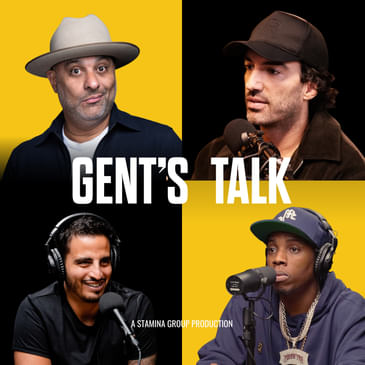
What if the biggest risk you can take is never betting on yourself?In this episode of Gent’s Talk, supported by BULOVA Canada, host Samir Mourani (@SamirMourani) sits down with entrepreneur, author, and Spin Master co-founder Ronnen Harary for a candid conversation about success, failure, entrepreneurship, and why you don’t need experience to start building the life you want.Ronnen reflects on the journey behind his book, No Experience Necessary: Why Betting on Yourself in Your 20s Is the Best Decision You’ll Ever Make, and the lessons he learned building a career from the ground up. From early failures and uncertain business ideas to creating products that became part of millions of childhoods, he explains why the setbacks often matter more than the wins.The conversation challenges the traditional definition of success. Ronnen explains why money, titles, and external validation shouldn’t determine whether you’ve made it, and why success is ultimately deeply personal. He also opens up about growing up around instability, the sacrifices he made as a young entrepreneur, and the decisions that separated his path from those of his friends.Ronnen also shares what decades of entrepreneurship taught him about ego, collaboration, leadership, asking for help, and knowing when an idea simply isn’t working. He explains why failure was never about finding someone to blame, how working alongside people with different perspectives helped build stronger ideas, and why trying to do everything alone isn’t always a strength.Most importantly, this conversation is about giving yourself permission to try before you have everything figured out.💬 What we cover:Why you can bet on yourself at any ageHow to define success for yourselfWhy failure can be more valuable than winningThe sacrifices entrepreneurship demandsBuilding a business without letting ego take overKnowing when to keep pushing and when an idea isn’t workingWhy asking for help is a strengthThe advice Ronnen would give his younger self00:00 Why you can bet on yourself at any age01:57 What he’s most proud of after decades of success06:03 Building a company around a constant flow of ideas08:52 Why success is deeply personal11:58 Growing up around instability16:21 The sacrifices he made for entrepreneurship19:00 Why failure was never about blame22:39 Managing ego while building a business28:20 What therapy taught him about relationships30:43 How do you know when an idea isn’t working?36:08 Why he finally learned to ask for help40:47 Why failures define us40:52 What he would tell his 10-year-old self42:02 Final thoughtsIf you’ve ever felt behind, wondered whether you missed your opportunity, or waited until you felt “ready” to chase something bigger — this episode is for you. It’s a reminder that experience isn’t always the prerequisite we think it is, failure isn’t the end of the story, and it’s never too late to bet on yourself.👉 Like, comment, and subscribe for more conversations on mindset, men’s wellness, entrepreneurship, and modern resilience.🔗 Connect with us:Subscribe ► /@gentstalkpodcast🌐 Website: https://gentspost.com https://gentstalkpodcast.com/📱 Instagram | TikTok | Facebook: @gentstalkpodhttps://instagram.com/gentstalkpodhttps://tiktok.com/@gentstalkpod#gentstalk🎙️ Credits:Host/Producer: Samir MouraniCreative Director & Executive Producer: Steven BrancoA STAMINA Group Production#entrepreneurship #success #failure #personalgrowth #mindset #leadership #motivation #business
The Gent's Talk podcast, hosted by Samir Mourani, pulls the curtain back on difficult conversations around mental health, business, relationships and the difficulties around expressing oneself, with rising and leading gents from across the globe.
New episodes every Monday! #GentsTalk
Instagram: https://instagram.com/gentstalkpod
TikTok: https://tiktok.com/gentstalkpod
YouTube: https://www.youtube.com/@GentsTalkPodcast
[00:00:12] So I'm really excited to have this conversation with you. Thank you for having me on. No, of course. I was telling you right before we started recording, I started reading a couple chapters of your book, No Experience Necessary, Why Betting on Yourself in Your 20s is the Best Decision You'll Ever Make. Now, the title slightly upset me a little bit because I didn't bet on myself in my 20s. So I'm going to have to ask you some questions about what I can do in my late 30s. You can bet on yourself at any age.
[00:00:39] But I'm really excited to have this conversation with you. And I think the first thing that I want to talk to you about or actually better understand about you is very simply, who is the person sitting in front of me right now? And what would I need to know about you in order to understand the type of man you are? Great question. You're sitting in front of someone who's empathetic, compassionate, creative, loves to brainstorm and collaborate with human beings.
[00:01:08] I have a very unique style in terms of having meetings. I don't know if you got to that part of the book, but it's in the Painting Your Masterpiece chapter. And when I have a meeting, I usually start with two or three people and I can end up with 10 people. And in the beginning, when we started the business, I would use the pager and I would call people to my office. So whenever I have a thought and we're in like a stream of consciousness, I want other people to come and contribute to that conversation.
[00:01:33] I'm a huge believer in diversity of thought and having other people that you wouldn't normally expect to participate in the conversation, but have a point of view. And then they come in and they enrich the conversation. So, and I'm the type of person, I'm always in the zone. I'm usually late. I run late all the time because I'm just in the moment and I lose myself in the moment. But usually good things happen when you're like, you know, collaborating with people. What's the thing you're most proud of in your career to this point?
[00:02:00] You've achieved a significant amount of success in all that you've done. Sure. But when you look back on that entire career, not to say anything that it's done, but when you look back at what you've done up to this point, what stands out to you as, hey, that's my crown jewel moment? You know, I don't think there's any one specific moment. I think the most rewarding thing now is that now that I'm older, I get to appreciate and meet the people that grew up on our toys and see how meaningful that has been to them in their lives.
[00:02:28] And, you know, I had a situation last week, I gave a talk in Phoenix and this 19 year old told me, he's like, you know, René, I just bought 20 Bakugans last week. And then he came the next day and he's like, let me show you my, let me see, let me show you my collection. And he brought in all his Bakugan. And so knowing how personal the toys have been in people's lives is really meaningful to me. I love seeing people in the airport playing with our toys. That's like, never gets old for me. Right. And we have this video game called Tokuboka.
[00:02:55] And so you see tons of kids in the airport, they're playing with them on the iPad. And I'm like, you know, I'm like the person who's like looking at the kids and I got to speak to the parents and tell them, you know, it's okay. You don't want to be the creepy guy. And then I'd say the careers that we've helped people build, we have a funny joke in our company that if you started in shipping, that's the best way to get to SVP in the company. And so there's lots of people that have come in. You know, Tyler Bunker came in in shipping and he runs merger and acquisitions for our company.
[00:03:23] Adam Beter came in literally 21 years old, marketing. He's, he'll go down in history as the king of licensing in our industry. Ben Dermar came in, started 22 years old, runs all inventor acquisitions for our company. He's a legend. He'll be in the Toy Hall of Fame for sure. So it's like the careers that you've shaped in people's lives. I think looking back, that's the most meaningful thing. Yeah. That's the same Ben that I read about in the book? No, that's Ben Verity. Okay.
[00:03:53] So Ben Verity actually, he nurtured and he trained under Ben Verity. I see. Okay. We call them the Bens. How did you get into toys? It just kind of found us. It was, when we went to university, me and Anton started a business called Campus Faces. And we said, well, when we graduate, we'll continue in this marketing business and we'll see where it goes. And what happened was we ended up finding this product called Earth Buddies, which is a small little potato head. You put them in water, it grows grass for hair. Ended up selling about a million of those.
[00:04:23] And then we figured it's a novelty product, so we better find something else. And I noticed that lots of kids were playing with devil sticks. I don't know if you know what devil sticks are. Yeah. I searched it up after I read it in the book. I was like, why is this familiar to me? And then I looked it up and I was like, okay, yeah, I know this. So it's a three-piece juggling set that kids play with. And we started to notice the kids were actually manufacturing, not manufacturing, but they were making them in their garages and playing with them at schools. And so we're like, what's going on here?
[00:04:50] And I played with the devil sticks when I was a teenager at the Grateful Dead shows. And it was mainly for hippies, but something was going on for kids. Yeah. And we said, well, we have this factory. Let's manufacture and sell some and see how it goes. And we ended up going to Toy Fair in 1995 through a distributor and showing the devil sticks. And after the show, they broke us into Kmart. Sorry. They broke us into KB Toys and Toys R Us.
[00:05:18] And suddenly we had distribution in 2,000 stores. The product sold well. We sold about a million pieces that year. And then we were like, should we go into horticulture or should we go into toys? And we were like, toys looks like more fun. So that's kind of how it started. And my business partner, Ben Verity, was living with Jen Irwin from the Irwin Toys family. And they were the biggest toy manufacturer in Canada at the time. And they said to Ben, you know, if you guys want to go in the toy industry, there's all these toy inventors that come up with ideas, but they never commercialize them.
[00:05:47] So they gave Ben the list and Ben started driving around or flying and meeting all these toy inventors. And we started seeing a bunch of ideas. And that gave us a steady flow of ideas of which to build a company with. Amazing. So over this career of yours as you were building the company, one of the things that stood out to me. So I read two chapters of this book, two of them that really stood out to me. As soon as I went through the table of contents, I saw partnership and equity.
[00:06:16] But before I jump into those, actually, I want to ask you about why you specifically reference your 20s. How does a 20-year-old or how does someone in their 20s bet on themselves? Well, I reference the 20 because I had the most magical lived experience in my 20s. I started our first business 21 at university and going with our bigger, actually 20 and going with our bigger business at 23. So I've been in business for a decade.
[00:06:44] And when I look back, when I hit middle age, I started to look back and I'm like, what accrues to you in your 20s that doesn't accrue to you later on in life? Or it doesn't accrue to you as much later on in life. And I was trying to dissect, how do we do it? Right? Or what was going on during that period? And things like, everybody's rooting for you. When you're young, people really want you to succeed. No one sees you as competition. The notion of being really close to the zeitgeist. Right?
[00:07:14] You practically are the zeitgeist. You're living in the zeitgeist. The notion that sometimes not knowing everything is an advantage versus a disadvantage. So there's a chapter on the power of not knowing. And the ability to be in motion generates a lot of luck. And when you're young, you have so much energy.
[00:07:37] And so it's like the notion of having that energy accrue to yourself with what you want to do. And I think the 20s are a time when it's for you to really take chances on yourself and in a way experiment with what you want to do in life. And I was very fortunate to know early on with what I wanted to do with my life. Man. Right? I knew at 10 years old. Really? Yeah. I knew at 10.
[00:08:07] Good for you. Yeah. And I think a lot of other people know it at a younger age. It's just what happens is sometimes we have too many options in life. And I actually didn't have that many options. So sometimes having too many options causes people to get stuck. So I was very fortunate to know what I wanted to do. And so in your 20s, you can try. Right?
[00:08:33] And you can try different things and see how they necessarily are going to pan out because the stakes are not as high as they are later on in life. Yeah. The difficult part is that there's so many influences on us in terms of what is the right thing to do. Right? And I think that the definition of success as a society, we should broaden it out because success is very personal. It's personal to you. What success in your life is personal to me. It's personal to Kat. Right? Everybody's got their own definition.
[00:09:00] But potentially we get influenced by society on what is the right path to take. Or we get influenced by our parents on what the right path is to take. Sometimes our parents, they love us so much, but they have their own unfulfilled dreams that they put on the kids. And they want to see their kids live a part of their dreams. Yeah. Right? So there's all these things going on. But at the same time, the 20s is just like rocket fuel.
[00:09:21] It's raw energy that you should gift to yourself with whatever you want to do and use the time to push yourself forward with whatever influences your creativity or your own internal knowing at the end of the day. I'm a big advocate in following your own internal knowing. You talked about not having a lot of options when you were 10 years old.
[00:09:50] And you referenced your dad and the immigrant story coming in from South Africa. Unknown country, figuring it out as you go. It's very different than today's time where you can find a place, find a job, find a community, and then make a move. Back then you just kind of make a move and you hope for the best. Tell me about that experience. Yeah, we came to Canada when I was five.
[00:10:14] And then my parents had a Persian carpet gallery in downtown Toronto called Leachy International. And it was great for the first 10 years. My parents were like classic immigrants working hard. My mom worked at the gallery. I used to go there on Saturdays and I was like classic rolling the rugs up and folding the rugs. And it taught me a lot of things. It taught me like I did not want to be in the rug business. I did not want to be in retail. Yeah. Okay.
[00:10:41] I did not want to be dependent on people walking in the door. Right. Retail's hard. Yeah. Retail is really tough. And, uh, and so then my parents were classic immigrants. We had dinner as a family every night at 630. And all the discussions in the family were about business. Right. Right. Nothing was really about us. Like I'm the classic, like latchkey 80s immigrant kid. Okay. Like I'm a free range chicken. Right.
[00:11:09] We just left the house, came back, you know, like all that type of stuff. And then. Must have been a masterclass though in business just to listen to those conversations. It was, it was a good masterclass. And my parents had like colorful friends and clients and all that type of stuff. So we're constantly observing all that stuff. Yeah. But then my dad's, he shut the business and it wasn't his business actually. I write in the book, my dad was always the junior partner. Right. He was never the a hundred percent. He was always had some sort of share, but he didn't have the final say in the business.
[00:11:40] Um, then he closed the business and he got a job at Sunripe Juice as VP. And it was one of the proudest things ever for me. Cause I was like, you know, it's like a normal job, VP title. Like it's like everybody else. Right. Um, in my, in the school that I went to. And then he lost a job six months later, started another business that lasted for two years that closed. My mother was working retail. Um, so it was like very unstable, stable, but unstable at the same time.
[00:12:08] So you put that together with, uh, growing up with a learning disability. That is a, a recipe for wanting to control your own life and your own, take control of your own destiny. Did you always know that you looked at the world differently? Certainly. Most kids grow up thinking I want to get that corporate job, the nine to five travel on my vacation days. You seem to always have been an entrepreneur. Well, again, it comes down to options because I've got learned, identified with learning disability called dysgraphia. Okay.
[00:12:38] Um, which is it, it's the inability for my hands to write clearly and to keep up with my thoughts. And just so my handwriting becomes illegible. And then I got to go back and rewrite the words so someone else can read it or I can read it. And then I lose my train of thought. So everything takes me much longer. Um, and then I have some other spatial awareness issues. So I was super lucky to get identified and get the accommodations like extra time on my exams, um, an extra tutor at the school. And I can tell you this much, if I didn't get identified, there is no way I would have
[00:13:06] graduated school and there'd be no way I'd be sitting here on this podcast with you. Right. A hundred percent. The, there are so many people, unfortunately, that do not get identified with learned disabilities or can't pay for the assessments, especially in the United States. Yeah. Right. It's like $6,000 to get an assessment. It's a lot of money. Not a lot of people can afford that. They can't afford it. Um, so the kids go unassessed and a lot of people end up on the wrong side of the tracks and end up in jail, but they're incredible. They're so creative and they have so much to contribute to society. Yeah.
[00:13:34] But I was one of the fortunate ones to get identified, but school was super tough. Like I was the king of the C's. Okay. Like if I got a B, it was like a good day. I've never gotten, I've never gotten an A in my life ever. Yeah. And. It's funny now they're a V. So I get it. I graduated with 69. I was on the wait list at Western. My mom said to me, get in the car, drive to Western. And go sit there at the admissions office and see if they'll let you in. That's exactly. She didn't drive me. That's what I drove myself. And that's exactly what I did.
[00:14:01] Um, and I got in to school, but I tell you the story because I knew that I would not have the academics to be a doctor or to be a lawyer or to be an accountant. Um, and I knew that business was going to be my track and I ended up studying political science because I was interested in politics, but I knew I wasn't going to be able to get into grad school and maybe. Sorry, I'm laughing because I also studied political science. Yeah. And same thing. I was like, I ain't getting into grad school. Political science and we both wear black. I was going to say, yeah.
[00:14:31] All I need to do is get a tattoo and we're like brothers from another. Exactly. So you went to, uh, you went through all of that and you, you identified that business was going to be your path forward, but entrepreneurship is not for everybody. Correct. It's, it's so much tougher than people assume. And I think over the last five, six years post pandemic, it's been over glamorized. Oh yeah. Become your own boss. You end up working more. Do whatever it is you want. You rarely get paid for what you want.
[00:15:01] You have to actually work a lot longer to get to that stage. What don't people understand about entrepreneurship? Well, first of all, I just want to say that, you know, I make the case in the book to, um, potentially if you want to be an entrepreneur, the book is there to actually help you, um, go in that direction if you're so inclined, but potentially not to go in that direction if you're not inclined either. Right. And there's nothing wrong with that. 100%. As I said, I think we should define success as a personal thing. Yeah. Right.
[00:15:30] But what, what I would not like to see is that people that are inclined to do their own business or it doesn't even have to be their own business. They want to be an athlete. They want to be a musician or whatever they want to do in their life. If they're not pursuing that, then that's a shame. Yeah. Right. So that's, that's all I'm trying to advocate for. But in terms of entrepreneurship, I mean, definitely there's tons of sacrifices you need to make in your life. Um, your earning potential will probably be less at the beginning, but I encourage people
[00:15:58] to look at earning potential over 20 year lifespan or a 30 year span rather than like an in year, right? So have a bit of a longer term horizon, right? Take your, take it over 30 years and divide it back and then look at what your, your yearly earnings potential would have been. Yeah. You'll give up certain aspects of your life. I, I'll never forget when I was with my buddies and we went to, um, Thailand for two weeks and then they were going to Cambodia and they're like, Renan, this is going to be unbelievable and you got to come. And I'm like, I can't come. They're like, what do you mean?
[00:16:28] I was like, I got to go to Hong Kong. Cause we're interviewing a lady to run our Hong Kong office. And they're like, what are you talking about? And I'm like, I got to go. And they're like, you got to come. And I'm like, I got to go. And I, I went to Hong Kong and they wrote me afterwards and they said, going down the Mekon Delta was the greatest thing ever. And then they went to the Philippines afterwards is the greatest thing ever. And we were 28 years old and I missed that trip. So you have to, you make sacrifices along the way. Um, so you're right. It's not a hundred percent, uh, uh, the rosiest road to take.
[00:16:58] Um, but it's your road. Right. And the question is what works best for you? And I'm a huge advocate of, of creating your environment that placed your strengths. And that's a personal thing, right? So being an entrepreneur, you get to, um, you get to build a culture that works for you. You get to hire the people that you want to be around. You want to get profit sharing. You get profit sharing the way you want to treat people, the way you want to shape integrity.
[00:17:25] Um, so you're, you're really creating your own world. And then that world is spreading out to other people. Yeah. The culture word that you used. I'm very fascinated by that because it's very easy to hire people. I shouldn't say it's easy, but you can go out and hire people, but it's very difficult to build a lasting culture. And when you talk about people, for example, the fastest way to a senior position in your company is to start in shipping. Right. That's a culture thing.
[00:17:55] That's building an ecosystem where people come in at no matter what level they come into and they can see a path forward and they stay. How do you build a culture like that in a business? Yes. You let people participate in areas that they wouldn't normally be able to participate in. Um, you look at people's results and you judge everything based on merit. Um, and you bring people in that, that are, that are not political.
[00:18:24] I think that one of the greatest things that me and my business partners did amongst ourselves first. And then that spread out to the rest of the organization is we're not a culture of blame. Um, and when you're developing creative products, there's never one person that brings the product to the market. It's a, it's a full team sport. Yep. Um, and we would, we've had so many failures in our career in the early days. You know, we had Don't Free Freddy disaster. Worst product ever. Tickle secrets, baby. Worst product. It's the worst name. Great names.
[00:18:54] Great names to listen to. Huge arm cuties. That was like in 98, 99, like it was string of failures. And I'll never forget. We never blamed anybody for the failure. Basically what we did was we marked down the product, you know, 30 bucks, brought it down to 15, $10, cleared out the inventory and then started working on the next product. We've never in our company's history ever done two things. One is we don't write business plans. Okay.
[00:19:20] And we've never done a post analysis on a failure because everybody knows the score because everybody was there. Everybody was involved, right? And so we're just like, that's not a good use of energy. Let's just move forward. Let's just imbue the learnings into the next product that we're going to do. And so I think that type of culture where people didn't see us blaming each other, um, they didn't start blaming each other and people were just focusing on, on the craft. You can be a great product designer.
[00:19:48] You can be a great visionary, a great marketer. That doesn't necessarily equate to being a good leader. How do you develop the skills to be a great leader when you're building a company the size of this? Repetition. It's all about repetition, like meeting after meeting after meeting, uh, have business partners because they'll give you the feedback. You know, if you do it by yourself, you're not going to get that much feedback. You'll live more in a bubble because my business partners are like, you know, I don't have to suck up to you. You know, like I'm just going to, I'm going to tell you the way it is.
[00:20:18] Right. And, and they sure did. I have two type A business partners and they gave me feedback all the time. Constant feedback. You know, like I was like, you know, I was a self-improvement project for one of my business partners, not mentioning any names. Okay. So. But he'll know who you're talking about. He'll know. Yeah. Uh, and then also, you know, your own personal growth, you see what's working and what's not working. I mean, I, I will never forget when we were doing air hogs, which was our first big product, uh, this air pressure airplane.
[00:20:47] I was in China for two months doing the debug. We'd sold in the product. It was January of like 1998. And the product had to be in stores by May of that year. It was already sold in. We sold in like a lot of product. And I was the one in China doing the debug. And there was one engineer, um, with us. His name is Alex Perez. He was about 15 years older than me. He was our one engineer. We were hired from Mattel. Right. Great guy.
[00:21:18] And one of the parts came out of the machine. It set us back another three days and I just lost it. Um, and I just let it go on Alex for probably like 10 minutes. And he wanted to leave because I basically dressed down an older man. Um, and I still to this day feel terrible about that.
[00:21:45] I completely, completely lost my temper. Um, and I'm so grateful that he stayed and he stayed in our company. But there's, there were, there'll always be like a something there between us. And I loved him. He's such a great guy. And he, he was so good to me. And we have such a, we had, we have a great personal relationship. Perez, that's what I call him. And, but there'll always be that moment.
[00:22:12] And so that was, for me, that was a real, okay, like I better change. I got, I got to like work on some deeper issues that I have here. And, uh, so it's situations like that, that, um, shape you. How do you pull your ego out in those instances? You're the guy in charge. You're coming in. Someone's not delivering. It's you. You're, you're liable for all of it. You're the guy responsible. You and your partners, obviously, but sort of the buck stops with you.
[00:22:41] How do you navigate your ego while trying to build a business, cultivate a culture, treat people with empathy and still get the job done? Because there's a lot of entrepreneurs I've spoken to who seem to glorify the cutthroat nature that they operate within. And you can see the turnover within their businesses that people don't like working with them. And in some cases they get the results. So how do you navigate that? Yeah, I think in that situation, I don't look at it as like,
[00:23:11] ego in terms of getting the product out. That was more, it was more of just, um, frustration, uh, lack of self-control, that type of stuff. There was no ego. Like people, I'm not better than him or anything like that. Right. It was just, you know, we made, we constantly make mistakes and, and we got to get this product out, but it's not an ego thing. I think the ego plays out, um, in how you conduct yourself in terms of,
[00:23:40] if you think you have a better idea than someone else, that's really where the ego comes out. And one thing that I'm super proud of, like not to say that me and my business partners don't have egos, but one of the things that worked really well for us is we would meet every week and we'd have our partner meetings and it was like a clearinghouse for issues. Hmm. And two things would take place. One is if there was ever an issue between us, right? We learned how to say sorry. Sorry is the most powerful word that you can ever use. Okay.
[00:24:09] Knowing when you've done something wrong and being able to acknowledge it is super important. And so we would actually say sorry to each other when someone overstepped. Yeah. And if they didn't, I would ask for it. Right. That's number one. Number two is never talking behind someone's back. It's not a hundred percent related to ego, but it's an important thing related to ego because you got to have everything on the table. Yeah. Put the truth on the table. And then the last thing is like, we had so many healthy discussions and debates.
[00:24:38] And I think the most powerful thing, if you are going to go into business and you're going to have business partners or you're going to have people in your company, creating an environment for healthy debate is critical because coming out of the healthy debate, debate comes the best idea. And here's where it comes back to ego is that if you're going to, if you're, where the ego gets in the way is not being able to recognize the best idea when it surfaces and then running with that idea. Hmm. And that will cripple your business.
[00:25:04] And that will disenfranchise other people because they're like, well, that was so obvious. That was, that was the best idea. Why are we not going with it? So obvious. Right. Yeah. And so that is really how I, how to manage ego. It's like, you need to bring your ego into the room to be like super passionate to advocate for what you want to advocate for. Right. And bring your ideas. But then at the same time, you're like, oh, okay, this is, we just, this is even better. Right. This is a better way to go. So let's go over here. And then you don't, and then there's no ownership.
[00:25:32] The last thing I'd say is in our company is that we're not a culture of like, you know what? Paw Patrol was you. Samir, that was all you. It was all you. That was me. You know, it's like, no, because it's a creative business. So no one gets, no one gets the blame unless, unless it's very, very, very, very, very specific, you know, but when it comes to products, no one gets the blame on the losses, the failures, and no one gets the, the big trophy on the wins. It's shared the whole way through. Everything's shared a hundred percent.
[00:26:02] I mean, we're the only company when we started in the toy business, every time we won an award and we won, so we have this thing called the toy of the year awards, kind of like our Oscars. We've been very fortunate. We won about 30 awards over the years. And every time we won an award and there was an inventor that came up with the product, we bring the inventor up on the stage. Good for you. Right. They'd be up on the stage. They getting, they getting the accolades and people were shocked. They were like, the inventors never, they were always in the shadows. So we're, we're all about letting everybody else get the accolades. I'll tell you one last thing.
[00:26:32] I will tell you the, the proudest thing for me and my company, okay, is seeing a product become successful that I had nothing to do with. There's nothing that makes me happier. And that happened with Astromals. I think that's, that becomes a reflection of the system that you've built, the culture that you've built, the team that you've built, where they're able to successfully operate. If you, for whatever reason, decided to step away, weren't available, whatever, they can continue to operate and they can build something.
[00:27:01] And I think that's a reflection of all the hard work that you put in up to that point. Correct. The company has become its own living, breathing organism today. You talk a lot about partners and that's top of mind for me. I'm in the process of launching a new business and I've been thinking about partnerships a lot. I've had my share of amazing people that in my personal life, I was like, wow, these are great people. I'd love to work with them. And then it turned out really bad. And then I've had people that I've worked with that I, from the onset was like, this is not
[00:27:30] going to work and was pleasantly surprised. But I haven't necessarily been able to find the perfect recipe for how to identify a partner. And that's why I went straight to that chapter in the book. And you talk really glowingly about your partners as in a manner in which to me, as I listened to you talk, none of this can happen without having the right partners in place. How do you find the right partners when you're starting a business? I think you got to get lucky. It's kind of like finding your wife.
[00:27:59] You kind of have to get a little bit lucky. Yeah. And it's good to date before you jump in. Yeah. That I would say for sure. Like definitely date because a lot of stuff comes out. Everything's good on the surface, but you really need to know your partners and how they are in many, many, many different situations. It's like my therapist says, you know, Renan, you got to date someone for a year before you get married. Right? So for me and Anton, we started our business called Campus Faces after graduating, sorry,
[00:28:28] after our first year of university, after we were selling fertilizer door to door. And we were like, this is not a good gig. And so we started our poster business and we did it for three years at university, graduate with no debt. But we had three years of like back and forth and back and forth and back and forth. So I had a sense of what it was like to work with them. I had a sense of like what it was to have like conversations. I'd say, look for someone that you can mind meld with, that you can have the conversation
[00:28:57] I was talking about before, but they can recognize the idea. And there's, the ego is not in the post analysis of the conversation. Anton worked, sorry, Anton went to business school with Ben and they were in the same class for two years together. So they were like seeing each other day after day after day. So I think there's a lot of repetition. Yeah. Right? So repetition, spending time together, knowing people's families. I think families are an incredible indicator. So I knew Anton's grandparents.
[00:29:25] I knew his parents because I've known him since I was 12 from camp and seeing people in different environments. You need to see their true nature. Yeah. Right? And then the question is, what is their motivation and what do they want to do? Right? So Anton and myself, we really wanted to build a business. We wanted to be in business for ourselves. We were very committed to it. It wasn't necessarily about this specific business. It was about being in business. We- You just knew you wanted to work together? No. No? No.
[00:29:55] Anton and I said in high school, because we were very competitive, we played tennis together, that we would never go into business together. Oh, really? Ever. Okay. Okay. Until we tried it and it worked. Okay. Right? Yeah. So you just never, you never know. And that's the combination of luck and then timing, which I believe is a really big part of any partnership. And then aligning on the vision where you both want to go to your point. Yeah.
[00:30:20] And I will say this much is like, our vision was we want to go into business for ourselves. We want to grow as company as big as we possibly can. We're open to ideas wherever they come from. And we love partnerships. Yeah. And those were our guiding principles. And we have the same work ethic. Mm-hmm. Right? And then we just let it flow from there. As an entrepreneur, if someone were to say to you, how do you know when the idea just doesn't work anymore?
[00:30:49] Because there's a fine line between, oh, you just gotta try one more because it could be right on the other side of that. And you know what? I've given it my all and it's not working. I should pivot or move on. How do you know? So speak to the customer. Mm-hmm. Speak to the consumer. Right? The consumer will never lie to you. Right? I'll tell you a funny story about Don't Free Freddy. So we, Don't Free Freddy for the listeners is basically it's this stuffed monster and
[00:31:18] he's in handcuffs. He's like got this great smile on him like Samir right now. But then you press this button and he goes roar. He's supposed to scare you. And we filmed the commercial and I remember seeing the kid who was in the commercial. Okay. And he had this look on his face and he was like, I don't like this product, but I'm getting paid to do this. So I'm going to do it, but I don't like it. And I was like, okay, this product's not going to do well. Mm-hmm. Right?
[00:31:45] And so it's really understanding your consumer and listening to them. And are they really getting what they need from whatever you're putting out into the world? Yeah. And if the answer is yes, and you still need to, you know, same thing with my book. My book is like, my sales are okay. They're not great. Um, but I'm getting great reaction from, from people that read it. So I need to stick with it. Yeah. If I wasn't getting a great reaction from people that read the book, then I'd be like, okay,
[00:32:15] like I didn't write a really good book. Um, so. And not getting in love with whatever you put out into the world in that moment in time and realizing whatever you've done will lead you to your next success. I'm a huge believer is that don't get too married to something because what's going to come next could be even way better than what you have today. Yeah. Right. And I've seen it play out in our business.
[00:32:39] We started, uh, uh, in 2010, um, I really wanted to get into the digital game space. We built a studio in Los Angeles. We were $10 million in, we had a hundred people working. It was called tech deck live. It was basically like a precursor to Roblox with skateboards. Okay. And we probably could have been in the Roblox if we would have stayed in the game. We were $10 million in a hundred people. I took a couple months off and I came back and everybody was like, you know, we're $10
[00:33:07] million in this, it's not going to go. We should like, we should just call it a day. And it was one of the worst decisions we made calling it a day, but we called it a day. It didn't go. It could be debatable if it could have, it couldn't have, but it was, it failed. And then six years later, we ended up buying a company called Tokaboka, which is a game that's created in Sweden. It's basically a digital dollhouse for kids. Has become our best acquisition in our company's history.
[00:33:34] Um, and we would have never bought that if we wouldn't have gone through that whole experience with tech deck live. So I've seen it played so many times. Stay in the game. Don't get too married to what you're, no, it's no, I believe you. For sure. Don't stay, stay in the game. Don't bet the farm. Don't get married to what you have. Um, and just stay in motion. Yeah. Well, you referenced the book a few times and there was one specific line that I really
[00:34:02] wanted to ask you about because I must say that I don't think I've read a single line that has resonated with me more. And the line goes, the irony about money is that the way you feel about money isn't really related to how much money you have. It is, but it isn't. It's really about whether or not you see the world through a lens of scarcity or a lens of abundance. I'd always seen the world through the lens of scarcity and I still do. A million, a hundred million, a billion.
[00:34:31] It doesn't change who you are and that's who I am. Why did you write that? Because I wanted to share it as a reality. You know, money is, is important in terms of being able to provide for your family and to give you physical benefits in your, in your life. But the question is like, what is the thing that lights you up in your life at the end of the day? Like what makes you alive? And money is, is one part of it.
[00:35:00] And then the other thing is, is the, I basically wrote, it's like at the root of a scarcity mindset to change that in your life. Don't look to money to change it. You need to change it from other things, right? That can be like loving yourself, um, taking care of yourself first, um, putting yourself first, uh, working on your self-esteem.
[00:35:29] Um, it could be, uh, yeah, a lot of it's, a lot of it has to do with, um, what are you missing? Hmm. Right. What are you missing? And don't use money as a tool to fill the hole of what is missing in your life. And that can be different for many, many people. Yeah. Right. And so I've gone on my own personal journey. I started working on myself, you know, doing the work at 40.
[00:35:56] I wish I started doing the work at like 20, but at 20, I was like, like, I was like, like a clam. Like I was just like, literally like a crab, you know, I was very close. I was like, I would never sit and do a podcast like this. You know, I didn't ask for help. I didn't ask for, you know, advice. I was very much like an independent, I'll get it done myself, um, type of person, but that's not the best way to live because first of all, people are amazing and people want to help you in your life.
[00:36:24] You know, every, the irony is everybody wants to, most people want to help you. Right. And the irony is that our shared human lived experience is so similar. Right. And you even said it before we started the podcast, you know, like we all have stuff that we were dealing with. Right. And, um, you know, I just did, uh, the Hoffman process. I don't know if you know about the Hoffman process, the ice water thing, right? No, no. You're, you're, you're, you're. Wim Hof. Wim Hof. Sorry.
[00:36:54] No, no. I messed them up. This is not Wim Hof. This, this is the Hoffman process. It was started about 50 years ago and it's, it's an eight day. You go off the grid, give your phone in and, um, basically you just map out all your patterns that you've basically garnered from your parents. Right. And so they basically, you map them all out and you work on them for the next day. It's a lot of unpacking. Oh yeah.
[00:37:22] Like this, this, this is the Mount Everest of workshops. Yeah. The Mount Everest. This is the hardest thing I've ever done in my life. I did it this, uh, this February in, uh, in Alberta. What'd you learn about yourself? Well, the, the reason why I share it is it's not what I learned about myself. I l, I learned that we are so similar. Okay. In terms of how we are as human beings, we all have patterns. Right. And what I learned is a lot of us project our patterns onto other people. Right. And so something happens and, and you did something to me, but, but I'm interpreting it through
[00:37:51] my own lens and I'm attributing it back to a pattern that I got from my mom or my dad. Um, and you were just being you. Mm. Mm. And there was nothing wrong with it, but I saw it as something wrong, but it was, but as a result of a pattern, you know, so they talk about, it's a whole thing called transference. So you're basically, you're transferring your patterns onto another human being. Yeah. Mm. And so we actually had to do an exercise in the, in the, in the workshop that we had to, it's the craziest thing.
[00:38:21] The teacher said in day three, they said, do you have any of you guys had an issue with us? Three teachers. There's 27 of us in the class and everybody put up their hand. Okay. Okay. And then after everybody put up their hand, they said, okay, here's a sheet. You need to tell us what happened. And then after telling us what happened, you need to identify what pattern it was. And then you're going to come sit in front of us and tell us. And all the students were listening.
[00:38:50] And so what you noticed at that moment in time was that every person had an issue. Okay. Which they can trace back to their own patterns. And it was so humbling doing it in front of everybody. And the teacher would just, and at the end of the sheet, you'd have to say, I release you. And the teacher just says, thank you. And, and another person comes and shares their stuff. So anyways, I'm going way off here. I'm getting a little bit woo-woo with you, but to your point, it's like the, as human beings,
[00:39:18] we are all very similar and we all have patterns. We have things to work on. Um, and so why I wrote about scarcity was just to share that money is not a way to deal with. If you have a scarcity mindset, there's other issues at play and it best for you to go figure it out. It's interesting that you say that because I think that's something that I might need to work on. I have a scarcity mindset. I, similar to you, grew up with very little options and always had this weird, irrational
[00:39:46] fear that I'm always one bad financial decision away from complete ruin. I'd end up on the street type of thing. And even in my most successful business ventures, made some money here and made some money there. It was never enough. It was just, all right, cool. What's the next level? What's the next level? And I've had enough conversations on this podcast now to understand that the next level doesn't actually change anything. It just, you just keep going for more and more and more.
[00:40:14] And then eventually you still realize it doesn't actually fill that gap inside of you. So listening to you talk about how it's actually the other things in the peripheries around that that need to be worked on is an interesting point of reflection for me that I would need to spend some time on. I want to ask you one more question here. Sitting here today, knowing everything that you know, all the ups and the many more downs that we inevitably go through,
[00:40:44] are always sort of facing more failures along the way than we do wins. And that's what defines us. If you can go back to that 10 year old version of you, give him one piece of advice, say one thing to him, knowing everything you know today, what would that be? You're intelligent. You're a learned disability. It has nothing to do with intelligence. Don't be ashamed. Don't hide it. You know, cause I was one, I was the kid.
[00:41:11] I would always write an exam in a different room and all my friends were like, Renan, where were you? And I was like, oh, you know, I was just, I was there. I was like, you know, I was the king of stories because I was so embarrassed. So I would tell my, myself and I wish my parents told it to me and I don't hold my parents. Um, I'm not upset at them for, for not doing it because you know, they have their own shared lived experience and how they handle things.
[00:41:35] Um, but I would say don't be ashamed because a learning disability is actually a learning disability, but on the flip side of the coin is learning gift. And you have all these other gifts in terms of the way you see the world and the way you think and the way you can connect the dots and everything's going to be fine. And then let's celebrate the gifts and let's lean into them. Um, and don't focus in on, you know, the deficits. Amazing. Renan, thank you so much for spending some time with me today. My pleasure, Samir.
[00:42:04] I'd love to have you back. My brother from another mother. Absolutely. It's really good to meet you. Likewise. Thank you so much, everybody.