
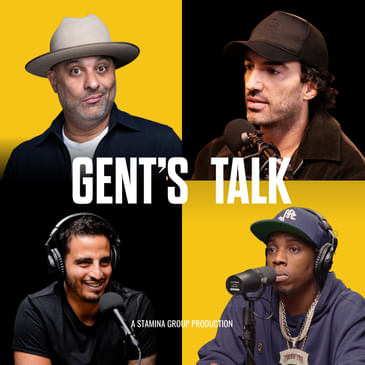
In this episode, host Samir Mourani sits down with Todd Minerson from Movember to dive deep into the evolving landscape of men’s mental health, modern masculinity, and systemic change.1Key Topics Covered:Understanding Paternal Postpartum Depression: Samir shares his candid, personal struggle with loss of identity, confidence, and sleep deprivation after becoming a dad. The two unpack Movember's latest data showing that 1 in 4 new fathers experience post-birth depression, highlighting the need to address paternal mental health without invalidating women's experiences.Navigating Grief & Individual Action: Addressing the guilt around mental health crises and loss, Todd outlines Movember’s "ALEC" framework (Ask, Listen, Encourage, Check back in) to empower everyday check-ins.Early Prevention & Sports Initiatives: The discussion covers Movember's Breaking the Ice initiative with the Western Hockey League, which equips young athletes, coaches, billets, and parents with mental resilience tools to reshape sports culture from the ground up.Shifting Systems Over Symptoms: Todd explains why focusing solely on individual behaviors isn't enough. They explore systemic solutions, such as Movember's Men in Mind training program, which accredits therapists to better respond to male-specific mental health needs.Allyship & Raising the Next Generation: Samir and Todd talk about male accountability, stepping up when witnessing toxic environments, and modeling healthy vulnerability and consent culture for young men.The Magic of Movember: The episode concludes on an optimistic note, celebrating the power of community, fundraising, and growing mustaches to spark lifesaving conversations across Canada.👉 Like, comment, and subscribe for more conversations on mindset, men’s wellness, and modern resilience.🔗 Connect with us:Subscribe ► /@gentstalkpodcast🌐 Website: https://gentspost.com https://gentstalkpodcast.com/📱 Instagram | TikTok | Facebook: @gentstalkpodhttps://instagram.com/gentstalkpodhttps://tiktok.com/@gentstalkpod#gentstalk 🎙️ Credits: Host/Producer: Samir Mourani Creative Director & Executive Producer: Steven Branco A STAMINA Group Production
The Gent's Talk podcast, hosted by Samir Mourani, pulls the curtain back on difficult conversations around mental health, business, relationships and the difficulties around expressing oneself, with rising and leading gents from across the globe.
New episodes every Monday! #GentsTalk
Instagram: https://instagram.com/gentstalkpod
TikTok: https://tiktok.com/gentstalkpod
YouTube: https://www.youtube.com/@GentsTalkPodcast
[00:00:13] I like the jacket. Thank you. I was worried about what to wear. You should never be worried about what to wear. With a stash like that? I know. Well, the stash is really, it's pretty tough to walk around Toronto with this stash in October. Yeah, but soon they'll understand. Soon they'll understand. The preseason mo. I mean, it is the magic. It is the magic. And remember, it's not the mustache. It's the conversations that it can start. And that's really one of the fun things. And there's no better way to start a conversation than with a mo that looks like that. Yeah, well.
[00:00:44] Mo is right around the season. Right around the season. Wow. This is a sleep deprived dad talking and I can't formulate sentences properly anymore. The Movember season is right around the corner is what I meant to say. What's happening in the world of men's health and young men's health? Yeah. Well, first of all, sleep deprived is understandable. So let's just have some empathy.
[00:01:08] I mean, we're, we're so conditioned to perform and to be perfect and all this kind of stuff. But when your performance and your perfection is around investing in your kid, you get a lot of leeway. So don't worry if we're tripping over words or for a little bit sleep deprived today. What is happening in the world of Movember? I mean, yeah, it's the, the leaves are changing color.
[00:01:30] There's like a whiff of pumpkin spice in the air and upper lips are getting tingly because it's time to grow some mustaches and have some fun and raise some money and awareness for men's health. And it has been a pretty remarkable year for men's health in Canada. I think what we've seen is the conversation is still really pertinent. It's top of mind.
[00:01:56] It's, you know, there's, there's a broader scale of events that are showing how important it is, whether it's young men's interactions online, whether it's the state and scope of poor men's health when it comes to mental health or addiction or gambling or pornography. And, you know, the tragic end results sometimes of that in terms of suicide. So we've seen a lot more conversation and a lot more understanding of where we're at. And maybe we're just seeing also a little bit of how to make it better.
[00:02:25] And some really interesting work that we've been pushing forward with federal and provincial governments to get this on the radar with collaboration and partnership with other organizations. And with them both deepening the field of research and supporting implementation of programs that are actually making a difference.
[00:02:44] This is going to be a heavy subject right off the rip here, but it's top of mind because there was, and forgive me because I can't recall his name, the actor from Breaking Bad who recently took his own life. And when I was reading through all of the beautifully written tribute captions that all his co-stars had written, a lot of them apologized.
[00:03:09] And it almost appeared to me that there was a sense of guilt for not showing up more or doing more. And I wonder why we just generally wait until shit hits the fan before we go, oh, I'm so sorry. I wish I checked in. I wish I did more.
[00:03:31] I just, I don't know how to reconcile that because I also think to myself, I know with certainty that there's going to be people in my circle, some of whom have never given me any impression that something was wrong. That knock on wood, God forbid, something should happen. I would feel guilty for it too. But I'm also in a season of life where I, I barely have the bandwidth to show up and record a podcast. Right. Right. How do you navigate that?
[00:03:57] Like not to say you're going to have the perfect answer to put you on the spot, but I just, I'm looking for that kind of guidance. Yeah. Yeah. I mean, I think it's really complicated. I think one of the biggest barriers is fear. Like, am I going to make it worse? Do I know what to do? Someone else is going to make a difference. Someone else is probably talking to that person. Somebody else is checking in. I don't know what to do. Like, so paralysis from the unknown, right? I just don't even know what to do.
[00:04:27] I think though, we also put a lot of pressure on individuals to solve for some of these problems that are systemic. So, you know, whatever somebody has been going through all their life that might lead them to complete a suicide. It's not one thing. It's not one person's job to do it. Right. There's this unbelievable pressure on us to feel like we could have made, we could have been the thing that made the difference. You might have been, but you may not have been as well. Right.
[00:04:56] I do think there's an element of guilt and that's just in all grief and loss. And so there's a big part of it there. But I can tell you for sure, if you're worried about someone and if you're wondering, you can't go wrong by asking. You can't go wrong by checking in. You know, we have a handy little acronym at Movember called ALEC. It's easy to remember. It's just ask, listen, encourage, take action, and check back in.
[00:05:25] It's four simple steps. You can't make it worse by doing that. All you can do is let that person know that you care and that you're there for them and you're ready to listen. So, you know, spotting the signs is a really hard thing. And some people don't give a lot of opportunity to do that because their pain is so great that they're really good at hiding it. So don't be so hard on the individual response. Let's also work on the societal response about how we change those things so people don't get to that place.
[00:05:55] So what can we do as a society to improve mental health for men? We know that getting started with young men before things get really bad is probably the single most important part of prevention work. It's easier to teach than heal. It's easier to teach than heal. It's easier to prevent than deal with crisis.
[00:06:17] It's better to give young men the tools and to work to change the stereotypes and norms and systems when they're young than to try to change entrenched behaviors or deep pain later in life. So for the work we do at Movember, a lot is focused on early prevention. We know there are amazing groups and important groups doing what we call the pointy end, you know, the crisis intervention.
[00:06:46] Part of mental health work. And that's vital too. But let's try to get less people to that place by giving them the kind of tools that they need before. So we're working with young folks on things like our program called Breaking the Ice, which is working with the Western Hockey League. Such a cool program, by the way. It's for a hockey kid, like who grew up playing hockey and, you know, lived through some of that toxicity, but also lived through the love of being on a team and playing a sport.
[00:07:14] And just like the magic of forgetting about everything else in life when you're chasing a little piece of rubber around a freezing cold rink for an hour. I mean, I still get that when I play today. Like it's amazing, right? But, you know, Breaking the Ice, two really cool things about it. One, it is for young men and it's through athletes. And obviously lots of young men and young people are not athletes, but this is particularly a sports intervention. It looks at a mental health and resiliency training for young people. It's exactly this conversation we just had.
[00:07:44] How to spot the signs in yourself, in others, how to have those conversations, how to recognize if somebody might be struggling, how to challenge things that might be making it worse. But it doesn't stop just at the player because players live in an ecosystem, like we're talking about here. There's a system around you, right? So Breaking the Ice engages coaches and trainers, the staff of the hockey teams, and also the parents.
[00:08:09] And in junior hockey, the billets, the families that young people might be moving away to live with while they're pursuing their hockey dream. So we know that kind of giving kids that tool and wrapping it around the ecosystem is really showing positive signs of them being able to deal with situations then. But guess what? Also, as they grow and as they encounter different and more challenging mental health scenarios as they get older. I grew up a huge hockey fan, still am.
[00:08:37] Worked in the OHL as a scout. I spent a lot of time in rings talking to parents and other teams and some of these kids. And there have been countless, I couldn't count the number of moments where I felt the joy and passion that comes out of that. Seeing it in the parents, seeing it in the kids, on the teams, on the team buses, all those things.
[00:09:00] And then there's also instances where there's some really poor decisions made by teams, by players, controversies, lawsuits, harassment claims. I worry about being such a big hockey fan. My father was a huge hockey fan. Thinking about putting my son into hockey one day and what kind of environment he's headed into. On the one hand, I'm worried.
[00:09:25] On the other, I know the importance of building resilience and social skills and team building. So when you talk about this Break the Ice program, that gives me hope to say, okay, there's an intentional shift being made in the world of hockey, starting with young men, where there's been a notorious amount of hazing incidents. What are you seeing response-wise from these people?
[00:09:51] Like you talk about all the programs you're rolling out and they all sound great, but what are you seeing in terms of the response from the billets, from the parents, from the players? Yeah. I'll start with the response from the leagues because they have been magnificent. They are committed to changing the culture of hockey. They have lots of great ideas. They have, especially in junior hockey, the ability to implement those things without much debate. Right?
[00:10:19] It's not like there is a CBA that has to be negotiated or billions of dollars or TV contracts or anything like that. They have that, but they also have what they are really, really considerate of, which is like a duty of care for these young people. They're minors, a lot of them, right? Obviously, some people turn age of majority 19.
[00:10:53] Yeah. Ultimately. Ultimately. So the response from the league has been magnificent. I don't use that word a lot, but I'll use it for them. And I give them full credit for leaning in and embracing challenges and taking on the cost of it. Like, you know, there's part, it doesn't come for free. There's time, there's commitment, there's directive, there's leadership. And, you know, the funds from November really helped go a long way. And together we've made this marriage that's really working in that way.
[00:11:22] The ecosystem, the parents, the coaches, they get it. They just don't sometimes know what their role can be. Right? They don't know how important a part they play in the mental health of these young athletes. But it does not take long for them to get there. Yeah. Right? They are doing this because they love their kids and they love the game. And I think when you put it in the context of how can we make this better? How can we grow this? How can we help these kids now and for the rest of their life?
[00:11:52] They're willing participants. And the magic is the players because I think they're ready for this kind of stuff. I think we sell young people short in their ambition for a better world, a more just and equitable world, an alternative to having to follow the peer pressure of stuff like hazing and other things, you know, and a system that they feel like is going to support them if they do speak up and challenge things.
[00:12:19] So once you kind of come past some of the surface stuff of that protection of privilege or male entitlement, boom. The doors open and they are ready to go. It's been really fun to watch. Like just aware overall than when I do any kind of work with St. Mike's College, the high
[00:12:48] school here in Toronto, all boys, where the questions that they ask, I'm like, I didn't even know the words mental health existed when I was their age. These kids are so ahead. They're so forward thinking. And it's not just I'm struggling with this. What can I do? It's if I have a friend who is having a hard time, how can I show up to them? So it's like that service to others is incredible to see. So I'm really happy. And you said that there was something that happened to you.
[00:13:14] I had a 24 hour period where, you know, even with all of the hard and challenging things around men and masculinity that are going on around the world. I had a 24 hour window, Samir, where my hope was restored. OK, tell me about it. I'm having dinner in my house and I'm about to get ready to walk the dog. And I seen this kid across the street, maybe 13 years old, 14 years old, working on skateboard tricks. And he was grinding. He was working for like a good 20 minutes, half an hour. And so I came out and walked the dog.
[00:13:43] I don't this like we know we live across from each other. I know this kid's name or anything like that. But I was like, keep it up, bro. I just wanted to I just wanted to pump him off a bit because he was just working so hard. He looked over at me and he's like, I can't, man, I'm too scared. And I'm like, I'm not going to let that vulnerability from a young guy go unsupported. So I walked past him with the dog and I don't be scared, man. I watch you work hard at this for the last half an hour. You got this. You're going to be amazing. I don't want you too creepy because I'm like a neighbor next door who doesn't know this kid.
[00:14:13] But I did like from across the road say, takes the time to say, you got this. It was really cool to hear him say to me, I'm scared. And for me to be able to say, it's OK, man. You can be me. You're doing this. Same walk. I'm still walking the dog, playing my tunes, just enjoying life. And these two even younger boys, like maybe 11, come up to me as I'm walking. Excuse me, sir. Do you have any old Pokemon cards or baseball cards that you want to get rid of?
[00:14:43] And I was like, I don't know what they wanted at first. So I took my headphone. I'm like, no, I don't. Why are you guys asking? Like, we're starting a card business and we're just asking people in the neighborhood if they have old collections they want to get rid of help us start a business. And I was like, tell me about your business, guys. Like they had this cute little business plan. I mean, I'd left out the part that they're targeting 50 year old men walking solo in the neighborhood for their old collections. But I was charmed.
[00:15:10] I was charmed at the fact that, you know, these two young guys, they weren't sitting around playing video games. Those are stereotypical things that boys do. They're creating a business plan. Yeah. 11 years old. And now you're an active investor in the company. I was like, I wish I did because I would get them to you in a flash.
[00:15:31] Next day, 24 hours later, I go to a workshop from a friend, an amazing organization called Possibility Seeds that's looking at consent culture and sexual violence prevention. They are showing a film that they made. The film about consent was made by a 17 year old boy. It was amazing. You know, my expectations were shattered. I thought it was a women's collective that I kind of worked on it. This young guy did it.
[00:15:58] He said, I didn't want to just learn about consent culture. I wanted to change it. So I was like, hope, optimism. And I left that event, Samir, and I went to a memorial event for one of my DJ friends who passed away last year. All of his buddies who DJ in the house music scene here in Toronto got together and threw a night for him.
[00:16:23] But the magic was his parents and family came and they didn't know he had this deep, deep group of friends. Everybody had a DJ solid story. Everybody had a story about Andre. It was adult men showcasing their friendships with him. It was supporting each other. There were tears. There were laughs. It was bumping good music.
[00:16:47] But what really struck me was like these guys could come together like this and grieve together publicly and heal together publicly and also give Andre's parents a view into a world that they didn't know. They didn't know he had these deep, deep connections, these friends that were connected through music. And I was driving home from that and I'm like, what a 24 hours. Like I do feel some optimism. I think this is where masculinity wants to go.
[00:17:16] I think this is what men are hungry for. Feeling. Healing. Caring. Crying. Saying I'm scared. And getting rich off Pokemon cards. Like I think, you know, it's like it was really amazing. It was just like such a wonderful 24 hours for me to think back on. The Pokemon cards are a nice touch. How do you have that conversation though with the collective of men who still view emotions as weakness?
[00:17:42] Not because they're opposed to it, but because they've been conditioned subconsciously and consciously to think that anything like that takes away from their masculinity. I've thought about this quite a bit in my own work, in my own life, in my own mental health. And also just doing this work for a while now and being in this kind of space. And I keep coming back to two things. And again, part of it is fear. And it's fear of a couple of different things to me. It's fear of what other men will think.
[00:18:11] I think that's still like probably the number one barrier for a lot of us. Like if I open up to this guy who I'm friends with, if I'm vulnerable, if I share like, oh, how are they going to react? Like what's the, what's it going to cost me socially in what people think of me or the image that I have? There's another kind of fear of like, what should I do? I don't know. No one's role modeled this for me. I need some help.
[00:18:39] I need to understand how to do this better. And then, you know, there's even another fear of like, not maybe this one's not as much fear as like, I don't have the words for this. I don't know what is happening to me. I cannot articulate it because I've been, you know, kind of put into a system that tells me the emotions that are okay for me to feel as a man are anger and fine. And fine's not an emotion, by the way. So everything else comes through the prism of anger. Yeah.
[00:19:09] You know, we get so sad. We get elements of joy and happiness, but you know, they have to be in certain spaces. Right. And, or excused in certain contexts only. So yeah, I think there's still a lot of fear for that, but then we have to look at the system that we're into. Like it's, it's just become more and more clear to me over the years that we can work on individual behavior change, one mustache at a time, one follicle at a time, as much as we want.
[00:19:36] But unless we help change the systems that men are living in and the norms and the social structures, we're only going to get halfway there because we still have to exist. You can break out of it in your small circle and then you can still see how hard it is to do in your bigger circle. You might have a friend that you can talk to about this stuff deeply, but then you go to work and you have to bury it down again. Right. Or you have family that make it hard or difficult because they're not in a place to do it with you.
[00:20:04] So I'm not satisfied anymore with just kind of, yes, we can help men talk about their emotions better. We got to change the system that prevents us from talking about our emotions. So what does that look like in practice, changing the system? Yeah. Well, it's part of why we think about working out Movember as systems, norms, behaviors, right? So individual behaviors, the set of norms that surround us and kind of help us understand how we conduct ourselves, but then the systems that we're in as well.
[00:20:32] Changing the system, a good example of the way that we think about that in some of our work is a project that we find called Men in Mind. One of the things that we want to destigmatize is that men don't seek help. We know actually that a lot of men do. We touched on suicide earlier.
[00:20:47] As if the volume of suicides completed by men isn't enough, three out of every four in Canada, there's an even more tragic underlying statistic to me that two-thirds of men who do complete a suicide in any given year did try to get help at some point in that year before. And in one way or another, it didn't work for them. So we live in this world that says, oh, men, if they only got help, if they only were able to ask for help.
[00:21:13] Well, it's not as simple as that because men are going to get help and it's not working. So changing that system is something that we have to do. And one way that we're thinking about it is understanding men's experiences when they do get into therapy or counseling and helping therapists and counselors be better at serving men in those situations. So Men in Mind is built to help practitioners really be more responsive to what men are looking for when it comes to their mental health.
[00:21:41] And a good example is like it's easy to go to a therapist and you talk about your life for a little bit, you kind of establish a base and they're like, yeah, I think you got to drink less or I think you're working too much or maybe take a walk or get some exercise or maybe some medication might help. Hmm, okay. Okay. That's tackling the symptoms, not the cause really. And neither the practitioner in some cases or the client, the man in some cases, know how to get to those deeper truth, pains, hurts, harms, whatever they are.
[00:22:11] And so Men in Mind is like an eight-hour accreditation course for practitioners that can do it. And again, we don't want to change one practitioner at a time. We want to change systems. We want to change healthcare systems in doing that. So, you know, there's an example of how we're trying to think of systems change as well at November for the first time, which is amazing because like it's nerdy stuff, but it's got to happen if we want to make progress.
[00:22:35] It makes me wonder as you're talking, is there any kind of research or evidence that points to the effectiveness of therapy versus men's circles or retreats, something where men see other men talking about these things, working through those things, versus a one-on-one private session? Look, I'm going to be honest. I don't know the data on some of that stuff on the differences between it.
[00:22:59] I can say that one of the challenges of getting good mental health help is finding the right thing for you. And a lot of people treat it as, well, I tried and it didn't work, so I'm never going to try it again. Well, I know from my own experience, you might try one counselor or therapist, it may not be the right fit. You might try one methodology or kind of field of practice and it may work or it might not.
[00:23:26] You might try, you know, different things for addiction recovery that might work or might not. Well, it's that programs versus, you know, residential programs or doing it yourself, right? So I think I can't really speak to the effectiveness of one over the other, but I can tell you it's work to find the one that works for you. And there is a magic to me, and I can say this personally, from being in group settings as a guy who's in the help-seeking space.
[00:23:53] Something powerful about seeing another man put their hand up and say, hey, I'm going through this or I'm struggling. And there's a power in that, and there's a power in how other men come to support him, right? There's a power in giving that support too, which you can't do in a one-on-one therapy session. If I'm lying on this couch with a therapist, it's kind of one way, right? There's a back and forth. You're in a group.
[00:24:20] The giving support is as helpful as getting it sometimes. And just the richness and diversity of different experiences, but also the commonality of the challenges, right? That for sure is some of my experience being in group settings with other guys and working through hard things. And laughs and having some, you know, just knowing you're not alone in it is huge. I want to slightly shift gears.
[00:24:47] I had a guest on maybe almost two years ago now. He was a specialist at CAMH. And he specialized in depression in men after a child is born. Now, he called it postpartum depression in men. We recently talked about that on social and then got ripped apart because the terminology just didn't convey the theme.
[00:25:12] And then I quickly learned there was this one commenter who was actually really sweet and wrote paternal postpartum depression is the technical term. Right. But I was shocked at the time to learn how much of an impact that has on a new dad. And as I talked to more dads before my son was born, they all shared a very similar experience. This loss of identity, this crisis of confidence, this loss of routine, the do I make enough? Am I present enough?
[00:25:42] Have I forgotten about my wife all of a sudden because I'm caring for this child? All of those different things all mashed together on a sleep deprived, brain fogged dad at three in the morning doom scrolling Instagram. That became my reality. Right. And there were moments where I lost my sense of self. I lost my confidence. I had no sense of whether I was capable of being a dad. I thought that I had somehow failed as an entrepreneur.
[00:26:08] I felt like a no good friend because I didn't check in with any of my friends. Then I started feeling guilty because I realized how hard the stage is because I didn't show up for my friends when they were in that stage without really understanding or comprehending how hard it is. And I was like, wow, I know all of the things, not all, but I know a lot about this space. I'm very sort of more aware than most. Yet I'm struggling to this degree.
[00:26:32] I could only imagine what someone who doesn't really know the space well is going through and doesn't even have the ability or the language to articulate that they're going through something. And it really concerned me and really emphasized this idea of, you know, depression in men after a child is born is a shock to the system for a lot of these guys. Yeah, I mean, we have some recent data from our report released just this September called the system falling short. We again were looking at systems about how men access care or not and what needs are being met and aren't being met.
[00:27:02] And in some of that research with CAMH and with the Mental Health Research Commission of Canada, we discovered one of the truths in there is that about 24%. So basically one in four men experience some kind of depression after the birth of the child. And it's for all those reasons that you listed and probably more in different experiences for people too.
[00:27:21] There may even be cultural pressures or their job may be, their job performance may be tied to, you know, just not an ability to balance between being a dad and working. Or if they're self-employed, you know, they may not have the kind of benefits that they need to help when a newborn arrives. There's no such thing as paternal time off for me. Yeah, right. When a newborn arrives, right? So lots of pressures at a really important juncture for men.
[00:27:48] And again, something that, you know, even that experience of the social, we're just barely beginning to understand how to name it, how to call it, right? And we run into another tension, I think, there that is one we're working at at Movember to try to dispel. It's not a zero-sum game because some men feel this. It doesn't discontinue or discount any of the challenges that women feel. It's not an either-or.
[00:28:15] It's not like my suffering is greater than your suffering. It's people are suffering when child arrive on the scene and we can do better, right? And it's maybe different. So how do we have that conversation? How do you talk about paternal postpartum depression without taking away from postpartum depression that women can go through after birth? I had an old boss who gave me a classic answer for this. It's not an either-or.
[00:28:45] It's a yes-and. It's yes and yes. They're two things. They're both important. They're not competitions. We need to bring that nuance to the conversation without invalidating any of the experiences that are part of it, right? We need to know that it's a different kind of set of pressures and challenges for a woman to give birth to a child and then to raise and then have all these expectations in the world that the system puts on them. And for a man, that's okay. It's all right.
[00:29:15] It just means we have to think about how we address them a little bit differently, right? Be brave with the conversations. Have it. Another great example from your experience on the social. Don't be afraid to learn. Nobody's perfect. We may not get it right. Take the feedback. Don't be defensive. We'll figure out a good way to talk about it. You had a kind commenter come on there and say it's paternal postpartum depression. You're not going to probably make that mistake again, right? No. No. I certainly won't. Right. But that's good. That's learning. That's growth. Well, I had the conversation with Mila, my wife.
[00:29:45] And I just said, you know, what did I get wrong here? Why? Like, did I completely miss the boat on it? And she goes, no, I think it's just we're in a season where women generally feel like they can't have anything to themselves without there being a man's experience or perspective on it. And in light of all the stuff that's happening societally and in Hollywood and in universities and in sports and all that stuff, it's just a lot for women. That's a good one, Mila. That's a good one. She's great. She keeps me. Yeah, she's incredible.
[00:30:15] Sometimes I think that she should be sitting in this chair, not me. I'm trying to understand as a husband, as a partner, as a friend, as an ally, as a father, how can I create an environment where I'm not just talking about it, but the way I show up. One of the biggest things I took away from all the stuff that was in the news about, you know, the university stuff or the college stuff was like, it's not enough for me as a man to say, I support women.
[00:30:43] It's how do I show up in rooms where there are other men talking about women in a derogatory way? How do I show up in situations where I see something wrong happening? Do I say something or do I go, that's not, I'm not involved. It's not my problem. Hands off and walk away. And I think about that because my son one day is going to be in these rooms, rooms that I don't have access to, in group chats that I won't see, on social platforms that I don't know what's happening in the DMs.
[00:31:13] And it's like, how do I raise this next generation of men? You know, specifically my son, I'm not raising an entire generation, but how do I raise him? Take it on Quaid the job there, Samir. This is my announcement piece. How do I raise him to think and behave that way? Because I can try to teach him and that's a fear of mine as a dad. Well, there's a lot there. There's a lot there. There was. I threw a lot. Can I, can I, can I tease out one part just first about how, like we think about this a lot. I want to elevate just to men's health v.
[00:31:41] Women's health because all those points are important in that space where women are in the world right now, where they're feeling like, can we just have like something to ourselves? Like, I feel that if, if, if anybody would just would be saying a joke about menopause, then I think a lot of women in my life would lose their minds. Right. Cause like, give me a break. Can we just focus on this neglected health challenge for women that every single woman goes through without making it a woman too right thing.
[00:32:11] We think about this a lot in Movember. It's not an either or again, right? Like men's health has, uh, obviously poor outcomes for men and boys, but it has equally poor outcomes for women and girls and non-binary folks. Right. Like there's levels of violence. There's the cost of caring for men when they're not well, there's the burden it takes on families and caregivers when men are unwell.
[00:32:37] Well, so we've worked to kind of articulate that broader picture and say, Hey, obviously men's health costs us in lifespan and all these other things, but it does have a huge impact on the women that look after us as well. Not only that, to understand how to advance men's health, we have to lean on the lessons that women's health advocates have made over the years, that queer health advocates have made over the years in HIV and AIDS and in advocating for specific health needs that are being unmet
[00:33:07] in those populations from black and indigenous, um, health advocates over those years. We are learning from them and that's the only way we know how to do this. So we have a debt of gratitude and a sense of accountability that we have to bring to it. So that's an important part of the context of the conversation around men's health. It's not happening in isolation. Healthy men make healthy communities and families, and it's the tide that can help rise all of our boats like everyone's health can.
[00:33:37] On the other side of things, you know, how do we raise men to be better? Let's just leave it at that without delineating all the things that we are need improvement on. There's again, back to this systems change piece. It's not just an individual responsibility. We got to change these systems that this stuff is permitted in. You can talk about a university and awful sexual assault base, but if you don't also talk about
[00:34:05] how it was brushed under the carpet by the administration, you're losing half the battle. If you're talking about violence against women, but you have, you know, perpetrators of violence in positions of power all over the world, then there's a systems flaw there that is not helping. Raising young men and the role that we can play as fathers or as adult men in young people's lives is simple. It's modeling that behavior.
[00:34:35] It's not tolerating it. It's being bold and brave enough to step in when you see something wrong. It's, you know, not letting your own fear be an excuse to show both young men and young women in your world that there's a better way, right? And that you can be part of it. So that's just courage and basic skills and you can do it. I saw social post by Nike.
[00:34:59] I think it was where they hosted a run at an airport. They rented out an entire airport hangar for women to just go running at night at night so that they felt safe. Yeah. And I was like, wow, this looks really cool. I'm so happy they did it. And then I thought to myself, why was this even necessary? And that's such a sad thing to have to come to that a brand has to rent out an entire airport hangar for women to feel safe.
[00:35:26] We as guys generally need to wake up, wake that F up about women's experiences when it comes to violence and fear of mostly men, to be honest. Like, just call it what it is. I don't know about you. Have you ever held your keys like a brass knuckles? Have you done that when you walked home? Only because I was in a neighborhood that I shouldn't have been. That sounds like another good story. Oh my God. That was an interesting story.
[00:35:54] But I was going to say that my wife, every time something happens, she goes, I've been there. I was just coming home from work or I was in the subway or whatever. And this happened. This happened. It's just like, it happens so often to women. I think like guys our age and our generation, we can't use ignorance of this as an excuse anymore. Agreed. Oh, I didn't know. How could it possibly be? If you have a pulse and you scroll on something, you should be aware of this now, right? It's not an excuse anymore. Does that mean you know what to do next or how to do it?
[00:36:24] No, but you got to take the first step. And that's going to be the next level of no more excuses. Like the 50 other people on a group chat, there's going to be no excuse. Well, that's the part where I was saying earlier. Like, you know, the ones who were on that group chat who chose not to say something, I almost feel like you're equal. You're responsible. You have a responsibility to say something, to do something, to call the authorities, to reach out to someone who can stop this.
[00:36:50] Like this is, we all share a responsibility as men to be better, to show up better. And I've heard, and I've said this at times where it's like, oh, but it's not all men. And then someone said to me, it's not all men, but it's always a man. And I was like, well, that's an interesting way to put it. Because women's experiences, and I get the, maybe the irony of two guys on a podcast talking about a woman's experience with no woman here to talk about it herself.
[00:37:19] But I'm hoping that this message gets across to the men who listen and watch this, to go like, guys, get your shit together already. Like, it takes so little of you to make sure that you don't make a woman feel uncomfortable. Us. 100%. Right? 100%. I don't want to be. No, no, you're absolutely right. Well, just, I'll give you an example of where I screwed up recently.
[00:37:43] I was at a speaking engagement, and the organizer was super stylish. Like, she was just so incredibly nice. Like, if somebody that works in the organization or something came over, and he's like, oh, so-and-so, you look really nice. Um, and then he made this joke about, he's like, oh, I wish I looked as sexy as you. I could have said something. But I paused, and I was like, well, I don't know if it's my place. I don't know if they know each other. Do I say something on the spot?
[00:38:11] This is, technically, there's like a professional relationship here for me. And I froze. And then the moment passed, and I'm like, well, now what do I do? Yeah. And I thought, and I still think about that. And I was like, could I have done something or said something in that moment? Would it have been inappropriate? What if they knew each other? What if they were like best friends for years, and that's how they talk to each other? I mean, so I'll say a couple things, I guess. But the first is that laundry list of things that comes up in our brain when something like that happens.
[00:38:38] Like, we got to work towards eliminating that and just kind of getting to a more natural reaction of doing something, right? What it is in that case, you're right. I don't know. You could, but there are things you could do. You could, leads to my second point. Sometimes it doesn't have to always be in the moment. You could have found that guy afterwards and said, hey, I don't know, man. When you said that about the being sexy as you part, it's kind of hit me a little bit weird. And I don't know if you meant it like that, but kind of felt like objectifying a little bit or something like that.
[00:39:08] You could have checked in with the host too afterwards and say like, I'm really, this is really sticking with me now. And even though it was like an hour ago and the event is done or whatever, but is there something I could have done there? Is there a way that I could have showed up to support you a little bit better in that? Because it stuck with me a bit and I want to try to be more prepared next time that happens in my life. That's good. So there's a few, you know, we think it has to be like, you know, the white knight jumping in in the middle of the incident.
[00:39:38] And it's just, that's just like savior mentality stuff that isn't super helpful either. But, you know, we can't think about it in, not only in the moment, but in moments afterwards as well. I think that speaks to the nuance of all of this is that it's not as black and white as people make it out to be sometimes. And that, you know, even when you're well-intentioned, even when I'm well-intentioned and I do all things that I try to do, I still make that mistake sometimes. And it's like, I could be better. I could show up better. I could learn from that.
[00:40:08] And going forward, how could I do that better? Our conversations are always very deep, profound, and sometimes heavy. Leave us with a positive note. I was laughing as you said that because I'm sitting here with this redonkulous mustache on my face. It's like near the end of October right now. We're getting into that season for November, which is, you know, so driven by this passionate
[00:40:33] and creative and wacky community of 40,000 or so Canadians who are going to sign up to participate this year and do fitness challenges, are going to do battles of the bands, are going to do I go to too many hot wing contests in a season for a guy who runs a health charity. That is a paradox I'm learning to live with. I love wings. God, I love wings. Oh my God, I love wings too. Yeah. But, you know.
[00:41:03] We should do our next episode with someone. Oh, let's do like, yeah. All right. I'm down. Camera's off though, right? But, you know, one of the things, and you know this because you've put the challenge out there, one of the things we want to do this year is to get people to make a commitment, a grow commitment, to bring a friend along, to show up for somebody, to introduce a new person to what it's like to participate in this cause and to support men's health and wellness. So, yeah, this season we're getting ready to have some fun and do some good.
[00:41:33] And we really want to kind of continue to be that place where we can talk about the hard things, but we can have some fun and we can laugh at ourselves as well, where we can shamelessly look like a 1930s Dutch airman with this crazy mustache on my lip right now. I wasn't going to ask that description, but that one works. Yeah, it works a little bit. I've been thinking about it in the mirror every day going, what am I doing? This is my job. What?
[00:42:02] I was getting coffee and says, nice mustache. Like, yeah, it's for work. And they were like so confused. So, yeah, it's the season. It's fun. We're ready to rock. And it's an unbelievable community movement. It's put, you know, 330 million plus dollars into Canadian men's health projects in the last 20 years. The single biggest funder of prostate cancer research and programs in Canadian history outside of the government. Using trails in mental health and systems change.
[00:42:32] Working with the federal government to introduce the first national men and boys health and wellbeing strategy, which is, you know, for us really the pinnacle of how we do that systems change, but also embed that work around men's health into all kinds of spaces in the country. So we're on the cusp of it. It's going to be super fun. I'm going to be as exhausted as a guy who has a five month old child by the end of it. But it'll end for me.
[00:42:59] And then I'll be back to being regular 50 year old guy. You know what? I am so excited for this season. There's so much that's already happening, which I find for me, at least is a bit different from previous seasons because there's been a lot more that I've been involved in sort of leading up to it, which has been great. Just seeing other organizations that are reaching out saying, hey, we really want to do this. We want to start it. I was just on a call with a school that was so intent. They're like, we don't want to wait till the middle of the month.
[00:43:28] We want to kick this off right at the beginning of November. They're talking about doing a mustache cup for their young men, which I think would be so cool to do. But yeah, there's so much that's happening. I'm so excited for it. And thank you as always. Thank you. And we're just grateful to be working with you as well, Samir, and the integrity and energy and the thoughtfulness you bring to it is just something that we just dream of having. And we're lucky to be working with you. I'm the lucky one.
[00:43:58] I'm the lucky one. We can talk about it over with. All right. Yeah, there we go. I appreciate it, Todd. Thank you. Yeah, I appreciate you. Thanks. Thanks, everybody.