
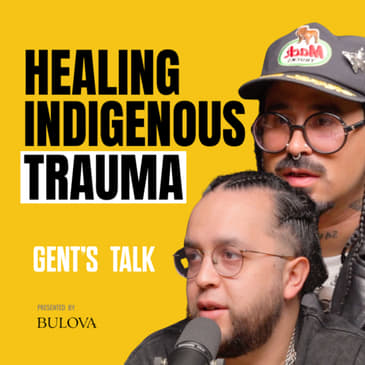
In this week's episode of Gent's Talk, presented by BULOVA, host Samir Mourani sits down with Indigenous music artists the Snotty Nose Rez Kids to talk about growing up on a reservation, community, representing the Indigenous community, dealing with racism and healing intergenerational trauma. #gentstalk Connect with us! Subscribe here ► https://www.youtube.com/@GentsTalkPodcast Website: https://gentspost.com/ Instagram: https://www.instagram.com/gentspost/ TikTok: https://www.tiktok.com/@gentstalkpod Facebook: https://www.facebook.com/gentspost/ About Gent's Talk: The Gent's Talk series, powered by Gent's Post and presented by BULOVA Canada is an episodic video podcast conversation with leading gents and rising stars across various industries. Guests include Russell Peters, James Blunt, Robin Sharma, Director X, JP Saxe, Wes Hall, Johnny Orlando, Shan Boodram, Dom Gabriel, and Nick Bateman, just to name a few. The conversations range from career, mental health, family, relationships, business, and everything in between. Gent's Talk is the first-ever video podcast to be made available for streaming on all Air Canada domestic/international flights. We aim to have a raw, unfiltered conversations about our guests' lives, how they achieved success, lessons learned along the way, and the challenges encountered. Credits: Host/Producer: Samir Mourani Creative Director and Executive Producer: Steven Branco Video & Sound Editor: Roman Lapshin A STAMINA Group Production, powered by Gent's Post.
The Gent's Talk podcast, hosted by Samir Mourani, pulls the curtain back on difficult conversations around mental health, business, relationships and the difficulties around expressing oneself, with rising and leading gents from across the globe.
New episodes every Monday! #GentsTalk
Instagram: https://instagram.com/gentstalkpod
TikTok: https://tiktok.com/gentstalkpod
YouTube: https://www.youtube.com/@GentsTalkPodcast
[00:00:00] [SPEAKER_00]: I lost a brother. We just got a call one night and he just wasn't with us anymore.
[00:00:04] [SPEAKER_02]: That's like where the switch happened.
[00:00:06] [SPEAKER_02]: The Snotty Nose Rez Kids are a Canadian Indigenous hip hop duo who are known for their lyrical prowess and multiple awards,
[00:00:12] [SPEAKER_00]: including their first Juno Award nomination.
[00:00:15] [SPEAKER_02]: We had no engineer, no producer to sit down with us, nobody to really guide us. It was just mean him.
[00:00:21] [SPEAKER_00]: We're just being true to ourselves. We are Rez Kids at heart and we still carry that with us everywhere we go.
[00:00:27] [SPEAKER_03]: There's tons of stigma around life in the Rez.
[00:00:32] [SPEAKER_02]: What I'll say to that is the people that do those statistics and make up those stigmas have never been.
[00:00:38] [SPEAKER_03]: Do you still experience that type of racism?
[00:00:41] [SPEAKER_00]: I mean, I definitely get lugs but I always have. So they still make me feel uncomfortable to this day.
[00:00:48] [SPEAKER_00]: But it brings you back right and makes you wonder like why do I feel like that?
[00:00:51] [SPEAKER_03]: We all could use unlearning.
[00:00:53] [SPEAKER_03]: What's the biggest thing you still have to unlearn?
[00:00:54] [SPEAKER_03]: Gentlemen, welcome to Gents Talk.
[00:01:21] [SPEAKER_01]: Thanks for having us.
[00:01:22] [SPEAKER_03]: You're the Snotty Nose Rez Kids and I'm gonna have to ask you about that.
[00:01:27] [SPEAKER_03]: But Quinton, Darren, it's really good to meet you guys.
[00:01:30] [SPEAKER_03]: Nice to meet you too.
[00:01:31] [SPEAKER_03]: I'm excited to have this conversation because just seeing some of the stuff that you guys are doing
[00:01:38] [SPEAKER_03]: is fascinating to me firstly but secondly I'm very intrigued by how you stay authentic and true to your heritage.
[00:01:48] [SPEAKER_03]: Which is part of what I wanted to have a conversation with you guys about.
[00:01:53] [SPEAKER_03]: Firstly, how long have you guys been doing this?
[00:01:57] [SPEAKER_02]: We've been doing music since we were kids but we released our first album together in 2017.
[00:02:02] [SPEAKER_03]: And you guys are related?
[00:02:04] [SPEAKER_03]: Yeah, we're cousins.
[00:02:05] [SPEAKER_00]: We grew up five doors down from each other.
[00:02:09] [SPEAKER_03]: So who was the first one that said let's start making music together?
[00:02:13] [SPEAKER_00]: This guy.
[00:02:14] [SPEAKER_02]: Why?
[00:02:16] [SPEAKER_02]: It's just something we've always had a genuine love for.
[00:02:21] [SPEAKER_02]: And it was like a place of refuge for us.
[00:02:25] [SPEAKER_02]: So growing up, dealing with a certain amount of racism or whatever it may be,
[00:02:33] [SPEAKER_02]: it gave us the space to be ourselves freely.
[00:02:37] [SPEAKER_00]: Yeah and also visionize yourself someplace else.
[00:02:40] [SPEAKER_00]: Like wherever music may take you, wherever you see your favorite artist going,
[00:02:45] [SPEAKER_00]: that's where we envisioned ourselves.
[00:02:47] [SPEAKER_00]: So it was almost like yeah, it was just like you said a place of refuge.
[00:02:51] [SPEAKER_03]: So when you talk about it being a place of refuge, the racism,
[00:02:55] [SPEAKER_03]: can you actually maybe let's just dive right into that.
[00:02:59] [SPEAKER_03]: What was life like?
[00:03:01] [SPEAKER_02]: We grew up Kiddamet Village, Heislen Nation and then about a 15 minute drive there's the town Kiddamet.
[00:03:11] [SPEAKER_02]: And you know a lot of us went to like the community school when we were kids on the res out there.
[00:03:17] [SPEAKER_02]: And when it came time to high school, that's when like you, a lot of us made that jump to like,
[00:03:23] [SPEAKER_02]: oh now we're going to a public school.
[00:03:26] [SPEAKER_02]: And yeah, there's just a lot of division more often than not.
[00:03:31] [SPEAKER_02]: And I know for myself like I only kept to myself or people that I played basketball with pretty much you know.
[00:03:38] [SPEAKER_02]: And like him, my big brother and just the cousins really I didn't really go out of my way to try because there is just tension sometimes.
[00:03:50] [SPEAKER_00]: There's a lot of love in our community.
[00:03:53] [SPEAKER_00]: Like you know, like there's a lot of, you really feel like you're part of a community in Kiddamet and up north where we're from.
[00:04:01] [SPEAKER_00]: But also there's you know, like there's the intergenerational trauma that's passed down.
[00:04:06] [SPEAKER_00]: And we used to get bullied a lot of kids because we're just like smaller dudes, right?
[00:04:12] [SPEAKER_00]: Smaller for our age especially.
[00:04:15] [SPEAKER_00]: And you know my dad would always tell me like we get beat up on the playground or whatever you know, whatever it may be.
[00:04:21] [SPEAKER_00]: He'd always just tell me like where it comes from and made me understand why people are the way they are.
[00:04:27] [SPEAKER_00]: And then it gave me a better feeling about going through life.
[00:04:31] [SPEAKER_00]: And that's how we try to carry ourselves today.
[00:04:34] [SPEAKER_00]: You know, we tell our story the way it's meant to be told and we try to give people either something to relate to or something to learn from.
[00:04:45] [SPEAKER_00]: And I think that's important when it comes to dealing with people that aren't okay with themselves.
[00:04:51] [SPEAKER_00]: And you know, like we have, I have savage tattoo on my neck and it's just kind of taking back that grittiness in me, that beast in me.
[00:05:01] [SPEAKER_00]: And just showcasing to the world what I'm capable of.
[00:05:06] [SPEAKER_00]: And one experience we had when we were kids, we were playing, I think we were playing netball or something like that.
[00:05:12] [SPEAKER_00]: And we like whooped the teams ass and just they just started chanting savages, savages barely even human.
[00:05:20] [SPEAKER_00]: Like you know like the Pocahontas theme song or whatever it was.
[00:05:24] [SPEAKER_00]: But that stuck with me for like a lot of years and like it just kind of drove me to do what I do now.
[00:05:32] [SPEAKER_00]: And that's why it's so important for us to do what we do and let people like us know that it's okay to be you.
[00:05:43] [SPEAKER_03]: Sort of growing up with that kind of an environment around you and the theme song that you referred to.
[00:05:51] [SPEAKER_03]: I'm curious about how that's impacted you today because it sounds like for the most part, and correct me if I'm wrong, you've turned it into fuel.
[00:06:00] [SPEAKER_03]: But there's going to be kids out there who look up to you, resonate with you, who don't turn it into fuel.
[00:06:08] [SPEAKER_03]: And it could hurt them. What would you say to those kids?
[00:06:11] [SPEAKER_00]: I mean, I think that for the most part, it's pretty like those moments that I remember of at least.
[00:06:22] [SPEAKER_00]: I kind of, I don't bottle up or keep to myself like I talk about it like this.
[00:06:25] [SPEAKER_00]: But for the generation that we're speaking to, I think we speak from a good place.
[00:06:32] [SPEAKER_00]: So I think that we represent our people in a good way and in a good light.
[00:06:38] [SPEAKER_00]: And you know when it comes to Snotty Knows Res kids, even with the name like, we always try to put a positive spin on everything we do.
[00:06:47] [SPEAKER_00]: Snotty Knows Res kids are meant to, we were built to make people feel good about themselves.
[00:06:53] [SPEAKER_00]: And to make light of any dark situation no matter what it is.
[00:06:58] [SPEAKER_00]: So I feel like, like Savage, Savages are like just, I'm trying to talk about my clothing brand, but like Savage kids,
[00:07:08] [SPEAKER_00]: like it's just to let people know you're not alone, you know?
[00:07:11] [SPEAKER_00]: Like and I don't think, I don't think like the, like the name Savages is like really something that is even to be felt as a person.
[00:07:23] [SPEAKER_00]: In a negative way, like when we say the least or when we're talking about Savage like Beast, you know?
[00:07:28] [SPEAKER_02]: And also, you know, just a message to the youth like is to just be proud of who you are and just love the skin that you're in.
[00:07:38] [SPEAKER_02]: You know what I mean? Because you look at with the intergenerational traumas that were passed down
[00:07:45] [SPEAKER_02]: and with the way society was built for to kind of keep us down and make us feel ashamed of ourselves
[00:07:53] [SPEAKER_02]: and make us feel less than just to let them know like that's the furthest thing from the truth.
[00:07:59] [SPEAKER_02]: You know? And it took us a while. Pretty much the journey for me was like once I started growing my hair out.
[00:08:06] [SPEAKER_02]: You know what I mean? And slowly but surely, I felt the change in me.
[00:08:09] [SPEAKER_02]: I felt me becoming me and really grew into who I am today.
[00:08:16] [SPEAKER_02]: And it's to just, yeah, just let them know. Just don't take it too personal.
[00:08:22] [SPEAKER_02]: I mean, obviously it's kind of fucked up. You got to deal with any racist situation.
[00:08:27] [SPEAKER_03]: Well, I want to ask you because I, you know, obviously the most exposure I'm going to have to something like this is from what I see in the media
[00:08:35] [SPEAKER_03]: when I hear in these conversations. So I want you to help me understand, help the audience understand
[00:08:42] [SPEAKER_03]: what's life actually like growing up on a res?
[00:08:48] [SPEAKER_00]: That goes like res to res. You know? Like I can't speak for anyone else or from anyone else context because
[00:08:55] [SPEAKER_00]: So what was your experience?
[00:08:57] [SPEAKER_00]: Not my story. Yeah, I think that for us it was mostly good.
[00:09:03] [SPEAKER_00]: We come from a good community and that's what we talk about all the time.
[00:09:07] [SPEAKER_00]: You know, like our community is our family and most of them are family.
[00:09:11] [SPEAKER_00]: But like, you know, like everybody had kind of had an open door policy and your neighbors look out for you.
[00:09:20] [SPEAKER_00]: If a family is down in the dumps or like having a hard time, your neighbor will pick you up and make sure you're okay.
[00:09:28] [SPEAKER_00]: You know, there's if there's a kid not feeling good or like down the street, it's normal for someone to come out and help them.
[00:09:36] [SPEAKER_00]: You know what I mean? Like, yeah, it's like everybody holds each other out.
[00:09:41] [SPEAKER_00]: It's a real sense of community.
[00:09:42] [SPEAKER_00]: Yeah, it is. And I think that everybody like even from the time that I was a kid and my mom talked about it from the time she was a kid
[00:09:52] [SPEAKER_00]: to the time I was a kid, the community just keeps getting stronger and stronger.
[00:09:56] [SPEAKER_00]: What's the secret there?
[00:09:58] [SPEAKER_03]: When you talk about how there are some communities that are not as closely knit as yours, what was it that made yours different?
[00:10:06] [SPEAKER_00]: I think it's just time. I think it's time and learning as you go.
[00:10:12] [SPEAKER_00]: Like I feel like there's a lot of healing.
[00:10:14] [SPEAKER_00]: There's a lot of unlearning that needs to happen and there's a lot of relearning that needs to happen in communities.
[00:10:20] [SPEAKER_00]: And learning how to deal with your issues, I guess your traumas.
[00:10:26] [SPEAKER_00]: And you know, like we have support groups in our community for people that need it.
[00:10:32] [SPEAKER_00]: And I think one of the main things is like I said just time.
[00:10:38] [SPEAKER_00]: But like, yeah, there's not a lot of...
[00:10:42] [SPEAKER_00]: I don't know, I have a hard time talking about it just because I don't want to paint a negative stereotype on my community or anything like that.
[00:10:50] [SPEAKER_00]: But when I go home, I feel proud of my people.
[00:10:55] [SPEAKER_00]: You know what I mean? Like I'm not going to talk about where we were at 20 years ago or 30 years ago.
[00:11:00] [SPEAKER_00]: But today our people are strong, you know?
[00:11:03] [SPEAKER_00]: That's incredible.
[00:11:04] [SPEAKER_00]: They're healthy and it feels good to look around in your community.
[00:11:08] [SPEAKER_00]: And just like there's no like major party houses or nothing like that.
[00:11:12] [SPEAKER_00]: And when I was a kid there was.
[00:11:15] [SPEAKER_00]: But yeah, just in the last 20 years you see change.
[00:11:21] [SPEAKER_00]: And that's all we could really hope for, you know?
[00:11:25] [SPEAKER_00]: Especially knowing the history that Native people have in Canada and U.S.
[00:11:30] [SPEAKER_00]: And just all over the world really indigenous people.
[00:11:32] [SPEAKER_00]: But just to see the growth within my lifetime and even within the short lifetime of SNRK.
[00:11:41] [SPEAKER_00]: Just to see the change in people and the change in how they carry themselves is incredible.
[00:11:48] [SPEAKER_02]: And to kind of add on to that, a lot of us I would say all of us.
[00:11:54] [SPEAKER_02]: It's really that family first mentality is just embedded in us.
[00:12:00] [SPEAKER_02]: You know? Because like even if some of us grew up with just enough to get by.
[00:12:09] [SPEAKER_02]: We were rich in love, you know what I mean?
[00:12:11] [SPEAKER_02]: Like just like he said we're just there for one another.
[00:12:15] [SPEAKER_02]: And like the amount of times I was able to go to his house and his mom, my aunties just said,
[00:12:22] [SPEAKER_02]: oh, do you grab a plate?
[00:12:23] [SPEAKER_02]: You know what I mean?
[00:12:24] [SPEAKER_02]: Like you don't have to knock just come in and grab a plate.
[00:12:27] [SPEAKER_02]: And vice versa with the way he came over to my house.
[00:12:30] [SPEAKER_02]: The many nights we slept at each other's houses, you know what I mean?
[00:12:34] [SPEAKER_02]: And like our parents were just more than okay with that because they knew where we were.
[00:12:38] [SPEAKER_02]: They knew we were safe.
[00:12:41] [SPEAKER_02]: And yeah man it's just community.
[00:12:44] [SPEAKER_02]: It's just everybody is there for each other.
[00:12:47] [SPEAKER_02]: Like especially because it's such a small community and say if there's like,
[00:12:52] [SPEAKER_02]: there's a member of the nation that passes away.
[00:12:56] [SPEAKER_02]: The whole community rallies and supports that family in need.
[00:13:00] [SPEAKER_02]: You know what I mean?
[00:13:00] [SPEAKER_02]: Like that's how deep the connection of community goes.
[00:13:03] [SPEAKER_03]: You know when you're talking about community and the connection and the bond between the different houses
[00:13:08] [SPEAKER_03]: and the different people in that community.
[00:13:11] [SPEAKER_03]: There's tons of stigma around life in the res.
[00:13:18] [SPEAKER_03]: But it almost seems like there's more community there than there is in my neighborhood in Toronto.
[00:13:24] [SPEAKER_02]: What I'll say to that is the people that do those statistics and make up those stigmas have never been.
[00:13:31] [SPEAKER_02]: You know what I mean?
[00:13:31] [SPEAKER_02]: Interesting.
[00:13:32] [SPEAKER_02]: In my opinion.
[00:13:33] [SPEAKER_02]: Why do you think that?
[00:13:34] [SPEAKER_02]: Because all they look at is just what's in the newspaper and they just look at the negative things that happen.
[00:13:41] [SPEAKER_02]: And then through media they paint that picture.
[00:13:44] [SPEAKER_02]: But for us we had a very good upbringing.
[00:13:48] [SPEAKER_02]: We were surrounded by love.
[00:13:50] [SPEAKER_02]: We were surrounded by family and we had people who pushed us to be the best version of ourselves because they believed in us.
[00:13:59] [SPEAKER_00]: Also I think it's like a connection to place.
[00:14:03] [SPEAKER_00]: You know when you think about indigenous people, these are our territories.
[00:14:07] [SPEAKER_00]: Like this territory Toronto belongs to someone.
[00:14:10] [SPEAKER_00]: Well it doesn't belong to this land.
[00:14:15] [SPEAKER_00]: And just like us there's a sense of we hold our territories to heart.
[00:14:21] [SPEAKER_00]: Like we are one with the land that you can't talk about identity without talking about land.
[00:14:24] [SPEAKER_00]: You can't talk about land without talking about identity.
[00:14:27] [SPEAKER_00]: So there's a sense of place for people that come from small towns or reservations and your neighbor is going to be your neighbor your whole life.
[00:14:34] [SPEAKER_00]: And whereas us people live in the city your neighbor can change from day to day.
[00:14:39] [SPEAKER_00]: You know like tomorrow I could get up and move and it wouldn't even affect me.
[00:14:43] [SPEAKER_00]: I wouldn't even miss anybody because I wouldn't miss any of my neighbors so many.
[00:14:47] [SPEAKER_00]: You don't have that connection with them?
[00:14:49] [SPEAKER_00]: Yeah you don't have that connection with them.
[00:14:50] [SPEAKER_00]: Like your neighbors are your friends that you have on Instagram.
[00:14:53] [SPEAKER_00]: Whereas in a community your neighbors you see them every single day.
[00:14:57] [SPEAKER_00]: It's a real bond.
[00:14:58] [SPEAKER_00]: Yeah you have connection to them.
[00:15:00] [SPEAKER_00]: And that's so different in the city.
[00:15:04] [SPEAKER_00]: There's no tie to your land.
[00:15:06] [SPEAKER_03]: When you talk about intergenerational trauma and use the word unlearning.
[00:15:12] [SPEAKER_03]: I'm curious what exactly is it that you have to unlearn in order to grow forward?
[00:15:17] [SPEAKER_00]: I think like just speaking from my own context is just learning how I think about myself.
[00:15:23] [SPEAKER_00]: Learning what I was taught about my people.
[00:15:27] [SPEAKER_00]: You know like there's a lot of things we can't unlearn.
[00:15:32] [SPEAKER_00]: There's a lot of things that can't be undone.
[00:15:34] [SPEAKER_00]: And you know you've heard about land back obviously.
[00:15:37] [SPEAKER_00]: There's movement going on land back and for us land back is taking back our voices.
[00:15:43] [SPEAKER_00]: Like for every indigenous person land back means something different.
[00:15:47] [SPEAKER_00]: And it doesn't necessarily mean like to me from the way I look at it.
[00:15:51] [SPEAKER_00]: It doesn't necessarily mean like taking back this land because this cannot be the shit that's here.
[00:15:56] [SPEAKER_00]: That can't be undone.
[00:15:57] [SPEAKER_00]: This city can't be undone.
[00:15:58] [SPEAKER_00]: You know these hunting territories these grounds that people survived off of from time memorial cannot be undone.
[00:16:05] [SPEAKER_00]: So when you talk about land back like you're talking about taking spaces back.
[00:16:08] [SPEAKER_00]: You're talking about taking some treaty rights back and just making sure that they're being dealt with properly.
[00:16:14] [SPEAKER_00]: So for us like land back to me means being able to express myself the way that my ancestors would be proud of me expressing myself.
[00:16:23] [SPEAKER_00]: And doing the work that is important for the next generation to look at themselves the way I look at myself.
[00:16:29] [SPEAKER_00]: And when I talk about unlearning things it's unlearning the way that I have looked at myself growing up.
[00:16:35] [SPEAKER_00]: Because of those kids chanting savages, savages barely even human.
[00:16:39] [SPEAKER_00]: You know what I mean?
[00:16:40] [SPEAKER_00]: Like I learned enough about myself to unlearn how I felt about myself.
[00:16:48] [SPEAKER_00]: Does that make sense?
[00:16:49] [SPEAKER_03]: So if I was a fly on the wall at that time in your life when you were both young men hearing people call you these names, treat you the way they did.
[00:16:59] [SPEAKER_03]: And I was standing there looking at both of you what would I have seen?
[00:17:03] [SPEAKER_00]: Confusion?
[00:17:04] [SPEAKER_02]: Definitely confusion.
[00:17:06] [SPEAKER_02]: I remember being grade 8, grade 9 and having a grown man say some crazy shit.
[00:17:20] [SPEAKER_02]: You know what I mean?
[00:17:21] [SPEAKER_02]: Like you fucking chugs or whatever it may be.
[00:17:23] [SPEAKER_02]: And it's definitely confusion.
[00:17:25] [SPEAKER_02]: It's like what did I do to you?
[00:17:28] [SPEAKER_02]: I'm just trying to buy myself a bag of chips at the store.
[00:17:33] [SPEAKER_02]: Out of nowhere you felt the need to say that.
[00:17:37] [SPEAKER_02]: It's definitely a lot of confusion for sure.
[00:17:40] [SPEAKER_00]: At that age definitely confusion and just like what?
[00:17:45] [SPEAKER_00]: Growing up obviously watching Disney shows and not even thinking about it.
[00:17:52] [SPEAKER_00]: And then you grow up and actually those shows are really fucked up.
[00:17:56] [SPEAKER_00]: And then being called that you're like oh you recognize where it's from but you don't know why.
[00:18:01] [SPEAKER_00]: So it's just like you have to talk about it with your parents and they make you feel weird about it.
[00:18:05] [SPEAKER_00]: You know what I mean?
[00:18:06] [SPEAKER_03]: It's like an extra layer of just navigating.
[00:18:09] [SPEAKER_03]: Understanding that you're already trying to figure out life.
[00:18:11] [SPEAKER_00]: Exactly, yeah.
[00:18:12] [SPEAKER_00]: So like yeah I was only like 10 years old when that happened maybe 9.
[00:18:16] [SPEAKER_00]: But you know it stuck with me enough to remind me of what it was like to feel that.
[00:18:24] [SPEAKER_00]: And to kind of like build an identity around it.
[00:18:27] [SPEAKER_00]: You know what I mean?
[00:18:29] [SPEAKER_00]: So obviously like I still have some unlearning to do.
[00:18:31] [SPEAKER_00]: You know I still have some healing to do.
[00:18:34] [SPEAKER_03]: What's the biggest thing you still have to unlearn?
[00:18:39] [SPEAKER_00]: You know what?
[00:18:40] [SPEAKER_03]: And I hope you know I'm asking this in the sense of just trying to understand it better.
[00:18:45] [SPEAKER_02]: For me it's just like what we really really started practicing and really started doing since we started this SNRK was the practice of self love.
[00:18:59] [SPEAKER_02]: You know taking care of ourselves and loving ourselves so we could be the best versions of ourselves so we could love our loved ones even better.
[00:19:08] [SPEAKER_02]: You know what I mean?
[00:19:09] [SPEAKER_02]: So that's one of the biggest things we had to learn.
[00:19:13] [SPEAKER_02]: And with that is unlearning you know the self hate, the self doubt whatever negative feeling that you have about yourself that was painted from the time we were born really.
[00:19:25] [SPEAKER_02]: And like with him experiencing elementary kids chanting savages.
[00:19:31] [SPEAKER_02]: You know what I mean?
[00:19:31] [SPEAKER_02]: Like that's insane.
[00:19:33] [SPEAKER_02]: Yeah.
[00:19:33] [SPEAKER_02]: Like it's bizarre.
[00:19:36] [SPEAKER_02]: Kids are mean.
[00:19:37] [SPEAKER_02]: Yeah for sure.
[00:19:39] [SPEAKER_02]: And you know learning it from somewhere.
[00:19:41] [SPEAKER_02]: Yeah exactly and it all stems from like parents, grandparents whatever it may be.
[00:19:48] [SPEAKER_02]: We all could use unlearning.
[00:19:49] [SPEAKER_02]: You know what I mean?
[00:19:50] [SPEAKER_03]: Do you still experience that type of either racism or stereotypes or anything like that?
[00:19:56] [SPEAKER_03]: Yeah.
[00:19:57] [SPEAKER_00]: I definitely get it.
[00:19:59] [SPEAKER_00]: Well like I don't look like your normal dude walking down the street so like definitely like when I'm
[00:20:04] [SPEAKER_00]: You've got a lot going on.
[00:20:05] [SPEAKER_00]: Yeah yeah.
[00:20:06] [SPEAKER_00]: When I'm out in public I definitely get looks for sure but you don't know where that comes from.
[00:20:12] [SPEAKER_00]: Like I don't judge a book by its cover, I don't judge a look by its cover.
[00:20:16] [SPEAKER_00]: But I definitely get looks but I always have so they still make me feel uncomfortable to this day.
[00:20:22] [SPEAKER_00]: And even though my confidence is high these days you know like there's still times where you kind of feel sheepish.
[00:20:28] [SPEAKER_00]: You feel like you feel insecure around a group of people.
[00:20:31] [SPEAKER_00]: So if I get on a plane and there's 20 white people staring at you and you're like wondering why like oh fuck.
[00:20:37] [SPEAKER_00]: Like it just feels weird but it brings you back and makes you wonder like why do I feel like that?
[00:20:42] [SPEAKER_00]: So there's things that I still need to deal with and as far as unlearning goes that's one thing that I need to sit down with too.
[00:20:51] [SPEAKER_00]: And just figure that out because as it comes to the society that we are a part of and especially the industry we're a part of is very fast paced.
[00:21:05] [SPEAKER_00]: So some of that unlearning I need to do is stop moving so fast and just like ground yourself.
[00:21:12] [SPEAKER_00]: So I have to remind myself that I need to be grounded from time to time otherwise you're just moving on to the next,
[00:21:18] [SPEAKER_00]: on to the next, on to the next and the next you know five years go by and you're just still doing the same thing.
[00:21:23] [SPEAKER_00]: So like I think for me one thing that I'm trying to learn is just learning to be comfortable with myself
[00:21:32] [SPEAKER_00]: and no matter like what it is it's just always trying to hold yourself to the same standards I guess.
[00:21:39] [SPEAKER_00]: Are you comfortable?
[00:21:41] [SPEAKER_00]: I'm comfortable yeah but like I said there's moments where you get that.
[00:21:46] [SPEAKER_03]: I don't have those moments but I'm curious in terms of like where you're at today in your own identity.
[00:21:53] [SPEAKER_03]: I'm comfortable.
[00:21:54] [SPEAKER_03]: I mean you strike me as comfortable, confident.
[00:21:57] [SPEAKER_02]: Yeah like we're in a very good place in our lives right now not just in our career but personal lives and it feels good.
[00:22:08] [SPEAKER_02]: It's a good place to be you know.
[00:22:11] [SPEAKER_02]: Like he said with this industry that we're in it's very fast paced and it's easy to distract yourself with work
[00:22:18] [SPEAKER_02]: and next thing you know all those things that you've been avoiding dealing with quickly add up
[00:22:26] [SPEAKER_02]: and then next thing you know that bottle is overflowing and it just happens.
[00:22:30] [SPEAKER_02]: Yeah so when he's talking about like grounding ourselves it's really taking those moments in
[00:22:36] [SPEAKER_02]: and for us like say like we're going to the studio and our ritual that we do is like we'll light some sage
[00:22:45] [SPEAKER_02]: we'll smudge and then we'll say a prayer it's like okay let's go to work
[00:22:49] [SPEAKER_02]: and just doing that practice alone really helps ground the both of us with whatever it is that we're going through in life.
[00:22:58] [SPEAKER_02]: It could be good, it could be bad, it could be everything in between.
[00:23:01] [SPEAKER_02]: It helps us like recenter ourselves and just focus.
[00:23:04] [SPEAKER_03]: Well you've been doing quite well for yourselves on the music side and the career congratulations.
[00:23:09] [SPEAKER_03]: Thank you.
[00:23:10] [SPEAKER_03]: So you launched your first album in 2017 and now you're launching a second album?
[00:23:15] [SPEAKER_00]: No, six.
[00:23:16] [SPEAKER_03]: We're on album number six.
[00:23:18] [SPEAKER_03]: Number six.
[00:23:20] [SPEAKER_00]: Imagine just two albums.
[00:23:21] [SPEAKER_00]: That's a lot in 2017.
[00:23:22] [SPEAKER_00]: No I know.
[00:23:24] [SPEAKER_03]: Sorry I don't know why I had the number two in my head but it's all good.
[00:23:27] [SPEAKER_03]: Six albums now.
[00:23:30] [SPEAKER_03]: What have you learned producing the sixth one that you didn't know when you created the first one?
[00:23:37] [SPEAKER_03]: Man, what works?
[00:23:39] [SPEAKER_02]: We didn't know nothing on the first one.
[00:23:41] [SPEAKER_02]: We were just on the first one.
[00:23:44] [SPEAKER_02]: It was just us you know we had no engineer, no producer to sit down with us, nobody to really guide us
[00:23:53] [SPEAKER_02]: on hey you should spit it like this or like you should change this lyric it was just mean him.
[00:23:58] [SPEAKER_00]: Goals in mind with nowhere to go.
[00:24:01] [SPEAKER_02]: Like going for broke here it goes.
[00:24:04] [SPEAKER_02]: We're about to see if it works you know and...
[00:24:07] [SPEAKER_03]: At what point did you know?
[00:24:09] [SPEAKER_00]: I think after the first album.
[00:24:11] [SPEAKER_00]: After the first album we were almost halfway done the second one by the time we were done the first.
[00:24:16] [SPEAKER_03]: Yeah and we were working on two albums at the same time at that point.
[00:24:21] [SPEAKER_00]: We usually do.
[00:24:23] [SPEAKER_00]: Is that a common practice?
[00:24:24] [SPEAKER_00]: I don't know.
[00:24:26] [SPEAKER_00]: I don't know what the standard is, the industry standard of writing but like I feel like I'm for creative.
[00:24:31] [SPEAKER_02]: There are definitely artists out there that work on multiple projects at once.
[00:24:34] [SPEAKER_02]: It's like oh this song kind of fits this vibe.
[00:24:36] [SPEAKER_02]: This song fits this kind of project.
[00:24:38] [SPEAKER_00]: But like for us it was more like like you know we're finishing a project and then you're coming into a new part of your life
[00:24:43] [SPEAKER_00]: and it's like I feel like albums are written through experience as far as like from our context at least
[00:24:50] [SPEAKER_00]: and for us you know like we finished 90 Nose Res kids and it was like a healing tool for us.
[00:24:56] [SPEAKER_00]: You know we got a lot off like I lost a brother to suicide and you know there was a lot of like us,
[00:25:04] [SPEAKER_00]: a lot of that and a lot of like yeah just a lot of crazy shit happening in our lives
[00:25:09] [SPEAKER_00]: and we used it to express ourselves and just to get everything on the table and kind of off of our chest.
[00:25:15] [SPEAKER_00]: It's therapeutic really.
[00:25:16] [SPEAKER_00]: It's therapeutic yes and by the time that album was done
[00:25:20] [SPEAKER_00]: we were already moving on to the next phase like we're feeling good like free like a weight was lifted off of our shoulders
[00:25:25] [SPEAKER_00]: and getting into the second project it was just like it just happened.
[00:25:30] [SPEAKER_02]: Like every album has helped clear up the headspace.
[00:25:35] [SPEAKER_02]: Yeah.
[00:25:36] [SPEAKER_02]: And it was a healing tool for us and little did we know it was helping other people heal.
[00:25:42] [SPEAKER_02]: You know like we have people tell us like how much that first album had such an impact on them to where some fans even get some of the lyrics like tattooed on their arm.
[00:25:52] [SPEAKER_02]: You know like it's insane.
[00:25:54] [SPEAKER_00]: And that's when we knew we had something.
[00:25:57] [SPEAKER_00]: That's when we knew we had something special here and that we had to just keep going because D was always, he's always been the rapper you know.
[00:26:05] [SPEAKER_00]: And he wanted to go do a solo thing and I was like let's just try another record.
[00:26:08] [SPEAKER_00]: Let's just try another record.
[00:26:09] [SPEAKER_00]: So we did and we stayed at Snoddy Nose Res Kids and then we got a Juno Noem playlist on Shortlist off the second album.
[00:26:17] [SPEAKER_02]: Yeah when things really started to change was with that second album getting shortlisted for the Polaris Music Prize.
[00:26:24] [SPEAKER_02]: I'm in a Juno Noem.
[00:26:25] [SPEAKER_02]: Like I'm not gonna lie before that I don't even know what the fuck Polaris was.
[00:26:27] [SPEAKER_02]: You know I was like oh Shortlist that's kind of cool.
[00:26:31] [SPEAKER_02]: Yeah.
[00:26:31] [SPEAKER_02]: Top 10.
[00:26:32] [SPEAKER_02]: Not the head you know.
[00:26:33] [SPEAKER_00]: I mean yeah when I got the call for that I was like okay I knew what Polaris was and I knew how important it was but I didn't know what went into getting onto that top 10.
[00:26:47] [SPEAKER_00]: I didn't even know what got into the top 20 or top 40 or whatever it was.
[00:26:51] [SPEAKER_00]: And then when I looked at it I'm like oh like we got a nomination from someone.
[00:26:56] [SPEAKER_00]: Start up Dustin.
[00:26:58] [SPEAKER_00]: And we didn't realize how many people had to take it in and say yes to get to the next stage and then even worse the next stage was the top 10.
[00:27:08] [SPEAKER_00]: But I was like oh there's no fucking way.
[00:27:10] [SPEAKER_00]: And then all of a sudden my email started popping off the morning of Longlist.
[00:27:14] [SPEAKER_00]: Like you made Longlist like what?
[00:27:16] [SPEAKER_00]: Call him.
[00:27:17] [SPEAKER_00]: That was a crazy moment for me.
[00:27:19] [SPEAKER_00]: And then when we made the top 10 I was like damn I guess we were onto something here.
[00:27:23] [SPEAKER_02]: I was still up for the night before.
[00:27:25] [SPEAKER_02]: I texted him with a 6 and a 1.
[00:27:26] [SPEAKER_02]: Oh we got it bro.
[00:27:29] [SPEAKER_00]: And yeah and it's crazy too because it's like that's a bedroom LP you know like we made that in our living room.
[00:27:36] [SPEAKER_00]: We recorded on this mic right here.
[00:27:40] [SPEAKER_00]: Yeah and that was a surreal moment for us.
[00:27:43] [SPEAKER_00]: We definitely knew we had something special with Snotty Nose Res kids once we started getting recognized like that.
[00:27:49] [SPEAKER_00]: Recognition like that.
[00:27:49] [SPEAKER_03]: So how do you want people to think of you?
[00:27:53] [SPEAKER_03]: When people hear the music they see your faces.
[00:27:58] [SPEAKER_00]: I mean I don't...
[00:28:00] [SPEAKER_03]: What's the emotion that you want them to get from?
[00:28:03] [SPEAKER_00]: I don't really have a...
[00:28:05] [SPEAKER_00]: I don't really have an idea of the way I'd want people to think about me.
[00:28:11] [SPEAKER_00]: I just want them to...
[00:28:13] [SPEAKER_00]: I don't know.
[00:28:14] [SPEAKER_03]: What impact do you want your music to have?
[00:28:16] [SPEAKER_02]: I just want people to feel a sense of pride.
[00:28:21] [SPEAKER_02]: You know?
[00:28:22] [SPEAKER_02]: A sense of love.
[00:28:24] [SPEAKER_02]: Passion.
[00:28:25] [SPEAKER_02]: You know what I mean?
[00:28:26] [SPEAKER_02]: Like because we're really just trying to show like we've always done it for the youth.
[00:28:32] [SPEAKER_02]: And when we started this we had this idea of you know it's like damn we wish we had those artists in the mainstream that we could have looked up to.
[00:28:43] [SPEAKER_02]: Because if you think about it there's not many indigenous artists out there.
[00:28:49] [SPEAKER_02]: Not saying there's not but for us growing up social media wasn't social media yet.
[00:28:56] [SPEAKER_02]: Which made it even harder to find people.
[00:28:57] [SPEAKER_02]: We're looking up to the Kanye's, the Lil Wayne's all that.
[00:29:04] [SPEAKER_00]: There was just nobody right in front of our face like we are to people.
[00:29:08] [SPEAKER_00]: There was nobody that was accessible to us.
[00:29:11] [SPEAKER_03]: Do you feel a sense of responsibility that you're not equal?
[00:29:15] [SPEAKER_03]: Of course.
[00:29:15] [SPEAKER_03]: For sure.
[00:29:16] [SPEAKER_00]: And that's another thing.
[00:29:19] [SPEAKER_00]: I think that when you're speaking for a body of people you're not just representing yourself so you have to hold yourself to a higher standard.
[00:29:26] [SPEAKER_00]: And I think that what my impact on that listener would be is just to feel good about yourself and to understand me more than you ever did.
[00:29:36] [SPEAKER_00]: Because I'm telling the my story the way it was meant to be told by me.
[00:29:40] [SPEAKER_00]: And you're hearing it first from the source.
[00:29:43] [SPEAKER_03]: So you're at this point now where you're on your sixth album.
[00:29:47] [SPEAKER_03]: You're seeing the reception to your work, the impact to the comment you made.
[00:29:54] [SPEAKER_03]: People tattooing lyrics and all of these things.
[00:29:58] [SPEAKER_03]: If you could go back and tell those young men versions of yourself one thing.
[00:30:06] [SPEAKER_03]: Knowing what you know today.
[00:30:08] [SPEAKER_03]: Knowing all the work you've put in to get to where you are today.
[00:30:10] [SPEAKER_03]: What would you say to them?
[00:30:12] [SPEAKER_03]: What would you say to your younger self?
[00:30:14] [SPEAKER_00]: I would honestly just tell myself it's okay to fail.
[00:30:20] [SPEAKER_00]: And as long as like, yeah.
[00:30:23] [SPEAKER_00]: I feel like I don't have any regrets.
[00:30:26] [SPEAKER_00]: I don't feel a type of way about any move that I made.
[00:30:30] [SPEAKER_00]: I feel like every move that I made was it was a choice to get me to where I'm at today.
[00:30:37] [SPEAKER_00]: And you know there's a lot of ups and downs, but at the same time I was going in a direction.
[00:30:44] [SPEAKER_00]: And everything I did led me to this point today.
[00:30:48] [SPEAKER_00]: So I guess the only thing I would really say to myself is just do you be confident in what you're doing
[00:30:55] [SPEAKER_00]: and don't let anybody's judgment of you persuade that.
[00:30:59] [SPEAKER_02]: Yeah.
[00:31:01] [SPEAKER_02]: Man there's so many things I would say, but it's just like you know the real journey starts outside your comfort zone.
[00:31:10] [SPEAKER_02]: You know what I mean?
[00:31:11] [SPEAKER_02]: Especially coming from a small town it's easy to have that small town mentality towards like this is all I know.
[00:31:18] [SPEAKER_02]: And I don't want to leave what I'm familiar with.
[00:31:21] [SPEAKER_02]: And to let them know it's just you're going to be okay man.
[00:31:25] [SPEAKER_02]: You know there's going to be nights of self doubt.
[00:31:30] [SPEAKER_02]: There's going to be nights where you're wondering damn man is this even worth it?
[00:31:35] [SPEAKER_02]: You know what I mean? Is this going to work?
[00:31:37] [SPEAKER_00]: Am I going to be able to pay rent tomorrow?
[00:31:38] [SPEAKER_00]: Yeah exactly.
[00:31:39] [SPEAKER_00]: Like and if I can't will I be okay?
[00:31:41] [SPEAKER_02]: Yeah and I'll just let them know it's going to be okay.
[00:31:45] [SPEAKER_02]: You know what I mean?
[00:31:47] [SPEAKER_02]: We weren't given no blueprint on how to do this.
[00:31:50] [SPEAKER_02]: You're going to learn as you go.
[00:31:51] [SPEAKER_02]: You're going to make mistakes, but don't dwell on them.
[00:31:53] [SPEAKER_02]: Learn from them and you only lose when you quit.
[00:31:58] [SPEAKER_00]: Yeah and money don't let the lack of money stop you from doing what you need to do.
[00:32:05] [SPEAKER_00]: You know like there's always a way around things and you know like for us like for the first two years of our career we donated money.
[00:32:16] [SPEAKER_00]: Any money that we made we were just putting back you know and for us it's always been like for the purpose, for the cause.
[00:32:28] [SPEAKER_00]: And yeah like those hard times when it comes to like capital or money or whatever it is that makes society turn isn't the above all be all.
[00:32:42] [SPEAKER_00]: You know like things will be okay.
[00:32:45] [SPEAKER_03]: You mentioned your brother.
[00:32:46] [SPEAKER_03]: Yeah.
[00:32:47] [SPEAKER_03]: May I ask about that?
[00:32:50] [SPEAKER_00]: Yeah um yeah I just lost well yeah I lost a brother in like the younger years of just before I started this and he was a big fan, big supporter of both of us.
[00:33:04] [SPEAKER_00]: He was um he was he was a light to all of us and you know he was the big brother so he was our like one of our supports you know.
[00:33:14] [SPEAKER_00]: He was our biggest fan and yeah we just we just got a call one night and he wasn't with us anymore.
[00:33:22] [SPEAKER_00]: So like for me I can like I don't want to talk about that but I'll talk about how I got through it.
[00:33:28] [SPEAKER_00]: And like for me it was just it was it was like one of the hardest moments of my life.
[00:33:33] [SPEAKER_00]: And I was actually at a Kanye show when I got the news so like we're just lining up to go see Kanye West and had to do it.
[00:33:41] [SPEAKER_00]: Went back to the hotel room and it was just craziness just trying to get home trying to get a flight home the next day.
[00:33:49] [SPEAKER_00]: And then the next few months was just like dullness.
[00:33:54] [SPEAKER_00]: It was just an insane weird like lull in our community of weirdness you know.
[00:34:02] [SPEAKER_02]: That was my true first sense of like feeling depression for sure.
[00:34:11] [SPEAKER_02]: And like I was at university at the time and then after that it kind of changed everything for me.
[00:34:19] [SPEAKER_02]: It made me think about like life like so I was going to school for like accounting right so now I'm thinking like damn do I even want to do this?
[00:34:28] [SPEAKER_02]: Can I see myself doing this?
[00:34:30] [SPEAKER_02]: And then that's like where the switch happened.
[00:34:33] [SPEAKER_02]: I was like man if I'm going to work I want to do something I love because nothing's promised and this life is too short.
[00:34:41] [SPEAKER_02]: So yeah pretty much from there on that's when I was like you know what if I want to work I'm going to do music.
[00:34:46] [SPEAKER_02]: Like I'll figure it out.
[00:34:49] [SPEAKER_02]: And I didn't start for like another year or two maybe but it was from that that changed everything.
[00:34:58] [SPEAKER_02]: And also we had that chip on our shoulders like man we're going to do it for him.
[00:35:02] [SPEAKER_02]: You know what I mean this is what he would have wanted us to do.
[00:35:05] [SPEAKER_00]: And the first album is kind of dedicated to that experience.
[00:35:09] [SPEAKER_03]: If he was with us today what do you think he would say about you guys right now?
[00:35:15] [SPEAKER_03]: He'd be proud man.
[00:35:16] [SPEAKER_02]: He'd be proud and he'd be front row from every show from a first time doing an open mic.
[00:35:27] [SPEAKER_00]: He'd probably be running security for us.
[00:35:30] [SPEAKER_02]: He'd be there with us at the Juno's you know what I mean?
[00:35:32] [SPEAKER_02]: Like he would be there for sure.
[00:35:35] [SPEAKER_03]: So I want to bring this back to there's a lot of I mean an infinite what seems like an infinite number of musicians and artists these days.
[00:35:47] [SPEAKER_03]: Very few speak for a group of people the way you guys do.
[00:35:54] [SPEAKER_03]: And there's going to be young men out there and young women out there who look at you guys and go that's my inspiration.
[00:36:05] [SPEAKER_03]: So to carry that responsibility to be building out that blueprint as you go day by day to chart this path forward for the next generation it's a heavy responsibility.
[00:36:16] [SPEAKER_03]: One that I don't see you guys taking lightly in any way by the way.
[00:36:23] [SPEAKER_03]: What are you hoping that young boy that young girl watching you going I want to try and chart my own path.
[00:36:33] [SPEAKER_03]: What are you hoping they take away from all of this.
[00:36:36] [SPEAKER_03]: They hear you talking not just about you know hey this is where I like to eat when I'm in the city but this is what our music means to us.
[00:36:45] [SPEAKER_03]: This is our journey.
[00:36:46] [SPEAKER_03]: Let's pull that curtain back.
[00:36:48] [SPEAKER_03]: I mean like you want them to know.
[00:36:51] [SPEAKER_02]: Like the biggest reward I feel like for us is for somebody to say you inspired me to be just like how the people we looked up to inspired us to be ourselves.
[00:37:06] [SPEAKER_02]: Unapologetically you know what I mean one of the craziest comments that we've ever got.
[00:37:11] [SPEAKER_02]: We were doing like a little workshop with like with the youth and we had like a Q&A and there is this mom who had like her kids there and she said you know for me growing up in the 90s it was it was Tupac Dre Snoop Biggie Wu Tang and it makes me so proud that my kids have people like you guys to look up to in music.
[00:37:38] [SPEAKER_02]: And like that's the kind of thing that like money can't buy.
[00:37:41] [SPEAKER_02]: What a beautiful feeling.
[00:37:42] [SPEAKER_02]: And like oh I got emotional in that spot.
[00:37:46] [SPEAKER_02]: My eyes watered up.
[00:37:47] [SPEAKER_02]: I was like damn you know what I mean.
[00:37:49] [SPEAKER_02]: And it's just it's moments like that where it's just a reminder for ourselves.
[00:37:54] [SPEAKER_02]: It's like okay we're still on the right path and jobs not finished.
[00:37:59] [SPEAKER_02]: You know what I mean we got we got more work to do and that's what we do with every album.
[00:38:03] [SPEAKER_00]: And I think that one thing that I want to leave people with or just kids with and just let them to know like is that you see us at the forefront.
[00:38:13] [SPEAKER_00]: You see us on Instagram.
[00:38:14] [SPEAKER_00]: You see us doing our things on YouTube.
[00:38:16] [SPEAKER_00]: You see us on TV whatever it is and we're just being true to ourselves.
[00:38:22] [SPEAKER_00]: We are res kids at heart and we still carry that with us everywhere we go.
[00:38:26] [SPEAKER_00]: We are starting those res kids just like you.
[00:38:29] [SPEAKER_00]: And one thing that I will say is that your brother is just like me.
[00:38:33] [SPEAKER_00]: Your sister is just like me.
[00:38:34] [SPEAKER_00]: Your mom your uncle is just like me.
[00:38:35] [SPEAKER_00]: So you're surrounded with people just like me.
[00:38:38] [SPEAKER_00]: You have them to look up to.
[00:38:40] [SPEAKER_00]: You know like they're doing the exact same things that we're doing.
[00:38:43] [SPEAKER_00]: And I feel like you don't need to look far for inspiration when we when we pull inspiration it's usually from our family from our close closest people in our lives.
[00:38:53] [SPEAKER_00]: It's not from it's not from Kanye West.
[00:38:58] [SPEAKER_00]: So look to them for inspiration.
[00:38:59] [SPEAKER_00]: Look for it to them for advice.
[00:39:01] [SPEAKER_00]: Look to them for guidance.
[00:39:03] [SPEAKER_00]: That's one thing that we learn growing up is that you know like one of my biggest role models is my dad.
[00:39:11] [SPEAKER_00]: So that's one one thing that I would want to leave the youth with is don't you don't have to look far to get proper guidance.
[00:39:17] [SPEAKER_03]: That's amazing.
[00:39:19] [SPEAKER_03]: I want to end the conversation off on this album here.
[00:39:26] [SPEAKER_03]: What's different about this one from the others.
[00:39:30] [SPEAKER_00]: I mean just to kick it off like you know like the average or sorry the Sonny knows res kids a lot of my brother situation.
[00:39:39] [SPEAKER_00]: The average savage was obviously made for like that situation we talked about earlier on in the show about the savages savages.
[00:39:49] [SPEAKER_00]: So it was sampled all the Disney shows whatever it was we sampled those songs and just twisted everything.
[00:39:57] [SPEAKER_00]: So you listen to that album it's all based off that that situation that happened to me so that's how much it affected me.
[00:40:02] [SPEAKER_00]: And then you push forward to trapline.
[00:40:04] [SPEAKER_00]: It was us kind of coming back to our roots.
[00:40:07] [SPEAKER_00]: You know you move away from the city and then or sorry you move away from your res or your community and you realize how much you miss your community and how much that really was who you are.
[00:40:16] [SPEAKER_00]: And it really made us come into ourselves as who we are today.
[00:40:21] [SPEAKER_00]: And that's getting back to the roots and you push forward to life after and that was OK.
[00:40:28] [SPEAKER_00]: We released trapline pandemic hits.
[00:40:30] [SPEAKER_00]: We're going through a weird depression some shit that we've never felt in our lives.
[00:40:34] [SPEAKER_00]: You know we were in a dark place and then you start thinking about the old things and you think of is it worth it.
[00:40:38] [SPEAKER_00]: That is what am I doing.
[00:40:41] [SPEAKER_00]: And like now I have to sit here for two or three years while this pandemic kind of kills off people that I know and just kills our career kills our families careers.
[00:40:51] [SPEAKER_00]: Everything we're building like what is going on.
[00:40:53] [SPEAKER_00]: Then you start realizing how important it is to ground yourself.
[00:40:56] [SPEAKER_00]: So then you come back into yourself and you heal from that.
[00:40:59] [SPEAKER_00]: And then Red Future pushing forward to well I'm good how about you is letting the world know OK we're good now let's do this now.
[00:41:06] [SPEAKER_00]: And then you get into Red Future and it's seeing yourself in the future.
[00:41:10] [SPEAKER_00]: It's visualizing yourself down the line and visualizing your your kin and visualizing the next generation coming after you and making sure that they're taken care of.
[00:41:19] [SPEAKER_00]: Red Futures are spin on indigenous futurism and it's realizing that we're at a critical time where indigenous excellence is at the forefront and it's right in front of your face.
[00:41:30] [SPEAKER_00]: And if we don't keep going with that and open more doors then they'll eventually get shut.
[00:41:37] [SPEAKER_00]: So we need to open enough doors so that they stay open so the next generation can get through.
[00:41:42] [SPEAKER_00]: And that's starts with seeing yourself in the future.
[00:41:46] [SPEAKER_03]: That's quite the journey.
[00:41:48] [SPEAKER_03]: Yeah.
[00:41:48] [SPEAKER_03]: Like when you lay it out like yeah that's what I mean.
[00:41:51] [SPEAKER_00]: It's it is a journey.
[00:41:53] [SPEAKER_00]: Yeah.
[00:41:54] [SPEAKER_02]: And with each album that we've done it's like how can I explain it.
[00:42:00] [SPEAKER_02]: It's like this is where we're at in our life and you could hear you go if you start from the first album and listen to everyone like you hear the growth track by track album by album.
[00:42:14] [SPEAKER_02]: And we're at a point now where it's like you know like for the two of us it's like you know the more battles you fight together the more you know who you go into war with.
[00:42:27] [SPEAKER_02]: You know what I mean.
[00:42:28] [SPEAKER_02]: And I know I can count on him any given day of the week and vice versa he can count on me.
[00:42:33] [SPEAKER_02]: And we just still got that chip on our shoulder despite being as far as we are like never losing that hunger and we truly I feel like we've figured it out on this one.
[00:42:46] [SPEAKER_02]: You know what I mean.
[00:42:47] [SPEAKER_02]: And yeah you just hear it for the record you hear every single song man you hear the confidence you hear the love you hear the passion.
[00:42:55] [SPEAKER_02]: And I would say we have a more passionate now than we were when we started.
[00:43:00] [SPEAKER_02]: You know what I mean because we just got into this creative flow in the making of this album that we've never hit before.
[00:43:10] [SPEAKER_02]: And beautiful place to be.
[00:43:11] [SPEAKER_02]: It was something like the best times of my life making this record you know what I mean.
[00:43:16] [SPEAKER_02]: And I feel like we both hit a lot of milestones career wise and personal life and just really helped us grow even that much more.
[00:43:26] [SPEAKER_02]: And we can't wait for the world to hear this record.
[00:43:30] [SPEAKER_03]: Gentlemen how do I say this.
[00:43:31] [SPEAKER_03]: Firstly congratulations on number six.
[00:43:34] [SPEAKER_03]: Thank you.
[00:43:37] [SPEAKER_03]: I mean the company is inspiring.
[00:43:39] [SPEAKER_03]: Honestly.
[00:43:40] [SPEAKER_03]: And I wasn't sure what to expect from the answers I was going to get today but to hear that your experience was positive for the most part.
[00:43:50] [SPEAKER_03]: You know filled with love and compassion and community and bonds.
[00:43:56] [SPEAKER_03]: I sincerely hope that anyone who's listening and watching it'll change their perspective.
[00:44:03] [SPEAKER_03]: On this.
[00:44:04] [SPEAKER_03]: Because I think there's a lot of to your point earlier about media narratives.
[00:44:08] [SPEAKER_03]: It can very much dilute what it actually looks like.
[00:44:13] [SPEAKER_03]: And this was I mean I love the fact that I just learned something in this conversation with you guys.
[00:44:18] [SPEAKER_00]: And that's what we say too right.
[00:44:19] [SPEAKER_00]: Like people will get what they get from us.
[00:44:22] [SPEAKER_00]: You know whether it's an album, whether it's a conversation.
[00:44:24] [SPEAKER_00]: We put ourselves on the line and you're either going to be able to resonate connect or learn.
[00:44:30] [SPEAKER_00]: So like that's how every conversation should go right.
[00:44:34] [SPEAKER_03]: Gentlemen thank you so much for your time.
[00:44:35] [SPEAKER_03]: I really appreciate you.
[00:44:36] [SPEAKER_03]: Congrats on everything you're doing and I wish you the best of luck.
[00:44:39] [SPEAKER_03]: I'll be following along your journey and rooting for you every step of the way.
[00:44:43] [SPEAKER_03]: Thank you.
[00:44:43] [SPEAKER_03]: Appreciate you guys.
[00:44:44] [SPEAKER_03]: I appreciate it.
[00:44:45] [SPEAKER_03]: Thank you so much everyone.