
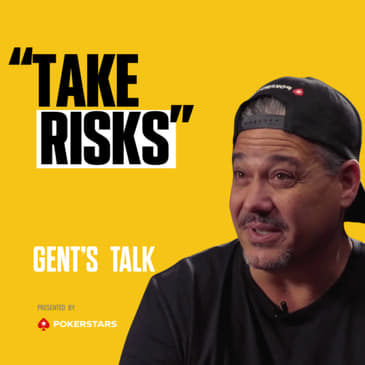
In this week's episode of Gent's Talk, presented by PokerStars, host Samir Mourani sits down with Boston Rob Mariano, winner of the game show Survivor and professional poker player. Boston Rob talks playing in the North American Poker Tour in Las Vegas with PokerStars, lessons learned along his journey in reality tv, how he manages risk and why it's important to take a chance on something that matters. #gentstalk Connect with us! Subscribe here ► https://www.youtube.com/@GentsTalkPodcast Website: https://gentspost.com/ Instagram: https://www.instagram.com/gentspost/ TikTok: https://www.tiktok.com/@gentstalkpod Facebook: https://www.facebook.com/gentspost/ About Gent's Talk: The Gent's Talk series, powered by Gent's Post, is an episodic video podcast conversation with leading gents and rising stars across various industries. Guests include Russell Peters, James Blunt, Robin Sharma, Director X, JP Saxe, Wes Hall, Johnny Orlando, Shan Boodram, Dom Gabriel, and Nick Bateman, just to name a few. The conversations range from career, mental health, family, relationships, business, and everything in between. Gent's Talk is the first-ever video podcast to be made available for streaming on all Air Canada domestic/international flights. We aim to have a raw, unfiltered conversations about our guests' lives, how they achieved success, lessons learned along the way, and the challenges encountered. Credits: Host/Producer: Samir Mourani Creative Director and Executive Producer: Steven Branco A STAMINA Group Production, powered by Gent's Post.
The Gent's Talk podcast, hosted by Samir Mourani, pulls the curtain back on difficult conversations around mental health, business, relationships and the difficulties around expressing oneself, with rising and leading gents from across the globe.
New episodes every Monday! #GentsTalk
Instagram: https://instagram.com/gentstalkpod
TikTok: https://tiktok.com/gentstalkpod
YouTube: https://www.youtube.com/@GentsTalkPodcast
[00:00:00] Poker is, are you accurate about what they think?
[00:00:04] I'm an 80% favorite, 20% of the time you're gonna win.
[00:00:07] Can you manipulate that situation?
[00:00:10] Rob Mariano is an American television personality
[00:00:12] renowned for his multiple appearances
[00:00:14] on the reality show Survivor, where he won the 22nd season.
[00:00:18] He's also appeared on The Amazing Race and Deal or No Deal Island.
[00:00:22] Some people are gonna argue at the end of the day
[00:00:23] it's still about math and about the cards and about the numbers,
[00:00:26] which it is.
[00:00:27] But, once you know it, you're confident of it.
[00:00:31] Embrace the risk.
[00:00:33] It sounds easier said than done.
[00:00:34] It took me four times to win Survivor.
[00:00:36] I've lost way more than I've won.
[00:00:39] Managing that risk and finding that balance
[00:00:41] is the key to becoming successful.
[00:00:44] You were playing in the tournament last night and you lost.
[00:00:47] What's the first thing that goes through your mind in that moment?
[00:01:06] So Rob, I'm excited to have this conversation with you.
[00:01:10] That you're a Survivor winner, a reality TV show,
[00:01:13] an entrepreneur, an author, a dad, a husband, and a poker player.
[00:01:19] Maybe not quite at the professional level that you say you want to be just yet.
[00:01:22] Not yet.
[00:01:23] I mean, 30 years and counting.
[00:01:25] And counting, you know.
[00:01:26] We're gonna get 30 years someday.
[00:01:27] Exactly.
[00:01:29] Now, the reason we're having this conversation, obviously,
[00:01:31] is we're here in Las Vegas at the North American Poker Tour with PokerStars.
[00:01:36] And you were playing in the tournament.
[00:01:37] Yes.
[00:01:37] You busted yesterday.
[00:01:38] I did.
[00:01:39] I'm so sorry.
[00:01:40] It's okay.
[00:01:40] You know, poker is a game that, like, I've loved for a long time.
[00:01:46] Ever since I was a kid, my grandfather taught me how to play five-card stud for penny poker
[00:01:50] in his basement when I was, you know, six or seven years old.
[00:01:55] And I've always been fascinated by the, you know, juxtaposition of skill and luck
[00:02:01] and finding that balance.
[00:02:03] And it showed its evidence yesterday at the end of the tournament because luck took over
[00:02:09] and my skill was not enough.
[00:02:12] And now I'm sitting here with you this morning because of it.
[00:02:15] So there's a silver lining in everything, right?
[00:02:17] There's a silver lining or you're saying that this is just a really bad consolation prize.
[00:02:22] No, no.
[00:02:23] Maybe this is the reason I'm here.
[00:02:25] It wasn't for the $3 million guarantee.
[00:02:29] Um, so, okay, so $3 million, like, those are wild numbers.
[00:02:34] It is, yeah.
[00:02:35] But you've also been a reality TV star where you've played for astronomical numbers too.
[00:02:40] Yeah.
[00:02:41] Is there ever a point where those numbers just start meaning as much?
[00:02:44] I mean, I feel like money, one, is sweeter than money earned sometimes and a lot easier.
[00:02:53] And luckily, uh, I was able to do it early.
[00:02:57] So I put myself in a position that, you know, I, I, I utilized my knowledge of business and
[00:03:04] what I know to make that money work for me so that when I play poker tournaments or stuff
[00:03:09] like that, I try to not let the outcome affect me.
[00:03:13] It's not life changing to me.
[00:03:16] I'm at a point in my life that I've, you know, done well that I suppose if I want a 20, you
[00:03:22] know, the main event, $12 million that could change my life, you know, to a degree, but
[00:03:28] really like I'm, I'm very happy where I'm at.
[00:03:31] Yeah.
[00:03:32] Yeah.
[00:03:32] I want to go back for a moment and start at the survivor part.
[00:03:35] So who was Rob before all of that?
[00:03:39] Yeah.
[00:03:40] So what's really wild is, uh, Rob before is still the same Rob.
[00:03:46] And that's like a fact.
[00:03:49] Like, uh, I was a construction worker.
[00:03:51] I love playing poker.
[00:03:53] I love playing hockey.
[00:03:55] My family, my friends were everything to me.
[00:03:57] And I promise if you ask any of my friends from the time I was six years old until, you
[00:04:04] know, my college friends, my high school friends, they'll tell you I'm the same guy.
[00:04:09] Consequently, I think it's the reason why I was asked back for all the different shows
[00:04:14] so many different times is because I've always just been me.
[00:04:18] And I think a lot of times people go into these shows thinking that, you know, it's going to
[00:04:26] be the gateway to something else.
[00:04:29] For me, I just went on because I wanted to win a million bucks.
[00:04:33] Because that was a great reason.
[00:04:34] Yeah, it was a great reason.
[00:04:35] But, um, I still enjoy all of the things that I did before television and I still enjoy
[00:04:43] them, you know, to this day.
[00:04:45] Did it ever get to your head?
[00:04:47] Winning?
[00:04:48] No, because so if you understand the, the, the journey of how I got there, uh, originally
[00:04:58] in the second time that I played in the all-star season, when it got down to the final two,
[00:05:03] it was myself and another girl.
[00:05:06] And there's only two rules in Survivor.
[00:05:08] You can't physically assault anyone and you can't conspire to share the money.
[00:05:13] There's no chops.
[00:05:15] You can't chop the pot.
[00:05:17] So when it got down to myself and this girl, the other people that you vote out have to
[00:05:22] decide who's going to be the winner and who's going to vote for you.
[00:05:25] So before they announced who the winner was, I asked the girl to marry me.
[00:05:32] And it was a pretty good hedge in a loophole that they hadn't thought about.
[00:05:36] And, uh, this April we'll celebrate 20 years.
[00:05:40] Wow.
[00:05:40] We're married.
[00:05:41] So.
[00:05:41] Did you meet on the show?
[00:05:42] We did.
[00:05:43] We met on the show.
[00:05:44] So, um, it was hard.
[00:05:46] Did you really even know each other before you decided to pop the question?
[00:05:50] Uh, about a year.
[00:05:51] Okay.
[00:05:52] Yeah.
[00:05:52] Yeah.
[00:05:52] And they were engaged for about another year.
[00:05:55] Okay.
[00:05:55] So they filmed the show and then the show airs and then the finale is, you know, six months
[00:05:59] after that.
[00:05:59] Okay.
[00:06:00] Gotcha.
[00:06:00] Um, so they finally, after she said yes, they announced the winner and she was the winner.
[00:06:08] So.
[00:06:08] You still got your winnings.
[00:06:10] Yeah.
[00:06:12] About, uh, five years later I went back and played again and I finally won.
[00:06:18] So I didn't have to hear in my own house anymore.
[00:06:20] Well, I was the winner.
[00:06:21] So now we're even.
[00:06:24] Okay.
[00:06:24] So then you go on the show.
[00:06:26] Um, I've had a lot of conversations with different reality TV contestants, winners on
[00:06:33] a number of different platforms.
[00:06:35] Yeah.
[00:06:35] One of the things that they talked about was how isolating it can feel at times.
[00:06:39] Like just being in your case on an Island or some places like being in a box, a set of
[00:06:45] some kind.
[00:06:45] Do you ever go through that?
[00:06:47] I never really felt that.
[00:06:49] That's, that's the truth.
[00:06:50] Like I always felt comfortable.
[00:06:53] I knew what I was getting into.
[00:06:55] I mean, you are separated from society to a degree, you know, and in the early days of
[00:07:00] reality TV, like the early 2000s when it was new, they literally like went through
[00:07:05] extremes to keep you isolated and protected.
[00:07:08] We filmed the season in Panama where they had the government shut down the airspace.
[00:07:13] So we didn't even see planes flying overhead.
[00:07:17] There were no ships that passed.
[00:07:19] We were on an Island and we felt isolated.
[00:07:21] And you come back from the experience and you have a profound appreciation for everything
[00:07:29] that you take for granted.
[00:07:31] Running water, hot water, being able to take a shower, food, the simplest of things.
[00:07:38] When you're deprived of it, you all of a sudden become super appreciative.
[00:07:43] However, that feeling is fleeting.
[00:07:47] It goes away quickly.
[00:07:50] You adjust and you get back to your routine.
[00:07:52] And I found that like in order to grow and to continue that appreciation, you have to continuously
[00:07:59] put yourself in these situations that are hard, which is why I've been back to Survivor six
[00:08:05] times.
[00:08:05] The amazing Rachel doesn't.
[00:08:06] I mean, I didn't plan it that way, but I've lived over 20 years, you know, competing on
[00:08:14] different reality shows.
[00:08:16] And it's funny because there's so much crossover between the world of Survivor and these reality
[00:08:24] competition shows and the world of poker.
[00:08:27] I mean, like there are...
[00:08:32] Psychological games.
[00:08:33] Psychological.
[00:08:34] I have a degree in psychology from Boston University.
[00:08:37] There's a strategic element, the physical element, which is not so much in poker, but it has
[00:08:43] been shown that, you know, if you work out and keep your mind well, that you do better at
[00:08:47] the poker table.
[00:08:48] And the social aspect, which, you know, in the old days, that was a big part of it.
[00:08:53] You know, Doyle and those guys getting the right guys in the game and, you know, being friendly
[00:08:59] with them.
[00:09:01] It's kind of moved away from that a little bit where they're more cerebral.
[00:09:06] They're talking about, you know, game theory optimal, the odds, the position, you know,
[00:09:13] all of that.
[00:09:14] And it's less about the social interaction, but it's still present in finding tells on
[00:09:20] people and that kind of stuff.
[00:09:22] And in like the reality competition world, the social game has like been elevated to the
[00:09:29] most paramount.
[00:09:30] You know, that's really what separates great players are the ones that have that self-awareness
[00:09:37] and the ability to not only know what they're putting out there, but be able to know what
[00:09:42] their opponent is picking up on and being accurate about that.
[00:09:48] Is there like a technique?
[00:09:50] Like how to spot something?
[00:09:52] That's when we say you're in an environment or a setting where it's very highly social.
[00:09:56] Yeah.
[00:09:56] Yeah.
[00:09:57] So, I mean, I wrote a book on it and it's pretty, it's a pretty simple concept.
[00:10:03] And I hear like poker players say it all the time, but it's pay attention, right?
[00:10:08] Like whenever you meet someone in business and life on the island at the poker table, there
[00:10:14] are stories being told, right?
[00:10:16] Pay attention.
[00:10:17] Listen to the story someone's telling.
[00:10:19] Ask yourself if it makes sense and then see their actions.
[00:10:25] If the actions match what's coming out of their mouth.
[00:10:29] You see it on the island all the time.
[00:10:31] You'll see them doing something and then acting in a different way.
[00:10:35] And, you know, it's simple stuff, but a lot of people, they're not acutely tuned into
[00:10:41] what's going on.
[00:10:42] And I think that makes a big difference, you know?
[00:10:46] If you give people enough space, they'll just sort of tell you what you need to know.
[00:10:50] If you're paying attention.
[00:10:51] Right.
[00:10:52] Yeah, it's there.
[00:10:53] What was the hardest part for you of doing those shows?
[00:10:58] I mean, there seems to be some sort of thing to keep going because you keep doing, you've
[00:11:02] done so many of them.
[00:11:03] But yeah, you know, when you come off a reality show like that, when you talk about being
[00:11:07] in Panama, you know, complete isolation, you come back to reality, there's almost a level
[00:11:13] of shock there that you have to readjust.
[00:11:15] Yeah.
[00:11:16] So like I said, the appreciation and then the fleetingness of that appreciation is pretty
[00:11:22] brutal.
[00:11:23] But I was always pretty balanced.
[00:11:26] I felt like I knew I was playing a game.
[00:11:28] I knew what the rules to the game were.
[00:11:30] I was going to push every element of those rules to my advantage.
[00:11:34] And when it was over, win or lose, I'll shake your hand and, you know, we'll move on.
[00:11:39] I never got hung up in the minutia of the game.
[00:11:43] A lot of people do.
[00:11:45] I mean, if you ask anybody that hasn't won any of these competitions, invariably, they
[00:11:52] will tell you the exact moment, the exact thing, how if one thing was different, they would
[00:11:59] have been the winner.
[00:12:00] It's pretty short sighted.
[00:12:02] They're literally seeing it only through their own lens.
[00:12:05] And that's the key.
[00:12:07] And that's the difference is to be able to see the game through somebody else's eyes.
[00:12:13] It's not easy to do.
[00:12:14] If you can put yourself in that other person's position, then you'll know and you can understand
[00:12:21] their motivation.
[00:12:22] And if you understand what motivates them, then you can craft a move that makes sense
[00:12:27] to them, but also makes sense to you.
[00:12:29] And it almost feels as if they're coming up with the idea, but you planted it in your head.
[00:12:37] I mean, it's a little...
[00:12:38] Psychological warfare.
[00:12:39] It is a little advanced, but I mean, it works.
[00:12:44] Because you obviously, with all the years of experience, the bachelor's degree, winning
[00:12:49] the tournaments, playing poker, you know, semi-professionally.
[00:12:53] Yeah.
[00:12:54] You keep saying that.
[00:12:55] I'm definitely a recreation player that loves to play in the big tournaments.
[00:12:59] But then, like, you've developed a skill set here and you've honed it over the years.
[00:13:03] Sure.
[00:13:04] Like, just the way you're articulating it.
[00:13:05] Someone's listening to this, watching this, goes, you know what, I'm either about to embark
[00:13:10] on a reality show, I'm about to embark on a poker tournament, or hell, I'm about to
[00:13:15] embark on a new job.
[00:13:16] Mm-hmm.
[00:13:17] What advice would you share with them in terms of how to sort of start, get started in that
[00:13:22] way?
[00:13:22] Yeah.
[00:13:22] And better, like, build that self-awareness?
[00:13:25] I mean, I really think self-awareness can be built through paying attention and focusing.
[00:13:33] Like, some people, it comes naturally and easy to, and other people, they don't have it.
[00:13:40] You know, and their ego gets in the way of them, you know, paying attention and learning.
[00:13:47] But I think, like, there are lots of simple lessons in business.
[00:13:51] You know, like, the number one rule in negotiation is whoever cares at least wins.
[00:13:56] Right?
[00:13:57] You have to understand, you know, where your line in the sand is, what you'll cross, what
[00:14:03] you won't, and then stand by it.
[00:14:06] And don't compromise, don't negotiate against yourself, you know?
[00:14:12] I tell my kids all the time, don't quit, don't give up.
[00:14:17] It took me four times to win Survivor.
[00:14:19] I didn't win the first time I played.
[00:14:20] I didn't win the second, not the third.
[00:14:22] It took me four times.
[00:14:24] And then I played two more times.
[00:14:25] And I didn't win on the fifth or the, well, the fifth I didn't really play.
[00:14:28] I was a mentor.
[00:14:29] But I didn't win the sixth.
[00:14:30] I've lost way more than I've won.
[00:14:34] But I always play to the best of my ability.
[00:14:39] And that's all you can do at the end of the day.
[00:14:41] If you do your best, what else do you want to do?
[00:14:45] You do your best.
[00:14:46] Is that a natural trait of yours where you just will keep going even after you've failed?
[00:14:52] You just keep pushing the envelope, keep trying?
[00:14:54] A lot of people struggle.
[00:14:55] Yeah, I think keep trying.
[00:14:57] But also, like, if you fail because you did something wrong, do something different, right?
[00:15:03] Like, understand the difference between variance and chance and skill, right?
[00:15:11] And you have to learn from your mistakes, right?
[00:15:14] History would be a terrible lesson if people didn't learn from the mistakes that they made.
[00:15:20] So make an adjustment.
[00:15:22] Do something different.
[00:15:23] Try something again, you know?
[00:15:25] But you can't just, I got knocked out of the poker tournament last night.
[00:15:29] I'm not going to sit in my room and cry about it.
[00:15:32] Like, I'm going to play again, you know?
[00:15:34] Going to try another day, you know?
[00:15:37] Sometimes you need to take a break.
[00:15:39] That's okay.
[00:15:39] Take a break.
[00:15:41] But I think, you know, to move forward in life, like, you really, you have to learn from your mistakes.
[00:15:47] And you have to be resilient and keep trying.
[00:15:53] Walk me through, so, in the scenario, for example, where you were playing in the tournament last night and you lost,
[00:16:00] what's the first thing that goes through your mind in that moment?
[00:16:02] Are you sort of replaying things or are you just going, you know what, I lost.
[00:16:05] I'm going to sort of park this for now.
[00:16:07] Well, I don't know if myself why, you know?
[00:16:10] And if I could have done things differently, was I happy with the way I played?
[00:16:17] And yesterday, I could have played better.
[00:16:20] I could have done some things differently.
[00:16:22] But at the same time, I made mostly good decisions.
[00:16:28] And some of the decisions didn't work out because of luck.
[00:16:32] And some decisions I made were as a result of things that happened along the way.
[00:16:40] How I felt perceived at the table, my table image, how I played certain hands.
[00:16:45] And ultimately, I felt like I extended my life past what it would have been.
[00:16:55] It's not the result I wanted.
[00:16:57] I wanted to play again, but I was happy with the way I played.
[00:17:00] You said table image.
[00:17:02] What are you referring to there?
[00:17:04] Not only the perception, right?
[00:17:07] So not only how I feel like someone at the table is viewing me, but how accurate I am with that assumption.
[00:17:18] The French philosopher, Immanuel Kant, I am not who I think I am.
[00:17:22] I am not who you think I am.
[00:17:24] I am who I think you think I am.
[00:17:26] And that's really like the most introspective way.
[00:17:30] Like, you have to know what other people think about you.
[00:17:34] And you have to be right about it if you're going to make assumptions.
[00:17:37] And that's what poker is, right?
[00:17:40] Poker is, are you accurate about what they think?
[00:17:46] And if you are, how are you acting?
[00:17:48] And can you manipulate that situation?
[00:17:51] Now, some people are going to argue at the end of the day, it's still about math and about the cards and about the numbers.
[00:17:56] Which it is.
[00:17:58] But...
[00:17:58] To what degree?
[00:17:59] On a micro level.
[00:18:01] I mean, it matters, right?
[00:18:04] Absolutely.
[00:18:04] I mean, I can have aces and you have kings and I'm an 80% favorite.
[00:18:09] 20% of the time, you're going to win.
[00:18:10] If we're playing a game like Potlum at Omaha, there's even more variants.
[00:18:14] You know, you're never going to have somebody crushed more than, you know, 70-30 or 60-whatever it is, the number.
[00:18:20] 60-40.
[00:18:22] So depending on the game, you have to be okay with that variance.
[00:18:27] You have to be okay with that chance.
[00:18:28] You have to understand the game that you're playing.
[00:18:30] In life, in business, every day, we take risk.
[00:18:36] And a lot of people don't even realize it.
[00:18:38] But we take risk every day.
[00:18:41] And managing that risk and finding that balance is the key to, you know, becoming successful and moving up.
[00:18:49] Some people do it well.
[00:18:50] Some people don't.
[00:18:51] Some people lose a hand where they're an 80-20 favorite and they go on tilt and they throw the rest of the game away.
[00:18:57] Some people look at it as a learning experience.
[00:18:59] And so yesterday, I knew the odds going in before I played, you know, there's 500 people in the field.
[00:19:08] That gives me, you know, a 1% chance.
[00:19:10] It's, you know, one-fifth of 1% chance to come out on top.
[00:19:14] Now, where's my skill level?
[00:19:16] And constantly analyzing that, understanding it, and still being willing to take the chance to take the risk.
[00:19:24] I think there's a lot to be said for people that step up to the plate.
[00:19:30] When your mind is going through all of those different things, how do you stay present to what's actually happening?
[00:19:37] Yeah, it's tough.
[00:19:38] You have to focus, you know.
[00:19:40] But it's, you know, some people do it better than others.
[00:19:44] I think, like, practice and doing it over and over and over.
[00:19:47] Like, the old adage, like, practice how you want to play, like, makes a big difference, you know.
[00:19:56] It's a long way from when I first started playing.
[00:19:59] And the game's evolved.
[00:20:00] The game has changed a lot.
[00:20:02] In what way?
[00:20:02] I mean, even from 2004 until now, in the last 20 years, the strategy has evolved.
[00:20:10] The players have evolved.
[00:20:12] The advent of online tools and training sites and access that people have has grown tremendously.
[00:20:23] The player today, the average player is much better than the average player used to be.
[00:20:30] Like, it's crazy, but, like, any player today would crush those guys that played in the 70s because they just know so much more.
[00:20:37] Not to take away from the guys in the 70s because, like, they were the, you know, grandfathers of the game.
[00:20:44] And they knew it even before then.
[00:20:47] It's like trying to compare professional athletes today to...
[00:20:50] Yeah.
[00:20:51] Watching an NHL game from, you know, the 1930s and, you know, the skate circles around them.
[00:20:59] So, but really you do, you have to meet the game where it is.
[00:21:04] That's important.
[00:21:06] And Survivor also has evolved a lot, you know.
[00:21:09] Like I said, it used to be so much about providing for your tribe and the physical, how well you were at the challenges and how great you did and how that was revered by your tribe mates.
[00:21:21] And now that doesn't matter at all.
[00:21:25] I mean, I was playing in the 40th season and I remember somebody saying, like, we're not voting people out whether they're good at challenges or provide, right?
[00:21:33] And it was just like, what?
[00:21:35] Like, here we are now where, like, the only thing that matters is your alliance and your social game, you know.
[00:21:42] So, and you don't want to be the old guy in the club going, back in my day, this is how we did it because nobody cares.
[00:21:49] Yeah.
[00:21:50] You know?
[00:21:51] This is the vomit you've all been waging for.
[00:21:56] I just dragged the pot like a champ.
[00:21:58] Game on.
[00:22:00] Look at the camera, the lights and the action.
[00:22:02] Look at the way that we're taking advantage.
[00:22:06] Come on!
[00:22:17] That was one for the cameras, wasn't it?
[00:22:22] I like your style, eh?
[00:22:26] I win!
[00:22:43] Is there, is there a, how do you balance?
[00:22:48] I think the question I'm looking for here is how do you balance doing the shows, coming to the tournaments, but also being present as a father, as a husband?
[00:22:58] Like, there's time commitments, like, especially on the shows where you're just completely, you're away.
[00:23:03] Yeah.
[00:23:04] Of course.
[00:23:05] I mean, the shows are usually for a finite period of time.
[00:23:08] They're, you know, three to six weeks.
[00:23:10] Which is significant.
[00:23:12] But luckily, like I said, my wife was a contestant on the show.
[00:23:17] She understands it.
[00:23:19] She, she also understands who I am as a person.
[00:23:22] And like, I have like an insatiable appetite to compete.
[00:23:27] Like, I love the competition.
[00:23:29] I still play men's hockey league.
[00:23:32] I still play poker.
[00:23:34] I still work in construction.
[00:23:36] You still work in construction?
[00:23:38] I sure do.
[00:23:39] Yeah.
[00:23:39] I have a renovation show on CBS called Secret Celebrity Renovation.
[00:23:44] But personally, I also have investment properties that I have renovated myself and several other business ventures.
[00:23:54] So, to answer your question, it's difficult finding that balance because like really.
[00:24:00] It's a lot on the go.
[00:24:01] There's a lot to do.
[00:24:02] But I think like the number one thing is when I'm with my kids to be present, right?
[00:24:09] Like, I try to be like there for their sporting events.
[00:24:13] My oldest daughter just started playing golf.
[00:24:15] So, I'm fully immersed.
[00:24:16] Like, all of a sudden, I'm playing golf again.
[00:24:18] I used to play golf before they were born.
[00:24:20] And then I took like five years off and like seven years, the first seven years of their life never played at all.
[00:24:25] And now they're starting to play.
[00:24:26] They're starting to play.
[00:24:27] So, my game's getting better.
[00:24:29] And I'm out there playing again too.
[00:24:32] And tennis, pickleball, like we're an active family.
[00:24:36] We like the outdoors, going to the beach, even sitting at home watching a movie, having movie night.
[00:24:41] So, when I'm home, I'm home.
[00:24:44] I'm not out there doing other things.
[00:24:46] And I think that helps with the balance.
[00:24:51] It's never going to be perfect.
[00:24:52] You can't do everything all the time.
[00:24:57] But, you know, I think it's great.
[00:25:00] Yeah.
[00:25:00] And to have a wife that understands, you know, that I want to compete and I want to provide and I want to do these other things too.
[00:25:09] And, you know, sometimes a little time away is good too.
[00:25:13] Sure.
[00:25:13] Yeah.
[00:25:13] I mean, you still need time for yourself ultimately.
[00:25:17] Right.
[00:25:17] Like when you're immersing yourself in all the different things that you're doing, you still need that time for Rob to just sort of settle in and do the things that you want to do.
[00:25:25] I'm very lucky in that respect.
[00:25:28] Like I fully, the number one rule in the Boston Rob rule book, the first rule is you have to know who you are.
[00:25:34] And from a young age, I found out who I was and what I stood for.
[00:25:40] And I think a lot of it was shaped by my parents, the values they taught me growing up on the East Coast in Boston where my friends, like if I got out of line, they'd call me on it.
[00:25:53] And nobody, you know, nobody, nobody, you can be full of shit and they're going to call you, you know, and having those checks and balances like allow me to just be myself.
[00:26:04] So I really do feel like I live the life that I always want, like I'm doing it.
[00:26:11] Like as I'm getting older, my parents are getting older, like I realize more and more that there's no destination.
[00:26:21] Like this is it.
[00:26:22] We're doing it.
[00:26:23] That perspective that you have of like, you know, just live it, live life, take the chances that you want and live the life that you want.
[00:26:31] Don't don't sort of hold back to your point earlier.
[00:26:34] You're taking risks every day.
[00:26:36] You know, when I'm sitting here listening to you talk about this, I go, yeah, yeah, that makes sense.
[00:26:40] Like I should be doing the same thing.
[00:26:43] But there's so many people, myself included, that at times will go, ah, this all just feels very uncomfortable.
[00:26:49] I'm not sure if I should take this risk.
[00:26:51] Do I take the safe route?
[00:26:52] Do I, how do you, you know, like it sounds easier said than done.
[00:26:57] I know it does.
[00:26:58] That's when you grow the most though.
[00:26:59] Living in the uncomfortable.
[00:27:01] When you're uncomfortable.
[00:27:02] And I'm not talking about like going downstairs and put it all on red and like, let's go.
[00:27:06] Like I'm not talking about like being reckless, right?
[00:27:09] Which is I think the key there.
[00:27:11] Yeah, the key is not to be reckless, but that uncomfortability is when you grow.
[00:27:16] And I'll give you a personal example from my own life.
[00:27:21] When I took a risk and I was really unsure and really, you know, for a long time, my wife and I, we talked about buying property and renovating houses and renting houses and doing this.
[00:27:34] And I never really knew what I was doing.
[00:27:37] Like I worked in construction and I always worked for someone and I didn't work for myself.
[00:27:41] And I was mostly a stone mason, you know, so I was great at building walls and chimneys and fireplaces and patios and stuff.
[00:27:48] But I don't really know about electrical and plumbing and all of that stuff.
[00:27:55] And I got to a point where I was like, man, there was a house came up for sale.
[00:27:59] And I was like, man, I really want to buy this house.
[00:28:02] And at the time I was working, I was in New York working for an environmental construction company running heavy equipment.
[00:28:08] And I was there with a buddy of mine.
[00:28:10] And he was like, yeah, he goes, yeah, he goes, if you get the house, I'll help you, you know, and we'll renovate it.
[00:28:15] We'll do it. And I was like, OK, I'm going to do it. I'm going to do it.
[00:28:19] So scary. I told my wife, I was like, I'm going to buy this house. We're going to do it.
[00:28:23] I had two or three young kids at the time. I don't remember.
[00:28:27] And she was like, OK, so I did it and I bought the house and.
[00:28:34] I had to go over there and it needed everything like we had to move the wall.
[00:28:38] We had to put a new kitchen, new floor, new bathrooms, everything, new roof.
[00:28:42] I found out it had bad wiring. It had this.
[00:28:46] And I had this friend that was going to help me to do it.
[00:28:49] And every time I called him for help, it was another excuse.
[00:28:54] Something happened. Something happened.
[00:28:57] I was like, man, I got so mad.
[00:29:00] And then I realized like this kept happening over and over, over three months.
[00:29:05] And it like forced me to learn to do it myself.
[00:29:10] And then once I did it.
[00:29:13] I mean, I remember like wiring a thermostat that was like 16 different wires, all different colors.
[00:29:21] And I'm watching the YouTube video.
[00:29:23] You're kind of on your phone.
[00:29:24] And I mean, I'm like, like I don't recommend this for anybody because some people are not like mechanically inclined.
[00:29:30] But I'm doing it and I like have this sense of victory.
[00:29:34] And then I'm like in the attic following like the 220 wire to the stove.
[00:29:39] And I'm going to move the stove and I'm going to move this cabinet.
[00:29:42] And it just made me realize how capable I am.
[00:29:45] And this guy that was going to help me inadvertently didn't know, but gave me the biggest gift he could have ever given me by not helping me because it forced me to learn.
[00:29:57] So now I don't fear anything.
[00:30:00] Like in my own personal house, like a week ago, a pipe broke and like under the wall.
[00:30:04] And I was like, oh, my God.
[00:30:05] I was like, OK, we got to turn the water off.
[00:30:07] We'll figure it out.
[00:30:08] You know.
[00:30:11] I think it's the unknown.
[00:30:12] Yeah, it is that unknown.
[00:30:14] And then almost every time once you do it, you're like, that wasn't so bad.
[00:30:19] I could do it, you know.
[00:30:21] And then you get that confidence.
[00:30:22] And then once you have the confidence, you get on.
[00:30:25] You can do anything.
[00:30:26] Like I'm.
[00:30:28] There are two things in this world I know I'm terrible at.
[00:30:31] And no matter how much I try, I'm not going to get any better.
[00:30:34] They've called me like 10 times, but I'm not doing Dancing with the Stars.
[00:30:37] And I can't sing at all.
[00:30:40] I cannot carry a tune.
[00:30:42] Other than that, like I feel like I could figure out a way to get it done.
[00:30:47] But I also know what I like because I know myself.
[00:30:51] Like I don't want to work in an office.
[00:30:53] I don't want to work at a desk.
[00:30:54] I would rather be outside mixing cement and shoveling dirt than I would sitting at a computer.
[00:31:01] And I just think like a lot of people sit behind the desk even though they feel that other way because they're afraid to take the step.
[00:31:12] And it just takes one step to start.
[00:31:17] And then who knows?
[00:31:19] Like I sent in an application to be on a reality show.
[00:31:22] I could have never planned 20 years later that it would still be going.
[00:31:28] I just went to Scotland last summer and shot this new show, The Traders, that just won the Emmy.
[00:31:34] It's going to be coming out on January 9th.
[00:31:37] And I don't know what my next job is going to be, but it'll be something.
[00:31:44] And in the meantime, I'll go play poker.
[00:31:46] I'll hang out with my family, maybe play a little golf.
[00:31:50] You know, I don't know.
[00:31:53] But like I think the difference is some people, people like me, love the unknown and some people fear it.
[00:32:03] So there's a personality trait in you there that resonates with that.
[00:32:08] I think poker players in general embrace that though, right?
[00:32:12] There are not many poker players that like don't embrace the risk.
[00:32:19] Like the fact that they're playing poker, I mean, I guess maybe make an argument for like the seven card stud players or like the limit, you know, like the strictly map based players.
[00:32:30] But and then on the other end of the spectrum are like the high stakes PLO players, you know, like they understand it and they love it.
[00:32:38] But like with that risk comes a reward, right?
[00:32:42] Can you learn that though?
[00:32:44] Can you learn?
[00:32:45] I think so.
[00:32:46] I think like you have to start small.
[00:32:48] I think, I think, I think people want that.
[00:32:54] Yeah, I think people want it, but they're afraid.
[00:32:57] And it's like you have to take the first step, right?
[00:32:59] So the way you become good at anything is you have to start.
[00:33:04] I think it would take a long time, but maybe I could learn how to dance, you know, it would take a long, long time.
[00:33:10] And I would have to want it, right?
[00:33:12] Great.
[00:33:13] Sounds like PokerStars needs to put on a dance tutorial for its player.
[00:33:18] Also sprinkle it in between games or something.
[00:33:20] PokerStars is awesome, man.
[00:33:22] I mean, they do so much great things like besides a poker tournament.
[00:33:27] They make it an experience, you know.
[00:33:29] I've been to the Caribbean Adventure and I think like they embrace that, you know, no two players are the same.
[00:33:39] And there's something for everyone.
[00:33:42] So that's why I love coming to these events.
[00:33:44] Well, you find yourself sometimes basically just running into people who are there for the very first time.
[00:33:49] Maybe just started playing poker a handful of months ago.
[00:33:52] And then obviously there's the ones that have been playing it for many, many years.
[00:33:55] Right.
[00:33:56] And that's the other thing that's crazy.
[00:33:58] I think like having a family and my evolution with poker and I see like young guys that have only been playing for eight or nine years and they're playing like these sky high stakes, you know.
[00:34:12] And I always think about, man, what would it be like to play that high?
[00:34:15] And then on the other side of me, I'm like, oh, my God, I could never do that to my family.
[00:34:19] You know what I mean?
[00:34:20] Like that's too much risk.
[00:34:21] So it's like something happened along the way that, you know, it's crazy.
[00:34:28] It is like coming up like the biggest tournament was like a 10 or 25K.
[00:34:33] And now they're like million dollar buy-ins.
[00:34:35] It was just like, wow.
[00:34:36] Those numbers are astronomical.
[00:34:38] Yeah.
[00:34:39] But I think it's all relative, right?
[00:34:41] It is.
[00:34:42] It's all relative, you know, at some point.
[00:34:46] At some point, like you bet 10 bucks with your friend on a bet, you know, versus someone that has billions of dollars.
[00:34:55] What's a million?
[00:34:56] Sure.
[00:34:57] You know?
[00:34:57] Right.
[00:34:58] So relative to that person ultimately.
[00:35:00] Right.
[00:35:01] You mentioned you were just some guy who decided to send in an application to a reality show.
[00:35:06] Yeah.
[00:35:06] Like one of the things that I didn't get to ask you that I want to know about is what triggered that decision?
[00:35:12] Like what was happening?
[00:35:13] So the show was very popular at the time.
[00:35:16] They had like 50 million, 51 million people watch the first finale.
[00:35:20] So it was very much in American pop culture.
[00:35:24] And there was a guy on the show.
[00:35:25] His name was Colby.
[00:35:26] And he was like the young like athletic guy.
[00:35:30] And I remember watching it.
[00:35:32] My girlfriend at the time was a big, like loved the show.
[00:35:37] And I was watching my dad.
[00:35:39] And he gets up there.
[00:35:41] And he's got like this Captain America thing.
[00:35:43] And I was like, I would kick his ass.
[00:35:45] My dad was like, oh, you think so?
[00:35:47] Why don't you try?
[00:35:48] And I was like, okay, maybe I will.
[00:35:50] And I did.
[00:35:51] I sent in a thing.
[00:35:52] And then years later, I ended up, Colby, I ended up playing against him.
[00:35:56] And I body slammed him a few times.
[00:35:58] We're still friends today.
[00:36:00] Okay.
[00:36:00] Yeah.
[00:36:01] So he still has like that whole thing.
[00:36:03] Like he was a Texas cowboy guy.
[00:36:06] And I was the Boston wise ass.
[00:36:10] What did you say to your dad after you actually got on the show?
[00:36:12] After he loved it.
[00:36:13] Yeah, it was so good.
[00:36:14] I mean, just the whole journey.
[00:36:16] They're super proud.
[00:36:17] You know, I've always.
[00:36:19] Always close with the parents?
[00:36:20] Yeah.
[00:36:20] Always like, you know, taught.
[00:36:22] Came from like loving Catholic Italian family, you know.
[00:36:26] And grew up like always represent yourself well.
[00:36:30] And, you know, I have.
[00:36:32] I feel like I have, you know, definitely.
[00:36:34] I have a humor and a sarcasm that not everybody gets.
[00:36:38] But never anything malicious.
[00:36:43] So how many fits do you have?
[00:36:45] I have four daughters.
[00:36:46] Four daughters.
[00:36:47] Yeah.
[00:36:47] So being a father, what's one lesson that you learned from your father
[00:36:52] that you've been imparting on your children?
[00:36:56] Oh, I mean, a lot of everything I teach them is like what I got from my parents.
[00:37:02] You know, family, take care of you.
[00:37:05] Your brothers, your sisters, they only have sisters.
[00:37:08] Watch out for one another.
[00:37:10] And that you're a freaking champion because you got champion blood.
[00:37:14] Because your mom's a winner, your dad's a winner, and you can do anything.
[00:37:18] You just have to work really hard.
[00:37:20] And that's a truth for anybody out there.
[00:37:23] Like, truthfully, like, believe me, if it can happen to me, it can happen to anyone.
[00:37:28] You just have to work your ass off.
[00:37:31] And a lot of people, like, they hit their first wall.
[00:37:34] They stumble and then they don't want to.
[00:37:36] Or they're afraid what someone's going to think.
[00:37:38] Like, screw everybody else.
[00:37:39] Nobody cares.
[00:37:39] We're all here just doing whatever.
[00:37:42] And we're here.
[00:37:44] Like, the older you get, you realize it goes quick.
[00:37:48] I'm 48 now.
[00:37:50] And, like, it's going.
[00:37:53] It's quick, you know?
[00:37:54] Any regrets?
[00:37:55] No.
[00:37:56] I'm doing it.
[00:37:57] I feel, like, very fulfilled and happy.
[00:38:02] Yeah.
[00:38:04] If you could go back in time and talk to a young Rob.
[00:38:08] Yeah.
[00:38:09] The one who is about to go on the show, about to embark on this journey of deciding,
[00:38:12] I'm not going to go the traditional route of the corporate job.
[00:38:15] I'm going to go out on my own.
[00:38:17] I'm going to do the thing that gives me fulfillment.
[00:38:20] That Rob was probably spinning inside, like you're about to do something different.
[00:38:25] What's one piece of advice you would give him?
[00:38:27] I think, so just to go back a little bit, like, I always felt that.
[00:38:33] I always felt, like, I remember I graduated from college.
[00:38:35] I had a degree in psychology.
[00:38:37] And I was like, what am I going to do with the degree?
[00:38:39] Like, you know what I mean?
[00:38:40] I just, I liked the class.
[00:38:41] I liked learning about how other people thought and stuff.
[00:38:44] And I remember sitting at one of my dad's sister's house, my aunt.
[00:38:48] And she's like, what are you going to do?
[00:38:49] And I was like, I don't know, but I'm going to do something fun.
[00:38:52] And then I went to go work in construction after five years of college
[00:38:56] because I liked working with my hands.
[00:38:58] Like, I never had a problem knowing, like, what I liked and actually doing it.
[00:39:04] But I think I would just tell myself to just, you know, like, believe in yourself
[00:39:08] because it's going to be okay.
[00:39:09] And nobody knows, like, what your journey is going to be.
[00:39:12] But, like, you literally can change your life like that if you want to.
[00:39:18] You can.
[00:39:20] Like, there's nothing stopping you.
[00:39:21] The only thing stopping you is you and your brain and your mind.
[00:39:25] You don't want to do interviews anymore.
[00:39:27] You want it to be a race car driver.
[00:39:28] Shit.
[00:39:29] Tomorrow you can do it.
[00:39:30] Like, you can do it.
[00:39:31] Like, you're not going to start at F1, but you can go run tracks in Georgia
[00:39:35] or go to here or go to training or whatever.
[00:39:38] Like, you can literally change your whole life if you just decide you don't want to do that anymore
[00:39:44] and go do something else.
[00:39:47] So you give off this really self-confident, positive, forward-thinking personality.
[00:39:56] Like, that's the impression that you're giving me.
[00:39:58] Yeah.
[00:39:58] I'm confident, though, that there are moments where you are probably sort of negative self-talk.
[00:40:04] I don't self-talk negative.
[00:40:06] I think, like, sometimes when there's things that are outside of my control that could have consequences,
[00:40:18] something I'm thinking about was one of my daughters, when she was very young,
[00:40:23] she was in the ICU, and she got very sick, and I felt helpless, you know?
[00:40:30] And it was a situation that I didn't know what to do.
[00:40:35] She had, it was called post-streptococcal glomerulonephritis,
[00:40:40] which was like a disease in one of her kidneys that wasn't processing.
[00:40:46] I don't know the specifics of it.
[00:40:48] But I know that I looked at the doctor and the doctor's eyes,
[00:40:52] and I could see, like, fear in the doctor's eyes.
[00:40:54] Like, I could see that, and that made me really scared.
[00:40:58] And, like, all I could do is, like, fall back on my faith and pray that everything would be okay.
[00:41:05] And luckily everything was okay, but it was, like, 10 days.
[00:41:11] And, of course, growing up, I think there's always going to be, like, some unknown.
[00:41:18] But I think the difference is, like, inside me, like, when there's pressure, like, I like it.
[00:41:27] I like, I feel like I do better when there's pressure.
[00:41:33] Like, if it's a situation where I'm playing hockey and there's a penalty shot, I want to take the shot.
[00:41:38] I want to take it every time.
[00:41:40] I'm not going to make it every time, but I want to take it.
[00:41:43] I want, I want to live and die by my consequences and what I do.
[00:41:52] And I don't know.
[00:41:53] Maybe I have the confidence because my parents instilled it in me, and I try to instill it in my kids.
[00:42:03] I don't know.
[00:42:06] There's no, like, real, like, you know.
[00:42:09] Like, I definitely, there have been times in my life that I've been afraid or scared.
[00:42:14] What do you say to yourself in those moments?
[00:42:15] Just do it.
[00:42:16] I remember I recently had a business, not recently, but a few years ago, I had a business conundrum come up where it looked like it was going to be a situation where in order for it to work out, something else was not going to work out.
[00:42:38] And I was trying to find a way for both things to, to be successful.
[00:42:45] And I just, I wrote myself a little note and I just said, you have to do what's best for you and your family.
[00:42:55] Because I was trying to think about friends and other things and, you know, make everybody happy in that spot.
[00:43:01] And sometimes it's hard to stand up for yourself, but you have to remember something.
[00:43:10] If you don't do it, nobody's going to do it for you.
[00:43:14] Agreed.
[00:43:14] Your whole life, your best advocate is you.
[00:43:19] Yep.
[00:43:19] I had an agent for a lot of years.
[00:43:21] He was a great guy.
[00:43:23] He did, you know, what he could.
[00:43:25] And ultimately one day I said, you know what, I'm going to advocate for myself.
[00:43:30] And I started doing it on my own, not just to save 15% of my money, but because I feel like I'm best going to represent me.
[00:43:40] And I think a lot of people would be best served if, like, you know, they took their own fate into their own hands.
[00:43:49] Hmm.
[00:43:49] Yeah.
[00:43:50] So you're here at the North American Poker Tour with Poker Stars.
[00:43:54] You played in the tournament last night.
[00:43:56] Are you playing it anymore?
[00:43:57] I may play.
[00:43:58] I'm going to be here for a few more days, so I think I will play some more.
[00:44:01] What are you telling yourself to get yourself sort of back, ready to go?
[00:44:06] Yeah.
[00:44:06] Yeah.
[00:44:07] So poker to me, I don't want to say it's easy, but, like, my relationship with poker, I understand it well.
[00:44:19] And in order for me to go and play another tournament, I need to be well rested, I need to be focused, and I need to want to play.
[00:44:25] And that's what I'll do.
[00:44:27] And then I'll go play.
[00:44:28] And I'll do the best I can to my ability.
[00:44:32] I'm not under the illusion that I'm the best player in the room.
[00:44:36] But I'll rely on the variance and luck factor to help me in the situations where I need it.
[00:44:45] And just try to have a great time, you know?
[00:44:47] Because, like, we're obviously very privileged that we get to come to Las Vegas to play in these tournaments and have this fun.
[00:44:54] And that's not lost on me either, for sure.
[00:44:57] Amazing.
[00:44:58] Yeah.
[00:44:58] Rob, thank you so much for your time.
[00:45:00] Yeah.
[00:45:00] Samira, it's been a pleasure.
[00:45:01] Thanks.
[00:45:02] Great.
[00:45:02] Yeah, I appreciate it.
[00:45:03] Best of luck with the rest of the tournament.
[00:45:05] Yeah.
[00:45:06] I'll be rooting for you.
[00:45:07] At least, you know, there's one person in the room that ain't landing there.
[00:45:11] That's great.
[00:45:11] Yeah, this was great.
[00:45:12] That was fantastic.
[00:45:13] I learned a ton, man.
[00:45:13] Honestly, the piece around, like, we hear it all the time, just do it, like, just go for it.
[00:45:20] And sometimes our heads will just, like, nope, we're just going to build a wall there and stop you from it.
[00:45:25] Yeah.
[00:45:25] And that's a subconscious defense mechanism of trying to, I guess, protect.
[00:45:31] But to your point, you can only thrive in being uncomfortable.
[00:45:37] Yeah, it's like once you know it, you're confident of it, right?
[00:45:41] It's like imagine trying to take a test that you already have the answers to because you know it and you've studied it
[00:45:49] and you've done it your whole life, right?
[00:45:52] So I can confidently sit here and tell you that, like, if you want to do something, if you work hard, you go and do it.
[00:45:58] You can do it because I've done it and I know it, you know?
[00:46:02] And I know, like, you can do it too.
[00:46:04] The only thing I can't do is I can't make you do it.
[00:46:08] Only you can do that.
[00:46:10] Yeah.
[00:46:11] Amazing.
[00:46:12] Yeah.
[00:46:12] Pleasure.
[00:46:13] Thank you so much.
[00:46:14] Yeah, you got it, dude.
[00:46:15] Thank you so much, everybody.