
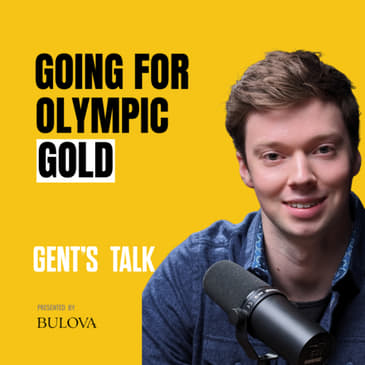
In this week's episode of Gent's Talk, presented by BULOVA, host Samir Mourani sits down with Olympian Nick Wammes to talk about his goals for the Paris Olympic games in 2024, what it was like being an Olympian at only 21 years of age, suffering through a back injury right before the Tokyo Olympics, the short life span of the sport, the challenges of financially sustaining a career as an Olympian and what athletes must do in order to make ends meet while competing at the highest levels.
#GentsTalk Connect with us! Subscribe here ► https://www.youtube.com/@GentsTalkPodcast Website: https://gentspost.com/ Instagram: https://www.instagram.com/gentspost/ TikTok: https://www.tiktok.com/@gentstalkpod Facebook: https://www.facebook.com/gentspost/ About Gent's Talk: The Gent's Talk series, powered by Gent's Post and presented by BULOVA Canada is an episodic video podcast conversation with leading gents and rising stars across various industries. Guests include Russell Peters, James Blunt, Jonathan Osorio, Director X, JP Saxe, Wes Hall, Johnny Orlando, Shan Boodram, Dom Gabriel, and Nick Bateman, just to name a few. The conversations range from career path, hurtles, mental health, family, relationships, business, and everything in between. Gent's Talk is the first-ever video podcast to be made available for streaming on all Air Canada domestic/international flights. We aim to have a raw, unfiltered conversations about our guests' lives, how they achieved success, lessons learned along the way, and the challenges encountered. About Nick Wammes: Nick Wammes is racing towards gold as a Canadian Olympian in Track Cycling. He has represented Canada around the world at the highest levels of competition, including Pan American Games, Commonwealth Games, World Championships, and World Cups. Nick has dedicated most of his life striving for excellence as a high-performance athlete and, in 2021, he made his childhood dream come true when he represented Canada at the Tokyo Olympics. Credits: Host/Producer: Samir Mourani Creative Director and Executive Producer: Steven Branco Video & Sound Editor: Roman Lapshin A STAMINA Group Production, powered by Gent's Post.
The Gent's Talk podcast, hosted by Samir Mourani, pulls the curtain back on difficult conversations around mental health, business, relationships and the difficulties around expressing oneself, with rising and leading gents from across the globe.
New episodes every Monday! #GentsTalk
Instagram: https://instagram.com/gentstalkpod
TikTok: https://tiktok.com/gentstalkpod
YouTube: https://www.youtube.com/@GentsTalkPodcast
[00:00:00] What don't people understand about Olympians?
[00:00:05] There's a lot you don't see.
[00:00:08] Like what?
[00:00:09] And for a lot of them, like I said, there's more disappointment than success.
[00:00:15] And the Olympians that I know, everyone that I've met is just incredibly dedicated to what they do.
[00:00:22] They're not making a whole lot of money.
[00:00:24] There are some Olympians that do make a lot of money, but the majority of them don't.
[00:00:30] What do you think?
[00:00:49] A super humble, super kind guy.
[00:00:51] We're talking about Alan Pallander.
[00:00:54] Probably one of my favorite people to talk to because every time I see him, he's just so happy.
[00:00:59] He's just got this big smile on his face.
[00:01:02] But speaking of smiles, I am excited to have this conversation with you Nick because I'm always intrigued by diving into the psyche of an Olympian
[00:01:14] and what it takes to be an Olympian and perform at the level that you have to perform at.
[00:01:20] One of my closest friends is also currently in the process of competing to get onto, I guess what's the right terminology?
[00:01:31] He's competing in tournaments to secure a spot in Paris for Canadian beach volleyball.
[00:01:38] Trying to gain a quota spot basically.
[00:01:40] Yeah.
[00:01:41] He's in Qatar right now, I think, playing in a tournament.
[00:01:45] But I wanted to get to know your story a little bit because people see Nick the Olympian, but who's the man behind the Olympian?
[00:01:58] Just a small town kid with a dream really.
[00:02:02] I've been doing this sport for a long time.
[00:02:04] Sorry when I was 12 and 24 now.
[00:02:07] It took a lot of years to gain the experience, the time, the training to get to where I am today.
[00:02:15] I grew up in the small southern Ontario town, about 1,000 people, big hockey town.
[00:02:22] Didn't play a lot of sports growing up, just some community sports, soccer, volleyball, basketball.
[00:02:27] Nothing really that big until I found cycling.
[00:02:31] It was kind of like a happen by chance.
[00:02:34] It was never really part of the plan.
[00:02:36] I was at this leadership camp in Aurelia, OELC.
[00:02:40] I got selected and I was in grade 7, I think it was.
[00:02:43] We were driving back.
[00:02:44] We stopped in Vaughan at Montana, I think it was.
[00:02:47] And the Tokyo 20, or try not Tokyo, sorry, the London 2012 Olympics were on.
[00:02:52] Women's team pursuit was going for bronze medal against, I think it was the US at the time.
[00:02:57] I said, what is this sport?
[00:02:59] That's what you mean.
[00:03:00] That was the catalyst.
[00:03:03] I just intrigued by the speed, racing around this wooden indoor track.
[00:03:07] What is this? This is crazy. You need to see what's more of this.
[00:03:10] Found it as a small track in London, Ontario.
[00:03:13] I said, mom, we're going.
[00:03:15] I was 12 years old and I'm going, you're a bit crazy.
[00:03:18] We ventured out there one Saturday and just kind of amazed by how steep the track was, how small it was, how tight it was.
[00:03:25] There was someone there that said, hey, do you want to try it?
[00:03:27] I said, yeah, I'm going to try it.
[00:03:29] I got on the bike that day and just started riding around in circles.
[00:03:32] I did a few drills, got on the track and never really looked back to be honest.
[00:03:36] Do you ever remind your mom of...
[00:03:38] Oh, she tells the story quite well.
[00:03:40] She tells the story quite well.
[00:03:42] She was how horrified she was of the 45 degree banking and just that you're not riding this.
[00:03:47] There's no way you're getting on a fixed year bike with no brakes.
[00:03:50] There's no brakes on these things?
[00:03:52] No, no brakes. One gear, no brakes.
[00:03:54] Direct drive, no coasting.
[00:03:57] I guess, yeah. When would you ever really brake and you're just trying to go for it?
[00:04:03] Yeah, essentially it's more dangerous to have brakes on than to not have brakes.
[00:04:06] You basically control the speed with your feet.
[00:04:08] You kind of have to back pedal to slow down.
[00:04:11] You can't coast.
[00:04:14] If you could coast, there'd be crashes all the time because there would just be people stop pedaling
[00:04:18] and you bring yourself up because you're basically controlled by a centrifugal force being stuck on the boards.
[00:04:23] So yeah, if you pull the brakes you'd slide out and go down the track.
[00:04:27] There'd be a lot more crashes that way.
[00:04:29] It's a safety aspect as well just to the sport.
[00:04:31] Makes the sport sound a lot more dangerous.
[00:04:34] Yeah, I always say that this sport looks beautiful until things go wrong
[00:04:40] because when things go wrong they go really wrong.
[00:04:42] Everything looks great until it doesn't.
[00:04:45] Have you ever had an accident?
[00:04:47] I've had a few, yeah.
[00:04:49] I'm not going on wood. I haven't had one in a long time.
[00:04:50] I had two bad crashes in 2015 basically back to back.
[00:04:55] There was one I was at home training on the road,
[00:04:57] along my track bike and fixed it here like I said.
[00:05:00] I decided to stop pedaling.
[00:05:02] I guess I just didn't have the cue in my mind that it was not my road bike
[00:05:05] and I stopped pedaling at probably 50k an hour
[00:05:08] and it just bucked me off my bike basically
[00:05:10] and tumbled, broke my collarbone,
[00:05:13] had a pretty minor concussion but yeah,
[00:05:15] I have a plate and six screws still in here since 2015.
[00:05:17] So there was that one I recovered from that one
[00:05:20] and then I crashed that fall or that, yeah,
[00:05:23] I guess that winter December on the track in London.
[00:05:27] I was going too fast and something, something happened.
[00:05:30] I lost control and I went up and hit the railing.
[00:05:33] My bars locked onto the railing and spun my bike around
[00:05:36] and I got tossed down the track.
[00:05:38] I basically out for a couple hours.
[00:05:41] I woke up in the hospital the next morning.
[00:05:43] Wow.
[00:05:45] And that's pretty like about a six week recovery
[00:05:47] and I had a concussion on that one.
[00:05:49] So, haven't had a big one since just a couple little slide-outs
[00:05:53] some rashes and stuff like that but nothing major since then.
[00:05:56] So, been thankful that way.
[00:05:58] Oh absolutely.
[00:06:00] And I'm glad to hear that there hasn't been anything since
[00:06:02] and like you said knock on wood that there isn't anything going forward.
[00:06:06] It's interesting to me
[00:06:09] whenever someone suffers from an injury of some kind
[00:06:15] there's always that initial recalibration period afterwards.
[00:06:19] Right?
[00:06:21] Like what's going through your mind as you get back on the bike for the first time
[00:06:23] after that incident.
[00:06:25] Do you remember what that was like?
[00:06:27] Like the first few thoughts that you had as you're about to get back on a bike
[00:06:29] or was it just a seamless?
[00:06:31] I think I was still pretty young at that point.
[00:06:33] I was eager to kind of just get back and get back into it.
[00:06:36] More recently though, I injured my back in the build to Tokyo actually.
[00:06:40] Okay.
[00:06:42] Pretty like, it's hard to, basically my SI joint got stuck.
[00:06:45] The SI joint is?
[00:06:47] Basically like low back.
[00:06:49] And no one could figure out what was going on with me.
[00:06:51] I basically got to a point where I couldn't walk anymore.
[00:06:53] It was just so painful to get up and move and walk.
[00:06:56] That was in the build up to the Tokyo Olympics.
[00:06:58] That was basically four or five months out from the Olympic Games.
[00:07:01] And I was just kind of an injury that progressively got worse.
[00:07:05] It was a month between Kyro's, Physio's, Massage Therapist, X-rays being done.
[00:07:11] No one could figure out what was happening with my back.
[00:07:13] I just slowly progressively got worse.
[00:07:15] That was a daunting experience because I was in the build to my first Olympic Games.
[00:07:19] I already been selected.
[00:07:21] We were already doing that extra year of training basically.
[00:07:23] It took me going home to my chiropractor in Chatham actually and kind of figured out what was wrong.
[00:07:27] And got unlocked and got into a rehab process of basically rebuilding.
[00:07:31] It took me about a month to rebuild.
[00:07:33] I was out of the gym, off the bike, basically doing like 30 minute spins.
[00:07:37] All I could do on the bike and it was so painful.
[00:07:40] But that was a more daunting experience for sure.
[00:07:45] But it just wasn't going to work out and that was it.
[00:07:48] There was a real thought to my mind at the point that I wouldn't be going to the Olympics.
[00:07:52] How did you persist through that?
[00:07:56] That was tough.
[00:07:58] I think it's like, that one was tough.
[00:08:03] Yeah, it's hard to kind of bring that one up because you build so long.
[00:08:07] My dream as a kid was always to go to the Olympic Games and we were so close.
[00:08:10] I mean you had the extra year of training, kind of a tough battle to get through when we realized the games were postponed.
[00:08:15] Got an extra year to train.
[00:08:17] I was in a really, really tight battle with my teammates.
[00:08:19] We were going back and forth all the time.
[00:08:21] We had the two spots where we were both going but we were kind of battling it out and training every single day.
[00:08:25] I wanted to be faster and then the injury happened.
[00:08:28] Yeah, that one was tough.
[00:08:31] It's one of those things you kind of have to just push through and take day by day.
[00:08:35] It's not something you really have control over until once it's happened.
[00:08:39] It's basically how you can control coming back from it.
[00:08:42] And I just leaned on my team around me a lot.
[00:08:46] My partner Sarah really helped me get through that.
[00:08:49] She was amazing through the whole process, like just being there to support through the whole thing.
[00:08:53] Mike Hiro, my team of physios.
[00:08:56] Like it just, the coaches were all very supportive.
[00:08:59] It just took a big team to get me back on the bike after that one.
[00:09:02] Kind of more figuratively speaking.
[00:09:04] A mental game.
[00:09:06] Mental game for sure.
[00:09:08] I actually thought I might not go to the games.
[00:09:09] The staff wouldn't let on that they were scared but they were also nervous.
[00:09:15] Our head coach after the games, once I had finished competing in Tokyo,
[00:09:19] he told me, he had to be like, you know, I was worried.
[00:09:22] I was worried you might not have been here this week because when I saw you,
[00:09:26] when I showed up, because he's from New Zealand,
[00:09:28] so he came in like later, he came basically for the final build into Tokyo.
[00:09:32] He's like, when I got here and you're doing 30 minute roller sessions,
[00:09:34] that's all you could do.
[00:09:36] I was a little bit nervous.
[00:09:37] But yeah, we just got it done.
[00:09:39] Just took a day by day and session by session got back to doing,
[00:09:43] being actually at my best in Tokyo.
[00:09:45] I never performed that level to what I did in Tokyo.
[00:09:48] When you heard your coach say those words to you,
[00:09:51] what went through your mind?
[00:09:53] What'd you feel?
[00:09:55] It was tough because it was like after the Kieran in Tokyo,
[00:10:00] I was on the roller cooling down.
[00:10:02] I kind of had to have a great performance in the Kieran.
[00:10:04] I did a good performance in sprint, like a personal best in the qualifying,
[00:10:05] for sprint.
[00:10:07] There's two events I did, the sprint and the Kieran.
[00:10:09] Sorry, can you clarify what the difference between the two events?
[00:10:11] So basically, the sprint event is a two person event.
[00:10:14] You basically do a 200 meter qualifier,
[00:10:16] so you go on the track by yourself and you do a qualifying lap,
[00:10:18] get seated based on your time.
[00:10:21] And you basically go one versus one to get down to like the later rounds
[00:10:24] to fight for the medals.
[00:10:26] Whereas Kieran, it's basically,
[00:10:28] you get put into heats of six riders.
[00:10:31] Those six riders line up behind a Derny,
[00:10:33] which is basically a motorbike, electric motorbike on the track
[00:10:35] and it brings you up to speed 50 kilometers an hour.
[00:10:38] And then pulls off the track with three laps to go.
[00:10:40] And basically all the six riders fight it out
[00:10:42] for first one to be across the line.
[00:10:44] Wow.
[00:10:46] So I just finished Kieran when he came up to me at this point
[00:10:48] and I finished, I think like 25th, 24th in the Kieran,
[00:10:52] which is out of 30 guys, it's not that great.
[00:10:54] I was a little bit nervous going into that event
[00:10:56] and so I think I was a little disappointed in myself.
[00:10:58] So kind of have him come up to me
[00:11:00] and say that was like a little bit reassuring,
[00:11:02] but I kind of just kind of went in one ear note
[00:11:03] at the other at that point
[00:11:05] because I was kind of disappointed in my performance.
[00:11:07] How did you turn it around then?
[00:11:09] How did you like get out of your own way?
[00:11:12] Yeah, I don't know.
[00:11:14] It was kind of a weird like year with Tokyo
[00:11:16] because obviously that gap we usually have
[00:11:18] after the games we didn't have.
[00:11:21] And I think it took me a long time to process
[00:11:23] what he had said because I took 10 days off
[00:11:25] after the games in Tokyo
[00:11:27] and then I went straight onto a Nations Cup
[00:11:29] in Columbia to qualify for World Championships
[00:11:31] was that fall.
[00:11:33] And then back to back.
[00:11:35] It wasn't until that I finished Worlds in Roubaix
[00:11:39] that you're in France that I kind of sat down
[00:11:41] and thought, shit, like what a crazy year that was.
[00:11:44] And that's when I started to really process
[00:11:46] the injury and like Tokyo
[00:11:48] and going to Nations Cup,
[00:11:50] winning a first Nations Cup that we had to win
[00:11:52] in order to qualify to World Championships
[00:11:54] and then getting to Worlds
[00:11:56] and just being like absolutely spent mentally, physically.
[00:11:58] I was done by the time we finished World Champs
[00:12:00] and it was hard to get on the line
[00:12:01] in Roubaix.
[00:12:03] It was just like I think I was so exhausted mentally
[00:12:06] from that period of time leading into the games
[00:12:10] and between the injury and then getting there
[00:12:13] and then going through it.
[00:12:15] I was definitely blocking it out.
[00:12:18] I mean you're talking about the Olympic Games
[00:12:20] which is like the pinnacle of our sport.
[00:12:22] Like I said, once I finished Worlds
[00:12:26] I kind of started to process what had happened
[00:12:28] in the last year.
[00:12:29] I was still with the pandemic
[00:12:31] and everything's going on in the world
[00:12:33] and the shit that I had to go through
[00:12:35] is just to get on the line in Tokyo
[00:12:37] and once I finished Worlds
[00:12:39] and processed everything that I went through it,
[00:12:41] yeah, it hit me.
[00:12:43] It was a tough couple weeks after.
[00:12:45] Everyone always talks about like the post games let down.
[00:12:47] Mine was almost the post worlds let down
[00:12:49] because I basically didn't shut off from
[00:12:51] June 2020 to October 2021.
[00:12:56] That's a long time.
[00:12:57] It was a long time.
[00:12:59] Yeah, it took a lot out of me for sure.
[00:13:01] What did you learn from all that?
[00:13:03] When you finally had that moment to sit down
[00:13:05] and think to yourself,
[00:13:09] I just need to find balance.
[00:13:11] Like it was, at that time too we were still living
[00:13:14] with like teammates and team houses basically.
[00:13:17] So that was a bit mentally draining as well
[00:13:19] and you're just in the environment
[00:13:21] and like it was like with the pandemic
[00:13:23] everyone was confined.
[00:13:25] You know, we were all kind of in that bubble per se.
[00:13:27] It was a very exhausting 18 months of
[00:13:30] everything that went on from early 2020 to the end of 2021.
[00:13:36] Do you ever think about packing it in?
[00:13:38] Just like, you know what, this took so much out of me.
[00:13:41] I've never been that way because I always said that
[00:13:43] when I was kid I would say I want to do three Olympics.
[00:13:46] Okay.
[00:13:48] I want to do 2028 could be the exit.
[00:13:50] I don't know, I could go longer at this point.
[00:13:52] I don't know, retiring at 28 in this sport
[00:13:54] would be pretty young.
[00:13:55] A lot of guys last until like 30, 32.
[00:14:00] Some people exit younger depends on like their success
[00:14:03] and the sport and how long their body can take.
[00:14:05] But I have the unique situation that I've also been in
[00:14:09] sport for a very long time.
[00:14:11] I've been doing it since I was 12 which is long.
[00:14:13] By the time I get to LA hopefully that'll be
[00:14:17] 2028.
[00:14:19] So Paris this year, 2020 ABLA that'll be 10 years
[00:14:22] for me at the elite level.
[00:14:24] Which is the toll on your body.
[00:14:26] I can only imagine.
[00:14:28] It's tough, just constantly.
[00:14:30] We train a lot.
[00:14:32] What's your training regimen like?
[00:14:34] Right now we train five days a week twice a day.
[00:14:36] Monday, Wednesday, Friday we lift in the morning.
[00:14:40] Monday afternoon and Friday afternoon we do track
[00:14:44] in the afternoon and then Tuesday Thursday mornings
[00:14:46] we do track in the afternoon.
[00:14:48] And then Wednesday we have like an aerobic session
[00:14:49] like a road ride or an aerobic track session
[00:14:52] and treatment on that day as well like massage.
[00:14:54] So how do you fund all of this?
[00:14:57] Because the conversation I had with Daniel,
[00:15:02] the beach volleyball player is he has to sell fund
[00:15:05] a lot of it.
[00:15:07] Fund raising, sponsorship.
[00:15:09] I am carded at senior elite level because I am like
[00:15:12] based on my performance I am carded by the government.
[00:15:14] And that allocates you a certain amount right?
[00:15:16] Yeah allocates me.
[00:15:17] I have 21,000 a year which is enough to survive.
[00:15:21] Survive?
[00:15:23] If that.
[00:15:25] Everything else is self funded like I lean a lot
[00:15:27] of my social media like partnerships, brand deals,
[00:15:29] sponsors.
[00:15:31] You have to.
[00:15:33] You have to build that and my partner Sarah and I
[00:15:35] we've been focusing on that a lot the last few years
[00:15:37] and building social media and building our brands
[00:15:39] and working with brands and doing those brand deals
[00:15:41] because it's so important to have that money
[00:15:43] to live like 21,000 dollars a year is not a whole
[00:15:46] lot to be able to pay rent in the GTA which is expensive.
[00:15:49] We live in Milton and I mean rent is expensive.
[00:15:53] We basically have to be here because we train at a
[00:15:55] national training facility like we have to
[00:15:57] Where's the facility?
[00:15:59] In Milton.
[00:16:01] Madden National Cycling Center but we basically need
[00:16:03] to be here to train on the track.
[00:16:06] We train on the track every day whereas the
[00:16:08] endurance riders as well they'll come in for
[00:16:10] camps and competition preps and but they
[00:16:12] can kind of go home and do their own thing
[00:16:13] for the other weeks of the year that they're
[00:16:15] not training in Milton.
[00:16:17] We're at the last where they're a year round.
[00:16:19] We live in Milton. Milton's home for me now.
[00:16:21] So this training regiment that you're in right
[00:16:23] now
[00:16:26] you said today is a day off.
[00:16:28] Today is a day off.
[00:16:30] What do you do on a day off other than come
[00:16:32] in for a contest?
[00:16:34] Which now I feel bad about because I brought
[00:16:36] you in on your day off.
[00:16:38] No for sure and it's like rest is so
[00:16:40] important for us right now like we're
[00:16:41] going to go to Los Angeles and of March
[00:16:44] and then I have the home Nations Cup in
[00:16:46] Milton middle of April.
[00:16:48] So right now we kind of finished like a
[00:16:50] development block of training that we
[00:16:52] did after we came back from Australia
[00:16:54] earlier in February.
[00:16:56] It's kind of like a transition week before
[00:16:58] we get into like a pre-competitive
[00:17:00] phase leading into Pan Am Champs in LA
[00:17:02] and Milton Nations Cup.
[00:17:04] So kind of had a bit of a modified
[00:17:06] training schedule this week.
[00:17:08] So this morning I slept in got up at
[00:17:09] Sarah had training today so I got we got
[00:17:12] up made coffee.
[00:17:14] Sarah is also a cyclist.
[00:17:16] She's basically the same role as me
[00:17:18] on the women's side.
[00:17:20] She's sprinter as well.
[00:17:22] So we basically do the same thing all
[00:17:24] the time.
[00:17:26] We're together all the time so she
[00:17:28] trained today so we got up made
[00:17:30] coffee this morning and then she
[00:17:32] went to training and I basically
[00:17:34] just laid on the couch for two
[00:17:36] hours, filmed some reels this
[00:17:37] morning and then we started
[00:17:39] doing a partner that's in the same
[00:17:41] field as you.
[00:17:43] I imagine it allows you there's
[00:17:45] almost an unspoken understanding
[00:17:47] of the challenges that sometimes
[00:17:49] you don't always have to articulate
[00:17:51] them in so many words because
[00:17:53] they're just that natural
[00:17:55] understanding of what you're going
[00:17:57] through.
[00:17:59] I think we're pretty good in that
[00:18:01] way like she sees the good days
[00:18:03] and the bad days and I have the
[00:18:05] same thing for seeing what she
[00:18:07] doesn't do together.
[00:18:09] Between travel we go all the same
[00:18:10] races, our training schedule is
[00:18:11] basically the same.
[00:18:13] We do all of our content together.
[00:18:15] Yeah.
[00:18:17] That's awesome.
[00:18:19] Yeah it's really good.
[00:18:21] And you're lucky in that sense.
[00:18:23] We've been able to build a
[00:18:25] pretty successful business and
[00:18:27] we know we go through on a
[00:18:29] daily basis so it's pretty cool
[00:18:31] in that sense.
[00:18:33] So you're gearing up for
[00:18:35] the Paris 2024 Olympics this
[00:18:38] year.
[00:18:40] What's one thing that you know
[00:18:42] that you learned from Tokyo
[00:18:44] that you're bringing with you
[00:18:46] in your quest for Paris?
[00:18:50] I've been thinking about this
[00:18:52] a lot recently because it's
[00:18:54] when I was building into Tokyo
[00:18:56] I was not really at the
[00:18:58] forefront of the qualifying
[00:19:00] process.
[00:19:02] I was still a very much a young
[00:19:04] developing athlete and I didn't
[00:19:05] really know what I was doing.
[00:19:07] At the last Nations Cup, the
[00:19:08] last World Cup we had in
[00:19:10] Melton, home Nations Cup
[00:19:12] and I was the fastest qualifier
[00:19:14] for our team.
[00:19:16] That's the funny one I got to the
[00:19:18] top of the Canadian team.
[00:19:20] Whereas before like there's
[00:19:22] still that long qualifying
[00:19:23] process before that so the guys
[00:19:25] that were ahead of me before
[00:19:27] were doing a lot of the points
[00:19:29] and accumulating the points
[00:19:31] and going to all the races
[00:19:33] that I wasn't going to while
[00:19:35] being a modified quad with the
[00:19:37] three years of.
[00:19:39] I've been at the front the entire
[00:19:41] time.
[00:19:43] I've been leading the team
[00:19:45] I guess you could say.
[00:19:47] A lot of the team now is younger
[00:19:49] than me and trying to guide
[00:19:51] this team and do the points
[00:19:53] we need to do and go to all the
[00:19:55] races and stuff like that's
[00:19:57] been a bit more challenging.
[00:19:59] It's been like a new challenge
[00:20:01] for me.
[00:20:03] How do you not take your foot
[00:20:05] and what's the difference?
[00:20:07] I was leading into Tokyo.
[00:20:09] I was just always building, always
[00:20:11] learning basically everything
[00:20:13] I was doing I was just getting
[00:20:14] faster and stronger the more
[00:20:16] training I did but this time
[00:20:18] I've like had to focus
[00:20:20] more on being intentional
[00:20:22] and like when you're developing
[00:20:24] athlete the gains come much
[00:20:26] using what they come now.
[00:20:28] Now everything's got you got
[00:20:30] you're I'm thinking so much
[00:20:32] more about like recovery
[00:20:33] and I'm just like I'm just
[00:20:35] getting a little bit of the
[00:20:37] coach just to make sure that
[00:20:39] I'm getting everything out of
[00:20:40] it you know everything's
[00:20:41] taken account like even today
[00:20:42] coming into Toronto like how
[00:20:44] how is that affecting my
[00:20:46] recovery.
[00:20:48] Everything is taken into account
[00:20:50] or before I never really had
[00:20:52] that I was always just
[00:20:54] doing whatever I was training
[00:20:56] developing and getting faster
[00:20:58] whereas when you get later on
[00:21:00] into your career the gains
[00:21:01] are going to take you into
[00:21:03] account and I think
[00:21:05] do you like living in that
[00:21:07] in that world and that
[00:21:09] environment where it's a lonely
[00:21:11] world.
[00:21:13] It's a lonely world that's for
[00:21:15] sure.
[00:21:17] I mean like everything we do
[00:21:19] like our social circle is not
[00:21:21] that big at all like we don't
[00:21:23] do a lot of extra curriculars
[00:21:25] I guess you could say
[00:21:27] we yeah we a lot of our time
[00:21:29] we spend on the couch resting
[00:21:31] both Sarah and I are so driven
[00:21:33] and like so motivated for
[00:21:35] the goals that we want to do in
[00:21:36] this sport.
[00:21:38] They're just real okay with it
[00:21:40] and we know
[00:21:42] why we're doing what we're doing.
[00:21:44] So in those moments
[00:21:46] when you notice the loneliness
[00:21:49] how do you keep yourself
[00:21:51] motivated.
[00:21:53] I think that's probably why
[00:21:55] like the social media contents
[00:21:57] come in so much like it's been
[00:21:59] like a almost an outlet
[00:22:00] for both of us
[00:22:02] just kind of having that balance
[00:22:04] earlier on in my career I didn't
[00:22:06] do a whole lot like social
[00:22:07] media based and I would kind
[00:22:09] of just learning photography
[00:22:10] and videography like late
[00:22:12] 2018 2019 wasn't really taking
[00:22:14] the whole social media thing
[00:22:16] seriously.
[00:22:18] Just I was just watching a lot
[00:22:20] of Netflix laying in bed
[00:22:22] between sessions just kind of
[00:22:24] I mean I was 18 19 I just
[00:22:26] was happy to be training
[00:22:28] didn't really you know wasn't
[00:22:30] really really focused on building
[00:22:31] the other part of my career
[00:22:33] because you know sport doesn't
[00:22:34] last forever
[00:22:36] and making sure that I'm
[00:22:37] developing that in a
[00:22:39] timely fashion I guess you could
[00:22:40] say is pretty important to me.
[00:22:42] So having that balance
[00:22:44] has been something that we've
[00:22:45] been able to put time into
[00:22:47] and just help to sort of
[00:22:49] ease the pressure on the mind
[00:22:51] as we're training.
[00:22:53] Obviously the goal
[00:22:55] going into Paris is to win
[00:22:56] I've had a few conversations now
[00:22:59] with athletes about
[00:23:01] what happens when they
[00:23:03] reach for a goal and it doesn't
[00:23:05] necessarily translate
[00:23:07] or how they
[00:23:08] essentially mentally prepare
[00:23:10] for that battle.
[00:23:12] Right the possibility that
[00:23:13] you don't achieve the goal
[00:23:14] that you've been working so
[00:23:16] hard for and the possibility
[00:23:17] that you come out on top
[00:23:18] and you're king in the
[00:23:19] world type of thing
[00:23:20] and almost not letting
[00:23:21] yourself go too negative
[00:23:23] or too positive because
[00:23:24] you don't want to get too
[00:23:25] comfortable thinking it's
[00:23:26] going to work out and you also
[00:23:27] don't want to make yourself
[00:23:28] feel like shit.
[00:23:30] Where do you fall in that
[00:23:31] spectrum?
[00:23:33] I think
[00:23:36] you almost need to be okay
[00:23:37] with losing in the sport
[00:23:39] I don't want to say okay
[00:23:40] with losing but you have to
[00:23:41] learn to accept disappointment
[00:23:42] and how to deal with it
[00:23:43] because at the end of the
[00:23:44] day it's only three medals
[00:23:45] per event
[00:23:47] you don't get medals for
[00:23:48] four, five, six, seven,
[00:23:49] seven all the way up to ten
[00:23:50] there's three medals
[00:23:52] and there's usually
[00:23:53] 30-35 guys competing
[00:23:59] yeah I guess it's something
[00:24:00] you have to
[00:24:02] to learn to manage disappointment
[00:24:05] because I've been disappointed
[00:24:06] in the sport more times
[00:24:07] than I've been satisfied
[00:24:10] and I think it's just
[00:24:12] latching onto the good moments
[00:24:14] in last fall we were in
[00:24:16] Chile for Pan Am Games
[00:24:17] and we won the team sprint
[00:24:18] which was a huge goal of us
[00:24:20] of ours for the team
[00:24:22] and we did it and it's just like
[00:24:23] it was a huge moment for us
[00:24:26] you can just latch on to those
[00:24:27] good moments
[00:24:28] I was talking earlier about
[00:24:29] going to Columbia for the Nations Cup
[00:24:31] after the Olympics
[00:24:33] we had to win that event
[00:24:35] to go to Worlds
[00:24:36] in Rebe that fall
[00:24:37] and we did it
[00:24:38] we won
[00:24:39] we did a national record
[00:24:40] in terms of time
[00:24:41] and we won the event
[00:24:42] we won gold medal
[00:24:43] that was my first time
[00:24:44] winning a World Cup
[00:24:46] you just hold on to those
[00:24:47] good moments
[00:24:48] and kind of just
[00:24:49] keep chasing it every time
[00:24:51] yeah
[00:24:53] the point you make about
[00:24:55] there's a lot more disappointments
[00:24:56] and there are successes
[00:24:57] I think is part of what
[00:24:59] a lot of people don't see
[00:25:00] when they look at
[00:25:01] Olympians right
[00:25:03] it's the same way when someone
[00:25:04] achieves some measure of success
[00:25:05] and you put it on your social media
[00:25:07] they don't see the hard work
[00:25:08] and the nose
[00:25:09] and the rejections
[00:25:10] and the failures
[00:25:11] and the almosts
[00:25:12] that let up
[00:25:14] so
[00:25:16] are you at a point
[00:25:17] where you're
[00:25:18] qualified if that's the right word
[00:25:19] for Paris
[00:25:21] not yet
[00:25:22] what has to happen
[00:25:23] so basically like I said
[00:25:24] Pan Am Champs coming up
[00:25:26] in Los Angeles
[00:25:27] end of April
[00:25:28] sorry, end of March
[00:25:31] basically we're trying to qualify
[00:25:32] the team sprint
[00:25:33] which is a timed event
[00:25:34] with three riders
[00:25:36] basically all trying to
[00:25:37] drop each other
[00:25:38] we race it as a team
[00:25:39] three riders
[00:25:40] P1 leads us off
[00:25:41] I'm P2
[00:25:42] follows
[00:25:43] and I try to drop
[00:25:44] P3 as fast as possible
[00:25:45] the total time
[00:25:46] of three laps
[00:25:47] is taken
[00:25:48] and then basically
[00:25:49] ranks you
[00:25:50] so we're trying to qualify
[00:25:51] through that event
[00:25:52] where the top eight teams
[00:25:53] in the world
[00:25:54] get to go to Paris
[00:25:55] for the Olympics
[00:25:56] if we do that
[00:25:57] we qualify
[00:25:58] full quota spots
[00:25:59] for Canada
[00:26:00] which would be three men
[00:26:02] if we don't qualify
[00:26:03] the team sprint
[00:26:04] we need to qualify
[00:26:05] individually
[00:26:06] basically through sprint
[00:26:07] or through Kieran
[00:26:10] and if we do that
[00:26:11] we either have
[00:26:12] one or two spots
[00:26:13] depending on that
[00:26:14] and once we
[00:26:15] earn those quota spots
[00:26:16] then we need to be selected
[00:26:17] to the team
[00:26:18] by Canada
[00:26:20] so like
[00:26:21] you can
[00:26:22] wow that's a lot
[00:26:23] it's a lot you got to do
[00:26:24] just to qualify
[00:26:26] and then
[00:26:27] get your head in the right space
[00:26:28] so we started this process
[00:26:29] last February
[00:26:30] in Indonesia
[00:26:32] for the first Nations Cup
[00:26:33] of basically
[00:26:34] 14 month qualifying process
[00:26:37] last February
[00:26:38] last February
[00:26:39] we started
[00:26:40] there's seven events total
[00:26:41] we have to do
[00:26:42] around the world
[00:26:44] so
[00:26:45] um
[00:26:48] okay
[00:26:49] sorry
[00:26:50] I'm just thinking about
[00:26:51] like the length of time
[00:26:52] that you have to
[00:26:53] yeah it's a lot
[00:26:54] it's a big challenge
[00:26:56] and then the mental grind
[00:26:57] I could only imagine
[00:26:59] last season
[00:27:00] like I said
[00:27:01] we started in February
[00:27:02] in Jakarta
[00:27:03] and then we had
[00:27:04] about a six week build
[00:27:05] into our home Nations Cup
[00:27:06] in Milton
[00:27:07] we're very fortunate
[00:27:08] because we get to have
[00:27:09] a home Nations Cup
[00:27:10] each year
[00:27:11] whereas some people don't
[00:27:12] we did a three year deal
[00:27:13] with the UCI
[00:27:14] 23 and 24
[00:27:16] so we have two
[00:27:17] of the seven events
[00:27:18] our home Nations Cup
[00:27:19] for us
[00:27:20] which is big for us
[00:27:21] it's brilliant
[00:27:22] that we're not going to travel
[00:27:23] so last year
[00:27:24] we did Jakarta
[00:27:25] then Milton
[00:27:26] which was six weeks apart
[00:27:27] and then six weeks after
[00:27:28] that
[00:27:29] we had Pan American
[00:27:30] Championships in Argentina
[00:27:32] and then
[00:27:33] seven weeks after that
[00:27:34] we had World Championships
[00:27:35] in Glasgow
[00:27:36] in Scotland
[00:27:37] and usually
[00:27:39] there's two World Championships
[00:27:40] in the qualifying process
[00:27:41] but because of
[00:27:42] the way they structured
[00:27:43] the schedule
[00:27:44] there's only one
[00:27:45] so World's last year
[00:27:46] was worth points and a half
[00:27:49] so that was stressful
[00:27:51] and then we went all the way to
[00:27:52] we had basically
[00:27:53] a big break
[00:27:54] because World's first year
[00:27:55] usually in October
[00:27:56] but this year
[00:27:57] it was in August
[00:27:58] 2023 it was in August
[00:27:59] because it was super worlds
[00:28:00] but all cycling disciplines
[00:28:01] combined
[00:28:03] so we had a big build
[00:28:04] into this Nations Cup season
[00:28:05] which was
[00:28:06] we started in February
[00:28:07] we were in
[00:28:08] Adelaide in Australia
[00:28:10] now we have an eight week
[00:28:12] build from that
[00:28:13] into Pan Am Championships
[00:28:14] and then
[00:28:15] a one week difference
[00:28:16] between Pan Am Championships
[00:28:17] and Milton
[00:28:18] and then after Milton
[00:28:19] will end the qualifying process
[00:28:20] for us
[00:28:23] Good luck man
[00:28:24] Yeah, it's a long process
[00:28:26] It's a very long process
[00:28:27] What?
[00:28:30] What don't people
[00:28:31] understand about Olympians?
[00:28:35] What do people...
[00:28:36] There's a lot you don't see
[00:28:38] Like what?
[00:28:39] And for a lot of them
[00:28:41] like I said
[00:28:42] there's more disappointment than success
[00:28:45] and
[00:28:46] the Olympians that
[00:28:47] I know
[00:28:48] everyone that I've met
[00:28:49] is just incredibly dedicated
[00:28:50] dedicated to what they do
[00:28:52] They're not making a whole lot of money
[00:28:54] There are some Olympians
[00:28:55] that do make a lot of money
[00:28:56] but the majority of them don't
[00:28:58] A lot of people that I've even met too
[00:28:59] they're
[00:29:00] have even less funding than I do
[00:29:02] I'm very fortunate
[00:29:03] to actually have the senior card
[00:29:04] and
[00:29:07] but everyone's just super passionate
[00:29:08] super motivated
[00:29:09] love what they do
[00:29:10] and they want to compete at the Olympics
[00:29:14] They just want to be at the top of their sport
[00:29:17] What's the difference
[00:29:18] when you say some people
[00:29:20] make money
[00:29:21] or have money
[00:29:22] through this
[00:29:23] what's the difference
[00:29:24] between those people
[00:29:25] and the rest of the playing field?
[00:29:27] Is it just
[00:29:28] side businesses
[00:29:30] or sponsorship?
[00:29:31] Yes and no
[00:29:33] You got to point out
[00:29:34] like some of the big name Olympians
[00:29:36] Like you know
[00:29:37] you got to think about the
[00:29:38] there's a lot of sports at the Olympics
[00:29:40] and there's a lot of them that
[00:29:43] get more airtime
[00:29:44] more recognition
[00:29:46] than some other sports
[00:29:47] I mean you think the Olympics
[00:29:48] you think the 100 meter
[00:29:50] That's the pinnacle of the Olympics
[00:29:52] whether you say it or not
[00:29:53] the 100 meters pinnacle Olympics
[00:29:55] Everyone tunes in
[00:29:57] for that race
[00:30:00] So there's
[00:30:01] Olympians that do make a lot of money
[00:30:02] Some of them do have side businesses
[00:30:03] Some of them just have very successful personal brands
[00:30:08] but there's a lot of new sports out there
[00:30:11] Where does cycling rank
[00:30:12] in your mind?
[00:30:14] I think track cycling at the Olympics
[00:30:16] gains a lot of recognition
[00:30:17] I think it's a pretty
[00:30:18] spectator friendly sport
[00:30:20] when it comes to the Olympics
[00:30:21] I think it does get quite a bit of airtime
[00:30:22] I think that's the thing right
[00:30:23] It's got to attract the viewers
[00:30:24] the eyeballs
[00:30:25] Yeah, it's got to attract the viewers
[00:30:27] Very spectator friendly
[00:30:28] because you can see
[00:30:29] the entire race happening
[00:30:30] It's not like
[00:30:31] the road race where it's
[00:30:33] you know people go by
[00:30:34] and it's done
[00:30:35] track cycling is all in front of you
[00:30:37] You can see everything
[00:30:38] you can see the infield
[00:30:39] all the riders warming up
[00:30:40] riders on the track
[00:30:42] So in that case it's really good
[00:30:46] Yeah
[00:30:48] Okay
[00:30:49] So
[00:30:51] what happens
[00:30:52] I mean
[00:30:53] I hope this is not too premature
[00:30:54] of a question
[00:30:55] but
[00:30:57] if you tell me
[00:30:58] retirement for
[00:31:00] an Olympian in your sport
[00:31:02] is early 30s
[00:31:04] you got the rest of your life
[00:31:06] Do you
[00:31:07] Are you ideating already
[00:31:09] on what you plan to do
[00:31:10] post career
[00:31:12] Like do you want to get into coaching
[00:31:13] do you want to
[00:31:14] some people
[00:31:16] like go back to school
[00:31:17] is it
[00:31:19] Have you even thought that far?
[00:31:20] I've thought that far
[00:31:21] Okay
[00:31:22] I've thought that far
[00:31:24] and I think that's kind of why
[00:31:25] I put so much energy into learning
[00:31:27] videography cinematography
[00:31:28] photography now
[00:31:29] because that's something I want to do after
[00:31:31] people are always asking me about coaching
[00:31:32] but I think I
[00:31:33] I could be a good coach
[00:31:34] but I also cannot be a terrible coach
[00:31:35] because I really tell people how it is
[00:31:37] I gotta be almost too harsh
[00:31:39] Okay
[00:31:42] But yeah
[00:31:45] It's hard because it's like
[00:31:46] you want to be so all in
[00:31:47] in the sport
[00:31:48] but you
[00:31:49] whatever day it could be
[00:31:50] it's gonna end
[00:31:51] Yeah
[00:31:52] and having a backup plan
[00:31:53] like I don't
[00:31:54] I didn't go to school after high school
[00:31:55] I moved right from
[00:31:56] I turned 18 moved out of the house
[00:31:57] moved to Milton
[00:31:58] started training
[00:31:59] and I basically self taught myself
[00:32:00] photography and cinematography
[00:32:04] I don't know what avenue that could take
[00:32:07] whether that be like through personal
[00:32:09] channels personal platforms
[00:32:11] and building on that
[00:32:13] or actually going into the production space
[00:32:15] I don't know where that may take me
[00:32:17] but I know that after this
[00:32:18] where I want to end up is somewhere in the media space
[00:32:23] I want to go back to a moment
[00:32:25] your cycling career
[00:32:28] or the cycling that you're doing for Paris
[00:32:31] you're doing it individually
[00:32:33] and with a team
[00:32:34] Correct
[00:32:35] Yeah
[00:32:36] How do you navigate the
[00:32:39] egos
[00:32:40] the ups and downs of
[00:32:43] competing for something so big
[00:32:46] with other people
[00:32:49] where your
[00:32:50] your overall result
[00:32:52] is partially tied to
[00:32:54] or not partially
[00:32:55] but some of it is
[00:32:57] what they do
[00:32:58] right like that's a lot of
[00:33:00] outside control
[00:33:05] I've been like
[00:33:08] the environment leading into Tokyo was difficult for me
[00:33:10] I was like I said the younger kid coming up
[00:33:13] and still developing, still learning
[00:33:15] and I've taken on more of like the
[00:33:17] senior team leader role if you say
[00:33:20] this quad
[00:33:23] we've got a really really good Gipper guys
[00:33:25] like we train well together
[00:33:26] we all push each other
[00:33:27] we know what we want
[00:33:30] but that aspect does come into play
[00:33:32] right like
[00:33:34] if it comes down to a fact
[00:33:35] we only have one or two spots
[00:33:37] everyone's going to want them
[00:33:40] but it's just kind of a battle every day
[00:33:42] making sure that you're doing what you can
[00:33:44] to be the best
[00:33:45] and because the decision will be
[00:33:47] performance based
[00:33:49] who can perform the best
[00:33:51] at the Olympics in Paris
[00:33:54] is there some solace in knowing that
[00:33:57] that it's tied to performance
[00:33:59] and purely that
[00:34:02] like when you say that I think about
[00:34:04] you know it's almost like going for a promotion
[00:34:07] right and then sometimes you wonder if
[00:34:09] so and so got the promotion over you
[00:34:11] because they have a better relationship with a person
[00:34:13] but here
[00:34:14] it's very much who has the best time
[00:34:16] and it sounds like there's some
[00:34:19] silver lining and knowing that
[00:34:21] you either had the best time or you didn't
[00:34:24] yeah so like
[00:34:26] we're lucky in that case that we are
[00:34:28] like a stopwatch based sport
[00:34:31] for the most part
[00:34:32] I mean there's racing like one versus one
[00:34:34] and tactics to come into play but
[00:34:36] the stopwatch doesn't lie
[00:34:40] and you got to show up with the race
[00:34:42] you got to show up on the day and
[00:34:45] people have good days and bad days
[00:34:47] but you gotta be
[00:34:49] hoping your bad days aren't on race days
[00:34:52] having the decision based on performance is like
[00:34:54] yeah it is
[00:34:56] I don't want to say comforting
[00:34:59] but
[00:35:01] the stopwatch doesn't lie
[00:35:02] the results don't lie
[00:35:05] it's not a
[00:35:07] you know
[00:35:08] who did better on this day of training
[00:35:10] or who was lifting the most weight in the gym
[00:35:12] or
[00:35:13] it comes down to who's performing best on the track
[00:35:17] so I guess you could say like yeah I guess there's a bit of like
[00:35:21] understanding in that and the team knows it
[00:35:23] we've been very clear about that
[00:35:25] how this election will go for
[00:35:27] Paris
[00:35:30] but yeah it's tough because
[00:35:32] we train together every single day
[00:35:35] everything we do together like the boys
[00:35:37] like we're all competing against each other
[00:35:39] but we're all trying to be better
[00:35:40] everyday as well
[00:35:42] the three guys that compete in the teams sprint
[00:35:44] the three of us like we've been very motivated
[00:35:46] on this goal together to qualify this teams sprint
[00:35:48] for Paris and
[00:35:50] it's a very young team
[00:35:52] we had doubts in the mean that we could do it
[00:35:54] but we're right on the edge
[00:35:58] as possible
[00:36:00] it'd be really cool if we did it
[00:36:01] the team
[00:36:02] Canada hasn't done that in a long time
[00:36:03] I don't even know the last time Canada qualified teams sprint to the Olympics
[00:36:07] so it'd be really big if we did it
[00:36:08] and you're right on the edge
[00:36:09] what does that mean
[00:36:10] it's like the top eight teams qualify
[00:36:12] and we are in the eight nine position
[00:36:14] we don't have
[00:36:16] like the European countries already have had like their continental championships
[00:36:18] whereas we have
[00:36:20] our continental coming up
[00:36:21] there's a big points grab for that
[00:36:23] so if we win that and get those points
[00:36:25] it's gonna bump us up in the ranking quite a bit
[00:36:27] so it just kinda come down to the last
[00:36:29] few points based on the
[00:36:31] the nation's cup results
[00:36:32] so it's like
[00:36:33] we're not one of the top two teams that's secured
[00:36:35] and tucked away for Paris
[00:36:37] we're right on the edge of
[00:36:39] being in or out
[00:36:40] it's a lot of pressure
[00:36:41] it's a lot of pressure
[00:36:42] yeah it's a lot of pressure
[00:36:44] there were a few races that were underperformed
[00:36:46] one of them being Adelaide
[00:36:47] we underperformed last year at Worlds
[00:36:50] we finished ninth
[00:36:52] by I think
[00:36:54] three thousandths of a second
[00:36:57] wow
[00:36:59] China beat us
[00:37:01] by three thousandths
[00:37:02] they got into the first round
[00:37:03] and we didn't
[00:37:04] so one of our big competitors
[00:37:06] it's gotta be heartbreaking
[00:37:07] yeah it is
[00:37:08] one of our big competitors was Poland
[00:37:10] and they qualified high at Worlds
[00:37:12] but they made a mistake in the first round
[00:37:13] and they finished eighth
[00:37:14] they had dropped their P3
[00:37:17] and we think that if we were in that first round
[00:37:19] we probably could have
[00:37:20] stayed together
[00:37:21] and done a better time than what they did
[00:37:23] which would have put us
[00:37:24] headaches our big fight right now
[00:37:25] is with Poland
[00:37:26] in terms of points and qualifying
[00:37:28] so yeah you just
[00:37:30] we had a bad day
[00:37:32] and it's hard to have those bad days on race days
[00:37:34] yeah
[00:37:37] when you know you're in the midst
[00:37:38] of a bad day on a race day
[00:37:42] what are you saying to yourself
[00:37:43] how are you getting yourself out of that
[00:37:49] yeah I mean like
[00:37:52] it's all about like
[00:37:54] we've done the training
[00:37:55] it's a lot of coming down to
[00:37:57] you know mental and
[00:38:00] I'm a big numbers person
[00:38:02] I try not to look at them on race day
[00:38:03] but I somehow
[00:38:04] find myself creeping over to the numbers on race day
[00:38:09] but yeah it's gonna be positive self talk
[00:38:10] to be honest
[00:38:11] it's really all that it is
[00:38:12] like there's nothing
[00:38:14] more you can do on race day
[00:38:15] other than just
[00:38:17] have confidence in yourself and back yourself
[00:38:19] which is tough because I mean
[00:38:20] if you're not feeling great on race day
[00:38:22] and I've had a few of those
[00:38:23] it's tough to back yourself
[00:38:25] and be like yeah
[00:38:27] it would be easier if I just didn't
[00:38:31] but
[00:38:32] you just have to back yourself really
[00:38:33] like it's
[00:38:35] how would you
[00:38:37] you get to Paris let's say
[00:38:40] you will get to Paris
[00:38:42] and
[00:38:44] you come in
[00:38:45] whatever place
[00:38:47] how are you defining success for that
[00:38:53] I don't know what success looks like
[00:38:54] in Paris right now
[00:38:56] to be honest
[00:38:59] I think if I go to Paris
[00:39:00] and I finish top 8 I'd be
[00:39:02] incredibly happy
[00:39:04] I think personally I'm still developing
[00:39:05] as a
[00:39:06] track cyclist
[00:39:07] I don't think I'm there yet
[00:39:08] I don't think I'm at the top yet
[00:39:10] what separates you and
[00:39:12] the guys at the top
[00:39:13] just time
[00:39:14] speed, strength, power
[00:39:18] I don't think I've quite nailed down
[00:39:19] my racing tactics
[00:39:20] quite yet
[00:39:22] there's guys in the circuit that
[00:39:24] can make tactical errors
[00:39:25] but they're just so strong
[00:39:26] powerful they can make up for it
[00:39:28] whereas for me I have to execute perfectly
[00:39:30] I don't have that added bit of power
[00:39:31] that those guys have to
[00:39:33] have bigger acceleration
[00:39:34] or have that top end speed that they have
[00:39:37] such that I execute races
[00:39:38] and be tactically good
[00:39:41] I think I'm still learning
[00:39:42] and still developing
[00:39:43] I think I've seen big gains
[00:39:44] in the last year and a half
[00:39:46] and hopefully that carries through to Paris
[00:39:49] I finished 14th
[00:39:51] in Tokyo
[00:39:53] and I think that I'm in a much better position
[00:39:55] I know I'm in a better position
[00:39:56] to top that result
[00:39:58] in Paris
[00:39:59] were you disappointed by the 14th place finish
[00:40:04] yes and no
[00:40:05] I mean a qualified 12th finish 14th
[00:40:08] but it was such a weird year
[00:40:09] such a weird year of building up to it
[00:40:11] and as we talked earlier
[00:40:13] everything that I went through
[00:40:14] to get on the start line
[00:40:16] you're just happy to be there
[00:40:17] I was happy to be there
[00:40:18] I was the fastest Canadian
[00:40:20] which was a big one for me
[00:40:24] but dealing with that injury
[00:40:27] I don't want to say it wasn't an ideal prep
[00:40:29] because I was my fastest I've ever been
[00:40:31] I did a huge PB in Tokyo
[00:40:35] but I was really happy to be there
[00:40:36] I raced well
[00:40:38] I won the first round of sprint
[00:40:39] which is a big deal for me to win
[00:40:41] a round at the Olympics
[00:40:42] even when I raced at the Olympics
[00:40:43] it's huge
[00:40:44] I mean I'm still 21 years old
[00:40:46] I was the youngest competitor in the field
[00:40:49] just to be on the line that day
[00:40:50] I was just happy like there's videos
[00:40:51] of me rolling up to the line
[00:40:52] with Frank, my coach
[00:40:54] I'm just smiling rolling up to the camera
[00:40:55] because the camera is waiting for you
[00:40:57] on the line
[00:40:58] and I was rolling up smiling
[00:41:00] like I'm at the Olympic Games
[00:41:02] the dream that I had as a kid
[00:41:05] you made it
[00:41:06] you did it
[00:41:07] the rings are right there
[00:41:09] on the track
[00:41:11] that dream you have is just like
[00:41:13] you're living it
[00:41:15] it's a real moment
[00:41:16] yeah
[00:41:17] and I think
[00:41:20] it was that moment
[00:41:21] was hitting me there
[00:41:25] yeah I mean I'm still smiling
[00:41:26] at you right now
[00:41:27] but yeah you look at
[00:41:30] it's hard to describe
[00:41:32] like
[00:41:34] to reach that dream
[00:41:37] for the first time
[00:41:38] like I mean I'm still dreaming
[00:41:39] of going to Paris and going to LA
[00:41:41] but for the first time to realize that
[00:41:42] I mean I was just happy to be there
[00:41:44] so what advice would you give
[00:41:46] to new Olympians
[00:41:48] anyone who shows up at Paris
[00:41:50] first time
[00:41:52] what would you say to them
[00:41:53] buckle up
[00:41:55] because in an Olympic environment
[00:41:56] it's like nothing you've ever experienced
[00:41:58] what makes this so different
[00:42:01] you got the Olympic Games
[00:42:02] like I said it's hard to describe
[00:42:03] because it's like
[00:42:06] there's just like this
[00:42:07] this buzz
[00:42:08] at the Olympics
[00:42:10] we were fortunate enough
[00:42:11] that we were in a satellite village
[00:42:13] and we were in a satellite venue
[00:42:15] so we were allowed spectators
[00:42:16] because some venues weren't allowed
[00:42:17] spectators in Tokyo
[00:42:18] but there was just like this
[00:42:21] the people were amazing
[00:42:22] a chain for everyone
[00:42:23] like there was like a
[00:42:25] just
[00:42:26] this sense of excitement
[00:42:28] in the track
[00:42:30] and there's a lot on the line
[00:42:31] everyone shows up with their new bikes
[00:42:32] their new kits
[00:42:34] everyone's matching
[00:42:36] team at higher like you just
[00:42:39] it's exciting
[00:42:40] it's hard to
[00:42:41] intimidating
[00:42:42] intimidating for sure
[00:42:43] I mean everyone's there to compete
[00:42:44] and
[00:42:46] they want the three medals
[00:42:47] that are available
[00:42:49] everyone's fighting for the same thing
[00:42:50] naturally yeah
[00:42:53] it's just a special place
[00:42:55] when you see their rings in front of you
[00:42:56] and know that it's
[00:42:57] it's legit you're there
[00:42:59] and I think I was just kind of a
[00:43:00] star struck kid
[00:43:02] being like so young
[00:43:03] and
[00:43:05] going to this Olympics
[00:43:06] there's definitely
[00:43:08] that experience of digesting
[00:43:10] that first bit of hype
[00:43:11] around the Olympics
[00:43:12] I've been to three
[00:43:13] four major games now
[00:43:15] two Pan American games
[00:43:16] one Commonwealth Games
[00:43:17] and an Olympic Games
[00:43:19] so I think I've kind of digested
[00:43:20] that environment
[00:43:21] of how a game system works
[00:43:23] I mean
[00:43:25] do you get compensated
[00:43:26] for being at the games
[00:43:27] like when you went to Tokyo
[00:43:28] even though you're in place
[00:43:29] in the top three
[00:43:31] I don't know if it's the government
[00:43:32] like things are covered
[00:43:33] like it's covered
[00:43:34] I didn't cost me any
[00:43:35] in the Olympics
[00:43:36] all the team at higher
[00:43:37] everything's covered
[00:43:38] gear is covered
[00:43:40] but there is
[00:43:41] in Canada
[00:43:42] there's winnings for the medals
[00:43:43] I think it's
[00:43:44] 20,000 for gold
[00:43:46] 15,000 for silver
[00:43:48] 10,000 for bronze
[00:43:51] not a lot
[00:43:52] no
[00:43:53] where you look at some like
[00:43:55] I don't know exactly
[00:43:56] what country it is
[00:43:58] but
[00:43:59] there's like a prize
[00:44:00] like a million dollars
[00:44:01] if you win a gold medal in this country
[00:44:02] just because they
[00:44:03] don't have the Olympic team
[00:44:05] they don't win medals
[00:44:06] so
[00:44:07] I don't know what country
[00:44:08] that it is
[00:44:09] I forget what it is
[00:44:11] a million dollars would be nice
[00:44:12] yeah
[00:44:16] but yeah
[00:44:17] it's not a lot
[00:44:18] I think that's the biggest thing
[00:44:19] that people don't
[00:44:20] really comprehend about Olympians
[00:44:22] we see them on television
[00:44:24] and we think
[00:44:25] wow
[00:44:26] pinnacle of athleticism
[00:44:28] that's
[00:44:30] the best of the best
[00:44:31] of the best
[00:44:32] and we're happy for you
[00:44:33] we're rooting for you
[00:44:34] and most of them are broke
[00:44:35] and most of them are just
[00:44:37] broke
[00:44:38] yeah
[00:44:39] and it's so sad
[00:44:40] yeah
[00:44:41] because
[00:44:43] it's like
[00:44:44] almost how can you expect
[00:44:45] an Olympian to be their best
[00:44:48] when they're also
[00:44:49] trying to figure out
[00:44:50] how to just put food
[00:44:51] on the table
[00:44:52] yeah
[00:44:54] that's wild
[00:44:55] I know athletes and sports
[00:44:56] that like
[00:44:57] work part-time jobs
[00:44:58] train in the morning
[00:44:59] go to work
[00:45:00] train at night
[00:45:02] jeez
[00:45:04] what needs to change
[00:45:07] a lot
[00:45:09] you had a magic wand
[00:45:12] infuse more money in the system
[00:45:14] but
[00:45:15] it's tough
[00:45:16] because it's like it
[00:45:19] these niche sports
[00:45:20] don't get the airtime
[00:45:22] that some pro sports get
[00:45:25] you go on TSN at night
[00:45:27] or whatever there's
[00:45:28] 5 NHL games on
[00:45:29] sure
[00:45:31] there's easy display of
[00:45:32] sponsorships on all these games
[00:45:33] there's ticket sales
[00:45:36] whereas us
[00:45:37] we have one home niche
[00:45:38] a couple of years
[00:45:39] it goes on CBC live
[00:45:41] online
[00:45:42] some people watch it
[00:45:43] there's no sponsorship exposure
[00:45:45] right
[00:45:46] so
[00:45:47] these big corporate brands
[00:45:48] that could put money
[00:45:49] behind these sports
[00:45:50] and some do
[00:45:51] but they just don't gain the exposure
[00:45:52] that say like an NHL team
[00:45:54] would give them
[00:45:55] sure
[00:45:56] they'll see the value in it
[00:45:57] yeah
[00:45:58] which is tough
[00:45:59] I mean what can we offer to them
[00:46:01] I mean it's easy to strap a logo
[00:46:03] on a leaf's jersey
[00:46:05] and it goes on
[00:46:07] national TV
[00:46:10] put some
[00:46:12] logos on the boroughs
[00:46:14] at the ice rink
[00:46:16] it's tough to
[00:46:17] attract those big corporate sponsors
[00:46:19] that we need
[00:46:21] because they don't get the exposure
[00:46:22] that they'd want for their money
[00:46:25] a lot of like our funding
[00:46:26] is through government funding
[00:46:28] through on the podium
[00:46:30] government of Canada
[00:46:32] they pay like there is
[00:46:33] way of funding but it's still not enough
[00:46:34] and
[00:46:36] everything's going up in price right now
[00:46:37] and that funding amount isn't changing
[00:46:40] it's not matching
[00:46:41] the rising cost of living
[00:46:44] but it's tough
[00:46:46] yeah cause a lot of things
[00:46:47] could change but
[00:46:49] there's just more money
[00:46:51] well Nick
[00:46:54] I sincerely hope
[00:46:55] that you're able to
[00:46:56] continue on this incredibly inspiring journey
[00:47:00] first and foremost
[00:47:01] and secondly
[00:47:04] I am so excited
[00:47:06] I hope that you are able to
[00:47:09] to get to Paris
[00:47:11] I know you're going to get to Paris
[00:47:12] positive
[00:47:13] it's the hope
[00:47:16] get to Paris
[00:47:17] crush it at Paris
[00:47:21] and yeah I hope you just keep doing
[00:47:23] the stuff that you're doing
[00:47:24] cause honestly it's
[00:47:25] I have a new found
[00:47:27] I have increasing respect for
[00:47:30] the athletes who are competing
[00:47:31] for their countries
[00:47:34] the amount of work that's involved in it
[00:47:35] the amount of time
[00:47:37] and dedication
[00:47:38] and sacrifices
[00:47:39] more than anything else
[00:47:40] the things you have to say no to
[00:47:42] there's so much
[00:47:44] and I don't think people
[00:47:45] really comprehend that
[00:47:46] so if you're listening
[00:47:47] or watching
[00:47:48] support your athletes
[00:47:51] yes the big mainstream pro athletes
[00:47:53] get all the buzz
[00:47:55] but there's a ton of gems out there
[00:47:57] who are doing so much to
[00:48:00] you know
[00:48:01] wear that crest proudly
[00:48:03] so thank you so much for coming
[00:48:04] yeah thanks for having me
[00:48:05] I wish you the best of luck
[00:48:06] great check
[00:48:07] in your journey
[00:48:08] and I would love to continue
[00:48:09] and have a part 2
[00:48:11] post Paris
[00:48:12] if you're up for it
[00:48:13] we'll lock it in
[00:48:14] yeah amazing
[00:48:15] Nick thank you so much
[00:48:16] thanks for having me
[00:48:17] thank you everybody
[00:48:21] you