
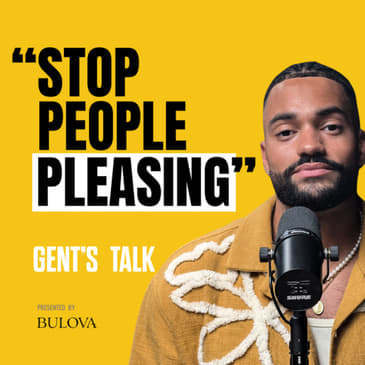
In this week's episode of Gent's Talk, presented by BULOVA, host Samir Mourani sits down with digital creator and media personality Jed Tavernier to talk about his time on Big Brother, how to stop yourself from being a people pleaser, overcoming fears of rejection and abandonment, how he grew his social media accounts to over 1M while making a living off it and what he's learned about himself while watching his parents. #gentstalk Connect with us! Subscribe here ► https://www.youtube.com/@GentsTalkPodcast Website: https://gentspost.com/ Instagram: https://www.instagram.com/gentspost/ TikTok: https://www.tiktok.com/@gentstalkpod Facebook: https://www.facebook.com/gentspost/ About Gent's Talk: The Gent's Talk series, powered by Gent's Post and presented by BULOVA Canada is an episodic video podcast conversation with leading gents and rising stars across various industries. Guests include Russell Peters, James Blunt, Robin Sharma, Director X, JP Saxe, Wes Hall, Johnny Orlando, Shan Boodram, Dom Gabriel, and Nick Bateman, just to name a few. The conversations range from career path, hurtles, mental health, family, relationships, business, and everything in between. Gent's Talk is the first-ever video podcast to be made available for streaming on all Air Canada domestic/international flights. We aim to have a raw, unfiltered conversations about our guests' lives, how they achieved success, lessons learned along the way, and the challenges encountered. Credits: Host/Producer: Samir Mourani Creative Director and Executive Producer: Steven Branco Video & Sound Editor: Roman Lapshin A STAMINA Group Production, powered by Gent's Post.
The Gent's Talk podcast, hosted by Samir Mourani, pulls the curtain back on difficult conversations around mental health, business, relationships and the difficulties around expressing oneself, with rising and leading gents from across the globe.
New episodes every Monday! #GentsTalk
Instagram: https://instagram.com/gentstalkpod
TikTok: https://tiktok.com/gentstalkpod
YouTube: https://www.youtube.com/@GentsTalkPodcast
[00:00:00] A transport truck came across the median on the 403 and I got in like a huge car accident.
[00:00:06] Jed Tavernier is a media personality, former contestant on Big Brother and previously a host on Global TV with nearly a million strong community.
[00:00:14] I was pretty much told my whole life that my mom abandoned me. I was like four years old when they split up, right? And my mom was just like out of the house. I just never really knew what happened with my parents.
[00:00:25] How do you think that's shaped you?
[00:00:26] It's affected me my whole life. I felt like if I do anything wrong, I'm expendable. Like I'm gonna be abandoned again.
[00:00:34] And I've felt it my entire life. Scared to say what I want to say. Scared to do what I want to do. Because if you don't like it, you're gonna leave.
[00:00:42] If you are ready to have this conversation, I'm gonna challenge you on something.
[00:01:11] I'm watching when I'm flying in November or something.
[00:01:13] Oh, where are you going?
[00:01:14] I think, well we're going to Tulum for my buddy's wedding.
[00:01:16] Oh, very cool.
[00:01:18] And then Jade has some, she shoots for Alo Moves.
[00:01:21] Okay.
[00:01:21] She's like a fitness trainer.
[00:01:22] Yeah.
[00:01:23] They fly her out to like Mexico or LA to film.
[00:01:25] So I think we're here.
[00:01:26] It's pretty good game.
[00:01:26] Yeah, I think we're in LA too.
[00:01:27] Oh, very nice.
[00:01:29] So, Jed, how long have you been in the, firstly, welcome to Jen's talk.
[00:01:33] Thank you for having me.
[00:01:35] You and I had a brief conversation before we started recording.
[00:01:38] And, you know, my, I get a lot, I see a lot of your content online and it's very humorous.
[00:01:45] There's a lot of like relatability to it and everything.
[00:01:48] But the conversation piece you and I had was, it doesn't really tell me much about who Jed is.
[00:01:52] There's not much to who's the man behind the persona people see online, the humor, the jokes, that sort of stuff.
[00:01:59] Who's Jed?
[00:02:00] Very simply.
[00:02:01] Yeah.
[00:02:02] I mean, you're right.
[00:02:03] That's social media in a nutshell.
[00:02:04] I think it shows you the highlight reel of everyone's life.
[00:02:07] It doesn't really show you what's going on behind the scenes.
[00:02:09] And I think that's why social media can be dangerous at times.
[00:02:11] But for me, I try to be as relatable and as myself as possible.
[00:02:17] But, you know, there are layers to me.
[00:02:18] I would like to call myself a little bit of an onion.
[00:02:21] But I think what a lot of people don't know about me when they first see me is that, first of all, I'm very selfless, very caring, kind.
[00:02:28] I think anybody that knows me knows that I would do anything for anybody.
[00:02:32] And I like to think it comes from a good place.
[00:02:33] But I think part of it may be my people pleasing tendencies, which I'm sure we'll get into later on in this episode.
[00:02:39] But growing up, I've just always been a caretaker.
[00:02:43] You know, I thought I was going to be in the medical field pretty much my whole life.
[00:02:46] My dad's a surgeon.
[00:02:48] I thought I was going to follow that path.
[00:02:49] My mom's emergency room nurse.
[00:02:51] So I really thought I was going to go down that path.
[00:02:53] But I definitely took those traits into my own life.
[00:02:56] And I think anybody that knows me knows that I will be the first one there for them if they were to need me.
[00:03:01] Okay.
[00:03:01] Yeah.
[00:03:02] So how do you go from wanting to be a caretaker or rather being in that type of an industry to growing a social media platform or multiple platforms, actually, to something like just shy of a million total, like a community base of just shy of a million across all of your platforms?
[00:03:20] That's a huge number.
[00:03:22] Congratulations.
[00:03:22] Thank you.
[00:03:23] Thank you.
[00:03:23] But how do you go from that to I'm just going to jump into the social media world?
[00:03:29] Man, I couldn't even tell you.
[00:03:31] It was kind of lucky, I think, honestly.
[00:03:33] And I know that some people don't believe in luck.
[00:03:36] People believe in just fate.
[00:03:37] And I think I believe in fate as well.
[00:03:40] But I just think a lot of things happened for me at the right time.
[00:03:43] I think a lot of things went right for me to be where I'm at today.
[00:03:49] And I hate to say it, but a lot of it came down to the pandemic.
[00:03:52] You know, a lot of people saw a lot of negatives in it.
[00:03:55] But I tried to take the positives out of it and use it to my advantage.
[00:03:58] And it actually really did propel me into the life that I live today.
[00:04:03] I think with social media, I never was really doing it like that.
[00:04:06] I was in university.
[00:04:07] I was doing kinesiology.
[00:04:08] I have a bachelor's and a master's.
[00:04:11] I was looking to go into like physio or chiro or something like that.
[00:04:14] Yeah.
[00:04:14] And I was actually going into osteopathy, if you ever heard of that.
[00:04:19] No, what is that?
[00:04:19] It's kind of like manual muscle therapy.
[00:04:22] It's like a holistic approach to healing the body.
[00:04:26] So, you know, if you have something wrong with like your gut, they might focus on like your feet.
[00:04:29] Like they might like, you know, it's a holistic body type of therapy.
[00:04:34] I was actually going into that.
[00:04:36] And this was in 2019.
[00:04:38] On my way to the open house, I got in like a huge car accident.
[00:04:41] And I've never been in a car accident.
[00:04:43] I've never gotten a speeding ticket in my life.
[00:04:45] And a transport truck came across the median on the 403 from London to Hamilton.
[00:04:52] And I looked to my left and I see a transport truck coming head on at me.
[00:04:56] And luckily I swerved and he completely totaled my car.
[00:04:59] He fell asleep.
[00:05:01] So that was kind of like a sign to me that maybe this isn't my path.
[00:05:05] Maybe this isn't what I should be doing.
[00:05:07] And from that point on the next year, 2020 COVID, I had just graduated.
[00:05:13] I didn't really know what I was doing.
[00:05:14] I was in like a couple of like dead end jobs.
[00:05:16] I was working at a gym.
[00:05:17] I was working in a restaurant.
[00:05:20] And now I'm like, is this another sign?
[00:05:22] Like I'm not doing what I should be doing.
[00:05:23] Maybe I shouldn't be in this space.
[00:05:25] Maybe I should try something else.
[00:05:27] And as COVID hit, you know, we're all stuck in the house.
[00:05:30] I was in London, Ontario by myself living in my own house, scared to leave.
[00:05:35] And I just started making TikToks randomly.
[00:05:39] My brother had been on TikTok and I was like, bro, that's stupid.
[00:05:41] I'm not doing that.
[00:05:42] I'm not dancing.
[00:05:43] You know what I mean?
[00:05:44] Like I'm not doing that.
[00:05:45] And then I was like, okay, let me try it.
[00:05:47] So I started doing it.
[00:05:48] You started with the dancing video?
[00:05:50] I started with the dancing, man.
[00:05:51] I'm telling everybody, like I have no shame.
[00:05:53] I started with the thirst traps.
[00:05:54] That's how I built my following, you know?
[00:05:56] You know, shirts were not worn on my page, you know what I'm saying?
[00:05:59] So yeah, that's how I got into it.
[00:06:01] And I just kind of fell in love with the process and thinking of ideas and going viral.
[00:06:07] I went viral for the first time that summer.
[00:06:08] And I was like, wow, this is like dopamine overload.
[00:06:11] Like this is amazing, right?
[00:06:12] So many people following me and all this stuff like that.
[00:06:14] So I just kind of got like addicted to that feeling and it just grew from there.
[00:06:18] It just kept growing.
[00:06:19] TikTok started growing.
[00:06:20] And then from there, got on TV and then, you know, I'm sure we'll talk about the journey,
[00:06:26] but everything kind of just-
[00:06:28] You did Big Brother.
[00:06:28] Yeah, I did.
[00:06:29] I went on Big Brother.
[00:06:30] So that came during COVID.
[00:06:31] I got the call and they're like, hey, like we're doing a season.
[00:06:34] It's going to be really locked down because of COVID.
[00:06:36] Yeah.
[00:06:37] We would love for you to be on it.
[00:06:39] And I was like, okay, like, I don't even know what this is.
[00:06:41] Let me watch a couple of seasons.
[00:06:42] And then obviously the competitor and me, I'm like, I can, I can do this.
[00:06:45] Like, this is easy.
[00:06:47] And went into this house for three months.
[00:06:50] And you know what?
[00:06:51] A lot of people ask me, like, would you do Big Brother again?
[00:06:54] And I always say, it's easy to say yes, but when I did it, it was a very different circumstance.
[00:07:00] Because if you think about it, we had been locked inside for almost a year now, not socializing with anybody.
[00:07:07] So for me, this was an opportunity to actually socialize and be with people, you know?
[00:07:12] Whereas everyone else was at home.
[00:07:14] But now it's like, we are all social.
[00:07:16] The world is open.
[00:07:17] You have to isolate the other way.
[00:07:18] And I'm going to isolate the other way.
[00:07:19] So I'm like, I'm going to miss out on things that's happening in the real world.
[00:07:23] And I think that's the thing that most people don't really understand about some of these shows is you're actually pretty much locked down.
[00:07:28] Yes.
[00:07:28] Right.
[00:07:29] With the group of people that you're with, you're not, you're not communicating with the outside world.
[00:07:32] Not at all.
[00:07:33] People kind of like, did you have your phone?
[00:07:35] I'm like, no, I didn't have my phone for 97 days.
[00:07:38] Like I didn't, there were days, there were weeks where we couldn't go outside for four days.
[00:07:42] We didn't have any windows.
[00:07:43] We didn't get any fresh air.
[00:07:44] Wow.
[00:07:45] Leading up to the show, I stayed in a hotel room for almost three weeks without being able to leave the hotel.
[00:07:50] Like it was, it was, people think it's easy, but it's not.
[00:07:53] Like it is not easy.
[00:07:55] So yeah.
[00:07:56] So from there, obviously went to the show and then social media started doing better after the show as well.
[00:08:01] And, um, definitely helps.
[00:08:03] Yeah, it definitely helps.
[00:08:04] And I started booking more gigs when it comes to like modeling and like commercial work.
[00:08:08] And then that's when ET came, ET Canada.
[00:08:11] And I got sent an audition to ET Canada.
[00:08:14] Went on there.
[00:08:15] I had no expectations at all.
[00:08:17] I was just like, I've never done like reporting.
[00:08:20] I've never done journalism.
[00:08:21] I didn't go to school for this.
[00:08:22] I went to school for kinesiology to like work out and stuff.
[00:08:25] And then I got the job on ET Canada over like a bunch of people that had way higher, um, experience resume work than me.
[00:08:33] Right.
[00:08:33] So things just started falling into place, man.
[00:08:36] And then obviously then I met Jade and we started our thing and now that's just erupted as well.
[00:08:42] So I just, it was kind of just like a slow burn one after the other and just things just kind of kept happening for me.
[00:08:49] And I just feel like that's been a, a trend my whole life.
[00:08:52] So social media is a very interesting place to be when it's going well.
[00:08:57] To your point, the dopamine hits are, they're coming at you, but when it's not going well, it could get very, very toxic.
[00:09:04] Like the negativity, the self-talk of, you know, like, is this working for me?
[00:09:08] Is this not working for me?
[00:09:10] How do you, you know, when the clips go viral, it's easy to say, I love it.
[00:09:15] I'm really good at this.
[00:09:15] But when they don't, how do you manage to stay positive?
[00:09:20] I think it's just staying even keeled and just never getting too high and never getting too low.
[00:09:26] Because in my opinion, at the end of the day, it's always going to balance itself out.
[00:09:30] It's like being like a day trader or something, you know, it's like, I've never done that stuff, but I'm assuming that some days you're flying and you're like, oh, I love this.
[00:09:40] And then some days, you know what I mean?
[00:09:42] Like you're in the red and you're like, damn, I hate this, you know?
[00:09:46] So I think it's just like never getting too high and never getting too low.
[00:09:50] And it's the same with social media because, you know, we'll have a random clip that goes, you know, our last couple of videos of a 20 something million.
[00:09:57] Right.
[00:09:57] Oh, wow.
[00:09:58] And then it's like, then you put a lot of effort into some content and it doesn't do well.
[00:10:02] And you're like, whoa, like I've had times where I'm just like, what are we even doing?
[00:10:07] Like, is this even worth it?
[00:10:08] Is this even like a job for real?
[00:10:10] Like.
[00:10:11] Is it?
[00:10:12] Can it be?
[00:10:13] It is.
[00:10:13] I think it is.
[00:10:14] I think it is.
[00:10:15] I think it is.
[00:10:15] I think it's the way of the future, to be honest.
[00:10:18] And I think it's something that if you have the opportunity to capitalize on it, you need to because it's crazy how much money is going into like ad work, ad revenue, just doing these campaigns and stuff like that.
[00:10:31] Brands know that all the eyes are on social media.
[00:10:34] Yeah.
[00:10:35] You know who watches the news?
[00:10:37] Not many people.
[00:10:38] No.
[00:10:38] But you'll see a video of what's going on in the States on TikTok, you know?
[00:10:43] So it's like how much impact do these influencers have?
[00:10:47] A lot.
[00:10:47] Because everyone's eyes are on social media.
[00:10:50] So I think that if you're one of those mediums between the brand and the consumer, you'll have work for a long time.
[00:10:59] Capitalize.
[00:10:59] Absolutely.
[00:11:00] Is there a trick?
[00:11:02] Is there, you know, people are starting on socials.
[00:11:04] They have socials.
[00:11:05] They're doing all these things.
[00:11:06] They're not seeing the type of virality that you've talked about.
[00:11:10] What's the secret recipe there?
[00:11:12] What's the sauce?
[00:11:13] It's super hard to like give advice because I've had a lot of people, especially actually recently, I've had a lot of people reach out to me and be like, hey, Jed, like love your content.
[00:11:21] I'm also a creator from Toronto or I just got off of like a show, a TV show.
[00:11:25] I've had a couple of people message me from other reality TV shows.
[00:11:28] They want to capitalize on it.
[00:11:29] How do I capitalize?
[00:11:30] How do I strike the iron while it's hot?
[00:11:31] As one would say, because that's what everyone tells you to do.
[00:11:34] Oh man, you got some eyes on you.
[00:11:36] You need to strike now.
[00:11:38] Yep.
[00:11:38] And honestly, it's just it's hard to give advice about it because it's so hit or miss.
[00:11:43] Sometimes like you got the juice and sometimes you don't, you know, sometimes your stuff will hit and sometimes it just won't.
[00:11:49] Some people I find try to force.
[00:11:53] Like a persona or something.
[00:11:55] They try to do something that they think will do well and they get outside of themselves.
[00:12:00] And I feel that viewers see right through that.
[00:12:02] So for me, I've always just tried to be as authentic as possible.
[00:12:05] I've always been just like myself, which is like relatable, funny, like caring.
[00:12:11] Like I just do that stuff that I actually do in my day to day life.
[00:12:14] And I just find that people resonate with it.
[00:12:16] But I find that when people try to start being someone who they're not, it comes off as super disingenuous and you don't get any traction because everyone's like, I know you're not like that for real.
[00:12:27] Like you don't talk like that.
[00:12:29] You don't do those things for real.
[00:12:31] So I would just say like, just try to be your authentic self.
[00:12:35] And we live in a world with billions of people.
[00:12:37] There will be a crew that resonates with you.
[00:12:41] With the type of content you create.
[00:12:42] Find that crew.
[00:12:43] Yeah.
[00:12:43] Yeah.
[00:12:44] Just be yourself.
[00:12:44] So let me ask you a question then.
[00:12:45] How do you balance being authentic while promoting random brands because they came to you and said, hey, we'll give you a stack of cash to do this.
[00:12:55] Well, it's doing exactly the opposite of that and not supporting random brands.
[00:12:59] It's doing brands that actually align with my life, my goals, my day to day.
[00:13:07] Like I try to be as authentic as I can with the brands that I work with.
[00:13:11] And I'm not going to lie.
[00:13:12] I've in the past done stuff that I don't resonate with because you're right.
[00:13:16] They throw a lot of money at you and it's hard to say no sometimes.
[00:13:19] But that was me right when I got off of the show or just started off on my social media journey.
[00:13:23] And I'm like, wait a minute, you're going to offer me how much to do that for that beer?
[00:13:29] For that beer company that I've never drank, but I will for that.
[00:13:32] You know what I mean?
[00:13:32] So, but now I've gotten to a place where I've done so much that I can be really choosy with what I do.
[00:13:39] So I'm super, like I just was on the phone with my agent and I was like, nah, like we'll pass on that.
[00:13:45] And it's like, it's a lot of money, but it's like, it's like the long game when it comes to social media.
[00:13:50] For me, it's quality over quantity because I know that something's going to come in that will probably be more than that.
[00:13:56] And I'll resonate with it more.
[00:13:58] And therefore the content will be better because my viewers know who I am.
[00:14:02] They know what my values are.
[00:14:03] And if they see me doing something that's completely off of that, they're going to be like, okay, don't sell yourself out.
[00:14:11] And you see that a lot with some creators.
[00:14:13] They become walking billboards.
[00:14:14] It's like every other post is an ad of some kind.
[00:14:17] And you're just at this point, you're swiping off as if you're looking at a commercial.
[00:14:21] It doesn't matter who's in front of you.
[00:14:22] Absolutely.
[00:14:23] You don't want to do that.
[00:14:23] No, you don't want to become oversaturated, right?
[00:14:26] You want it to just seamlessly flow into your content to the point where maybe they didn't even know it was an ad.
[00:14:31] You know?
[00:14:32] Yeah.
[00:14:32] Some of the stuff we do, we're just like having fun and people are like, oh, whoa, that was an ad?
[00:14:36] Or like, what shirt are you wearing?
[00:14:38] I'm like, oh, that's actually the shirt, the brand that I'm promoting.
[00:14:40] You didn't even know, did you?
[00:14:42] Bingo.
[00:14:42] Yeah.
[00:14:42] Exactly.
[00:14:43] That's okay.
[00:14:43] Yeah.
[00:14:44] So you started off getting a bachelor's degree, a master's degree.
[00:14:50] That's not a cheap endeavor to pursue.
[00:14:52] There's a time commitment involved in all of that.
[00:14:55] I'm curious where, given you said your dad's a surgeon, your mom's an emergency room nurse.
[00:15:00] Yeah, she was, and now she's in law school.
[00:15:03] Okay.
[00:15:04] Yeah.
[00:15:04] Oh, very cool.
[00:15:04] So given they've taken what we would perceive to be traditional routes to careers, and you were kind of pretty much following that path and then decided to completely 180 and go a different direction here.
[00:15:18] Mm-hmm.
[00:15:20] How has their response been to you being like, I'm going to pursue this social media thing real?
[00:15:27] Which to our parents' generations, they use it for entertainment, but it's not a job to them.
[00:15:33] Right.
[00:15:34] Yeah.
[00:15:34] I mean, well, first of all, growing up, my parents were, I would say, I always call it like they were sneaky strict.
[00:15:41] So I kind of grew up with my dad mostly and my stepmom.
[00:15:45] My dad was just super busy.
[00:15:47] He was a general surgeon, really the only one in town.
[00:15:50] I grew up in a very small town.
[00:15:52] And so he wasn't around too much.
[00:15:53] Okay.
[00:15:54] So I think for him, as long as he heard that we were doing good in school, then we're allowed to play sports because I'm a big basketball player.
[00:16:01] So I never really had to explain too much about him.
[00:16:04] He never really had too many crazy expectations for us other than just like do well in school.
[00:16:08] If you do well in school, you can play your sports.
[00:16:10] You can go out with your friends.
[00:16:12] You can have fun, whatever.
[00:16:13] So for me, it was like always academics was first.
[00:16:16] And then coming through school, it was kind of just like, I don't know.
[00:16:20] He wasn't like too involved.
[00:16:22] You know what I mean?
[00:16:23] He just wanted to hear that we were doing well.
[00:16:26] And because my dad was helping support for tuition.
[00:16:29] So he was like, I want to make sure like the money is going towards you actually getting your degree.
[00:16:32] And I think for him, it was more so just like getting the degree.
[00:16:35] He never said, I want you to be a doctor because I'm a doctor.
[00:16:38] I know some parents are very like overbearing like that.
[00:16:40] But it was just like, get your degree.
[00:16:42] And I just never felt the pressure to become anything or like do anything like traditional, I guess.
[00:16:50] And I think that it was just, again, the timing thing.
[00:16:53] Like once I graduated, it was like he was obviously happy.
[00:16:56] I got my master's, like on my bachelor's.
[00:16:57] Like what more can you ask about your kid when it comes to education?
[00:16:59] Sure.
[00:17:00] And then the COVID hit and I just started doing like kind of untraditional things, right?
[00:17:04] Like I went on TV.
[00:17:05] Like he's never had anybody he knows go on TV.
[00:17:08] And then I was just on TV.
[00:17:09] And I think it was more of like a proud, like pride thing.
[00:17:12] Like my son is on TV.
[00:17:13] Everyone in my hometown is watching me on TV.
[00:17:16] Literally everyone.
[00:17:17] Everyone's watching me interview celebrities on Entertainment Tonight, right?
[00:17:20] And it's like, this is kind of cool.
[00:17:23] Like I've never seen this.
[00:17:24] My dad's from the Caribbean islands, right?
[00:17:25] Like he's never seen anything like this.
[00:17:27] So I think that he was cool with it because I had a job and he could see me performing in the job.
[00:17:36] So yeah, I think his like mentality kind of shifted when it came to that.
[00:17:39] But I never felt pressure to go into a traditional role.
[00:17:42] And when it comes to my mom, my mom just supports me in anything I do.
[00:17:44] To be honest, like she's just like my number one fan.
[00:17:47] Like I could be selling lemonade on the corner and she'd be there.
[00:17:51] You know what I mean?
[00:17:51] Like she literally every game she was there, everything I ever do, she's there.
[00:17:55] So I don't think she would care what I do as long as I'm happy, as long as I'm supporting myself.
[00:18:00] But she sees that I'm doing well in this and is like my number one fan.
[00:18:04] When you talked about your dad not being around very often because of the nature of his job,
[00:18:10] what was the relationship like there?
[00:18:13] It was, I always had so much and I have so much respect for my dad.
[00:18:18] I think my dad is the one that I always wanted to impress and I never wanted to let him down.
[00:18:24] I always felt as though if I failed, I'd be letting him down.
[00:18:28] And I just knew how hard he worked to get to where we were, which was he came from the Caribbean Islands.
[00:18:35] He went to Boston.
[00:18:37] He went to Boston College.
[00:18:38] He went to Dartmouth, Harvard, like medical school.
[00:18:41] He went to McMaster and then he moved all over the place in Ontario and finally settled in our hometown Midland.
[00:18:47] And he was just extremely successful being the number one surgeon there.
[00:18:52] And I was like, he has come so far.
[00:18:54] Like I can't mess this up.
[00:18:56] Like I can't be a failure when my dad has done all this stuff when all the odds were against him.
[00:19:02] So I think it was almost like a fear of failing growing up.
[00:19:09] And there was also kind of a disconnect when it came to anything emotional.
[00:19:14] I never had emotional talks with my dad.
[00:19:17] I never really felt as though I could open up to my dad.
[00:19:21] And to this day, it just, it always felt like there was a bit of a disconnect on the emotional side.
[00:19:28] And I don't know.
[00:19:29] I don't really know where that came from.
[00:19:31] But.
[00:19:32] So as an adult man sitting here in front of me right now and looking back on that younger version of Jed,
[00:19:37] going, growing up feeling like you can't, you can't be a failure in his eyes,
[00:19:42] but never really having that emotional connection to even understand how he defines success or failure beyond do you have a degree.
[00:19:50] What do you, what do you think to yourself as you reflect on something like that?
[00:19:55] I think my mentality would have just changed around vulnerability, emotions.
[00:20:03] I think that if there was more of like a safe space to speak as a man or a boy back then about your emotions,
[00:20:11] maybe I wouldn't have been so almost disconnected growing up when it comes to my emotions.
[00:20:17] I really, I feel like I shelved a lot of them.
[00:20:20] I felt like I was hiding from a lot of them.
[00:20:24] And I think it stemmed from not being able to really talk to anybody.
[00:20:27] Growing up, it was me and my brother.
[00:20:29] And my brother and I are super close.
[00:20:31] Older, younger?
[00:20:31] He's two years older than me.
[00:20:33] Okay.
[00:20:33] And I talked to him, I think, more than I talked to my dad about anything like that, right?
[00:20:38] If something happened to me, I'd go to my brother.
[00:20:40] I wouldn't go to my dad.
[00:20:42] I just felt like my dad.
[00:20:44] Yeah, for sure.
[00:20:45] For sure.
[00:20:45] Yeah, my brother and I talk about everything.
[00:20:48] And I just feel like I can be more open and honest with him.
[00:20:52] And when I speak to my dad, it almost feels like it's like a surface level.
[00:20:56] You know, like you good?
[00:20:58] Yep.
[00:20:58] Okay.
[00:20:59] Doing this.
[00:20:59] Nice.
[00:21:00] Do you want more?
[00:21:02] I do, but I just, I don't know.
[00:21:05] I'm very hesitant.
[00:21:08] I just feel like it's not even in the cards, you know?
[00:21:11] I just think it's been, it's just been like my whole life.
[00:21:13] So like I'm almost 30 years old now.
[00:21:15] And it's like, I've never really had that type of conversation with him.
[00:21:19] And now I just feel like it's almost too far gone.
[00:21:22] You don't think that there's an opportunity there that could exist where you can maybe break through that wall so that it's deeper than a surface level conversation?
[00:21:32] Deeper connection?
[00:21:33] Meaning?
[00:21:34] I think there is.
[00:21:39] But I don't know.
[00:21:39] I would just have to be so intentional about it.
[00:21:41] And I just feel like there's...
[00:21:42] Are you ready for it?
[00:21:44] Yeah.
[00:21:44] I don't know.
[00:21:45] I don't know.
[00:21:46] I don't know if I am.
[00:21:47] Because there's just conversations that I just feel like we've never had.
[00:21:51] Like what?
[00:21:52] Just about our childhood growing up and what was really going on when it came to my parents.
[00:21:59] You mean like your mom and your dad?
[00:22:00] Yeah, my mom and my dad.
[00:22:01] Like my parents, I was like four years old when they split up, right?
[00:22:07] And my mom was just like out of the house.
[00:22:08] And then it was just us and our dad.
[00:22:11] And then my dad got remarried.
[00:22:13] And like that was pretty much our living situation for my entire childhood.
[00:22:18] And I just never really knew what happened with my parents.
[00:22:22] Still?
[00:22:23] Still, yeah.
[00:22:23] Like to this day, I don't know.
[00:22:25] All these years later.
[00:22:26] All these years later.
[00:22:27] And it's just...
[00:22:27] It's difficult because there's just so many questions I have that I don't think will ever be answered.
[00:22:34] Because, you know, there's three sides to every story.
[00:22:37] His side, her side, and the truth.
[00:22:40] But that middle ground, that truth, I don't think I'll ever get it.
[00:22:43] How do you think that's shaped you today?
[00:22:47] I think it's made me...
[00:22:49] Like does it show up in your relationship with your girlfriend?
[00:22:53] Does it show up in the way you approach?
[00:22:55] I mean, you mentioned earlier at the top of this conversation that you have a very selfless approach to things.
[00:22:59] Which sounds nice when you say it out loud.
[00:23:01] But it could also mean that you can be taken advantage of quite regularly.
[00:23:07] Yeah.
[00:23:07] So how has this played?
[00:23:09] Are you constantly trying to appease other people because you felt maybe you were trying to appease your parents?
[00:23:14] Yeah, I think so.
[00:23:15] I think when you ask how does it affect me, it's affected me my whole life.
[00:23:20] And unfortunately, it's always been what's your story and what's your story?
[00:23:25] But it's never been what's my story?
[00:23:27] What's our perspective?
[00:23:28] Because, you know, my dad wants to be right.
[00:23:30] And he, you know, he thinks he's right.
[00:23:32] And then my mom wants to be right.
[00:23:33] She thinks she's right.
[00:23:44] And I think for me, it's like my whole life, I've felt like I had to appease other people.
[00:23:51] Like you said, I feel like I have been in situations where I was scared of abandonment because I was pretty much told my whole life that my mom abandoned me.
[00:24:01] So me in my regular life, I'm scared that everyone's going to abandon me.
[00:24:05] So growing up, I'm a mixed race kid in a very white town, literally could count on one hand how many people were mixed or black in my entire graduating class.
[00:24:17] And I never felt fully accepted in my early years.
[00:24:22] I always felt like I was the one putting myself into situations to have friends.
[00:24:27] Even in my friend group, I was like the popular kid.
[00:24:30] But I was the one always reaching out to be like, hey, do you want to hang out today?
[00:24:35] Like no one ever called me.
[00:24:37] I remember being a kid and calling people and being like, hey, like, can I sleep over tonight?
[00:24:41] Like, do you want to like have a sleepover?
[00:24:43] And I never really felt like I was involved or included or wanted.
[00:24:48] Right.
[00:24:48] And I think that having that feeling also meant that I needed to tread lightly and walk on eggshells when it came to being myself, because I felt like if I do anything wrong, I'm expendable.
[00:25:02] Like I'm going to be abandoned again.
[00:25:04] So I need to make sure I'm doing things to please everybody.
[00:25:08] And that's where these people pleasing tendencies came from.
[00:25:11] And I've felt it my entire life.
[00:25:14] Scared to say what I want to say.
[00:25:15] Scared to do what I want to do.
[00:25:17] Because if you don't like it, you're going to leave.
[00:25:20] So how do you how far are you in this journey?
[00:25:24] It seems like you at least have your cognizant of these issues, the like the abandonment piece, the people pleasing.
[00:25:31] You're aware they exist.
[00:25:33] What steps have you taken or are taking?
[00:25:36] Or maybe you haven't yet.
[00:25:37] Maybe you're still working towards that to rectify these things from holding you back.
[00:25:44] I think it's a work in progress.
[00:25:46] I think healing is a journey, not a destination.
[00:25:49] You'll never really get there fully.
[00:25:52] But I think for me, I'm just trying to set boundaries now.
[00:25:56] And I've really been working on it the last couple of years.
[00:25:58] And I really do credit my girlfriend Jade for that because she taught me that you don't have to be accessible to everyone and you don't have to please everyone.
[00:26:08] It's okay to say no.
[00:26:09] It's okay to set a precedent and be like, I'm not going to allow you to speak to me like that.
[00:26:15] I'm not going to act or not act a certain way because it'll make you feel better.
[00:26:22] I'm trying to do things now that make me feel good.
[00:26:24] And if that means setting boundaries, then that's what I have to do.
[00:26:27] It's a hard thing to do.
[00:26:28] It's a very hard thing to do.
[00:26:29] And sometimes I fear that I'm going to regret it.
[00:26:33] Sometimes I fear that me not going to see my family sometimes because I'm not in a great place with them because of overstepping boundaries.
[00:26:42] Will I regret that in the future that I lost out on time?
[00:26:47] But I think it's easy to say that when we kind of come up with this thing in our mind that the issues aren't there that actually are there.
[00:26:55] It's like you're kind of like falling in love with this dream that's not actually real.
[00:26:59] It's like me going there.
[00:27:01] It's not going to be like this happy situation that I hope it would be.
[00:27:05] Yeah.
[00:27:05] You know, but it's just me taking those steps towards protecting my peace.
[00:27:12] And I think that's the biggest step that I've made over the past couple of years is just trying to put myself first.
[00:27:17] And I know that this people pleaser jet always comes out and it keeps trying to rear its head.
[00:27:22] But I'm really, really trying to be good with myself first.
[00:27:26] And then if you don't like it, then I don't need you in my life.
[00:27:31] How does that show up in your relationship?
[00:27:33] The boundaries piece, because we all need to set them even with our closest, even with the closest people in our lives, we need to set them.
[00:27:40] So if you're telling me that your girlfriend, Jade, is the one that taught you how to create these boundaries for yourself in other areas of your life, even in a romantic relationship, you need to create boundaries sometimes.
[00:27:52] How do you do that?
[00:27:53] How do you balance that versus your people pleasing, especially with the presumably the closest person in your circle?
[00:27:59] Yeah, definitely the closest person in my circle.
[00:28:01] And I think that's what makes me love her is that she it doesn't seem like she's ever impeding or like she kind of just knows when I need space or like when I need some alone time.
[00:28:12] And we really balance off each other well in that way.
[00:28:15] Like, obviously, we live together.
[00:28:16] But sometimes it's like, OK, let's just go into separate rooms for a couple hours and like you do your thing.
[00:28:21] I'll do my thing.
[00:28:22] And we give each other that space.
[00:28:23] If we're ever like in an argument or something like that, it's always like give each other some space, come together, communicate.
[00:28:30] But I think it's just hard for us to overstep each other, honestly.
[00:28:33] Like there's not many situations where I feel like I need to create crazy boundaries with her.
[00:28:39] I think the only time is knowing when to speak to each other about certain things.
[00:28:44] So like she'll never overstep when it comes to speaking about like my family or like my family issues and growing up and stuff.
[00:28:51] It's a lot of like her asking me questions and me talking.
[00:28:54] And the same with her.
[00:28:55] Like I'll never overstep when it comes.
[00:28:57] She has her own family issues.
[00:28:58] But it's like, OK, how does that make you feel?
[00:29:00] And then she'll tell me.
[00:29:01] But I'll never impede on that and be like, I think you should do this.
[00:29:05] Or like she'll never say like, I don't think you should go see your family.
[00:29:08] Like, you know.
[00:29:08] So we kind of have that mutual respect where it's like, I'll do whatever you think is right for you.
[00:29:15] But I can give you some advice.
[00:29:16] But sure.
[00:29:17] I have your best interest at heart.
[00:29:20] The people pleasing thing.
[00:29:22] It's a tricky one.
[00:29:24] Yeah.
[00:29:24] You're constantly trying to navigate this inclination to just want to be a good person and help.
[00:29:31] Versus saying no, making yourself feel like the bad person.
[00:29:35] Like you've somehow, you're a jerk for not helping or answering or making time for this, this, this and this.
[00:29:42] Before you find out you've basically just consumed your entire day with something that's not even yours.
[00:29:49] Is there a, and trick is not the right word, but is there a process that you take to balance when you're doing too much people pleasing to pull yourself back a little bit?
[00:30:01] Because there's a lot of people that struggle with that.
[00:30:03] Yeah.
[00:30:03] I think it's just a feeling.
[00:30:05] Like, I just think that sometimes we overexert ourselves and we just, we, we stretch ourselves in too many directions.
[00:30:12] And you'll actually physically feel that, you know, you might start feeling ill or like you'll just feel super run down.
[00:30:18] And another thing that Jade taught me, because she's a very, I like to call her like an introverted extrovert because she is very introverted, but like she can go out and, and have fun.
[00:30:28] But the difference is like her battery will drain when she goes out.
[00:30:32] Whereas mine, I kind of get juiced when I go out, you know what I mean?
[00:30:35] So it's like, I'm more like her.
[00:30:37] My battery drains very quickly.
[00:30:39] Exactly.
[00:30:39] So like she always uses the metaphor that she wakes up with a bunch of coins, right?
[00:30:44] And every interaction she has, she gives a coin away.
[00:30:46] So at the end of the day, she has an empty hand.
[00:30:49] Whereas I wake up with an empty hand and every interaction I have, I'm putting coins in my palm.
[00:30:54] Right.
[00:30:55] So it's a little bit of a different, a different thing there.
[00:30:57] But I think it's just, but I, I, I myself will still get run down.
[00:31:01] Like if we're doing too much, um, I'll feel that.
[00:31:04] So I think it's just learning how to say no, because for me, learning to say no was so hard.
[00:31:10] And anytime someone, yo, Jade, you want to, you want to go out tonight?
[00:31:13] And I'm like tired.
[00:31:14] Like I went out like last night or something like that.
[00:31:16] I'll be like, yeah, let's go.
[00:31:18] You know what I mean?
[00:31:19] And I didn't, I didn't want to do it.
[00:31:20] And then I'll get there and I'll be like, man, I wish I didn't do this.
[00:31:22] You know what I mean?
[00:31:24] Or like, you know, Jed, do you want to like do this thing for me?
[00:31:27] Like, um, like you can promote this for me and I'll just like, you know, I'll just give you.
[00:31:31] Imagine there's a lot of that.
[00:31:32] Oh, it's a lot of that.
[00:31:33] It's a lot of that.
[00:31:33] Especially as you grow on socials.
[00:31:35] It's like, yo, Jed, uh, remember from college?
[00:31:38] Like I'm, I'm rapping now.
[00:31:40] Like, can you promote my new album?
[00:31:42] Yeah.
[00:31:44] Like, yo, uh, like I, it's hard to say no to that because you don't want to come across
[00:31:48] as like a dick or a snobby.
[00:31:50] Right.
[00:31:51] But it's like, you got to put yourself first again.
[00:31:54] So I always say that saying yes to please someone else is saying that they're more important
[00:31:59] than you.
[00:32:00] You're prioritizing their happiness over your own because you're putting yourself in a
[00:32:04] situation you don't actually want to be in to make them happy.
[00:32:07] Yeah.
[00:32:07] So I'm trying to, I'm trying to live my life, put myself in the situations that I'm happy
[00:32:12] with.
[00:32:12] So now I'm, I'm tossing nose.
[00:32:16] I'm tossing nose out.
[00:32:17] And my friends know that.
[00:32:18] And a real friend will not get mad at you for that.
[00:32:20] No.
[00:32:21] You know?
[00:32:21] It's true.
[00:32:22] Like everyone that's like, I love Jade's friends for that.
[00:32:24] They'll ask her to do something and she'll literally just say, no, I just don't feel like
[00:32:27] it.
[00:32:28] I don't have to come up with a reason.
[00:32:29] I used to think I had to come up with a reason.
[00:32:31] Yeah.
[00:32:31] A long, elaborate story.
[00:32:34] My brother's cousin's dog needs me to take them to the vet.
[00:32:39] And it's like, no, I just, I actually just don't want.
[00:32:40] It's 45 minutes away.
[00:32:41] Yeah.
[00:32:42] Even the next hour.
[00:32:43] Yeah, exactly.
[00:32:44] So now it's kind of just like, I just, I don't want to, man.
[00:32:47] Sorry.
[00:32:47] And your friend will be like, okay, cool.
[00:32:48] That's good.
[00:32:49] Well, the real friends will understand.
[00:32:50] The real friends.
[00:32:50] That's a good point.
[00:32:51] Yeah.
[00:32:51] What does your friend circle look like?
[00:32:53] My friends.
[00:32:54] How many close friends do you have?
[00:32:56] I saw something the other day saying that you'll have maybe only like five friends ever.
[00:33:01] If you're lucky.
[00:33:02] If you're lucky, that will really be there for you and ride or die for you.
[00:33:06] And that's so true.
[00:33:07] And I feel like my friends have ebbed and flowed my whole life.
[00:33:12] You know, I had diehard friends in high school that I haven't spoken to in 10 years.
[00:33:17] You know, I've had diehard friends in college.
[00:33:20] I haven't spoke to them in five years.
[00:33:22] So it's like, sometimes I just feel like it's situational.
[00:33:26] Your friends.
[00:33:27] It's like, oh, I'm living here now.
[00:33:29] Okay.
[00:33:29] We're boys.
[00:33:29] We're going out.
[00:33:30] You know, we live in the same place.
[00:33:31] You're right down the road.
[00:33:33] And then you move cities and they're gone.
[00:33:35] You don't, you don't talk to them ever again.
[00:33:37] And then you have new friends, but it's those friends that are consistent through it all.
[00:33:41] And I find that when you want to make effort to see somebody or when they really try to make an effort to see you, that's a real friend.
[00:33:49] And I've had, yeah, like I'll say maybe like 10, like five to 10 people that I know that if I call them and I'm like, yo, man, like I need you.
[00:33:58] They would be there for me.
[00:34:00] But I think a lot of people might think they're that person to me, but they're not.
[00:34:04] You know?
[00:34:05] How do you define a good friend?
[00:34:08] I just think a good friend is just loyal.
[00:34:11] Like, I just think a loyal has your best interest at heart.
[00:34:16] Always there for you no matter what, no matter what time you call.
[00:34:21] Yeah, I don't know.
[00:34:22] I just think I saw something that said there's three types of friends that you can have.
[00:34:27] And if you were to call them all at 3 a.m. in the morning, there's one that's going to look at it, put it down, pretend they didn't see it.
[00:34:35] There's one that's going to look at it, get mad, slowly get up.
[00:34:39] And then there's one that's already dressed when they see your phone ringing.
[00:34:43] And that last one is the type that you want in your life.
[00:34:47] I was listening to Simon Sinek the other day talk about how we have friends that are going to show up for you when life is hard.
[00:34:56] When there's something tragic that happens, you're going through some shit, that person you can count on them, the 3 a.m. friend.
[00:35:05] Where a lot of us lack is in friends that we can also turn to to say, hey, I just got this promotion.
[00:35:12] I'm so happy.
[00:35:13] I want to share this with you.
[00:35:14] Hey, my video just hit a million or I just got this new deal or I'm getting engaged.
[00:35:19] The one that you can share good news with.
[00:35:22] There's actually fewer of those people because we're afraid to show our friends our successes because they can come across as bragging sometimes.
[00:35:32] Do you have friends that you are comfortable with outside of Jade that you can turn to and be like, man, I just got this deal today and I'm so happy about it.
[00:35:42] I just I wanted to share it with you where, you know, they're not going to be jealous or wish bad upon you or anything like that.
[00:35:49] Hmm. That's a that's a great point.
[00:35:52] I think it is harder to share your success than it is to share your failures because I feel like a lot of people show up for you when you're rock bottom, but not a lot of people show up for you when you're at the mountaintop.
[00:36:02] So that's a great point.
[00:36:04] I think I do have some of those friends, but like you said, it's few and far in between.
[00:36:08] I mean, I would say obviously Jade's up there and then like my mom's up there and like my brother.
[00:36:13] You know what I mean?
[00:36:14] Like those are like my top three.
[00:36:15] But then I do have some friends that I can share that with.
[00:36:18] But again, that comes back to my own issues.
[00:36:23] I think that I work through is that anybody that knows me knows that I don't brag.
[00:36:27] I don't really celebrate my wins as much as I should.
[00:36:33] I don't know.
[00:36:34] I think it goes.
[00:36:35] I don't do it either.
[00:36:36] You know what I'm saying?
[00:36:37] I think I honestly think it stems back from that people pleasing fear of abandonment vibe where it's like if I come across as braggy or like I'm doing too much, people will just be like, OK, like, like get it.
[00:36:50] Like, yeah, we don't need to be around that.
[00:36:51] You know, it's like I'm almost feeling like I'm bigger than you or something like that.
[00:36:56] Do you feel your social media is a brag?
[00:36:59] The numbers?
[00:37:01] I think a lot of people would see it as a brag.
[00:37:04] I'm probably like the most humble person.
[00:37:06] And so like a lot of people, like I'll meet somebody.
[00:37:08] They'll be like, yo, let me get your let me just get your Instagram real quick.
[00:37:11] And I'll just, you know, I'll message you or something.
[00:37:13] And I'm like, OK.
[00:37:14] And so I give it to them.
[00:37:16] And then I like wait.
[00:37:17] And I like look.
[00:37:18] And then it's not even like my Instagram is that crazy, but they'll just be like, whoa.
[00:37:23] And I was like as if I almost should have like prefaced.
[00:37:25] Yeah.
[00:37:26] By the way.
[00:37:27] Yeah.
[00:37:27] By the way, I kind of like do this.
[00:37:28] You know what I mean?
[00:37:29] Or like they'll find our TikTok and our TikTok is like, you know, like half a mil.
[00:37:32] And it's like, whoa, like this is you guys.
[00:37:34] Like Jade and I go to this one place for appointments.
[00:37:38] And we had been going there for months.
[00:37:40] And this young kid works at the front.
[00:37:42] He's like 20.
[00:37:44] And we're always super nice to him.
[00:37:45] Like, oh, thanks, man.
[00:37:46] Like, you know, like we asked him about his life, like everything like that.
[00:37:49] And then one day we came in.
[00:37:50] He's like, yo, are you guys like Jed and Jade?
[00:37:52] And we're like, yeah.
[00:37:54] And they're like, he's like, yo, you're like famous.
[00:37:57] What?
[00:37:57] Like you guys are so nice.
[00:37:59] Like, why are you guys so nice to me?
[00:38:00] And we're like, yeah, it's like, well, we're just nice people.
[00:38:05] Like, you know what I mean?
[00:38:06] Just because we have a big following doesn't mean that we can't be nice, you know?
[00:38:09] So.
[00:38:10] A lot of creators, it gets to their heads.
[00:38:12] It definitely does.
[00:38:12] It definitely does.
[00:38:13] I meet a lot of creators in this space.
[00:38:15] And there's the ones you could tell right away.
[00:38:17] Even if just a video pops off, they walk with a different level.
[00:38:21] They start moving a little different.
[00:38:22] Yeah.
[00:38:22] And you're just like, you're still the same person.
[00:38:25] You know, like just relax a little bit.
[00:38:28] Yes.
[00:38:28] Yes, absolutely.
[00:38:29] But yeah, to answer your question, I definitely do have friends that I can go to to celebrate.
[00:38:35] But at the same time, something that I've been working on actively is celebrating in general.
[00:38:40] So when I do do something cool, I think I need to celebrate more.
[00:38:45] How do you celebrate now?
[00:38:47] I just, first of all, just the gratitude.
[00:38:49] I've been working a lot on just being intentional with my gratitude.
[00:38:53] And, you know, like when I do, I do like yoga and like some breath work stuff.
[00:38:56] And I try to end it all with like intentions and gratitude.
[00:38:59] And just saying, you know, I'm so thankful for the position I'm in and all the things that have gone right for me in my life.
[00:39:04] I'm so thankful for it.
[00:39:06] Try not to take it for granted because I do find myself falling into this mindset of being like, okay, that's cool.
[00:39:12] But like, what's next?
[00:39:13] You know, and I think that's what a lot of people do on social media is like, okay, cool.
[00:39:19] I hit that milestone.
[00:39:20] But now what's next?
[00:39:21] What's the next milestone?
[00:39:22] We all think the next thing is going to bring us fulfillment.
[00:39:24] But then once you find that fulfillment in yourself, then you can be happy, I think.
[00:39:31] Because when you're chasing those external goals and those external successes, you're never going to be happy thinking that that's what's going to do it for you.
[00:39:38] You know?
[00:39:39] I was like, oh, I'll be so happy if I get that Entertainment Tonight job.
[00:39:43] I got it.
[00:39:44] And I was like, it's cool.
[00:39:46] But like, I'm not like that happy.
[00:39:48] You know what I mean?
[00:39:49] Like, I'll be so cool when I get 100,000 followers on Instagram.
[00:39:52] Got it.
[00:39:53] And I'm like, okay.
[00:39:54] Next day, I'm just like, okay.
[00:39:56] Now I kind of want 150.
[00:39:57] Yeah, exactly.
[00:39:58] It never stops.
[00:39:59] It never stops.
[00:40:00] It's like people who have an obsession with acquiring more and more money.
[00:40:04] There's no amount that's enough.
[00:40:05] No.
[00:40:06] I've had a conversation with a billionaire who said the exact same thing.
[00:40:10] He's like, I thought when I hit my first million, I'd be happy.
[00:40:13] I wasn't.
[00:40:13] I needed to hit 10.
[00:40:15] I hit 10.
[00:40:15] I wasn't.
[00:40:16] I hit 100.
[00:40:17] I wasn't.
[00:40:17] I hit a billion.
[00:40:18] Still wasn't.
[00:40:19] Wow.
[00:40:20] And it rings true in all facets of life.
[00:40:22] And it almost goes back to that point you made of healing is about the journey, not the destination.
[00:40:28] It's the journey of the growth that you're seeing, the connections, the experiences, the opportunities to do things you may have never dreamt of doing before versus the, I just hit 100,000.
[00:40:40] Great.
[00:40:41] Because you're never going to be satisfied with anything like that.
[00:40:43] Nobody will.
[00:40:44] Nobody will.
[00:40:45] And it's crazy to hear that even somebody at that stature can feel the same way.
[00:40:49] Because I think in our mind, we always convince ourselves that like, okay, all I need is one mil and I'll be happy.
[00:40:57] But it's like, that's not how the human mind works.
[00:41:00] Life doesn't end at one mil.
[00:41:01] You know what I mean?
[00:41:02] And you're right.
[00:41:03] Like, it is the journey.
[00:41:04] It's like the discipline and the repetition that you put into it.
[00:41:09] You know, like when I, I'm training for a marathon right now.
[00:41:13] Oh, no, what kind?
[00:41:14] Just like a full 42.2K race in Toronto.
[00:41:18] When is it?
[00:41:19] October.
[00:41:20] Okay.
[00:41:20] So I've started.
[00:41:21] No.
[00:41:22] Well, I've started my 16-week training.
[00:41:24] So I've done two halves now and I'm about to do this full.
[00:41:28] But it's kind of like a microcosm of life, right?
[00:41:32] It's like working towards this one big goal.
[00:41:35] But I know that when I do it, I'm not going to be like satisfied.
[00:41:39] Like, I'm going to be like, nice.
[00:41:41] Could have done a better time.
[00:41:42] Could have done a better time.
[00:41:43] That's the thing about running.
[00:41:44] And that's why I started running is because you're never going to be perfect.
[00:41:47] You can't run a race in zero seconds.
[00:41:49] No.
[00:41:49] So you can always be faster.
[00:41:51] You know, you can always do better.
[00:41:52] You can always prepare better.
[00:41:53] You can always say like, oh, I shouldn't have done this.
[00:41:55] Shouldn't have done this on the buildup.
[00:41:57] But you're never going to be completely satisfied.
[00:41:59] Yeah.
[00:42:00] And but it's the journey towards the marathon.
[00:42:02] It's like me right now running four times a week and like going to run clubs with friends
[00:42:06] and doing little races in between and just like that, like that continuous success and
[00:42:11] feeling of accomplishment.
[00:42:13] It's not going to be the marathon itself because I know I'll do it.
[00:42:16] But it will be this whole four and a half month build up to it.
[00:42:20] It's like that's the fun part to me.
[00:42:22] Sure.
[00:42:23] I mean, right before the pandemic hit, I was running OCR races, obstacle course races.
[00:42:29] I was doing the Spartan races and all that stuff.
[00:42:31] The maximum was a 25K, but they would sprinkle in something like 30 or 40 different obstacles
[00:42:37] in between this 25K.
[00:42:39] And if you didn't complete an obstacle, they would force you to basically do 15 or 20 burpees on the spot because you failed an obstacle.
[00:42:47] And then you continue on your journey.
[00:42:49] And it killed me.
[00:42:50] It was so hard.
[00:42:52] But it was so rewarding to know that I was able to complete it because I knew what what was involved in actually getting to the part where I could do that because I'd never been a runner, was never interested in running.
[00:43:03] And even to this day, I don't enjoy running.
[00:43:06] But if I'm running with someone, if I'm running in a race or I'm doing something for a cause, there's like that extra little bit of motivation that just spikes in.
[00:43:15] You're like, yeah, OK, I could do this.
[00:43:16] But it very much is about the journey and sort of the discipline to push yourself to do the rate, do the runs four times a week, even when you don't feel like doing it, even when you know your time is going to suck today.
[00:43:28] It's just getting your shoes on, going out and doing it.
[00:43:31] Yeah.
[00:43:31] Yeah.
[00:43:32] I think it's just about making a promise to yourself and holding yourself accountable, because if you tell yourself you're going to do something and you don't, then you just lost trust in yourself.
[00:43:41] And if you can't trust yourself, who can you trust?
[00:43:43] Right.
[00:43:43] Yeah, absolutely.
[00:43:44] I want to ask you the piece with your dad.
[00:43:49] We've had a lot of conversations around fatherhood on this podcast.
[00:43:55] Given the surface level relationship, as you described it, with your father, how does that show up for you today in the way you show up as a man in your relationship with Jade, with your mom, with your brother?
[00:44:09] Do you want kids at some point?
[00:44:11] Yeah.
[00:44:11] Yeah.
[00:44:11] How, like, how do you plan to navigate being a father one day when you may not have had an example of, you know, a strong bond with your own?
[00:44:22] Mm-hmm.
[00:44:24] Yeah.
[00:44:25] And I think it's hard to talk about because I do have so much respect for my dad.
[00:44:29] So it's never like I want to see it.
[00:44:31] Yeah.
[00:44:31] Like I never want to belittle or undermine what he has done for me because I knew how hard he was the hardest working guy I've ever met.
[00:44:40] Like, like if I had practiced at 7 a.m., he was already gone to work.
[00:44:44] When I got home from school, he was still at work.
[00:44:47] You know what I mean?
[00:44:47] Every day.
[00:44:48] So I'll never, ever undermine what he did for me.
[00:44:52] He literally set me up to have anything I ever wanted as a kid.
[00:44:55] And I think that with that comes maybe a lack of personal connection with your kids, right?
[00:45:03] Because you're just not there.
[00:45:05] Like simply, like you're, the time is not there.
[00:45:07] And I think for me, that is like the number one thing that I would focus on in my life.
[00:45:14] The time, intentional time, quality time, especially when it comes to my relationship.
[00:45:19] Quality time is like the number one thing for us.
[00:45:21] And it's setting intentional slots and days and weekends where it's just us and just pouring into that cup endlessly.
[00:45:30] When it comes to my other relationships, especially with men, my brother, my best friends, I make sure that I am the safe space to talk about anything.
[00:45:42] I never make anybody feel bad about telling me something, maybe be a little bit vulnerable with me.
[00:45:47] I've seen my friends cry.
[00:45:49] I'll never once be like, oh, like you're a pussy.
[00:45:52] Like, you know what I mean?
[00:45:52] Like, I'll never say that.
[00:45:53] It's a problem still.
[00:45:55] Yeah.
[00:45:55] There's a lot of guys out there that still, if, you know, if they heard you and I talking about this,
[00:45:59] they would be like, this is weak.
[00:46:01] Yes.
[00:46:01] This is not the definition of a man.
[00:46:03] Right.
[00:46:03] What would you say to people like that?
[00:46:05] I mean, you're sitting in front of me here.
[00:46:08] You've, by all accounts, at least the way society gives people check marks, you're succeeding.
[00:46:14] You've got a booming platform.
[00:46:17] You're a good looking gent.
[00:46:18] You're on TV.
[00:46:19] You do all these things.
[00:46:21] You're running a marathon.
[00:46:22] So by all intents and purposes, you're in a relationship, by all intents and purposes, you're succeeding.
[00:46:27] Mm-hmm.
[00:46:28] And then they hear you talk about these things, about being vulnerable, about how men should be able to express themselves, show themselves, be open and safe with each other.
[00:46:38] You're going to have a segment of men that go, no, that's the opposite of what manhood looks like.
[00:46:43] What would you say to people like that?
[00:46:44] I just think people that speak like that are hiding from themselves.
[00:46:49] I think they are maybe insecure.
[00:46:52] Maybe they are running from some sort of trauma where they don't want to face themselves.
[00:46:57] Because I think a real man is in touch with their emotions and vulnerability is their strength.
[00:47:04] Like, I think it's so weak and I've been in that place in my life where I just want to act like everything's good.
[00:47:10] I just want to act like everything's okay.
[00:47:12] I'm strong.
[00:47:14] I'm big.
[00:47:15] I work out every day.
[00:47:17] Like, the mind is something that can derail your entire life.
[00:47:22] So if you're not strong in the mind, you're not going to be stroing up as a strong man in your life.
[00:47:28] So I think that being able to talk about this kind of stuff is what it means to be a man.
[00:47:34] Being open and vulnerable.
[00:47:36] Crying sometimes.
[00:47:37] Saying like, yo, I'm not doing well today, man.
[00:47:39] Like, I have depression.
[00:47:42] I have, you know, anxiety.
[00:47:45] That is what makes you strong.
[00:47:47] Because I think that the guys that never talk about that kind of stuff or present as a strong man are actually the ones that are fighting the worst demons.
[00:47:55] I would agree with that.
[00:47:56] I would agree with that 100%.
[00:47:57] I was that version for a long time.
[00:47:59] It wasn't until I had hit rock bottom that I realized I needed to recalibrate who I was as a man.
[00:48:06] Otherwise, I could end up a statistic.
[00:48:08] I could end up depressed, addicted to something, you name it.
[00:48:11] And in this journey, I've come across so many men who feel the same way but were just looking for someone to give them permission to finally talk like this.
[00:48:21] To say, hey, it's okay.
[00:48:22] It's totally okay, man.
[00:48:23] If you're not feeling great, that's fine.
[00:48:25] I promise you.
[00:48:26] The biggest athletes in the world go through the same thing.
[00:48:30] There's a reason they have mental health coaches.
[00:48:32] There's a reason they have performance coaches.
[00:48:34] There's a reason they have these people that they're surrounded with that are constantly helping them stay mentally positive, emotionally strong.
[00:48:42] There's no reason why, as men, we can't do that for ourselves and for our friends, to your point.
[00:48:47] Being that space to say, listen, if you don't want to talk right now because you're not ready, you don't have the words to say it, that's totally okay.
[00:48:55] I'm going to sit here with you.
[00:48:56] If you're not ready to say it, I'm here.
[00:49:03] If you're not ready to say it, I'm here.
[00:49:26] Fine.
[00:49:26] Never really in touch with his emotions.
[00:49:28] Was that the younger version?
[00:49:30] Yeah.
[00:49:31] So I'm going to ask you something here.
[00:49:33] If you're able, knowing everything you know today, sitting where you are, if you were able to go back in time, talk to young Jed, the one that was witnessing his parents split up, his dad not really being around just because of work.
[00:49:49] The one that was growing up and building a hard, tough exterior.
[00:49:58] One-on-one, what would you say to him?
[00:50:01] I would just tell him it's okay.
[00:50:03] And I'd tell him it's okay to talk about what you're feeling inside.
[00:50:08] I would tell him that you're not weak for having these feelings.
[00:50:13] And I would tell him to ask some questions because I think for me growing up, it was a fear of knowing.
[00:50:21] I didn't want to know.
[00:50:22] I didn't want to know where my mom was.
[00:50:24] I didn't want to know what happened.
[00:50:27] So I was scared of asking those questions in fear of the backlash that would come with it.
[00:50:33] It was like an out-of-sight, out-of-mind situation where I was just like, all right, I guess this is just life now, you know?
[00:50:41] So I was just living in this almost, I don't even, like a numb state where I was just like, I know something's wrong, but I'm not going to address it.
[00:50:52] Because if I don't address it, then maybe it'll just kind of go away.
[00:50:56] Maybe this whole situation with my parents will just fizzle out and I won't even have to think about it, you know?
[00:51:03] I won't have to think about my mom.
[00:51:05] Maybe she just was never there.
[00:51:08] It's tough pills to swallow.
[00:51:09] It's extremely tough.
[00:51:10] And it makes me, almost now, it's just like I don't even, it's hard for me to talk about because I feel like things would have been so much different in my childhood had I just known what happened or just any sort of explanation.
[00:51:26] Do you ever want to have this conversation with them?
[00:51:30] It feels like...
[00:51:32] Is this the first time, if they were, if they listened to this, watch this, was this the first time that they hear you say that this could have changed your childhood?
[00:51:40] I think so.
[00:51:41] I think so.
[00:51:41] I don't think, I think when it comes to parents, they never want to hear that they may have done something that could have messed you up a little bit, you know?
[00:51:50] No parent wants to hear that they messed up.
[00:51:55] Every parent thinks that they were perfect or they did the best job that they could.
[00:51:59] And I agree with that.
[00:52:00] I think most of our parents do do the best they can, but they're human as well.
[00:52:04] Growing up as a kid, I thought my parents were God figures.
[00:52:08] They could never do wrong.
[00:52:09] Yep.
[00:52:10] We all do.
[00:52:11] We all do.
[00:52:11] But now, now that I'm an adult, they're superheroes.
[00:52:15] I'm an adult now and I'm looking at my parents more as like a peer.
[00:52:18] And I'm like, well, I'm not perfect.
[00:52:20] I know for a fact you're not perfect.
[00:52:22] So how could I have expected you to be perfect back then?
[00:52:24] And how can you expect yourself to have been a perfect parent when you were never a parent before?
[00:52:30] Yeah.
[00:52:30] You know?
[00:52:31] So...
[00:52:32] Our parents, I say this all the time, our parents, you know, we tend to sometimes give them a lot of flack for where they failed as parents.
[00:52:39] And it's easy for us to say, well, that's the source.
[00:52:44] And then we clue in eventually they were, they were, they are living life for the first time, just like you and I are.
[00:52:51] And they're stumbling their way through learning as they go, just like you and I are.
[00:52:56] And we would like to think that we would be perfect parents because of all we know in our self-awareness.
[00:53:00] But even still, there's going to be a possibility.
[00:53:04] Mind you, it could be smaller because we're self-aware, but there's still a possibility that we're going to negatively impact our children one way or another.
[00:53:11] And I find that that actually allows me to forgive my parents in some way.
[00:53:17] Not that they've asked for forgiveness, to be clear, right?
[00:53:20] And I've had on a therapist on this pod say to me in response to that, who am I to forgive them?
[00:53:28] So that was a whole other thing that I needed to reconcile.
[00:53:32] But it's still this idea that our parents were trying to do the best they can.
[00:53:36] As long as they're good humans, they were trying to do the best they can with what they knew.
[00:53:39] And in your dad's case, it just sounds like the best way he can support you and your brother is by basically working.
[00:53:48] Giving you, to your point, every opportunity to succeed.
[00:53:53] I'm curious, when did you see your mom eventually?
[00:53:56] Like at what age?
[00:53:58] I think I was, she started coming back into our lives around 16, 17.
[00:54:04] So you were already a young man.
[00:54:06] I was, yeah, I was, you know, just got through puberty.
[00:54:10] I was feeling myself a little bit.
[00:54:12] And yeah, then she kind of came back into my life.
[00:54:16] And it's funny because the way in which she came back into my life was when I was in trouble.
[00:54:20] I needed help.
[00:54:21] And I knew my mom, even though I hadn't seen her in years, would help me no matter what.
[00:54:29] And I just felt this like, she has this unconditional love for us that I could literally do the worst thing ever.
[00:54:37] And she would forgive me and be there for me, you know?
[00:54:40] So I never worry about that.
[00:54:43] So it was in that moment, I think I was 17, when I had messed up and I needed her.
[00:54:49] And she was there instantly.
[00:54:52] What was the feeling?
[00:54:55] It almost, it was a foreign feeling.
[00:54:58] It was because I just felt like my whole life leading up to that point, everybody saw me as expendable.
[00:55:05] Literally everyone.
[00:55:07] And I felt like I was trying my best not to upset people my whole life.
[00:55:11] And then in that moment, and from that moment on until this very day, texting right before I came in here,
[00:55:19] it's nothing could ever get her away from me.
[00:55:23] Nothing could ever make her stop supporting me, stop being there for me.
[00:55:26] No matter what I ever needed, she would be there for me.
[00:55:29] And it's just like that unconditional love where I feel like no matter what, she's there.
[00:55:34] And I think that is what hurts me, is that that could have been there.
[00:55:40] The whole time.
[00:55:41] The whole time.
[00:55:41] And how would that have changed me?
[00:55:43] Yeah.
[00:55:44] I'll just never know.
[00:55:46] Well, to your point, it doesn't prevent you from at least spending the rest of your life getting that time, right?
[00:55:52] Right.
[00:55:54] One final question for you.
[00:55:57] Being the man you are today with the voice that you have today,
[00:56:01] if you can go back and say something to your father, speak for little Jed, what would you say?
[00:56:09] What would you say to him?
[00:56:13] Well, I would say thank you, first of all.
[00:56:15] I would say thank you for everything that you've done for me.
[00:56:19] I know it wasn't easy.
[00:56:21] You know, he came from nothing and he created a life for us that only people could dream of.
[00:56:28] I know that kids come from way worse situations and I'm forever going to be grateful for that start and never having to worry about anything as a kid.
[00:56:38] But I'd say that I just wish that you could be more open with me, more honest with me, provide me with the space to speak my mind and to have emotion
[00:56:52] and to not be this stoic man-like figure and just be vulnerable with you.
[00:56:59] I think that I needed that as a kid.
[00:57:01] I needed to know that you wouldn't leave or separate yourself from me if I did show that vulnerability because that's how I felt as a kid
[00:57:12] and maybe even just showing vulnerability in yourself because I only ever saw my dad cry once in my whole life.
[00:57:21] And it was when his mom passed away.
[00:57:25] So Jed, firstly, thank you for sharing everything you just shared with me.
[00:57:29] I'm going to challenge you on something.
[00:57:32] The very thing you just said to me, I'm going to challenge you at some point when the time is right to say those exact words to your father today.
[00:57:42] Because it sounds like there's a lot there that you long for and correct me if I'm wrong.
[00:57:47] I could be talking out of my ass right now, but it'd be a shame for you not to be able to have that kind of a relationship with your father.
[00:57:56] You have a lot of respect for the man.
[00:57:59] And it sounds like he did whatever he could to provide for you, your brother.
[00:58:05] I think given what you've seen in your relationship with your mom and just that bond and that emotional, like filling your emotional cup that way,
[00:58:16] I can only imagine how that would fulfill you if you were able to do that with your father as well.
[00:58:22] I think that'd be so powerful.
[00:58:24] So it's a friendly challenge.
[00:58:27] Yeah.
[00:58:28] I mean, yeah, it's something I'm working through for sure.
[00:58:29] Still anxious even like you've challenged me like that.
[00:58:33] It's like I just started sweating, bro.
[00:58:35] Like I already get a little bit anxious about it.
[00:58:37] And yeah, I just want to thank you for providing this platform and, you know, this safe space to speak about this stuff.
[00:58:44] Because when you reached out to me, I was very hesitant because of that nature of fear of upsetting people.
[00:58:53] You know, like if I come on here and really tell my side of the story and my perspective, how is that going to make my parents feel?
[00:58:59] You know, so this is the first time that I've even publicly spoken about that kind of stuff and what happened in my life.
[00:59:07] And I'm just trying to learn that, you know, if someone's going to be upset with me for sharing my story and how I saw things as a kid,
[00:59:17] then maybe you don't have my best interest at heart.
[00:59:19] So I think that everybody needs to tell their own story because no one can tell it like you.
[00:59:25] Absolutely.
[00:59:26] Completely agree with that.
[00:59:27] On that note, Jed, thank you so much, brother.
[00:59:29] I appreciate your time.
[00:59:30] Thank you for sharing your story with me.
[00:59:32] Keep up the content.
[00:59:34] It's great.
[00:59:35] It's so fun to watch.
[00:59:36] Thank you.
[00:59:37] But also just keep being the man you are because I think the world needs more men like you.
[00:59:42] And let's keep in touch as you go forward.
[00:59:44] Thank you so much for having me.
[00:59:45] Thank you.
[00:59:46] Thank you so much, everybody.