
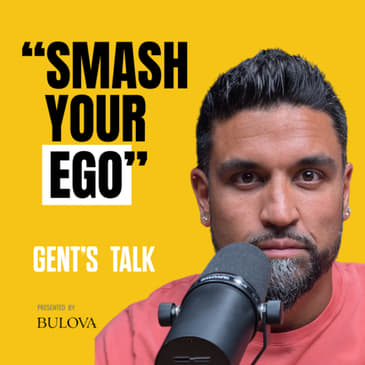
In this week's episode of Gent's Talk, presented by BULOVA, our host Samir Mourani sits down with returning Gent's Talk guest chef Devan Rajkumar, to talk about his sobriety journey, how he eliminates his triggers, why your ego can be your worst enemy and how he keeps a positive mindset, while working in an industry full of the very substances he works hard to avoid...PLUS, his newest passion project: his #MadLove cookbook. #GentsTalkConnect with us!Subscribe here ► https://www.youtube.com/@GentsTalkPodcastWebsite: https://gentspost.com/Instagram: https://www.instagram.com/gentspost/TikTok: https://www.tiktok.com/@gentstalkpodFacebook: https://www.facebook.com/gentspost/About Gent's Talk: The Gent's Talk series, powered by Gent's Post and presented by BULOVA Canada is an episodic video podcast conversation with leading gents and rising stars across various industries. Guests include Russell Peters, James Blunt, Robin Sharma, Director X, JP Saxe, Wes Hall, Johnny Orlando, Shan Boodram, Dom Gabriel, and Nick Bateman, just to name a few. The conversations range from career path, hurtles, mental health, family, relationships, business, and everything in between. Gent's Talk is the first-ever video podcast to be made available for streaming on all Air Canada domestic/international flights. We aim to have a raw, unfiltered conversations about our guests' lives, how they achieved success, lessons learned along the way, and the challenges encountered.Credits: Host/Producer: Samir MouraniCreative Director and Executive Producer: Steven BrancoVideo & Sound Editor: Roman LapshinA STAMINA Group Production, powered by Gent's Post.
The Gent's Talk podcast, hosted by Samir Mourani, pulls the curtain back on difficult conversations around mental health, business, relationships and the difficulties around expressing oneself, with rising and leading gents from across the globe.
New episodes every Monday! #GentsTalk
Instagram: https://instagram.com/gentstalkpod
TikTok: https://tiktok.com/gentstalkpod
YouTube: https://www.youtube.com/@GentsTalkPodcast
[00:00:00] Imagine you're in a group of people, you go into a bar and someone's like, hey Dev, give a sibling by the way, like are you an only child? That's not the time we're going to be like my brother died.
[00:00:08] Chef Devan is a global entrepreneur, media personality and successful chef. What was the most recent time you had a bout with potentially falling back into the addiction? A couple weeks ago, in that instance two thoughts crossed my mind. The first thought is to drink it.
[00:00:27] Nobody will ever know if I drink this right now. Except you would know. I wouldn't. And I wouldn't be able to live with myself. My worst day sober will always be better than my best day high. Always.
[00:00:40] My mom doesn't want to hear that this is the last time I'm doing it. She's heard all that shit before. You've tried this a variety path a number of times before. I have. And it didn't work. It did not work. What was the difference?
[00:01:17] So we're talking about squash. How long have you been playing squash now? I started playing in 2015 and in many ways squash saved my life bro. Why? In 2015 I went sober for like 10 months. I really started to look at cleaning up my life.
[00:01:32] I needed somewhere to put all this energy, anxiety, stress. I needed somewhere to put it because I had other ways of dealing with it before. I fell in love with squash. I was playing like 3-4 times a week. I started at Good Life. Sixth Division. You know?
[00:01:45] I left sixth. I went break to three. Okay. And then I went from three to two. I won three. I won two and I went to one. And then in one I got my ass kicked. Okay. Well, it's great cardio. I am in love with it.
[00:02:00] There is just something. There's like manipulative traits about squash. You know hitting one way but looking the other way. The boasting. You know you knit off the walls. There's just a lot of technique and strategy involved. I win games with mind games. Okay. You know?
[00:02:18] And I won it so bad. Welcome back. Thank you. This is long overdue. I appreciate you having me back. Since the last time, you know the last time on this show was really, I don't know if I was at a year and a year and a half sobriety.
[00:02:35] I don't know what it was but it was like one of the first public forums where I spoke about my past with substance abuse. I don't know what you said to get me going but it was one of the first places where
[00:02:45] I openly discussed a lot of dark secrets that I had, things that I was guilty and ashamed of. It was one of those moments where I got extremely vulnerable. I felt very comfortable with you.
[00:02:56] I was accepting of the fact that the words that I would share could potentially help somebody. Well they helped me. Yeah. So thank you for that. I mean the term, I still use it today every time someone asks me what's the biggest
[00:03:11] thing I've learned from doing this podcast? It's that it's okay to not be okay and those were your words. So thank you for sharing those words and I remember that conversation very vividly because I wasn't sure what to expect.
[00:03:24] At that point, I think you had just done the view the vibe cover shoot. Okay. And Stephen had said to me, it's going to be a great interview but I wasn't sure what to expect so you came in and you had a lot of energy.
[00:03:39] The sense I got from you though, very different than the energy you have today. The energy that you had then was not on edge but almost like you were still going through it. I get a very calm centered grounded version right now sitting in front of me. Interesting.
[00:04:00] I don't always feel calm and grounded. I think I was also very nervous last time about sharing my story. I think that was part of it. We also wasn't super comfortable sharing it or knowing exactly what to say or what not to say.
[00:04:12] Fair, that was the first time we met. Was it? Yeah. It feels like I've known you forever. It's been pretty crazy recently with the cookbook and everything and all the traveling. I've been away a lot more this year than being actually in Toronto.
[00:04:29] I've been away about three weeks out of every month this year so it's been really exhausting. It's really exciting at the same time trying to build a brand, trying to make the most of everything and I still have this like I have to prove myself kind of complex.
[00:04:43] I still have to prove myself to my dad and show him I can work as hard as him even though it's not his industry and it's something that he doesn't know about our industry, the culinary hospitality industry. These are things that go through my mind.
[00:04:53] Where are you in your sobriety journey? I just hit in terms of continuous sobriety three years. Congratulations. God bless. Yeah, I would say I'm like 37 months or something now and I can't remember when we did the last podcast. It's about a year and a half ago.
[00:05:11] It was early on. I guess maybe October. I think October of 22. 22, yeah. Yeah. Oh man. So it was about a year and a half there at give or take but yeah, I've learned a lot since then. It's a daily practice.
[00:05:25] You want to ask me recently, how'd you get cured? And I was like what? And anybody in the program of AA or anybody in recovery would be like what? There's no cure for this. It's a daily practice.
[00:05:37] I've done things over the past few years to fill up my spiritual toolbox with resources that can help me when times get difficult because before when adversity happened to give examples like you get dumped, you get rejected, you get rear-ended, you don't get that job.
[00:05:53] You know, you're having a bad day. I would use something. You know, I would ingest some type of substance to alter my state of consciousness, right? Long story short, I get high, right, to break it down into English.
[00:06:06] But I have the spiritual toolbox now which is full of useful things to me like prayer and meditation, like breathing practices, my sponsor, the fellowship of AA and CA or whatever it is. You know, like I have all these things now. Squash, gym.
[00:06:22] I know you work out a lot. I try to work out every day. I have all these things now that I could reach into and... Different outlets. Different outlets and way more manageable than what I used to do before. Right.
[00:06:35] I was thinking as you were talking about the question that you got from someone about how would you cure yourself? I almost feel like you can't fault the person because it seems like people still
[00:06:47] don't really fully grasp what addiction looks like and what the recovery process of addiction looks like. And the fact that it doesn't ever really... The recovery part doesn't ever really go away. It's not a you get antibiotics from a doctor, you're done for an illness.
[00:07:03] It's a daily consistent thing because the minute you fall back into that trap, you got to start over. As soon as I started engaging in past behaviors, past ways of thinking, stop accessing my spiritual toolbox, stop doing all the things that got me to where I am today.
[00:07:21] I put myself in a very dangerous position but like you said, I can't fault anybody for it. It's part of my role to educate people on how to help people that are struggling with substance abuse or some really, really dangerous behaviors. So you can't fault anybody for it.
[00:07:41] How have you... You're about three years into this, just over three years. What have you learned in these three years about yourself? What's the biggest thing that... You sit there, you reflect on dev from three years ago versus dev today because you've
[00:08:00] tried the sobriety path a number of times before and it didn't work. It did not work. What was the difference? A big part of my journey this time was practicing acceptance, right? From who? Of everything.
[00:08:18] Forgiveness is a big part and we can get to that in a minute. Acceptance has been a big part. I've struggled with my relationship with my dad for a long time and losing my brother. My brother left us in 2006. He was 26, I was 21 so 18 years ago now.
[00:08:35] And I never got to say goodbye. I just have all these like I wish I reached out more. He was living in New York at the time. I wish I texted him that day. I wish I went to New York.
[00:08:47] I wish I did all these different things and I need to accept the fact that I didn't know what was going to happen, right? And I need to forgive myself because I held a lot of pent up anger and stress and resentment for that.
[00:09:01] My relationship with my dad too. I was like man I'm doing all this work and my dad is not meeting me halfway for us to mend our relationship and build something that we didn't have.
[00:09:12] But I practice acceptance that I'm doing all that I can for myself and show him that I'm there to love and support where I can. And just kind of unclench these balled up fists that I had and drop my shoulders a
[00:09:24] little bit from being all wound up and go on with life that way. So acceptance has been a really big part of it, man. The relationship with your dad. We're filming this on the 17th of June. Yesterday was Father's Day. Do you do anything with your dad?
[00:09:41] I didn't do anything with him. I had a huge catering the day before. I was actually at my parents house for the weekend. I had a huge catering the day before.
[00:09:50] Slept in on Sunday, went for a massage, self-care and the place I went to, I picked up a two hour massage card for him. He's got a bad back and he does massages all the time. Earlier that morning I wished him happy Father's Day as well.
[00:10:04] As I was getting some cereal out and I came back and I gave him the card. And that was basically it, the two hour massage card. He asked a question or two about it. Didn't say thank you or anything but I didn't expect that.
[00:10:18] He just kind of saw the card and he said, I think he said, are they open now? I said give them a call. And I know he likes really, really strong people to work on him.
[00:10:26] So I said make sure you ask for somebody strong and then that was it. Were you hoping for a different reaction? Man, I don't know what I was hoping for. He's done some things recently that have really upset me that I get wound up over,
[00:10:37] that I do my best to talk about and speak about out loud instead of kind of just walking around really pissed off at the world. Because it invokes when my dad does something to upset me or when someone
[00:10:47] does something to upset me, specifically my dad because the history that's there, it kind of brings up all these emotions and frustrations, angers. It brings up a lot of this bad energy from when I was really young.
[00:11:00] And prior to getting sober and working on myself, I was very much looking at my dad and behaving on the inside like a 10 year old kid who's mad at his dad for whatever reason, right? So was I expecting a different reaction? Sure, man. That'd been great.
[00:11:13] Hey, thank you, son. Maybe we go together or something like that. Sure. Like that would have been cool. But it's OK. It's OK. I did my part. Ultimately, I know he's saying thank you on the inside. And I know. I know for a fact. I've heard it.
[00:11:27] He's very proud of what I've built. He's very proud of the journey that I've been on. And he may not say it directly to me, but I've been in the room when he talks about me to other people and that's a huge step.
[00:11:36] You know, my dad was talking to one of my friends a couple of weeks ago where he's like Devon's on another level right now. Like, you know, with the working out with the work, with the success of the cookbook, with, you know, his ambition, all this stuff.
[00:11:49] And I was there sitting at the counter. I think I was I was on my phone or something and he was talking to my buddy Chris and I looked around and I'm like, what's in this guy's coffee today, right? And so yeah, he's loosening up a bit.
[00:12:02] And like prior to me getting sober, man, I wanted to get clean and still figure out a way to still hate my dad. That much, huh? Yeah. Why? I was like, I need to learn how to not pick up anything.
[00:12:14] I need to learn to get my shit together. But I there's no way I'm forgiving that old man. Just like just years and years of resentment, man. Years and years. It's tied to my brother too. Not something I really want to ask you that next.
[00:12:26] But it's tied into my brother as well. It's all wound up in one big bubble, you know? The your relationship with your brother, you said that you wish you texted more and we guys just not close at the time or I don't remember, man.
[00:12:40] I don't remember the last time we spoke. It was 18 years ago. I mean, my head was up my ass back in those days. What was I was 21? 21, you know, my late my teenage years, my late teens, my early teens, I'll start early adulthood.
[00:12:52] I mean, I don't I don't remember, man. I don't remember the time. It was probably a week or two. It might have been a few days before or I don't I don't really remember.
[00:13:00] I just know that if I had known that he would go, I would be on the phone with him all day. I would have been in New York with him, right? I would have flown out in a heartbeat.
[00:13:08] So it's something that I just have to accept like nothing I do is going to bring him back. So what I choose to do is forgive myself and celebrate him. I used to lie to people when they would ask me, are you a only child?
[00:13:20] Do you have any siblings? Imagine you're in a group of people, you go into a bar or you're at like, I don't know, some type of party or something and you're in a group of people and you're talking.
[00:13:29] And then someone's like, hey, Dev, do you have a sibling? By the way, like, are you an only child? That's not the time we're going to be like my brother died, you know, in 2006, I would not do that.
[00:13:38] And today I choose to speak about it and celebrate him immediately after like as soon as you open that cookbook, it's a photo of Jai, my brother and I when we were kids. As soon as you open that cookbook, man, and it's like, I know
[00:13:52] we will break bread together in some way, shape or form, you know, which is like, yeah, just as soon as you get to after, yeah, after you get through like the title pages, the beginning of the book, I would say, boom. Yeah, a bright, bright table of contents.
[00:14:06] That's it, man. That's Jai, Jai and I. And the same way I'm looking up to him there to this day, I look up to him. He's a huge influence in my life. He's the kind of guy that walked into any room and lit it up, bro.
[00:14:19] He knew someone everywhere and he was able to connect with people. Not your typical young guy in his boy, bro. Died his hair, all-star hockey player, earrings pierced, smoked cigarettes, you know, like just different against the grain, you know, eating pho
[00:14:34] like at a young age, like just doing all this random stuff that you wouldn't expect from from somebody that looks like us, per se, back in the 80s. Yeah. When you celebrate him today, if you could actually say something to him today, what would you say to him?
[00:14:52] Oh, man. I don't know if I've ever been asked that if I could ask him something and ask him say something. What would you say? I would apologize, man. I would apologize for for not being there more.
[00:15:06] I hold a lot of regret that like in his darkest moments, he didn't turn to me. Right. He didn't turn to my mom, to my dad. He didn't turn to me. You couldn't control that. I know. I just I feel like.
[00:15:18] I feel like I could have done something. I wish I could have done something. I mean, it's a daily practice like we talked about this acceptance and forgiving myself, but it hurts, man. It hurts. It hurts all the time.
[00:15:30] And it hurt a lot over the past three years because as soon as I would feel any emotion, I would numb myself or escape the situation, right? And I don't do that anymore. I'm actually here and I have to like feel my way through it instead
[00:15:40] of figuring a way to go around it. And it's tough, but, man, I would just say I'm sorry. I wasn't there more and I hope that he's proud of me. I know he'd be proud. I know it.
[00:15:50] That teetering on the edge where you're you have to feel the emotions, but feeling the emotions or the avoidance of those emotions was in part why you even decided to get high, right? Because you want to avoid feeling those. And now you're just leaning right into them.
[00:16:06] How do you if someone's listening to this, watching this and here is you talk about leaning into the very emotions they're trying to hide from? What advice would you share with them? Why does this work? It's a great question, but it's for me so much more profoundly deep
[00:16:23] than me providing advice to somebody on how to lean into those emotions. Because behind me doing that, I have this whole spiritual program. You know, I jumped headfirst into CAA. I jumped right into 12 steps and it's not so much me today
[00:16:40] leaning into the emotions of losing my brother. At a young, fragile, vulnerable age. It's about me having the support to do it while I do that, right? The my friends and my close family that's in this program with me that have recovered as a result of doing 12 steps.
[00:16:58] I'm able to lean on them. I'm able to confide in my sponsor, who is someone that I look up to that has recovered as a result of taking the 12 steps and stuff like that. So without that, I don't know that I could lean into these emotions.
[00:17:11] Because anytime I tried before I'd get high, right? So I had to figure out a way to live life on life's terms without resorting to numbing my brain and numbing myself. And I think the first thing started with the ego deflation, which is step one.
[00:17:25] Essentially, in my opinion, that's what step one is. It's admitting the fact that Devin has a problem and Devin's life has become unmanageable. Devin needs help. So before I always wanted to be in control. I wanted to be the director.
[00:17:38] I wanted to be the person that called all the shots. I got myself into this mess. I can get myself out of it. Could not, not a chance over and over. Like we talked about it before, like I failed.
[00:17:47] I failed over and over and over and over again. And need to get that ego smashed and deflated as much as possible. What happens after the ego? I'm very, I'm very curious about this process because we recently released an episode talking about addiction and a number with Danny.
[00:18:08] Danny Fernandez and a number of people in the comments and the DMs were very much like this is nice to hear, but in the sense of it's nice to understand what this looks like. Right? Because if I'm in your life, Dev, and I see you struggling with something
[00:18:27] and knock on wood, you never feel or go through something like that ever again. But if I'm a witness to this, I'm curious about what I can do to support you. Because some of the feedback I've received when it comes to addiction and
[00:18:43] dealing with these kinds of things is you almost have to let them go through it. I'm not sure how to reconcile that. It's something I struggle with because I have friends who struggle with it.
[00:18:54] And I go, do I watch them implode because they have to hit a certain bottom or do I step in and intervene to which they're going to resist and potentially still hit that bottom regardless? There is a school of thought in the program that's like that person needs
[00:19:11] to get beat up a little bit more. For example, let's say I'm struggling every day. I can't not wake up and take a drink or get higher or whatever it is. And you know, I disappearing for days on end, my life's falling apart.
[00:19:22] And let's say I start going to the program and I get to a week a day, a week, two weeks, three weeks, six months or whatever. And then I go back out again. Something happens or I just, you know, on board or whatever the case
[00:19:31] maybe and I go back out again. Sometimes in the program, I'm not generalizing all meetings and stuff like that, but sometimes you'll say, oh, that person needs to get beat up a little bit more. And that's kind of what you touched on there.
[00:19:42] Things that you can do are educating yourself on what that person is going through and what resources are available to that person. Other things that I suggest that you can do are setting boundaries. If someone continues to take advantage of you, maybe throws you
[00:19:57] under the bus to their wife or partner or whoever it is, or borrows money from you or anything like that, you need to be able to set clear boundaries. If you need to distance yourself from that person, then you need
[00:20:08] to do what's difficult because ultimately you got to do what you think is best for them. And if you're just kind of hanging around them, the worst thing you could do is enable them. A lot of my friends enabled me, right? And I enabled them.
[00:20:20] I'm not pacing guilt on anybody. We enabled each other. I chose to hang around people that would allow me to behave the way that I wanted to behave. My friend circle, the people I travel with now, the people
[00:20:30] I spend time with, go to movies with, work out with. They're not those people that was sitting on a couch with me 10 years ago, you know, for two days or whatever it was. So auditing your circles really, really important. But yeah, setting boundaries, educating yourself and letting
[00:20:46] the person come to it on their own, I think is also really important because you can hold an intervention for someone, sit them down with their family. Everybody can write letters, which this process is a bit of a last resort thing, but you can do all that.
[00:21:00] But ultimately that person is the person that lives with themself 24 hours a day, and you can't babysit them every minute, every second of the day for the rest of their lives. At some point or another, that person needs to practice the acceptance, start smashing the ego.
[00:21:17] And you touched on this before leading into step two, came to believe that a power greater than ourselves can restore us to sanity. That's the next step after me admitting it. It's me trying to develop this conscious contact and this relationship with a higher power.
[00:21:30] Now that can be a God of your own conception. Mine is the universe. Ever expanding universe. I love astronomy and the more I study it, the smaller and smaller I get, you know, like, which is a good ego deflation piece massive, smaller than micro dust to
[00:21:45] think that we're here in our solar system. And there's like another they say potentially infinite galaxies out there. It's hard to imagine. And drama is the closest one to us. We'll never get there in this lifetime. Right. It's just wild to think about this.
[00:21:58] So yeah, for ego deflation, the the universe, the ever expanding universe is something that I look up to and I pray to it. I pray to that energy, right? It's so much bigger than me. So it helps keep me nice and small. So that's the second step.
[00:22:11] First step you admit Devon. I'll just say it this way. Devon admits that his life is effed and you can't make it through. He needs help like I need help. Second thing is, okay, up till now I've been the director. I've been in control.
[00:22:26] I've called all the shots. I need to relinquish myself of this now. So where do I put my faith? I put it into a higher power that could be. I don't want to mention anything specific. It'd be whatever God you want. Sure. Right.
[00:22:38] As long as it's not another human being, my higher power was my brother for a little bit. My higher power was my sponsor for a little bit in early recovery until I could build and develop my own connection relationship with that higher power.
[00:22:52] So yeah, we admit we have a problem. We start to develop this. This is this call we get out of ourselves and we put our faith into something else. Right. And then we continue on with the steps. Is there a risk to externalizing it? What do you mean?
[00:23:06] So I wonder if when you externalize that step and go, I have to put my faith in something external to me, you're relying on that external thing to keep you on track. But if that external thing were to fail you
[00:23:18] somehow, and I know it's kind of hard to like say how does, you know, the universe fail you. But if something, if life throws you another curveball and you go, well, I'm blaming the universe for this one or I'm blaming God for
[00:23:27] this one, that suddenly you fall back into the trap. Where does the responsibility come? Where does the responsibility fall on in doing the work internally to write yourself? Important to note, I'm screwed at this point. I am completely effed at this point.
[00:23:45] So me putting my faith into something else and then blaming that something else is not really something that I have the luxury of doing. Ultimately, if I keep putting that right foot in front of myself and I keep thinking, is that the right thing that I'm doing?
[00:23:57] Is this what my higher power would do? Like, should I pick up this beer? My higher power would not pick up this beer. I'd pick up the glass of whatever else it is other than alcohol. That's what it is.
[00:24:06] If I pick this up, this is my will at this point. This is not something that my higher power would do. Right. Even then, it's like I'm completely all out of options when I'm going to 12 steps or I'm going to meetings.
[00:24:20] I've tried everything in my power to stop using and I can't. I don't have a choice at this point. So either I go die or continue on until I die or worse jail or institution or whatever it is. Or I put my faith into a higher power
[00:24:36] and I let that higher power guide my decisions. And the more I do this, the more it becomes active. Right. The more that I practice these behaviors and I be honest, the more it's going to come a routine or routine to me.
[00:24:50] And that's basically how I have to approach this thing. They say you can't think your way in to good living, right? But you can act your way into it. So if I sit here and be like, man, I want to be more honest.
[00:25:04] You know, I want to start going to the gym, you know, I want to I want to love myself more. I can do that all day. But when I actually start doing it and engaging in it, breathing it, going through the ups and downs
[00:25:16] of actually acting it out and executing it, then that's how I'll develop that routine. And that's how I'll change that past behavior of thinking. So I'm going to I want to use an example here to sort of fully understand this. When was the last time?
[00:25:31] What was the most recent time you had a bout with potentially falling back into. The addiction, I mean, a couple of weeks ago, probably, I don't know that it would be me falling back into addiction or picking something up in a relapse thing.
[00:25:47] OK, but I was very much tested. Can can you walk me through not maybe you don't have to get into the details of what happened. But I'm curious more so about how you managed to stay on track, like what you did.
[00:26:00] Yo, so a lot of people listening to this. You'll probably hear it in my voice. This is my story and my journey, right? So you may or may not be able to relate to it. But like knowing my past history with my father, this enraged me, bro.
[00:26:15] I was traveling. I've been traveling, like I said, like a madman. I was in LA doing pop ups, right? I came back from LA after like a week or a week and a half. I went to my parents' house and I was doing back to back podcasts.
[00:26:27] Actually, both were on mental health. They ended up being that way. One was at 12. One was at one. I was in the sunroom in my parents' home, which has a sliding door and it's out in the backyard almost. It's on that side of the house at the back.
[00:26:40] And I'm there and my dad's really loud. You know, I if we go on vacation with my dad or you go to a restaurant, trust me, he's the kind of you'll hear him anywhere. You know, you're in the bathroom and you're going to hear my dad.
[00:26:51] You know, I'm filming stories. We were in Turks and Caicos. I took my parents with me when I was doing the menu development. I was like shooting a story by the pool and like you can hear my dad in the background.
[00:26:59] Right. So my dad opens the sliding door and he's like yelling. He talks, he yells. Yeah. And he's yelling. You're recording. And I can remember if he's on the phone or if he's talking and then my mom comes and she's like,
[00:27:10] Dev's on a podcast. Dev's on a podcast. Right. And I look over and I'm just like, are you going to notice that I have a laptop open and like I'm talking about mental health and I'm trying to make the world better
[00:27:19] and I'm trying to be I'm trying to do all these things. But it's not his responsibility to know all that. And I get that. But he said something that enraged me. He goes, this is getting ridiculous now because every time every now and then
[00:27:32] if I'm shooting something or filming something at home, it started during COVID when I was living with them. You know, we would know like I don't yell quiet on set. But I'm like, hey, I'm filming something. You know, maybe we can turn the music down
[00:27:44] or maybe you can take the phone call upstairs or something like that. And then I got to close the door because the door is open. You can hear him through the house, blah, blah, blah. So he goes, this is getting ridiculous now.
[00:27:53] And I'm like, dude, I haven't even been here for the past week and a half. It's not like I was doing this yesterday or a few days. Like I have not been here. What's getting ridiculous? On top of it, I'm like pouring my heart out
[00:28:06] in this interview, you know, with the hope that other people will start to pour their heart out or at least become a little bit more vocal or smash the stigma around men talking about how they feel like all these things are the things that I'm trying to do.
[00:28:20] And I wanted to scream that I can't remember which interview it was at the time, but he asked me a question and, bro, I just saw red. I heard this is getting ridiculous now. And I just like I felt like I transformed into
[00:28:33] like an eight or nine or 10 year old kid like the hair standing up on my arms. And it's just like he asked me a question and I didn't say, can you repeat the question? I just started talking about something. I don't even know what it was.
[00:28:44] And for the next like seven or eight minutes, I was livid. I thought about just taking the laptop and slamming it closed and just walking away and letting some steam off. Obviously, that's not the right thing to do.
[00:28:55] Sure. When the podcast ended, I went straight to the gym, went to the gym, let off a lot of stress. I started reaching out to people from the program, people that I confide in just talking to them. Shortly after that, my sponsor happened to reach out to me.
[00:29:10] We hadn't talked in a minute, talked to him, told him everything that's going on. I said it to a few people close to me and I let it out. And I let it out. Probably the best person to let it out to would be my dad,
[00:29:22] though, in a calm way. I just don't know how he'd react to it. I think immediately he'd become defensive and it would not probably end well. But that's really on me to just keep my cool.
[00:29:31] But we tend to regress back to when we were when I was younger, when he was younger, 20, 25, 30 years ago, when I was trying to figure my life out and I was coming home smelling like weed and all kinds of shit, right?
[00:29:42] Things that brown parents don't like, you know? But that was a recent moment where I saw black and I wanted to just whip my laptop out of the window. And I had to take some serious deep breaths.
[00:29:55] I had to process this in a way that I knew it was healthy. Go push some weights around, jump on the treadmill, whatever that looks like. And I needed to talk about it. So I did all of those things
[00:30:05] because if I keep all that shit bottled up inside, I'm going to jump on a trip somewhere. I'm going to go be working somewhere and someone's going to slide me a glass of wine and I'm going to smash it. And then I'll probably go to bed.
[00:30:16] The next day, I might have another glass of wine and probably go to bed. A week later, I might have two. And eventually I'm back in the shits. How do you? Like at what point in this relationship, considering he's a source of that level of anger?
[00:30:36] At one point, do you just face it head on? Knowing to your point, he might get self defensive. And as you're talking, it makes me think about my father too because I grew up, you know, I have a good relationship with my father
[00:30:47] but we also butt heads on almost everything. So I could get that same, I see red rage with my father. So I always struggle with this idea of at what point do we just face it head on? Knowing there's a limitation on that end
[00:31:02] as well in terms of the ability to receive what we're trying to say and the ability to meet us in the middle. It's never worked out well for me. It's always led in like door slamming and storming out of the house. Shouting mattresses.
[00:31:15] Yeah, so for me, I go back to that acceptance. I accept my dad for who he is and I try to lead with kindness and compassion. And what that means is if I put myself in my dad's shoes, if I start to practice empathy, you know,
[00:31:30] if I'm empathetic to his situation, then I start to realize that my dad grew up with some disabilities. My dad grew up in Guyana with nothing. I've been to their house in Mahica, Guyana, East Coast, Emmer, I've been there. It's like, it's, there's nothing there.
[00:31:44] It's a few sticks and like, you know, a few pieces of wood on top of it. One pot to cook everything in if they had food. I've been there many times as a kid too. My dad's dad died when he was 10.
[00:31:55] My dad's dad, my grandfather was an alcoholic, you know? My dad came here with nothing. My dad worked three jobs. He was diagnosed with insomnia in his young adulthood. I know all these things about my dad. So when I start to lead with kindness
[00:32:10] and be empathetic to his situation, be a bit more compassionate, put myself in his shoes, I start to release a lot of this tension, you know? And I start to practice that acceptance that I accept him for who he is. I accept the fact that, you know,
[00:32:27] he had it really difficult. He came here with nothing, all these different things. He didn't have a relationship with his father. I accept all these things. And as soon as I even start talking about it, I can hear my tone changing as I start to speak.
[00:32:39] I come from like a pent up kind of place to get real fired up. So there's little energy about right here. This is the same energy you held throughout the entire first episode we did together. Yeah, I was pissed, man. Yeah, okay, that's a good observation.
[00:32:53] It's hard for me to sometimes look from the outside in and see what you're seeing. So yeah, and I think that's real time. People will see that. It's like as I start to practice the things that I've learned working with psychologists and therapy and stuff like that,
[00:33:11] starts bringing me back to a place where I get more grounded and centered. I get to like that kid phase and it's like... Take a breath. Take a breath and practice some empathy and compassion. How do you balance sobriety, particularly on the alcohol side
[00:33:28] while working in the hospitality industry? You're either, most people are either drinking alcohol or cooking with alcohol. It just seems to be so infused in your entire industry that I'm just wondering how do you put yourself in the cross hairs of it all? It's tough, man.
[00:33:44] Even more so with the kind of work that I do, I'm not on a line Tuesday to Saturday 12 to 12. That means I'm not cooking on a restaurant line for anybody watching that doesn't know the lingo particularly. I'm out and about events, always in front of people,
[00:34:00] live demos, book signings, lots of TV, lots of parties, you know. And there's always alcohol and there's people doing shit in the bathroom, you know. And it can get really challenging, bro. And there's a saying that we have in the program.
[00:34:17] It's like if you sit in a barber's chair long enough, eventually you will get a haircut. What does that mean? That means if I keep going to these events and I keep hanging out there till 1 a.m., 2 a.m.
[00:34:27] when I have no business being there at any point, when there's nothing for me to gain from being there or having conversations with people that are half or all the way in the bag, then I need to get out of there.
[00:34:37] I need to say no to certain things. I can't be at everywhere all the time. Got a great story for you and it's happened twice. I'm cooking for a wedding in San Miguel then in Mexico last year. And I get there, I go straight into work,
[00:34:50] I have a crazy prep day and the day that I land, this happens a lot, happened in Pakistan, happens in a lot of places. I literally land and I go cook, same in LA. I get back to my room now. It's like 8 p.m., I'm exhausted.
[00:35:02] I've been traveling this and that. I get back to my room and there, and I'm stressed, you know, I'm stressed because I'm so critical about my work and I wanna put out the best product possible and I'm cooking for a couple hundred people in the middle of Mexico.
[00:35:15] So I get back to my room and there's a box on my bed in the hotel and I open the box and it looks like a bag of banana chips or blatano that's there and then we have a bottle and it looked like cologne.
[00:35:27] It was like a square bottle and it said salud on it, right? And I'm like an idiot. I go to open it and I smell it and I'm like, this is tequila, mescal even. I can smell the smoke, right? In that instance, two thoughts crossed my mind.
[00:35:43] The first thought is to drink it. I'm in like a hotel room. I remember the blinds were closed. It was dark in my hotel room. Nobody will ever know if I drink this right now. Except you would know.
[00:35:53] I would know and I wouldn't be able to live with myself. And then I need to say, okay, but why do I want to drink this? Like why do I want to put this into my system right now? And I start to work on that. I'm tired.
[00:36:05] I feel overworked. I'm really high strung. I'm really stressed. There's a lot of pressure on me for me to execute with a couple hundred people flying in from out of town to a destination wedding. All these things grow my mind. Go through my mind.
[00:36:17] Immediately at that point after I start processing, I start playing the tape forward. This is a huge thing for anybody in recovery. And I'll speak always to myself. I play the tape forward a lot. I shouldn't speak about anybody else's journey.
[00:36:29] I like to play the tape forward a lot. If I take that drink, I might not make it to work the next day. You know, what's the worst that can happen? Cause the worst that can happen has basically happened. You know, with the exception of me dying.
[00:36:44] The worst things that could happen have happened. So if I play the tape forward, if I take this drink, cause I want relief from the immediate moment, but if I play the tape forward and go a few hours later, a day later, where could I be?
[00:36:59] And it's never worth it, man. Never ever ever is it worth it. My worst day sober will always be better than my best day high. Always, always, always, always. I know that. So at that point, I put the cap back on the bottle.
[00:37:14] I can message or call my, I can't remember what I did in that moment, but I can call my sponsor. I can message my sponsor. I can reach out to someone from the program. I can go breathe, I can go to the gym.
[00:37:23] I can do a lot of different things, but I didn't have any resources before to not drink that mescaline. I didn't have them before. Same thing happened in Turks and Caicos. I get to Turks and Caicos. Again, a little bit stressed out.
[00:37:34] I have full dinner tables for the chef's table and stuff like that. There's a shot, not even like a, there's an actual shot full of, I guess rum in the fridge. I took it and I threw it down the sink. I don't want that temptation around me, right?
[00:37:47] But in those moments I play the tape forward. I think about what could my life look like if I take this? Why am I taking it? Is there something else I can do to get through the stress of this moment,
[00:37:56] then resort to something that I know is bad for me, could harm me, could kill me? That play it forward visualization is an incredible way of, just for anything. It's a popular tool in the program of recovery, but yes, very similar to 12 Steps.
[00:38:13] I feel like every human should do it. Yeah. I'm just thinking, if you're going through a problem at work or in life or in your relationship and you're about to have a conversation about something, just visualize what that looks like. Play out the thought experiments
[00:38:28] and see what the results would be and then choose your own adventure from there type of thing after you've thought it through. You could, yes. I never really thought about using it outside of the scenario which I just gave it to you, like playing the tape forward,
[00:38:41] like me picking up something. But yeah, you could use it in a lot of different places. The reason why it works so well for me is because I have so much experience with substance abuse and stuff like that. It usually always ends to the same place,
[00:38:53] which is broken Devin. Whatever the details of that looks like is whatever they look like. But ultimately at the end of the day, I'm broken. You know? Are you still broken? Is that how you would characterize yourself? Definitely not, man. Not today. Not today.
[00:39:11] I have a relationship with myself that I've nurtured and put so much work into and I don't have to hurt myself. My self-care days, I had a self-care day yesterday, bro. I took a day off the gym. I went to a movie by myself.
[00:39:26] Furiosa, I'm a Mad Max fanatic, bro. I'm a road warrior, post-apocalyptic fanatic. And Furiosa provided me with so much more context to George Miller's Fury Road. Enough about that. But I... Thank you, George. Yeah, man. These are the things I do now. Whereas before I'd finished my event,
[00:39:47] I'd had a catering Saturday. I would just... I'd have like, man, I remember times where I had buspins full of gear in my car, like tons of food and leftovers and squeeze bottles and shit. And it's in a parking lot for two days
[00:40:02] while I'm out being an idiot. You know, while I'm out hurting myself, right? So yeah, that's what broken Devin would do. But healing Devin, in work-in-progress Devin is going for that 90-minute massage I did yesterday, putting away my cell phone, going to a movie by himself.
[00:40:20] He's given enough of his energy, a book signing all week and et cetera, et cetera. So for those practicing compassion with my dad, you know, all these things, not picking up no matter what it is. Like, substance was my... Life was my trigger before.
[00:40:35] They say stay away from people's places and things. Another huge one. Life was a trigger for me, you know? Sitting here with you talking about things I'm very vulnerable about or getting rejected or fired or it's 18 degrees outside on a Wednesday.
[00:40:51] Like no matter what it was, I'd find an excuse to use. That's what broken Devin would do. But no, man, I'm going straight to the gym from here. I can't wait. Well, your motivating me to want to go to the gym after this too.
[00:41:03] And I went this morning at 5 a.m., so I'm excited. What did you train? I trained at Extreme Couture. What'd you do today? I did back. Nice. I have a separate day for shoulders now, which I'm excited about. Shoulders, I think as I get older,
[00:41:15] I need to start doing shoulder separately. And it takes a little longer to warm up too. Pump up very quickly. They do. They pump up quick. But you gotta warm them up. I had it with chest before, so now I love gym and... It's a great outlet.
[00:41:29] It makes me feel productive. I often train in the morning. I feel like starting my day off with a win is massive. My first win is eating like zero sugar cereal with zero sugar almond milk, starting it off clean, getting 30 grams of protein in.
[00:41:44] Having the vitamins, some creatine, and L-Bluetamine. This is how I start off my days, whereas before it might be like a sloppy breakfast sandwich, feel like shit the rest of the day. Just sit on my phone all morning, being hungover, start smoking, whatever it is.
[00:42:00] So I try to start my days off with a win, and gym is a big part of that. The days that I start with the gym first, I just, the mental clarity is so much higher. I haven't eaten yet. It's almost one o'clock. I'm still fasted.
[00:42:14] I mean, just water is just for some sort of sustenance. And I feel great. I don't have that afternoon crash. I'm not slow. I'm not feeling lazy. And this reminds me of something too, is like, if I'm on the path that I'm on today, then I'm accountable.
[00:42:31] You know, I'm like nurturing and loving. I'm the real me. I'm not wearing a mask. I'm able to be financially stable. You know, I'm able to do the things that I wanna do. I'm working out. I'm eating better. I'm doing all these.
[00:42:43] Like it's either I'm on this road or I'm on this road. And the other road is like broken Devin, lying, selfish, like egotistical, scrounging for pennies. Like it's either I'm this or I'm this. I'm not someone who can come in the middle.
[00:43:00] And I think this is really important for someone listening too. Like if you're a type three addict, which I am most definitely a type three addict. Sorry, what is type three? Yeah. Yo, so type one. This is, this is, this is interesting.
[00:43:14] So type one is the person that we've all seen. It's the person that's drinking from a pint, leaves half the pint on the table and walks away. Okay. Type two is someone that'll have four or five pints. You know, they might have 10,
[00:43:30] but then they go home and they sleep and they may not do it for a long time. Right? Type three is me. I will not stop drinking. When I pick up the first one, I don't know when I'm gonna stop.
[00:43:43] I'm gonna drink it or I'm gonna get high in the face of certain consequence. If I know I'm using and I might end up in the hospital or I might lose this job or I'll break my mother's heart. The worst consequences you can think of,
[00:43:55] both small and big, like that's what a type three is for me. That's how I define it. That's how me, Devin, myself, that's how I define it. I will use in the face of certain consequence. I have no control. I can't stop myself.
[00:44:09] That's why I jumped in the rooms and that's why I did 12 steps because I saw other people recover as a result of doing it. It almost sounds like creating that version of your life in such a way where it's so attractive and so much better for you
[00:44:24] that the alternative really looks like doom and gloom and you're just like, why would I ever, why would I ever choose that? It was doom and gloom. It was prison. It was a prison in my mind. I couldn't get out of it.
[00:44:38] I was handcuffed to this old identity. You know, like I'm walking, there's a chain around my leg and the chain is connected to like a ball that weighs like two tons and I'm dragging that old identity everywhere with me. I had to get rid of that
[00:44:52] and you know, I'd go out and meet you for a pint somewhere and then the next thing you know, like I'm not going home for a couple days. You know, it was never my attention to get high or to miss work the next day
[00:45:00] or whatever the case was. You know, it was never my intention to like not call my mom back. This is never my intention. But once that shit gets in me, I have no more control. So I had to do everything in my power
[00:45:10] to figure out a way to live life with peace of mind and serenity and some clear headspace without going down that road. The auditing your circle, hard to do, especially when the people around you make you feel so good but also realize that really and truly
[00:45:30] it's just a facade, the whole thing is fake and then having to cut those people out. It's so hard at first, bro and working with people in recovery, that's one, and for myself and working with people in recovery this is something that's so hard to do
[00:45:46] because friends are your life. You can't confide all the time with mom, father, brother, sister, you know, whoever that might be. Friends are your life, especially when you're out partying and you're doing, you're living your life. Like you go to work all day if you're going to work
[00:46:05] and like you just wanna hang out with your friends at night and hang out with them on the weekend and go to the game with them or the concert or sit on the couch or the restaurant, whatever it is, friends are your life. But you must eliminate people,
[00:46:17] places and things that will trigger you. I'm saying this now with conviction, bro in the first week, two months, three months it was torture for me. It was torture to sit at home on a Friday night at eight PM and not be out.
[00:46:28] Like Saturday night, my biological clock goes out, like where are we going? You know, like I should be getting ready right now to hit the clock or whatever that is at whatever time, right? That has to change. Did I eliminate these people completely from my life?
[00:46:41] No, I learned to love them from a distance. I don't need to call them every day, I don't need to be at their house every week but every now and then I can connect with them in a safe space when the time is right.
[00:46:53] Many of my friends I didn't see for a few months and the friends that love you and the friends that look out for you will understand. The friends that are like, it's not a big deal, let's just have one beer.
[00:47:04] It's a game of pool in the pool hall where you drank and partied for nights on end. If you know you're triggered by going to a Raptors game or a professional sporting game, if you know you're triggered by going to a movie, maybe you're smoking joints,
[00:47:19] if you know you're triggered by going to a wedding and it's all you can drink and you're sitting at a table and I've done this where every single person, the other nine people at that table are drinking, don't go. People, places and things, FOMO will pass.
[00:47:32] The fear of missing out will eventually pass and hopefully you'll get to a point where you can handle those situations and that's at your discretion. I'm not going to, I don't say yes to all weddings and I don't go to events and I'm not at clubs
[00:47:46] and I'm not at all these events that I used to be before. I'm also very mindful of the people that I spend my time with. You have to be. You have to be, you know, you are the company you keep
[00:47:56] so be prudent in the friends that you seek. I live by that every single day man. Is this person gonna benefit my life? Is it reciprocal? You know, is there something to gain from here? If not, my time is super valuable and limited to me. It's precious.
[00:48:09] I will definitely move on. I wanna ask you, I wanna get to the cookbook in a moment but I wanna ask you about when Devin was broken and in his substance abuse era, you obviously probably hurt a number of people in your circle.
[00:48:30] When you talk about forgiveness and acceptance, have you tried to seek their forgiveness or have you reconciled that to some people you may always be the villain in that story? Great question. Without a doubt, the biggest person I hurt was myself.
[00:48:47] You know, as selfish as that me sound that's how I feel. Cause I was with myself 24 hours a day for, you know, 40 years. When you're doing the 12 steps or when I did that journey, when I did that journey, step four is essentially writing down all your resentments
[00:49:04] and fears and you write all this out on a page and you admit it to yourself and you admit it to your sponsor and you admit it to your higher power and you try to rid yourself like, you know, I hate my father because of this, this, this,
[00:49:16] this and this, but I practice acceptance and compassion now and I let it go. I just try to give a real life example for it, right? I have fears. I'm afraid of dying. You know why am I afraid of dying?
[00:49:25] All these things we talk about and you feel really light. I felt really light after this step four. As you do this, you will inevitably come up with names or I did rather of people that I wronged, you know? Ex-girlfriends for me, father, mother, you know?
[00:49:44] Like all brother, all these different things. You come up with these amends and then as one of the steps, I make amends to these individuals. In some cases, I don't get ahold of anybody. In some cases you may have the phone slammed in your face
[00:50:00] or the email not responded to or someone might walk away from you. In my case, I got ahold of, I believe everybody, maybe except one person who's abroad, but I got ahold of everybody and everybody was very receptive to what I was saying.
[00:50:16] I basically came from a place of I was very spiritually sick at the time. I was not myself, I was acting out of character. I took advantage of you. I manipulated you. If there's anything that I can do
[00:50:29] to help in any way that I can, then please let me know. I don't expect you to forgive me, but I just wanted you to know that I'm working on myself as much as I can and the best way that I can do that,
[00:50:41] and I don't say this, but the best way I could do that is continue to demonstrate through my actions and behaviors that I've changed. My mom doesn't want to hear that I'm not gonna go get drunk. My mom doesn't want to hear
[00:50:51] that this is the last time I'm doing it. She doesn't want to hear any of that shit. She's heard all that shit before. She wants to see me change. My dad wants to see day after day, week after week, month after month, and it's not after six months
[00:51:04] that my dad's gonna be like, that guy's good. It doesn't work that way. It could be a day, it could be never, but I have to keep doing the right thing and that's how I approach events. Wow. And this just, firstly, thank you for sharing all of that.
[00:51:21] This just reinforces that this is a, it's not something to be taken lightly. It's an enormous journey. I'm very appreciative of the fact that you're sharing all this because it helps me better understand the weight of which you walk around with these things. That it's not, to me,
[00:51:40] a bottle of, or a glass of beer on the table is one thing to you. It's a whole other thing. And that weight is something and that burden is something that you have to carry and really, and truly, when I sound of it,
[00:51:52] you have to carry it alone. The most we could do as people who care about you, friends of yours, family of yours is to be supportive of you. You know what? As you go through this. Thank you for saying that. On that note, there are behaviors
[00:52:10] that get me rattled up a little bit. And it was an early recovery too. And I know it's just people looking out for me, but giving everyone that's listening maybe a little bit of insight into my life. Like if I get somewhere
[00:52:21] and someone slides a shot towards me, it's my choice to pick it up or put it down. And I remember at one event, someone's like, oh, Dev, here, take it, or just here, there's, take a shot. And two guys out of nowhere grab that and said,
[00:52:33] no, no, no, he doesn't drink, he doesn't drink. And I felt very embarrassed at that moment. You're showing all these people here that like you're making me feel like I have a problem or I'm like black sheep or I'm different. And it's embarrassing, man.
[00:52:47] You know, it's like, it's my choice, but at the same time, it's like the person who said, how'd you get cured? Can I fault them that they're looking out for me or that they don't want me to go down that road again? And those people, I mean,
[00:52:57] if anything, they just, they probably thought they were helping you. Without question. And this is part of the education piece is how do I show up for you in these scenarios? I feel like it's a really, really fine line. I practice the acceptance that ultimately
[00:53:13] at the end of the day, they're just looking out for what's best of me. I guess selfishly or ego-wise, it's like, oh, what are these people gonna think about me? You know, it's my choice at the end of the day. You also don't wanna wait around
[00:53:26] and see someone who struggled a lot be like actually go and grab it and put it to their lips right at the same time. Something I guess you gotta, you gotta just kinda deal with case by case scenario. I would hope that people in that moment
[00:53:37] see my state of mind and see my behavior and see how I am and how I have been and say Devin is in a place where he can make that decision for himself. Sometimes I show up at friends' places and they have non-alcoholic beer for me.
[00:53:49] That's dope, I appreciate that. Because that helps me feel inclusive. If we're sitting there watching the game and I have a Heineken Zero or something, when I drink it, Devin, like me, when I drink that, it doesn't make me feel like,
[00:54:01] oh man, I wish it was a real beer and I need that. I don't get that. That was my next question. I think some people feel like that. It doesn't happen to me. I'm in Mexico, I'm anywhere. If there's non-alcoholic beer and I'm out and people are drinking,
[00:54:12] I would love to have one or two. So it's less the taste and more so the feeling that comes from it? Just to have that, holding a whole bunch of people are drinking everywhere and I'm sitting there with a bottle of water.
[00:54:24] That happened in Guyana a bunch of times too because non-alcoholic beer is not a big thing there. It's a lot of pressure. It is, it can be. But also I shouldn't be in those situations like what am I really getting out of there? People drinking at a table,
[00:54:35] eating wings or whatever it is. You're talking a whole set of stripiness at that point, right? Per se. Give or take. So another thing too is like I'll have like a glass with ice and a garnish and a bunch. To make it look like. Yeah, yeah, yeah, yeah.
[00:54:49] Get like sparkling water with some ice and like a lemon wedge. That's another way instead of you just walking around with like a glass of water or a bottle of water or nothing. Or nothing. You understand they're in a circle. Everyone's holding a glass of wine or something.
[00:55:01] And there's nothing wrong with to some degree wanting to still feel like you're part of the social circle that's happening. It's my way of doing things. Yeah. Everyone has their own way. Tell me about this cookbook, Mad Love. Big flavors made to share from South Asia
[00:55:14] to the West Indies and in bright pink just like you are right now. Brand colors bro. This is the brand colors. Mad Love came about during the pandemic. I started organically signing off videos when I started Chef Dev at home
[00:55:27] at the beginning of the pandemic with Mad Love. I talk with a lot of slang. I'll tell you all mad hungry. That movie was mad fire. Whatever it is, I talk with a lot of slang. So Mad Love is like coming from a place
[00:55:38] of I have a lot of love to give. The world needs more love and you need to cook with Mad Love. You go through every one. There's over 100 recipes in here. There's no love in the ingredient list. You, whoever is cooking has to do that themselves.
[00:55:50] Mad Love is the name of the book. Best seller on Amazon. Indigo most anticipated titles for 2024. It's amazing. CBC Live Forbes house and home four page spread Globe and Mail cover, L Magazine. Like it just is the gift that keeps on giving.
[00:56:05] And this book is a testament to my journey in sobriety because I might have been able to do a cookbook like this back in active addiction. It wouldn't have been as honest and it wouldn't have been as impactful and as amazing as it is
[00:56:22] if I was still back in that life. Cause I gave 104% to this because I'm over delivering everywhere that I can. I gave it my undivided attention and I'm reaping the fruits of my labor. Things started to change in my life, not in a week or six months,
[00:56:38] but like I said, I keep practicing what I'm preaching and I keep living it and then living in that space and I keep heading in the right direction and eventually the gifts of the program start to show. That's beautiful man. I'm so happy for you. Bless you.
[00:56:55] Honestly, I'm so happy for you. This is such an incredible inspiring journey that you're on and just to be able to have had that conversation with you a year and a half ago and then have another conversation with you today. And we've kept in touch in between,
[00:57:08] but just the ability to have this really long form discussion and just talk through everything. It's like watching part two of a trilogy and I'm so excited to see what the next chapter holds and just watching you succeed, man, it's inspiring and you're inspiring the next generation
[00:57:26] of youth, of young men, of everyone really and especially for anyone who's listening or watching who is going through some sort of addiction battle. Here is a shining example of what happens when you really lean into it and say, I'm going to do this for me.
[00:57:43] I'm going to turn my life around for the better and it's always nice when there is a genuine human who can be that shining example. So thank you for doing that. God bless you, man. Thank you for championing this space for us to speak about how we feel
[00:58:01] and let's continue on this journey one day at a time. One day at a time. Dev, thank you so much, brother. God bless. Thank you everybody.