
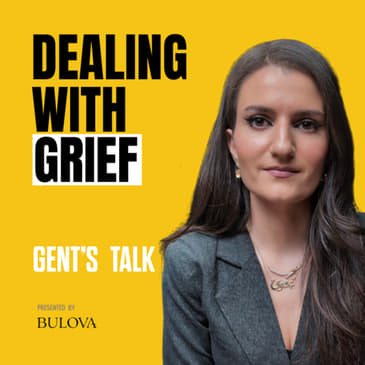
In this week's episode of Gent's Talk, presented by Bulova, host Samir Mourani / @SamirMourani sits down with author and speaker Najwa Zebian to talk about dealing with trauma, bringing past baggage into new relationships, compassion for our younger selves and the journey to healing that inner child as well has how to become the leader of your own life. #gentstalk About Gent's Talk: The Gent's Talk series, powered by Gent's Post and presented by BULOVA Canada is an episodic podcast/video style conversation with the leading gents and rising stars of industry. Guests on the show thus far include Russell Peters, James Blunt, Jonathan Osorio, Director X, JP Saxe, Wes Hall, Johnny Orlando, Shan Boodram, Dom Gabriel, Nick Bateman, & many more. The conversations range from career, mental health, family, relationships, business, and everything in between. Even more excitingly, Gent's Talk is the first ever podcast in video format to be featured on all Air Canada domestic/international flights. Our intention is to have a raw and unfiltered conversation with our guests about their lives, how they achieved their successes, lessons learned along the way, and the challenges of climbing that mountain. Connect with us! Website: https://gentspost.com/ Instagram: https://www.instagram.com/gentspost/ Tik Tok: https://www.tiktok.com/@gentstalkpod Facebook: https://www.facebook.com/gentspost/ CREDITS: Host/Producer: Samir Mourani Creative Director: Steven Branco Video & Sound Editor: Roman Lapshin Video & Sound Technician: Poncho Navarro Studio: Startwell Studios A STAMINA Group Production, powered by Gent's Post.
The Gent's Talk podcast, hosted by Samir Mourani, pulls the curtain back on difficult conversations around mental health, business, relationships and the difficulties around expressing oneself, with rising and leading gents from across the globe.
New episodes every Monday! #GentsTalk
Instagram: https://instagram.com/gentstalkpod
TikTok: https://tiktok.com/gentstalkpod
YouTube: https://www.youtube.com/@GentsTalkPodcast
[00:00:00] So if a person who you're spending 60, 70, 80, 90% of your time with or consumed in their reality and they're telling you that your perception of what's happening is very different,
[00:00:13] you really might believe them. You might question yourself. So imagine going through something like that and then moving on to a different relationship.
[00:00:30] I'm really excited that you're here. I've been following your work for quite some time and I think your work just resonates with a lot of people and when I look at the comments section,
[00:00:53] I can see that it resonates with people. But for those who may be familiar with the work but don't know, Najua, what's the story there? Who's Najua?
[00:01:04] I am someone who spent most of my life searching for what I describe as the feeling of home. Like I never really felt like I belonged not just in the physical sense,
[00:01:17] but more like my emotions never felt like they belonged or like they were okay. So I found comfort in writing because my journal kind of gave me a voice, it was my friend, it made me feel like there is a place where my emotions would be validated,
[00:01:36] where my thoughts and feelings about the world would be validated with no judgment. And I think the beautiful part was that I was giving myself that voice.
[00:01:47] Writing to me is all the therapy that I would ever need. Writing is what led me to go to the therapy that I actually need.
[00:02:00] Writing is what led me to discover who I actually am and how much power I have. So I am a human who has struggled for a very long time and who has started paving her path through the power of words.
[00:02:15] And I just came up with that now, but yeah.
[00:02:18] Maybe that's the opening line of your next book.
[00:02:20] Maybe. Well, yeah, I mean.
[00:02:23] I'm also a poet. Yes, you're a speaker. You do quite a bit. And one of your most recent posts was about the grieving process.
[00:02:32] Can we start there because I think for many of us, myself included, you've gone through moments in our life where we've had to grieve either the passing of a loved one or the ending of a relationship.
[00:02:47] And we're not necessarily equipped with the tools to know how to do that. And speaking from my own perspective, when I went through that big moment of grief, I was sitting there thinking, I don't even know how to grieve.
[00:03:03] Like, how do you even do this thing? So can we maybe talk about what the grieving process looks like, but from your perspective, what you think people should be doing to allow themselves the space to grieve.
[00:03:16] I think that's the hardest part with grief is allowing yourself to grieve, giving yourself permission to spend time in that place where you're really struggling with accepting the reality that someone that you loved so much is no longer there.
[00:03:34] But where you're in a space where you really want to push that reality away, the reason we struggle with accepting the loss of someone or accepting that we need to sit and be sad and sit and miss them or just be angry.
[00:03:51] Maybe that the world has thrown this our way or has taken someone away from us that we love so much is if we accept it in our minds, that's when it becomes true.
[00:04:04] So as long as we are resisting it or pushing it away or not feeling it or not just sitting down and saying this actually happened, this person is no longer there, I can never see them again.
[00:04:15] There's an element of maybe that past reality where they existed, it's still continuing and maybe I could just be in denial for a while that they're no longer here.
[00:04:28] When my grandma died, I actually talk about, that's how I start the only constant, my new book, talking about when my grandma from my mom's side passed away.
[00:04:41] But when my grandma from my dad's side passed away, I was 17 years old and the last time I saw her was when I was 16 right before I moved to Canada for good.
[00:04:59] And I lived with her my entire life, like my entire childhood and my grandma was there, she was living with us here and there but for the most part she was there.
[00:05:10] I even shared a bedroom with her at one point, we each had our own bed, we ate together, we did everything together, I have so many memories with her.
[00:05:21] So I come to Canada at 16 and then when I was 17, I was in my first year of university, I remember it was around final exams.
[00:05:32] And my cousin called me and she said, I need you to sit down and be in a very safe emotional space because I have big news that I need to share with you.
[00:05:46] I said what's going on, she said our grandma passed away.
[00:05:51] And I remember not being able to feel anything at all, it felt like that's not real, she's back home in Lebanon, I just saw her a year ago and in my mind she's still there, honestly.
[00:06:06] Like I cried a little bit later that day in the day after just seeing how my dad was dealing with it and seeing all the people who came over to our house and seeing their emotions, my aunts.
[00:06:20] But it didn't really click in, somewhere in the back of my head and my heart and my soul she was still alive.
[00:06:28] So almost a level of denial built complete denial, that's a defense mechanism.
[00:06:33] Absolutely.
[00:06:34] How do you how do you move past that?
[00:06:36] How do you actually we know?
[00:06:40] Sorry.
[00:06:41] No, that's okay.
[00:06:42] Don't worry about it.
[00:06:43] I thought I'd turn.
[00:06:44] We know when we're denying something like deep down.
[00:06:49] Yes.
[00:06:50] We could tell ourselves outwardly, we could tell other people in our closest circle, no I'm good but we know.
[00:06:55] How do you fight yourself and get yourself to accept your moving in a really bad direction to continue holding on to something that you know is not real anymore?
[00:07:07] It's definitely a process of giving yourself the compassion that you wish the world would give you.
[00:07:14] It's a process of telling yourself that it's okay to go through the grief in that ugly, uncertain way that you know it's going to be.
[00:07:28] So the story that I was telling you so when I turned 19, I went back to Lebanon just to give you an idea of how I gave myself permission to feel that grief.
[00:07:40] I get there and I go to my bedroom and the same bedroom that my grandma and I used to share.
[00:07:47] And I woke up that next morning and I looked at the bed that was across from me and I saw that she wasn't there
[00:07:55] and I started crying like a little child.
[00:07:58] It finally clicked into me that she's not here anymore.
[00:08:03] This is the reality.
[00:08:05] So when I reflect back on that, I tell every person who really knows that they need to grieve but they don't know where to start.
[00:08:17] Sit with yourself for a little bit and really imagine what it feels like to not have this person around ever again.
[00:08:30] What does it really feel like to never be able to give them a hug again?
[00:08:35] What does it really feel like to never be able to pick up the phone and talk to them?
[00:08:39] What does it feel like to know that when you get good news or bad news, you can't go to them and talk to them about it.
[00:08:48] And really sit.
[00:08:50] It is because that's reality.
[00:08:53] That's reality hitting you not in the face but in every aspect of your being.
[00:08:59] I remember the hardest part of a breakup I had was the inability to send them memes on specials.
[00:09:07] Like such a small thing.
[00:09:09] They would find that funny.
[00:09:10] You can't do that anymore.
[00:09:12] It's the little things, right?
[00:09:14] I hear a lot of breakup advice that's like just move on.
[00:09:20] There's other people who will listen to you and talk to you and...
[00:09:24] But not before you heal.
[00:09:26] Well, if you... I believe that if you go out and date people before you give yourself the opportunity to grieve.
[00:09:34] Not just the person that you lost, that you loved in a romantic kind of way.
[00:09:39] But if you don't give yourself an opportunity to grieve the person that you were in that relationship, right?
[00:09:46] The maybe the innocent naive too loving or maybe completely avoidant.
[00:09:54] If you don't give yourself permission to grieve that person in a way that's like...
[00:10:00] I understand that I can never again be the exact same person in a relationship
[00:10:05] because being with that person taught me that being too nice is going to end up hurting me.
[00:10:13] Being with that person taught me that being empathetic is going to lead to accusations that I'm trying to manipulate them.
[00:10:23] Being with that person, those are just examples.
[00:10:26] Being with that person taught me that being myself is too much or not enough.
[00:10:32] So if you don't grieve the person that you were in that relationship and the person that you lost in that relationship
[00:10:42] and if you don't grieve all your future plans and the life that you thought that this relationship was going to lead you to,
[00:10:53] any other person that you get into a relationship with, you're going to carry all of that with you.
[00:10:59] It's not fair to them.
[00:11:00] It's not fair to them and it's also not fair to yourself.
[00:11:03] You have to remind yourself that it's not just about what you're presenting the other person with.
[00:11:09] It's also about what you're presenting yourself with.
[00:11:12] Why would you carry that heavy of a weight into another relationship?
[00:11:16] Why would you not give yourself the opportunity to take some time and go back to being human and ask yourself,
[00:11:26] what is it about me that I actually need to change?
[00:11:30] And it's not like... because the only constant is all about change.
[00:11:34] So I don't want a person to think I need to change myself in order to get into a better relationship
[00:11:42] or I need to change myself in order to get a better job or it's not about changing yourself.
[00:11:48] It's about becoming more of who you are.
[00:11:51] It's about changing the way that you deal with yourself and with the world around you so that you could be a changed person in the way that you present yourself to the world.
[00:12:00] So if you are in a relationship where you constantly abandon yourself or let's say somebody gaslighted you
[00:12:07] or let's say somebody which I always think people know what that word means.
[00:12:12] But when somebody gaslights you, they are literally changing your entire perception of what your reality is.
[00:12:18] They are telling you that what you just experienced is completely different from what actually happened.
[00:12:25] And imagine this is somebody that you probably, if you don't spend, let's say 60-70% of your time with them,
[00:12:34] there's a huge period of time that you're thinking about them.
[00:12:38] They occupy a lot of you.
[00:12:40] Exactly. Those relationships are one of the biggest ones that we will experience throughout our lives.
[00:12:45] It's having that romantic partner.
[00:12:48] So if a person who you're spending 60-70, 80-90% of your time with or consumed in their reality and they're telling you that your perception of what's happening is very different,
[00:13:01] you really might believe them. You might question yourself.
[00:13:06] So imagine going through something like that and then moving on to a different relationship without healing that,
[00:13:13] taking the time to give that self of yours that was in that relationship that was constantly made to question yourself.
[00:13:24] If you don't give that self of yours that crying shoulder and say,
[00:13:29] that must have really hurt to go through that. You must have felt so confused.
[00:13:34] You must have felt like you were going crazy. None of that was true. You can trust yourself.
[00:13:41] If you don't do that, if you don't speak to yourself in that way, then you're going to enter into another relationship.
[00:13:48] And whatever the reality that that person is trying to present you with,
[00:13:53] you're either going to fall to the exact same pattern that you did with the person who you just ended a relationship with,
[00:14:01] or you're going to reject absolutely everything that they tell you because you're trying to defend yourself,
[00:14:08] because you don't want to go through the same pain you went through in that past relationship.
[00:14:13] But either way, either path that you take isn't bringing you closer to yourself.
[00:14:20] It's putting you in a situation where you are either constantly defending yourself from the way that another person could hurt you,
[00:14:28] or you are defending yourself from the way that you could hurt yourself.
[00:14:36] So you live in a survival mode kind of way where you just want to stay safe.
[00:14:41] And I always talk about the difference between feeling safe and the,
[00:14:45] you know, I am protecting myself kind of way. Like you imagine that you are hugging yourself
[00:14:51] and you're like sitting in that dark corner and you're like,
[00:14:53] I want to make sure no one hurts me versus the kind of safety that's like,
[00:14:57] I can fully be myself, vulnerable and authentically. And I feel safe.
[00:15:02] So, and the only constant I implore people to go for the kind of safety where you can fully be who you are.
[00:15:11] Present yourself to the world exactly as you are.
[00:15:15] Don't be afraid to set boundaries. Don't be afraid to say no.
[00:15:19] Don't be afraid to say I am my own person and I'm building my own life path.
[00:15:24] And if, you know, this person that I'm in a relationship with or this job that I'm at or this program
[00:15:32] that I'm in in university, if they don't cross anymore with the path that I have for myself,
[00:15:38] I get to leave. I get to take a detour and go somewhere else.
[00:15:42] So yeah, I think it's important to give yourself permission to grieve the future you thought you had.
[00:15:51] Grieve the relationship you thought you had.
[00:15:54] Grieve the person you thought you were and grieve your perception and ideas and thoughts and expectations of what the world owes you as a person.
[00:16:07] Grieve all of that if you don't. Like, if you sit there and you listen to the advice that tells you your way of thinking about things is wrong.
[00:16:17] The kind of advice that tries to shame you into change, you need to change that.
[00:16:23] There's a lot of that for guys.
[00:16:25] Absolutely. Which is why I think it's important for us to talk about this.
[00:16:28] Any change that is fueled by shame is sustained by shame and any change that is fueled by compassion and empathy is sustained by compassion and empathy.
[00:16:41] So if you shame yourself into a change, like you talk down upon yourself in order to push yourself to change your life in a certain way.
[00:16:51] Well, to keep that change that you just made, you're going to have to continue to talk down to every version of you that doesn't measure up to the version you think you need to be.
[00:17:04] Whereas if you sit with this, with who you are right now, with all the feelings of I'm not good enough there's something wrong with me.
[00:17:14] I'm not smart enough. My perception of reality isn't right. I can't trust myself. I can't trust others if you sit with that self of yours and say, why do we feel that way about ourselves?
[00:17:30] Who taught us that? It's not true. All the voices that are inside of you that are speaking down to you, those aren't your voices. You're not born, shaming yourself.
[00:17:42] You're not born talking down to yourself. You're born with a healthy image of who you are. You're like a blank canvas.
[00:17:51] Babies are always laughing and having fun. They forget certain mistakes that they made immediately. They fall, they get up. That's it.
[00:18:00] And then the world teaches you that not being a certain way means something about you and being a certain way means something about you.
[00:18:15] This path means something about you. Getting to this stage in life by this age means something about you and not getting to it means something about you.
[00:18:23] If you're a man or a woman, it's also means something about you. And sometimes it's the complete opposite. You know this? If guys go after their careers, it's like that's amazing.
[00:18:36] But not everywhere in the world is it accepted that a woman could go after her career ahead of like getting married and having kids and whatever we know that.
[00:18:49] So the world shapes that for us. And we internalize those voices as our own, but they're not. We learn them at some point.
[00:18:59] When I talk to people about inner child healing, I always get comments and I don't mean just on social media. I also mean in real life that are just like you're not a child anymore grow up.
[00:19:14] And to those people, I say if I don't heal that child, then I'm dismissing the fact that that child became who I am today.
[00:19:25] Your foundation?
[00:19:26] Yeah. It's not like, oh, I turned 18. Therefore all the past is in the past and now it's of course now I have a responsibility to take care of myself.
[00:19:37] But it doesn't mean that I'm once I turn 18 or 19 or whatever the age is that I'm expected to be mature enough to take care of myself.
[00:19:46] It doesn't mean that that second took away the conditioning that I had, the patterning that I had.
[00:19:54] If I was a people pleaser before that moment, I'm still going to be a people pleaser.
[00:20:00] If I was a self abandoning person before that moment, I'm going to still be a self abandoning person.
[00:20:07] If I'm a high achiever because I think if I don't do more than I am less, that's not going to change. It's still going to be the same thing.
[00:20:16] So we need to take the time to not only grieve past versions of ourselves, but I want to use the word compassion as a verb.
[00:20:27] Compassion are younger selves and younger versions of us and past versions of us into the present and future versions of us.
[00:20:38] We need to use that word as a verb instead of shame.
[00:20:44] Don't shame that past version of yours into there's enough people who will do that for you.
[00:20:50] Sometimes your parents will do that for you. Sometimes your partner will yes, sometimes the closest friends that you thought were your friends will do that for you.
[00:21:00] Sometimes people on social media will do that for you.
[00:21:03] Don't be one of them change the narrative for yourself.
[00:21:07] So how do you, because this as you speak so eloquently by the way.
[00:21:14] Thank you.
[00:21:16] It sounds so obvious. Yes of course this is what we should be doing. Of course we should be showing our younger selves compassion.
[00:21:24] Of course we should be showing our current selves compassion. In reality it's a lot harder to actually do that especially when you're going through the range of emotions because you just lost someone.
[00:21:35] In your mind and you made a point to this earlier you're kind of just in protection mode. How do I protect myself from feeling these negative emotions?
[00:21:42] There are people in my life right now that I know are going through really bad breakups who seem to refuse to want to almost deal with it because the pain is too large.
[00:21:53] And been there done that but I also know you know if you put yourself in the position to go through that as hard as it is,
[00:22:03] you feel incredible afterwards. Like you feel like a completely different person.
[00:22:09] I'm not entirely certain I could articulate to someone how to do that. Are you able to?
[00:22:16] Yes.
[00:22:18] I've been searching for the words to share with people in my circle. This is why you should do it.
[00:22:25] But it always comes off as you just got to go through the pain.
[00:22:30] Yeah but how do you actually go through the pain?
[00:22:33] So make sure my hair is good, sorry.
[00:22:37] That's fine.
[00:22:38] Like a one woman show today.
[00:22:43] This is why actually I wanted to write the only constant because there's so much advice out there on how to actually become the person that you want to be and how to actually become someone who lives the life that you want to live.
[00:23:02] And how do you feel your feelings? How do you get through that stuck place and just see yourself move forward in life?
[00:23:13] Because I went through that myself. I got to a point where I knew everything about what I needed to do. Like I knew I needed to feel my feelings but I didn't know how.
[00:23:24] And I found myself constantly judging myself for not doing what I know I need to do and I felt stuck in this loop.
[00:23:34] So I remember having a therapy session with a brand new therapist that I started working with because I just I was in such a bad place.
[00:23:43] I was feeling like I'm a fraud because I know so much about what I need to do but I wasn't able to do it.
[00:23:52] And I'm judging myself so much and I said that to my therapist at the time.
[00:23:56] I said I know exactly what I need to do yet every single morning I wake up and I don't change it.
[00:24:04] And then I go to bed, judging myself and ruminating over everything and just I'm such an awful space.
[00:24:12] And she goes to me have you ever thought or considered that maybe your body also makes a choice?
[00:24:21] Maybe it's not just your mind that makes a choice because when you're saying I know all of this stuff.
[00:24:28] You're talking about your logic like I know I need to feel my feelings.
[00:24:32] I know I need to leave this toxic person or that toxic work environment or that toxic family dynamic or whatever.
[00:24:41] I know all these things but why do I not know how to just do that?
[00:24:49] Like what's the why am I not doing that?
[00:24:52] Why am I choosing to not do that when she said yeah paralyzed.
[00:24:57] Like you know right before you're about to go on stage or actually let's bring it to a more human level.
[00:25:04] Let's say you're with a friend or with your parents or you're with someone that you really love and care about
[00:25:10] and you're about to like speak up for yourself.
[00:25:13] Your knees start shaking, your heart drops, you're like I can't do it so you feel paralyzed with fear,
[00:25:20] with feeling like I can't do this my life will be over if I do this and that's how I always felt.
[00:25:27] So when she said to me have you considered that maybe your body makes a choice too?
[00:25:34] Honestly the way I described it in the only constant is it felt like my soul left my body but at the same time they both aligned so beautifully together.
[00:25:44] It's like I snapped back into myself and I was like yeah she's like your body is not choosing to betray you.
[00:25:53] Your body is doing what it thinks is in your best interest which is your survival mode.
[00:25:59] If you've been taught that if you raise your voice you're going to get in trouble, guess what your body has learned to never raise your voice.
[00:26:09] If you've been taught unconditional loyalty which is what a lot of people are taught it doesn't matter what happens in a relationship you stay, unconditional loyalty.
[00:26:21] If you witness that growing up guess what your body's going to do the exact same thing it's going to stay because it's unconditional loyalty it's been taught that.
[00:26:34] So what do you need to do to change the choices that your body makes?
[00:26:41] Well first of all congratulations you just became aware that your body actually has a choice. That's a huge thing.
[00:26:49] So now you're not feeling so alone in your mind where you're like I know all of this stuff up here but I'm not doing it.
[00:26:56] It's like well there's all of this that knows things.
[00:26:59] So ask your body what it is that it knows, what are the limits of its survival mode.
[00:27:05] What does it think it's allowed to do and not do?
[00:27:09] Does it think that it's allowed to flourish past certain relationships?
[00:27:16] Does it think that it's allowed to give up whatever that term means to you on a goal that you had or but maybe you were taught when you were younger
[00:27:28] and conditioned to believe that giving up on something means you're a failure.
[00:27:33] So ask your body what it knows and once you start asking your body your body will tell you.
[00:27:40] So really sit down with yourself and close your eyes and I would highly recommend that you do this in a private space because if people are around you you're just going to be so consumed with what they're perceiving.
[00:27:54] So be alone sit in your bedroom in your office wherever close your eyes and whatever it is that you're struggling with right now.
[00:28:01] Let's say there's a certain emotion you don't know how to describe it but you're feeling stuck and you just don't know what to do.
[00:28:09] Just close your eyes and go into your body not into your mind, not into the words that you're hearing.
[00:28:15] What is your body feeling? Is there tension anywhere? Is there a tingling sensation? Is there heat?
[00:28:24] What are you feeling in your body when I did this the first time?
[00:28:28] I felt like my chest was going to explode because I couldn't breathe.
[00:28:35] Like I couldn't fill my lungs it was like that sureness of breath that you feel when you're really anxious.
[00:28:43] And I felt like somebody had like a big rock over my chest. My shoulders were very stiff, my arms were very stiff and my hands would always go into fists especially as I was about to fall asleep but also during the day I noticed I always did this.
[00:29:03] So then you ask your body as you're in this gentle moment of going inward how do I soothe this sensation?
[00:29:13] So for your chest, for example it could be that you try to take longer breaths bit by bit.
[00:29:19] So if you're having I can't breathe properly maybe increase that by a few seconds and put your hand over your chest and give yourself the comfort like we're okay.
[00:29:32] Breathe a little bit longer.
[00:29:34] Then what you're doing is you're training your body that there is something outside of that survival mode.
[00:29:41] And if people are struggling with understanding what survival mode means in an abstract kind of way.
[00:29:50] You know when your computer is working in safe mode I know not many people might remember this because not many people use desktops anymore.
[00:30:00] But when your computer works in safe mode only the basic functions are operating there's nothing creative that you could use.
[00:30:09] It's just the very basic things like you couldn't even open Microsoft Word you had to open like a just a white box and use it.
[00:30:18] There was no creativity it was just what do we need to make sure that this computer stays on and turns off safely?
[00:30:26] That there is nothing that could hurt it in any way.
[00:30:28] That's what your survival mode is you're just surviving you're just staying alive you're not going into the creativity that you know that you have you're not going into
[00:30:38] what is my passion what do I want what do I need it's more like what do I need to just get by and be safe.
[00:30:45] And so if that means never speaking up for yourself you're never going to speak up for yourself if that means never pursuing something that you love you're never going to pursue it if that means never letting the people around you see you that you see that you're hurt then that's what you're going to do.
[00:31:03] You're just you're shielding yourself from any possible viruses or in real life from any possible pain.
[00:31:11] It's also kind of like people have heard this analogy before but being in a cage where the door is open you can leave at any point but it's it's in your mind that you're stuck in this cage but you really can't leave at any point.
[00:31:30] But what your body has told you is the moment we step out what we're doing is we are compromising our connection with the people around us.
[00:31:40] So what we would rather do is so we as humans we have two main needs so to be authentic and to be connected with those around us.
[00:31:53] So and Dr. Gabor Mote talks about this a lot I talk about him a few times in the only constant so let's say you know that someone that you really love it could be not a romantic partner could be your parent.
[00:32:11] You know that they will never accept you as you really are whether it's the way you choose to live your life whether it's your dreams for yourself whether it's your choice of a partner you just know they will never accept you that way they have a certain plan for you and if you veer off they're going to
[00:32:30] shut you out break that bond that they have with you and just make you feel like something's wrong with you and unless you go back to being the person they wanted you to be there's no way they'll accept you.
[00:32:41] Therefore you are taught that your authenticity is what you need to sacrifice in order to get connection with them but those are two of your basic human needs
[00:32:53] to be authentic to be yourself truly to feel loved and accepted for who you are not just tolerated like really celebrated fully just if you can imagine it like you can throw the weight of yourself on someone and they will hold you that kind of feeling of acceptance.
[00:33:16] You have that need and you have the need of being connected to others and if to stay stay in connection with them you have to leave yourself behind and if your connection to them is more important to you you're going to leave yourself behind.
[00:33:33] Is there ever a scenario where that connection outweighs being authentic to yourself where you can justify that I mean anybody can justify anything when I think I'm trying to ask is is there a scenario that could make sense where my relationship with X means so much to me that I'm willing to sacrifice parts of me.
[00:33:57] So I would ask you why does that connection with X person means so much to you if you are not welcome in that connection.
[00:34:10] Because if you're leaving yourself behind you are not the one who's present in that connection it's a version of you that you adapted to what that person wants to see so they're not really connecting to you.
[00:34:25] They're connecting to a fake image of you that you've created so that you could keep that connection with them.
[00:34:34] And now as you're talking I'm thinking of all the different times I've created fake images of myself for different relationships whether it's family friends, work partners.
[00:34:43] There you go we all do it because our perception is that connection is necessary to my survival I can't I cannot survive with that connection.
[00:34:54] I can't survive without it right but again that's why you need to go back to your conditioning what were you taught what can you survive with and without.
[00:35:04] So I'm not telling people who are listening you don't need people break your connection to people you're fine on your own I'm not saying that we do need people.
[00:35:13] People will go for the complete opposite and isolate which I've seen also as well and there have been times where I've done that where I go you know what yeah I got me and that's it.
[00:35:23] It's the difference because we all need people we all need that feeling of like I said somebody's got me.
[00:35:33] I read a meme somewhere that said something like the problem with me is that I got everyone but not everybody's got me and you know that hits hard because it's like you're there for everyone because you think to yourself I'm being of service.
[00:35:52] I have great things to offer that's that's great I'm doing those things but I don't need anybody and then you feel so alone and lonely in your life because you're not opening up to anybody because you think the moment I open up.
[00:36:07] Not only are they going to see all the great things about me but they're going to see all the bad things about me and then they're going to walk away so I would rather not even approach that in the first place and just be the strong person that I think I need to be.
[00:36:22] How do you show up authentically in a relationship if it's new?
[00:36:26] If you're showing up into a new relationship and that point you just made about I can show them a version of me that I think will impress them the most.
[00:36:37] Yeah keep them around keep them enticed and excited until the part where they're invested in me and now I can start to show them the other parts of me.
[00:36:47] How do we how do we start authentically?
[00:36:53] So all the stuff that you just said where it's like you know I'll show them parts of me that will get them invested I think we need to throw all of that away.
[00:37:01] I do understand that you do need a level of mystery about yourself and that sometimes relationships when they first start you need to stand out in a certain way but you have to trust that you will stand out if you are being yourself.
[00:37:18] You don't have to try to convince that person of why you deserve that they give you a chance.
[00:37:28] You don't have to try to convince them that you are different just by being different they will feel that you are different and if that's not good enough for them that's not your person.
[00:37:38] I say this to my friends when they start dating all the time when they say something like oh you know I think I texted too much or I think I you know it's too early for me to show that side of me and it's like I get that but with the right person they will actually in a way.
[00:37:59] No, it won't be enough messages and if it is they will communicate that to you and maybe it's just a clash of your two personalities and it just doesn't work out but again if you have a story inside of you that tells you that you're never going to find love.
[00:38:18] Your biggest fear is that this new relationship that you're getting into isn't going to work out because it's going to prove to you that you don't deserve love but if you just look at it as you know what I love having a companion in life.
[00:38:33] I love having someone to spend time with someone who I can add to their life and they can add to mine.
[00:38:40] If it works out with this person it doesn't and if it doesn't I'm sure that there's another person out there that I can get to know.
[00:38:48] So it's just a difference of what is your intention of getting into the relationship?
[00:38:53] If it's to prove something to yourself about yourself you're going to try really hard to get their approval to get their attention so that you could feel better.
[00:39:04] If it's to avoid going to the same place you always go to which is I don't deserve love then you're going to do absolutely everything it takes to not show them the parts of you that might make them leave.
[00:39:16] But you know what they're going to see those parts because there is no person on this planet who could hide forever people snap they snap back into who they are at some point.
[00:39:29] You know there's a life trigger there is a stress there's something that happens you see how they are with their friends you see how they are with their family those are those are big yeah well you know what again I've seen people pretend to be nice to everyone.
[00:39:46] But look at the people who know them look at the people who have known them for longer than you've known them and see how those people treat them.
[00:39:56] If you sense that while you're you're all sitting with their family or with their closest friends who've known them for a really long time and they tell you know I've never seen him or heard this way before
[00:40:11] and they're usually not like this or you sense that the person that you're with is a completely different person around them like they're not there there's something that's really off that's how they're going to be with you at one point because if the relationship continues to grow and evolve.
[00:40:31] Yes, there's a difference between loving someone romantically and loving your family I understand that but there's something about the personality of a person and how kind they are and how just the core of who they are as a person that you can very clearly tell when that part is only present with you.
[00:40:53] Because it's not only going to be present with you for a really long time well the other sides will come out exactly which is funny because
[00:41:00] as you were saying that I was thinking about all the different ways movies romanticize this notion of you know person a meets person B and then person B you know their family or friends are like I've never seen them behave this way.
[00:41:17] And suddenly you feel like I did that yeah, and I feel good about I'm changing them I'm making them behave differently yeah but then eventually that other side will come back if they're only changing for you then.
[00:41:29] They're going to resent you at some point for for to them it means that they knew they couldn't get you unless they change that much and so they're changing that much or it could be that you inspired them to be a better person
[00:41:45] and that's a different story you can tell if a person continues to grow and evolve and that light that you allowed to emanate from within them isn't only being you know lit in your life but also in their life and with the people around them then that shows you yeah they are growing as a person.
[00:42:05] I like that the inspiring piece because I can think of how that could change or that could be a positive impact on a person to make them want to change to become better versions of themselves where it's authentic still it's not manufactured it's not fabricated it's not fake for the purposes of keeping you enticed and in the relationship.
[00:42:26] Have you ever heard of there's a book I don't remember what it's called but it's it's this line that has made its way through social media and it says something like your either his placeholder or his changemaker have you heard that before.
[00:42:41] I have not.
[00:42:42] And it's about the same thing you were just talking about so some women will believe that if this guy that they're now with has been with so many other women in the past
[00:42:54] and then all of a sudden you know he meets this woman he's like that's it like I'm changing my entire style yeah.
[00:43:02] So then all of a sudden all the other women were placeholders until he met the woman who changed him or changed his life or who he was willing to change for.
[00:43:14] I hate that and I don't use that word often but I don't like that because it's putting the responsibility on someone else how a man shows up even if you want to reverse this for men and women
[00:43:29] and say like for women the guy that she's with is a placeholder until she meets the person person she's willing to change for.
[00:43:36] I don't like that I don't believe that I don't believe that we just use people until we meet that one person who that's it we are completely willing to change who we are for them.
[00:43:50] We might but if the change isn't led by us and for us to be better people we're going to snap back into who we were.
[00:44:02] It just doesn't make any sense it's not sustainable to change for another person.
[00:44:08] No you should never change your entire self for another human being.
[00:44:12] No. I've been there done that doesn't work at some point until you made this point earlier there's a level of resentment that starts to grow there.
[00:44:22] Sometimes you don't even notice it's growing there until you know you bicker or you fight about something and then you realize why am I so mad about such a small thing and it's because there's pent up resentment that's been sitting there for many reasons.
[00:44:35] And sometimes it's not even the other person's fault. You've taken it upon yourself to change thinking this is what they want because you've never bothered to communicate.
[00:44:43] Which is exactly why when you asked me is there ever a time to compromise your authenticity for connection the answer is no. No.
[00:44:54] Because if the connection you're going for is based on you pretending hiding certain needs of yours pretending like there are certain things you don't actually want there are certain things that don't actually bother you.
[00:45:08] Then that connection doesn't feel like a connection to you. It might feel that way to them because they are being their full selves and you are accepting them exactly as they are which is beautiful.
[00:45:21] But if their acceptance of you in that connection in that relationship is reliant dependent on you not fully showing up why do you want that connection?
[00:45:35] So there's never a time ever where you should compromise your authenticity. You can be private about certain things you can be very reserved and say I don't want to share these things about myself absolutely.
[00:45:51] But when it comes to romantic relationships I don't believe that you I don't believe that it's sustainable to constantly have that guard up and say I'm never sharing the tender parts of me because then you don't connect.
[00:46:14] They might feel connected to you but you won't feel connected to them and that resentment grows and that's it. You're going to continue to suffer behind that guard that you put up alone so then what's the purpose of being in a relationship?
[00:46:31] What is not the big question? What's the purpose? What is the purpose of being in a relationship?
[00:46:38] I want to so all this talk of change and also trying to remain constant. I think it was a good segment understanding the book, the only constant not available yet coming out.
[00:46:52] It's coming out March 5th.
[00:46:54] Tell me about the book. What can we expect from it? If I picked it up and read it, what are you hoping I take away from it? Once I flipped that last page, what do you want me to know?
[00:47:07] I want you to know that you are the leader of your life, that you can trust yourself in leading your life forward and that you have the ability to come back to yourself and love yourself exactly as you are.
[00:47:26] And heal every single version of you that never thought that they deserve to be where you are today or never thought that they deserve more than what you have today.
[00:47:39] I want every person who reads this by the end to feel like their life has been changed from the inside out.
[00:47:46] This book isn't about changing yourself for other people. It's not about changing the image that other people have of you.
[00:47:53] It's not about getting into a better relationship because now you are someone who is appealing to other people through this change of yours. It's not about that.
[00:48:04] Those things will naturally happen, but this book is about you fully understanding that who you are authentically deserves to lead.
[00:48:15] The life that you are living right now and moving forward. If you've trusted other people to lead you on a certain path, you've trusted your parents, you trusted your mentors, you trusted your colleagues, your friends, your romantic partners, and they've all led you astray.
[00:48:34] I'm pretty sure because they all have their own paths for you. And when they led you astray or betrayed your trust or made you feel like you didn't deserve their love or their respect or whatever,
[00:48:49] you gave them that grace, you forgave them maybe, maybe you just walked away from them, maybe you allowed them to continue to be in your life. You did that.
[00:48:59] So what is it that stops you from taking that leadership role in your life and telling yourself, I know I'm not going to get this perfectly the first time or the second time or the third time, but I'm going to trust myself enough to say that when I do mess up,
[00:49:18] I'm going to give myself the same grace. I gave every other person in my life who I allowed to lead me. So it'll feel like the change happened from inside of you and naturally everything outside of you is going to reflect differently.
[00:49:37] You're going to be reflecting yourself as a different person in the world is going to be seeing you as different, but the truth is,
[00:49:44] you've just come into alignment with who you really are. You didn't completely change yourself. You became in touch exactly.
[00:49:57] You became more you and you became less afraid of losing people and you became less afraid of not reaching certain milestones in your life.
[00:50:09] You became less afraid of what it would mean for you to now all of a sudden be someone who says, no I don't want that.
[00:50:17] You become less afraid of talking to your partner about a real problem that you have or about your feelings.
[00:50:25] You become so much less afraid because you understand that the purpose of your life is to live an authentic life not just to say, well at least that person didn't walk away.
[00:50:37] At least that person still loves me. At least that's not the purpose. That doesn't tell you anything about yourself.
[00:50:44] What tells you everything about yourself is that true core of yours that you're allowing now after you read this hopefully to shine into the world around you.
[00:50:56] Amazing. I just want to thank you so much.
[00:50:59] Thank you. This didn't feel like an hour but it flies.
[00:51:03] It certainly flies and it just means we got to do a part two. We will do a part two. Yeah. No this is incredible. Thank you so much for sharing your time with me.
[00:51:12] Thank you for all the wisdom. I learned a lot. I love it when I just get to sit back and listen.
[00:51:18] I think there's a lot of people that can take value from this conversation because I think you so well articulate how people should be focusing in words and not so on the people around them.
[00:51:32] It's funny because when you were talking the last thought that came to my mind was who takes care of the person that takes care of everyone else?
[00:51:41] That's the reminder of taking care of yourself also healing your inner tribe. Absolutely.
[00:51:47] Because that inner child has been sitting in there all these years still dealing with everything that's been unresolved because you've just layered on top of that.
[00:51:58] All your new things, all your new life experiences, all your falls and all your wins and everything.
[00:52:03] While that little kid inside is still just like, hi, I'm still here. Yeah, absolutely. One last story I'll share is this would have been I think sometime last year where I was doing another interview and the interviewer, I don't remember her name.
[00:52:22] She said if younger you, like seven year old you were sitting beside you right now and looking at you what would she say?
[00:52:32] And I got so emotional because I could see younger me saying, I'm so happy to be you.
[00:52:40] Like she was looking up to me with like, you know when you look at someone and you're just so happy that you're in their presence, I felt that now I'm getting emotional.
[00:52:49] Yeah, but that's really what it is like to go inward and heal those past versions of you is going to bring you so much clarity on what's important in your life.
[00:53:01] There's that trend on TikTok that's like who takes care of you? And then you say I do and it's this really emotional thing like no one takes care of me.
[00:53:11] Well, start by taking care of you and heal the part of you that says I don't deserve to have people taking care of me because you do deserve that.
[00:53:23] But you teach yourself that by taking the time to take care of that seven year old you eight year old you ten year old you whatever age you were at the time.
[00:53:35] You sit with them. You take them out to buy that toy that everyone got that they didn't get you take them out to the places that everyone around them went to but you didn't go to those places.
[00:53:47] That's how you heal. That's how you teach yourself that you deserve that others do that for you too. That's it.
[00:53:55] Amazing. Okay, we definitely need a part two.
[00:53:59] Yeah, we'll do a part two.
[00:54:01] Thank you so much. Thank you for having me.
[00:54:03] This was inspiring and incredible and good luck with the book launch. Thank you.
[00:54:07] I'm excited to read it. I'm sure a ton of other people will be equally excited. You do amazing work.
[00:54:13] It's nice to come across people who do work to try and support other people in that journey.
[00:54:19] So thank you for that.
[00:54:21] Of course.
[00:54:22] And where can people find you? How can they reach out to you and learn more?
[00:54:26] Yeah, I'm everywhere on social media. So it's at Nege was ABN, N-A-J-W-A-Z-E-B-I-A-N, on Instagram, TikTok, Twitter, X, Threads, everywhere.
[00:54:40] And yeah, you can, there's a contact button. You can find the only constant literally wherever books are sold and I also narrated the audiobooks.
[00:54:48] Oh, very nice.
[00:54:49] So listen to it.
[00:54:50] Yeah, you can.
[00:54:51] Amazing. Thank you so much.
[00:54:53] Thank you for having me.
[00:54:54] Thank you everybody. Appreciate it.