
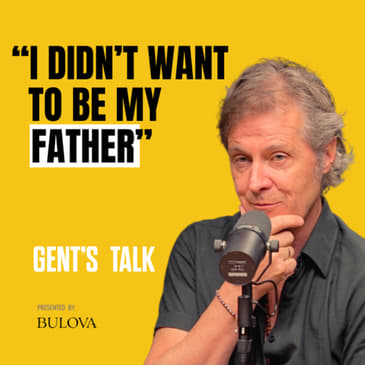
In this week's episode of Gent's Talk, presented by BULOVA, host Samir Mourani sits down with musician Jim Cuddy of Blue Rodeo where Jim talks about his relationship with his World War II veteran father, becoming a professional musician, how he stayed with his craft despite not seeing success until his 30s, the rise of Blue Rodeo followed by band decisions that resulted in him going solo and what it's like playing music alongside his children. #gentstalk Connect with us! Subscribe here ► https://www.youtube.com/@GentsTalkPodcast Website: https://gentspost.com/ Instagram: https://www.instagram.com/gentspost/ TikTok: https://www.tiktok.com/@gentstalkpod Facebook: https://www.facebook.com/gentspost/ About Gent's Talk: The Gent's Talk series, powered by Gent's Post and presented by BULOVA Canada is an episodic video podcast conversation with leading gents and rising stars across various industries. Guests include Russell Peters, James Blunt, Jonathan Osorio, Director X, JP Saxe, Wes Hall, Johnny Orlando, Shan Boodram, Dom Gabriel, and Nick Bateman, just to name a few. The conversations range from career path, hurtles, mental health, family, relationships, business, and everything in between. Gent's Talk is the first-ever video podcast to be made available for streaming on all Air Canada domestic/international flights. We aim to have a raw, unfiltered conversations about our guests' lives, how they achieved success, lessons learned along the way, and the challenges encountered. Credits: Host/Producer: Samir Mourani Creative Director and Executive Producer: Steven Branco Video & Sound Editor: Roman Lapshin A STAMINA Group Production, powered by Gent's Post.
The Gent's Talk podcast, hosted by Samir Mourani, pulls the curtain back on difficult conversations around mental health, business, relationships and the difficulties around expressing oneself, with rising and leading gents from across the globe.
New episodes every Monday! #GentsTalk
Instagram: https://instagram.com/gentstalkpod
TikTok: https://tiktok.com/gentstalkpod
YouTube: https://www.youtube.com/@GentsTalkPodcast
[00:00:00] Jim, welcome to the Gents Talk podcast. Thank you very much. I'm so excited to have this conversation with you. Thanks. You're a legend. I don't feel like a legend, but thank you very much. When someone says that to you, what's the first thing that comes into your mind?
[00:00:52] Oh, the first thing that comes in my mind is I'm not a legend. But I understand because I have admiration for artists in my life too. And I remember meeting Jackson Brown and being tongue tied.
[00:01:05] And if I wasn't with a friend, he wouldn't have known I was in a band or that I had a record that I wanted him to sign. So I'm not suggesting that you're like that. But I understand what it is to have art mean something to you.
[00:01:20] Yeah, well, it's powerful, right? It moves people. It inspires them and motivates them. It resonates with them. Sometimes when you're in your lowest of moments, that one musician's piece of art picks you up and gets you through whatever you're going through.
[00:01:35] And as I sort of looked through just even the comment section of some of your posts online, you could see that come through. And obviously you carry a ton of weight in that space and just the beautifully crafted career that you've had.
[00:01:55] But I'm curious because what I want to know is not necessarily just about the career and the ups, but who's Jim, the man behind the persona that people see online, that they see in the shows? Who's Jim? You know that's a difficult question.
[00:02:10] You probably ask that a lot. And you know, that's a difficult question because there's a lot of me that is represented in what I do. But then of course, there's a lot of me that's that's private. I mean, I have a family.
[00:02:21] I have a wife of very long time relationship over 30 years. I think I read 40 year we sell them in 40 years of marriage next Saturday. So June 8th, it was 40 years of marriage and we've been to get, we were together six years before that.
[00:02:37] So, so I am a product of my. Okay. My parents were from rural settings, but we're very much urban people. My mother did not want to, she was from Prince Edward County. She did not want to remain there for her life. My dad was from Strathroy.
[00:02:55] He wanted to have a bigger life. Was a second world war pilot came back, wanted to have a separate life. I am a product of my dad's rigidity and his stoicism and my mom's open, loving, embracing of life music. You know, she was a singer.
[00:03:14] She sang with a big band in university. And then I think significantly I'm a product of my dad's complete disillusionment with the corporate world and his stopping doing everything for two years and then creating his life as small as he could make it. I mean, my parents separated.
[00:03:34] He got a little, he got a little bachelor apartment. He had a very dignified life. He bought into a little wire factory. He had a very small, manageable life. And he was never, my parents were never discouraging about my choice of being an artist. They were very encouraging.
[00:03:54] My dad was always worried, you know, about success. I remember we'd play Ontario Place way back before the amphitheater and be full. And then the next year my dad would come up to me and say, that doesn't seem to be as many cars in the parking lot.
[00:04:10] And I'm like, that's not more people have come other ways. It's still full. I mean, it's full is full. But he was more worried about that. And but I think that those things are very fundamental for me because,
[00:04:21] because I took a path in my life that nobody in my family had ever taken. And I didn't do it. I didn't say, okay, I'm not having anything to do with that world. I thought I was going to go to law school.
[00:04:38] I was, I wanted to devote some time to music because I loved music. And one thing, you know, I, I had acceptance at a couple of law schools and I, I just kept deferring and deferring. And then I realized I can't do this.
[00:04:51] I can't step out of this world that I discovered this music world and be a lawyer or be anything in business. It's just not, it's not who you are. Not who I, I am at all. And certainly not who I was.
[00:05:06] Is there ever, is there, was there ever a time where you thought you made the wrong decision? Not really, you know, because almost right away I found some way to, I never thought I was going to be able to rely on music to make my living.
[00:05:22] So I, I got into doing props and sets for TV commercials. So working at a production house and that was how my wife and I bought our first house, had our first kid, bought a car, all that kind of stuff.
[00:05:34] So I never had any pressure on music to make money. And I never did, we never did, you know, Greg was a waiter or we made enough money, but we never did things just for money as Blue Rodeo. We only did it to be a good band.
[00:05:48] And so those things were very, they were good decisions. Like I look back and think, yeah, I mean, if I'd never made it in music, I still would have done something in production, but I never would have had to give up music. And that was a big deal.
[00:06:02] Like when we had, when we had one child, then two children, obviously it was very difficult because we were succeeding and we were way a lot. But if that hadn't happened, I still would have been part of music.
[00:06:13] I'm curious when you talked about your dad's stoicism and rigidity, being a World War II pilot. And I can only imagine what those stories were like, but I'm curious, did his rigidity and stoicism ever conflict with your mom's nature? Well, they divorced.
[00:06:31] So it did because my dad, when my dad went through his, his, uh, his disillusionment period, he was pretty somber and you know, didn't, didn't participate in life very much. And yes, so that was their undoing.
[00:06:46] But strangely, or maybe not strangely, my dad's sense of honor and dignity was so high that, that my mother, uh, they had about 10 years where they were apart and then Rena and I, my wife and I had a child and they
[00:07:06] started to babysit together and that turned into they remarried. Wow. I know they, they always said they did it for, they never lived together again, but they remarried. They do trips together. They just, they went through a period of time where they didn't want to be married.
[00:07:26] And how did his rigidity and stoicism, because those are very specific words that you used. How did that impact you as a child? It was hard as a child because he was, he was, he was difficult.
[00:07:37] He was angry a lot and I was, he did not approve of me because I was irresponsible as a child. I ran with a crowd and all that kind of stuff. But as an adult, and especially with this endeavor of the band, my
[00:07:53] dad embraced it with open arms. And he was, he was, you know, you can have a rigid parent, but when that rigid parents on your side, that was a good thing, you know? And my dad was always loyal and, and on my side.
[00:08:09] And so he was a very different, older person than he was a younger man. I think when he was younger man, he, he did what a lot of those guys did. He, he, he, uh, joined second world war, did his thing, came out, went to
[00:08:23] university, got a job, had a family. None of that was something he didn't sit down and think this is what I want to do. He just did it. And so I think that when he was later in life, when he was free of those
[00:08:36] things in his family, we were growing up and he was a part for my mom. I think that he just became a much softer, you know, cut, but he was still himself. He can still say brutal things, brutal, honest things, but, but it was, you
[00:08:51] know, it was good having a guy like that on my side and he was, he would come to see us like he had friends, old war friends that he'd come to see in Ottawa and they'd always come to the gig and here's a story about my dad.
[00:09:04] So when we're my dad, my parents were still separated. I was living in New York. So Greg and I and my wife, Rena lived in New York for three years, 81 to 84. She was at acting school. Greg and I had a band.
[00:09:15] So we'd come back and forth to Canada, but of course we had no working papers, so we just, you know, we just went in. So my dad said he'd drive me to Buffalo. Usually we'd take the cheaper airlines from Buffalo to New York.
[00:09:29] So again, the car with my dad, I'm going back and it's like, I don't know, September or something like that. And we're driving along and he drives right by the airport, turnoff, right? I'm like, what's going on?
[00:09:39] And he said to me, do you have to be back today? I said, no, not really. Okay. So he just keeps driving. He just keeps driving, just keeps driving. I don't really know what's going on, but I assume he's driving
[00:09:51] me either to a closer airport or driving me all the way to New York. We stopped somewhere probably around Syracuse, get some motel. We get some beer. I've never had a beer with my dad. Well, we watch a ball game. We go out for a steak.
[00:10:04] It's all new territory to me. I'd never been a friend of my dad. Anyway, that was weird enough, but he drives me the next day into New York. Rina and I lived in little Italy, so we're right at the sort of bottom of the Holland tunnel. Pretty busy.
[00:10:18] He drives, gets on our street, small little street, pulls up in front of the apartment. I realized he's not getting out. I'm like, do you want to come in and see the apartment? He said, no, I got to go.
[00:10:31] So I get out with my bag, shake his hand off. He drives, he doesn't even get out of the car in New York City to which he's driven me over two days. And that, that was my dad, you know, what do you think prompted that?
[00:10:44] I think it, I think those things were true. I think he did not want to get out in a busy city. I wanted to get out of there. He knew the Holland tunnel was right around the corner. He had no interest.
[00:10:53] You know, he wanted to drive me because he likes driving and he didn't mind spending time with me. I was used to that kind of stuff. I don't think it was to be hurtful. Yeah. I think it was to be practical and that's what my dad was.
[00:11:06] Which almost takes us a level of self-awareness to know that that was him just being his most authentic self versus making it about you and going, why is he doing this to me? He couldn't even, you know, like that's such a beautiful
[00:11:18] moment for him to say, you know, like just unspoken, I'm going to drive you over two days. Like that's not a short trip. No, I know. What could I say? Because he'd just driven me to New York and that was, that's a gift. Absolutely.
[00:11:30] I mean, money was, I didn't have a lot of money then. That probably would have cost me. Those are the days of People Express and United Air, which was 50 bucks to go from Buffalo to, but I mean, that saved me that money.
[00:11:41] And yeah, it was just, it was just practical. You know, I think that I was at a point, first of all, I was very independent in my life at that point. And I was, I was kind of at a point where I admired that story.
[00:11:53] I thought, you know, my dad is not a lovey dovey guy, but he is very loyal and helpful. And you know, he drove me all the way here. How does that shape how you are as a father today or how
[00:12:04] you were as a father when you first started becoming a father? Because I'm curious about how you look at fatherhood today after being a father for how, I don't know how old your children are, but 37. So for after 37 years of fatherhood, you've learned
[00:12:15] a thing or two, but when you first became a father, what was maybe the thing you told yourself? That you were going to be a father? What was maybe the thing you told yourself you're going to do or not going to do that your dad did or didn't?
[00:12:29] Very good question. That because I did not want to be the kind of father my dad was, I wanted to be a much more open loving father. And so I was much more affectionate with my children. I didn't have the baggage my dad did.
[00:12:46] It wasn't the second world war pilot. I didn't, I wasn't, you know, I didn't have any of that stuff. And that's not an easy thing to like, that's you can't dismiss the fact that he went to war and one of the biggest wars on the planet ever.
[00:13:00] And for him to do that, come back into your point, just get a job and go to university and just pretend like he's got to figure out a normal life. But that was, I mean, even when my parents would, my parents would babysit, I had to say
[00:13:16] to my dad because there would be certain things the kids would do that would irritate him. Sure. And he would lose his temper. I'd say, you can't do that. You can't blow up at them. And I remember asking my Devon when he was in
[00:13:28] bed, I said, are you afraid of grandpa? And he went, no, why would I be? Okay. That's just me. Yeah, that's your child. That's just my childhood. You don't think you think of him as this funny character. And so I just wanted to be different.
[00:13:43] I wanted to break the chain of, of anger in the house. And that definitely had some negative effects on everybody in my household, just being on pins and needles when my dad was around when we were young. So I wanted to break that and have my kids
[00:13:59] feel comfortable in the house and be, represent themselves if they wanted, talk back if they wanted, you know, do all that stuff that we were certainly not allowed to do. So if your son was sitting in front of me today, what would he, how would he describe
[00:14:13] you as a father? Well, essentially I'm Ben's which son. Okay. Cause I'm curious if you feel like you've succeeded in that goal of being a more affectionate version of your father. I think that I've succeeded in being a more affectionate open, but I don't think
[00:14:32] that I've succeeded in being all the father I wanted to be. I think that I have been, I have natural tendencies to be critical. I have a natural tendency to be a bit aloof. And so all those things I've tried to do
[00:14:46] something about, but I don't know that. I think my kids would say that I was a good father, but they wouldn't say I was perfect. Of course. And I, and I had angry, you know, when I was younger, I had the same kind of
[00:15:00] angry anger issues my dad did. And so, but I got over that, you know, I think my wife sort of talked that out of me. Well, it's incredible what a loving compassionate relationship can do for a man in terms of just getting you to see
[00:15:15] outside yourself a little bit, to see what your flaws are, but also not feel like the fact that she's pulled your flaws out and said, Hey, by the way, these are the issues that you need to work through. Doesn't make you feel any less than
[00:15:28] by the end of it. No, no, no. My wife's fiery and independent and not. There were just certain things that she just wouldn't put up with. Things that she just wouldn't put up with. And, and you know, I mean, it's funny to
[00:15:43] look back now because we have grown up children now, adult children are so enjoyable and as you know, and for the most part, and, and we've, we've certainly minimized how difficult the times were sometimes when I was traveling so much, the kids were young.
[00:16:02] We're trying to fit in everything we want to do as a family plus respond to our individual careers. You know, there were, there were tense times all, you know, for a long time. Is there, what would be the biggest lesson you've taken away from this whole experience?
[00:16:20] Your father, your wife being a father. If there was one lesson that you were to, if someone comes up and says I'm about to be a father and I'm asking this because father's day is just around the corner. There's a lot of new dads out there
[00:16:34] or dads that are struggling that want to become better, better fathers. What advice would you share with them? Well, I think that the most important thing is to be present, you know, and I mean, I could, I could be extremely present when I
[00:16:46] was there, but I was away a lot. And so I hear stories about that now. I think I tried to minimize my summer work so that I, and maximize my winter work when I wouldn't be missed as much, but I would honestly say all you can do
[00:17:05] because you can't not be yourself. All you can do is be there and as much as you can. And I was there as much as I could be. I mean, I had to make a living for us and I had to respond to my career opportunities.
[00:17:23] I don't think it would have been realistic to turn away from that. So how did you balance it all? How did you becoming a full-time musician, touring, making music, producing music, everything that comes with it, being available for your fans, cultivating a healthy lifestyle, a balanced lifestyle is
[00:17:45] extremely difficult because when you're diving into a craft, you're giving it everything. And then when you're with your children and your family, you want to give it everything, but you can't give both 100%. So how did you balance? Well, I think that what my wife
[00:17:59] and I did at a certain point went at a crisis point was to develop rules. We'll say can't be way longer than three weeks. Have to be have to allow two to four weeks and sometime in the four months of summer that we do stuff as a family.
[00:18:18] We had to get full-time help. That was important. I mean, we just developed rules and what happens is as you abide by those rules, things get easier. As you move along in your career, you get a lot more control over what you do and your schedule.
[00:18:40] And the only thing I would say that would also balance that particular method is that my wife and I both thrive on activity. She does too. And so we are very active people. So even if we have this time, we fill it with something.
[00:18:58] Although she would say I was more active, that's not true. She's very active. She does a lot of she puts on a play a year. She does all this beautiful art. She's always doing something. So that's the type of people we are.
[00:19:11] So we have to accept that in each other too. We have to say look, we can't we're not sit around people and we're not going to sit around and watch our children throw a ball around it. So we better figure something out.
[00:19:25] So we tried to we took our kids on. I think the first time we took our kids, we took them out of school in 97 when I think our son was 10. We had three kids at that point. Our youngest was five. Took him to Italy for a month and
[00:19:39] we continued that like we would go on these trips as long as we as long as we had this the three of them. So we balanced it by doing these trips and by making that time substantial. Whenever we had worked together, it
[00:19:55] would be at least for three weeks or something and we'd be somewhere that we had to cope all as a family. So when you talk about being present, being the advice that you would give and the efforts that your wife and yourself took
[00:20:10] to make sure that you got to spend the quality time. Do you regret not having more time as your kids were getting older? One conversation I've had and I'll preface the question by explaining where it's coming from. One conversation I've had with my parents consistently has been
[00:20:27] around how they felt that they weren't around enough when I was growing up because they had to work all the time. And so I've been asking more and more people this question who have kids and the answer seems to be generally the same.
[00:20:40] We didn't get enough time and kids grow up way too fast. Well, there's that's true. I mean, I think that now I think that events come and go too fast. Here's what I would say. Had I become a lawyer, I have lawyer friends that are my
[00:20:54] age and they work 80 hours a week because they bill their billable hours. So they work hard. I'm not sure it would have been better for me to be living in the same house with my family, but never there. I think that what happened was for
[00:21:11] me, it was all or nothing. So they knew that January, February, March, I was going to be around very little. But then they knew that in the summer or if there was a trip that I could take them on or we planned something together,
[00:21:25] they knew that they would have 100 percent of my time. So that was the way we worked it out because that's what we had. That was what that was the opportunity we had. And so I think because recently my youngest son has he said to
[00:21:42] me, I never realized how much you were away until Devin and Emma, his older brother and sister were away at university. And they said it was just me and mom every night. And so that made me feel that made my heart drop a little bit.
[00:22:01] But I don't I think that what they also remember is that is the big times that we the events we did together. And I've also been I think Rena and I have been very lucky that we do a lot of stuff together now because they're
[00:22:16] adult musicians and we we help with this endeavor that raises money for used to be Olympic athletes, but now for Music Counts, which is a music charity. And we go on these high end trips that people pay a premium and we're the musical guests.
[00:22:34] And so we've done these things all around the world with our two sons, sometimes with our daughter. So we've created alternate ways of being together. We've been together a lot. I mean, to the point where I think that they're probably tired of us. You know, family events don't
[00:22:49] mean the same anymore. But I think that I honestly think that we tried to create alternatives because it was not going to be every weekend I was home. It was not going to be that. And so we just try to create alternatives. And can we talk about the
[00:23:07] music career a little bit? A long story career doesn't happen without its fair share of challenges along the way. I've had conversations with numerous artists who've talked about almost quitting the day or the week before something finally broke through and worked for them.
[00:23:29] Can you think back to a time where something like that maybe happened to you? Well, you've caught me at a good time because we're just we're making a documentary or somebody's making a documentary about blues. So we've been all over all the phases of our band.
[00:23:46] And initially when they said, well, you know, the other band because we were interviewed individually. They would talk about the ups and downs and ups and downs. We've had pretty straight trajectory. And then they started talking about all these things. Yeah, we've had a lot of ups
[00:24:00] and downs. I have just somehow smoothed them out. I think that what was beneficial to us was when we started, we did not have high expectations of getting a recording contract or do it. Greg and I had been Toronto and New York for like seven or
[00:24:15] eight years, not really getting anywhere. So we really just wanted to be a good band and playing the bars and make our living some other way. So when things started to happen, we didn't just jump at them and just quit our jobs and say, OK, here we go
[00:24:33] now. We're going to the top. We just went very gradually. We had for the first five years of our band, we had a postman as our drummer and he kept his job. I mean, we could do the post. The Postal Service was on
[00:24:46] strike a lot so we could go touring during the strikes. But otherwise, we had to have him back so we could do weekends. But we had to have him back at his post at about five o'clock in the morning, Monday morning, so we could
[00:24:59] play Friday because he was usually done in the afternoon, Friday, Saturday and even Sunday. And then we drive back as long as we dropped him at his mailbox by five. He had his uniform off. He'd go. So we kept this very sane balance of, you know,
[00:25:17] fulfilling expectations but not letting them get too high. The things that have happened to us have been more about individuals health and psychology. I think that sometimes we've had things that have interrupted us with individuals health and we've had people thinking they didn't want to do this anymore.
[00:25:38] And those have been tough to get over. But in the end, each time, maybe happened three times, the will to stay together and make music together was stronger than the will to break it apart and go. Was there ever a point where you wanted to just walk
[00:25:57] away from it? I realized from this documentary that no, I've never I mean, I've done things defensively. I got when my partner went to make a solo record and really tell anybody, I thought he might not come back. So I better do the same.
[00:26:17] I went to the record company, made a deal. It's all good. I was used to that at that point. I made a solo record. I thought, oh, this is fun. I like this. That was 98. And I've just kept it up every five years or so.
[00:26:31] So that to me was a bit of a fail safe. Like I thought if everybody wants to quit, if it's too much for everybody and I think that too much sometimes is about personal troubles, but sometimes it's just about fatigue. Sometimes it's just about we've just done this 300
[00:26:49] times this year and I can't get on that bus. I can't see your face. I just can't do it anymore. So sometimes it's just that and you do get over that, but sometimes it's different. Sometimes it is deeper personal problems that need to be sorted out.
[00:27:03] But there was always in the back of my mind that that, OK, I do want to stay with this. I like this band. I love this band. I love these people, but if they don't want to do it, I'm also OK. I'm OK to continue on
[00:27:17] with what I'm doing. You found a way to at least maintain a connection to the thing that you enjoyed doing that didn't rely on other people being present for it. Absolutely. Yeah. Was there pushback for going solo? No, I wasn't the first one. Greg went solo first.
[00:27:31] Would you have gone solo if Greg didn't? I don't know. I don't know. I was very nervous about doing it to begin with. And then when I started doing it, I thought this is what I've been doing for 10 years. Why do I? Why am I worried about this?
[00:27:46] I write songs and I record them with people. So it was easy after the first one. So I probably would have at some point, but it would have been more of a vanity project than a necessity. It was a necessity at the beginning. How do you balance the
[00:28:03] speaking of vanity ego of it all? It's one thing when you're a solo artist and you start to see the notoriety grow, you see the audience, you see the fame, you see the money. Your ego grows just alongside of that and can take over.
[00:28:18] And when you're in a band, you're dealing not just with your own ego, but the egos of two, three, four, five, you name it. How do you work through managing egos? And managing might not be the right word because it assumes that you're managing everybody.
[00:28:35] But how do you, how do you, I guess, coexist with other egos in an environment like that? Well, first of all, I think that you need to have a pretty good ego to be an artist. You need to be able to care about communicating what
[00:28:52] you're thinking, what you've made to other people. We didn't start Blue Rodeo till we were almost 30. So we'd had a lot of years of people being indifferent to us as musicians. That's helpful. Humbling. It's well, it's just that you think when it does start to happen, you think
[00:29:10] I wouldn't get too high on this because it could either end or, you know, or anyway, could vanish. But we are pretty good within our group of trying to maintain a realistic expectation of what people do for us. And people do a lot for us.
[00:29:32] And we're we were very we do a lot of checks and balances on each other. And the way that we each deal with the public is we I think we sort of have a method for that too because we've all we've all been around people
[00:29:53] that abuse that that are arrogant, that are that that are get snippy with with fans or something. And we really come down on each other about that. You know, don't turn that moment that the person wants to have with you into something bad. Yeah. Just be normal.
[00:30:12] Just be reasonable. Just be polite. It's not like you don't have to spend an hour with them. Just be nice. And so I think that for us because we got to it a little later and because we have very reasonable people in the band,
[00:30:29] we have coped with that, I think pretty well. I think that we've always tried to be honorable and not abuse our privilege which we have lots and recognize that there's a lot of there's a lot of fantasy in music admiration. You know, there's not
[00:30:52] it's not really about you. It's about what somebody imagines from how they've participated in the music. How they perceive you. Yeah. And I'm sort of the what do they call it? With Edivar or the Oh, the avatar? I'm the avatar. I'm just the avatar. And I know that
[00:31:16] like I have Articide Meyer and I project a lot of things onto them because I learn things in their songs and they make sense of certain things for me. But I understand it's not necessarily them. And so we have to caution ourselves about that. Is there a difference
[00:31:36] between Jim the artist and Jim the human? I would assume. I think probably. I think that I, you know, I wasn't a naturally extroverted musician when I started. I was very self-conscious speaking on stage. I can see myself in early interviews being, you know, nervous
[00:32:00] about what I'm going to say. And I think you just learn how to communicate and just not put on a false front. Just say what you mean and carry on. So I would imagine that yes. I think that my family recognizes it when we're walking around
[00:32:20] and people recognize me and they usually like I probably go into Jim the artist mode and they just walk away. Like they've had enough of that. But then I come back to who I am and it's not a gigantic transition. It's just I'm a little bit
[00:32:42] more respectful of people that might come up to me or anybody, you know, in Canada. Just be respectful of the public in general. Was there ever a point in time where the persona was so strong that you had a hard time separating the two?
[00:33:00] No, I don't think so. There's times when I got tired of being in what I got tired of the persona. I mean, it can be wearing after a while and you can't you have to be careful to not take offense. And there's certain things
[00:33:17] that people do that can I can feel my back it up. Like I don't like being grabbed and that kind of stuff. Just have to be calm about it. But I think it's just that again it just comes from being tired. Do you look back on it all
[00:33:33] and go this was all worth it? Especially after the like the I mean, maybe that's not the right question here. I'm thinking from the lens of the times where you look back on the career you go I've done all these incredible things. I've managed to keep balance
[00:33:53] with my family. Were the lows ever that low? I guess is the question I'm really asking. Like were they so low that you just thought maybe this is it maybe I'm done. I think that there have been lows that have knocked me off my feet pretty hard.
[00:34:12] But I have had a very smart and supportive wife and family. What's an example of the low? Well, if you're comfortable sharing. Yeah, yeah, because it's going to come on the documentary anyway. But there was a point at which Greg quit the band and I was pretty
[00:34:32] I was hurt because he just phoned me and I thought, you know we've had a very close partnership and friendship for 30 some odd years and you just quit over the phone. So I was really wounded and I was really sad really wounded and
[00:34:52] I knew that I'd be OK. So I wasn't devastated, but I was devastated and that was a point at which once Marina knew then Marina was very supportive. You know what you want is that person to get angry at the other person right away. Right?
[00:35:08] She got I can't believe it. Bullshit. And so I'm like, yes, that's good. You're on my team. Just like you can only support the Leafs. You can only support one side. And then and then my family just kind of rally around and not in like,
[00:35:23] oh, we got to help dad. Just here we are. Let's have a barbecue or something. So I think that it was much tougher in the early years where it would have been confounding. Well, what do I do now? But after 98 and after the solo record
[00:35:42] and after, you know we had sort of established ourselves then then I don't think there was ever a time when I thought this was a mistake. I never should have done this. No, I think that my love and attach my love of an attachment to music
[00:35:59] has made has remained constant. And so I would just simply find another way to do it. Okay. Is that the advice you'd give other people? So maybe well, I think that you know for young artists you got to do it because you love it
[00:36:13] because if you do it to be famous or to be successful you will be crushed at some point. But if you do it because you love it if you love the art the art of making music the act of making music you can't be harmed.
[00:36:29] You can always play somewhere and you can always sit and write a song and you can you can put your feelings and thoughts into a song. So if you do it for the right reasons it's a great companion in life. I've heard artists talk about creating music
[00:36:50] creating art like therapy. It's their outlet it's their ability to finally express themselves and maybe finally is not even the case but just the ability to express themselves in a way that is very unique to them. It's their language if you will. Would you agree with that?
[00:37:08] Well, I would agree with half of that. I would agree with the fact that music is absolutely the language that we as musicians speak and I can when I'm with a bunch of people I can tell who is moved by that and how much we can we share.
[00:37:25] But in terms of it being a therapy is a very it's funny because it's okay as a songwriter not as a musician but as a songwriter. You're writing what you think is true. You're writing from your perspective you are not writing from the perspective of anybody else
[00:37:46] mentioned in the song and I've had this discussion with my wife many times was like why would you have me do that in the third verse? Why am I always the one that has to get over my feelings and come to you? You know
[00:37:59] and I think you're right then part of me thinks let's just write it in a play then you can have the response but I think in terms of therapy is just it's too it's too one-sided to be good therapy. I mean if you're still gonna
[00:38:17] you know one of the things we've done in our band is we've had to really learn how to talk. We've had to learn how to open up and talk and be honest with each other. That's not always contained in the music. What's contained in the music
[00:38:31] is dreams and hopes and framework of one person's psyche and so I think that is dangerous to think of it as therapy. It might be good it certainly feels good and it's a and for all of us it's a way of elevating ourselves and keeping ourselves
[00:38:51] our spirits buoyant but there's so much more outside of that that you have to learn with your in your relationships. I can certainly see it being a very helpful outlet more than anything else but I completely agree with the point of it's one way it's a one-way street.
[00:39:11] It's you projecting your thoughts out and then I think the act of getting it out is the therapeutic part. But it's not necessarily to your point it might not be the truth it's just your version of it. So I'm curious in terms of
[00:39:34] I want to go back to your dad for just a second if I may. Knowing what you know today as a father as a son if you could go back in time and talk to your dad when he was a young man what would you say to him?
[00:39:59] Well that's you know because my dad lost his mother when he was young like 10 or 11 and so that's obviously had a profound effect on him. But going back and talking to my dad as a young man is I can only observe I mean my dad was hardly formed
[00:40:17] and you know however he was but I wish that my dad had lasted longer. He died in his 70s I mean he would have been way old now but I wish he had been an older man because he was such a great old man and you know
[00:40:36] my wife and I were just talking about this the other day we were talking about the effect our fathers had on us and you realize that at a certain point in your life it doesn't matter. You look back and you think those things were so critical
[00:40:49] when I was 25 when I was even 35 but you have to in life accept and sometimes forgive you know I mean maybe the person who is being forgiven doesn't require forgiveness but you have to say that was the way it was we all turned out okay
[00:41:09] you were who you were for many reasons and you weren't irretrievable because as a you know for more than half my life you were fantastic it was a lot of fun but I think that you have to accept and not everything you know that could be
[00:41:25] like obviously there are some abusive parents that have messed up their kids and there's nothing acceptable about that but in terms of just the general course of parenting and childhood you have to learn to accept the way people are and you probably have to learn
[00:41:45] that with your own contemporaries too so there is acceptance is a big thing in life and it's not easily gained so okay and if you can go back in time and talk to a younger Jim knowing what you know now about your father
[00:42:01] yeah at a time when younger Jim may almost sounds like was maybe a little resentful of the rigidity that your father was what would you say to young Jim? I'd say you're right to stay out of his way you know I think that's what I learned to do
[00:42:19] was just stay out of his way and not provoke him and not be overly concerned by it you know and I think that what it helped me do was it helped me lead a very independent life at a very young age
[00:42:41] and it's not that I didn't have support but I didn't require support okay build some resilience yeah I'm not giving him credit for that sure yeah absolutely it's like thanks but I think that you know all families have to cope and I think that
[00:43:01] our the three kids in my family we coped in different ways and I cope by kind of disappearing and you know others were more in the line of fire Jim what do you have coming up right now? You mentioned the documentary what else you got going on
[00:43:19] in this busy life of yours? Well the documentary is I think just about done they're just about done all the that's all for Blue Rodeo and the history of Blue Rodeo I have a solo record coming out June 14th I have a record release party tomorrow
[00:43:33] which is June 4th I have a lot of summer touring all over Canada with Blue Rodeo bit with myself and then I have a full tour in the fall with my own band and then I think the East will be with my son Devin and his band
[00:43:52] and the West will be with Devin and Sam our youngest as a duo Wow family affair yeah very cool Jim thank you so much for sharing your time with me thank you for stopping by very nice to talk to you thanks a lot this was a pleasure
[00:44:05] I learned a lot I'm so excited to see this next path this next journey it's really cool that you get to do this with your sons now I think that's such a unique and amazing experience for them to be able to say
[00:44:18] you know I shared the stage with my dad like a lot of us as sons and you can speak to this just as much just want that core memory with our fathers that's what we live for sometimes it's just what we want we want to be able to
[00:44:32] look across to our left and say that's my dad I like looking across and saying that's my son it's nice for me Jim thank you so much sir I appreciate your time thank you very much thank you everybody