
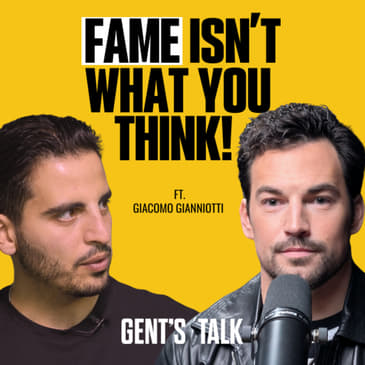
In this week's episode (S10/E138) of Gent’s Talk, powered by Gent’s Post, host Samir Mourani sits down with Giacomo Gianniotti, best known for his role as Dr. Andrew DeLuca on Grey’s Anatomy, for an open and deeply personal conversation about life in Hollywood, the pressures of the entertainment industry, and the mental resilience required to sustain a career as an actor.In this episode, Giacomo reflects on his journey from theater to television, how landing a role on Grey’s Anatomy changed his career, and why success in Hollywood is never guaranteed. He shares the realities of constantly chasing the next opportunity, the anxiety that comes with staying relevant, and how he has learned to navigate the unpredictable nature of the entertainment industry.We also discuss his latest project, Wild Cards, and what it means to lead a show. Giacomo opens up about the intense work schedule, the challenges of maintaining personal relationships while immersed in a production, and how he and his wife find balance despite long periods of separation.Beyond acting, Giacomo gets candid about mental health, the importance of vulnerability, and how societal expectations around masculinity often prevent men from openly discussing their struggles. He shares his own experiences with anxiety, the impact of growing up in a single-parent household, and the lessons he has learned about resilience, self-care, and prioritizing personal well-being.This conversation is an insightful look at what it truly takes to sustain a career in the entertainment industry, the emotional highs and lows that come with it, and why success is about much more than fame and recognition.Topics covered in this episode:- The reality of working in Hollywood and why there is no "coasting" in the industry- How landing Grey’s Anatomy changed his career but did not guarantee long-term success- The pressures of staying relevant as an actor and managing career anxiety- Behind the scenes of Wild Cards and what it means to be a lead actor on a show- The sacrifices required to maintain relationships while working in entertainment- How he manages his mental health in a high-pressure industry- The importance of men opening up about their struggles and breaking outdated stereotypes- Reflections on his upbringing and how it shaped his perspective on life and successWhether you are an aspiring actor, a fan of Grey’s Anatomy, or simply interested in hearing an honest conversation about success, mental health, and resilience, this episode provides a rare glimpse into the realities of life in the entertainment industry.Subscribe for more in-depth interviews with industry leaders, creatives, and change-makers.Connect with us!Subscribe here ► https://www.youtube.com/@GentsTalkPodcastWebsite: https://gentspost.com/Instagram: https://www.instagram.com/gentstalkpod/ https://www.instagram.com/gentspost/TikTok: https://www.tiktok.com/@gentstalkpodFacebook: https://www.facebook.com/gentspost/About Gent's Talk: The Gent's Talk series, powered by Gent's Post, is an episodic video podcast conversation with leading gents and rising stars across various industries. Guests include Justin Baldoni, Russell Peters, James Blunt, Robin Sharma, Director X, JP Saxe, Johnny Orlando, Dom Gabriel and Nick Bateman, just to name a few. The conversations range from career, mental health, family, relationships, business, and everything in between. Gent's Talk is the first-ever video podcast to be made available for streaming on all Air Canada domestic/international flights. We aim to have a raw, unfiltered conversations about our guests' lives, how they achieved success, lessons learned along the way, and the challenges encountered.Credits: Host/Producer: Samir MouraniCreative Director and Executive Producer: Steven BrancoA STAMINA Group Production.
The Gent's Talk podcast, hosted by Samir Mourani, pulls the curtain back on difficult conversations around mental health, business, relationships and the difficulties around expressing oneself, with rising and leading gents from across the globe.
New episodes every Monday! #GentsTalk
Instagram: https://instagram.com/gentstalkpod
TikTok: https://tiktok.com/gentstalkpod
YouTube: https://www.youtube.com/@GentsTalkPodcast
[00:00:00] I got to the day and it just sort of all hit me what the hell I was doing. This is a lot. This is bullshit. I don't want to do this. Giacomo Gianniotti is a Canadian actor known for his role on ABC's hit drama Grey's Anatomy. And he is a lead on the newly released season of CBC's Wild Cards. What are you hoping men in general start to understand and shift in their minds about how they approach their mental health?
[00:00:26] They would be shocked to know how completely not alone they are. So many men think that whatever they're going through, whether it's just pressure and stress of their life or being a dad or being a good husband or providing. Do you want to be a father? I did. I did. But um...
[00:00:49] We find it very interesting that the majority of you who watch and listen to this show aren't yet subscribed to our channels across Spotify, Apple, YouTube. It would mean the world to us if you can do us that small kindness. It allows us to continue to bring on amazing guests week after week and continue to provide you with amazing value and content. It's the only thing we'll ever ask of you. If you can hit that follow or subscribe button, it would mean the world to us. Thank you so much and enjoy the episode.
[00:01:32] Yeah, it's whenever I've gotten anything scripted beforehand, to your point, I just I get into my head. I stop I stop being present. And all I'm doing is trying to remember what I said I was going to say to sound. And oftentimes those producers are also reinforcing that when you get there like, hey, remember when they ask you about this, just remember, like, keep it tight. And then, you know, it's like only four minutes. And so you're kind of like, OK, so then even then when you're saying it and doing it, you're thinking of like wrapping it up and like being like, all right, I got to like, I'm talking too much now.
[00:02:00] Yeah. And you're kind of in the corner of your eye watching them. But you're in your head. You're not there. You're not present. You know, so that's what that. Which is why I enjoy these kinds of conversations, because it's just like, let's just have an honest conversation about what's happening. And speaking of what's happening, Giacomo, welcome to Jen's talk. I'm really excited to have this conversation with you. Me too. Me too. You, your show Wild Cards just premiered the first episode of the second season. Congrats on that. Thank you. On CBC, which is huge. Yes.
[00:02:30] You are a Canadian boy after all. Growing up in Toronto, Canadian boy, having a show and being the lead of a CBC show is like a very special thing. Yeah. And you're based in LA now. Yes. And there's some challenges happening out there. Yeah. The fires have been pretty crazy. And luckily my family is safe at the moment. We're monitoring it sort of like minute to minute, literally. Yeah. But at the moment, everything's okay. I don't think the people that do the work they do in times of crisis like this get enough credit. Not at all.
[00:02:58] And I mean, like, I mean, they're heroes. Like the firefighters and first responders that have been working. I mean, you can see footage from, from the, their, they, some of them have like body cams and stuff like that. And it's just, it's terrifying. It's terrifying. Yeah. It's actually like, like what nightmares are made of being that close and fighting these things that are actively trying to kill you. And it's, it's, and also like the winds can just shift at any minute. So, you know, a firefighter can think that they got an advantage and then in a moment it's just flying at them. And so it's terrifying.
[00:03:28] Wow. We, we had something similar to that in Alberta with the wildfires out there. And some of the footage that I saw, I have a cousin who lives out there. It was just like a nightmare. Like you said, I'm just like, I don't know how this happens. Wild card shoots in, in BC. And I know in Vancouver, British Columbia. And so I know they, I mean, they've been having some crazy fires too in the summers as well. So it's like all over the place. Well, I sincerely hope it, uh, it all gets resolved very quickly.
[00:03:54] And honestly, I come, I commend the heroes cause that's a great word to describe them. I commend the heroes on all the heroes. For sure. Um, Giacomo, I want to, I want to start this conversation by asking you if your life was a book, what chapter are we in right now? Hmm. Um, um, I guess if I base it on age or at least how, how long I think I'm going to live, how long I'd like to live.
[00:04:20] I I'd like to think that we're somewhere sort of like just before the middle, maybe the midway point. Yeah. Exciting time. Challenging. It's, I think my life has always in a way been exciting for better or for worse, uh, because I've, I've chosen to, to make it that way. Um, I'm enjoying some really nice, uh, fruits of my labor.
[00:04:44] Um, being in this industry for like past 20 years, uh, acting, starting in theater, like as a child and coming up to where I am now, I'm finally starting to get some solid ground underneath my feet in my career. Um, working both as an actor, but also as a director and writing stuff. And I, I'm, I'm really, um, I'm enjoying that of, of, of sort of a moment of like, I still have so much work to do.
[00:05:14] I still have so many goals, but there is a little bit of moment of like, okay, I've arrived. I've, I've, I'm, I'm a player in the game, which is what I really wanted to be when I was younger. I was like, I just want to be a player in the game. I want to be a participant. You know what I mean? I don't want to be an outsider. I want to be an actual player of this game. And then where I rank on that and where I stand on that, that doesn't matter to me. I'm not after like accolades and stuff like that, but I just, I want to actually be a working actor. I want to be a part of this industry and say, I'm actually, I'm actually doing this. I'm not dreaming about doing it.
[00:05:43] I'm not trying to do it. I'm actually doing it. And so in that sense, I, I've, I've achieved that and it's, it's a nice, it's a nice feeling, but with, you know, any kind of success, whether that be, you know, in your career, monetary, whatever, it comes with other problems and other issues and other challenges. I'll say not problems, challenges. Like what? I think, you know, I, I remember like during the pandemic, I had read a Will Smith's book
[00:06:12] that he had just released at that time and he was talking about like our industry and so much about like momentum and that like, if you don't stay on that wave and stay relevant and stay working that you can lose that momentum and it's really hard to get back. And so he was talking all about, you know, as like this sort of like, um, kind of funny thing that's sad, honestly, as actors, like when you get the good news phone call, we call
[00:06:41] it the good news phone call, like from your agent being like, you got it, you booked it. Like they want to fly you out to here and you're going to be on this show or this movie or whatever that, um, your celebration is like so instantaneous because it's like, yes, I got it. And then it's like, what's next? It's like, we can't even enjoy the win. We can't even enjoy the fact that we've been given this amazing opportunity without immediately thinking, well, what's next? And that sort of stated of anxiety because the anxiety is the future, right?
[00:07:11] And depression is the past thinking about the past. And like, we're always should strive to be in the present where we're not thinking about either of those things. And that's when we're, we're most happiest, but you know, I'm human and I, and I succumb to the anxiety and worrying about the future. So I think, I think that's the challenge of like, when you start to get some footing in this industry and you start to be working, you get, you get more, um, I guess, nervous about like, can I maintain this?
[00:07:40] Can I, can I stay on the hill or is someone going to kick me off it? And I'm going to have to claw my way back up. You know what I mean? Cause I worked so hard to get to this point. So I think it's like, that's sort of like the challenges, I guess, that comes with, with gaining ground. Which is interesting to hear you say that because, uh, the first time I happened to cross you as an actor was on Grey's Anatomy. And one would think that if you made it on Grey's, you kind of have your life set and you can coast from there. And, you know, you talking about. There's no coasting in this industry at all.
[00:08:09] Well, you talk about, you know, 20 years in this industry and you're still sort of working your way towards sort of staying in the game. Yeah. I think is a sobering reality on what the life of an actor really looks like beyond the glamour of like, Hey, you were on a show. Great. It's like, what comes next? And the fact that you don't even give yourself a chance for the majority of actors that I've spoken to never really give themselves a moment to celebrate that win. Yeah. Yeah. And just to enjoy it, just to be like, yeah, like things are going well. Like enjoy that.
[00:08:39] Not like, yeah, things are going well. So, you know, there's this, like this too shall pass and it works both ways. Right. If you're going through something really bad, this too shall pass. Like, don't get caught up on it. Like it's, it's going to go away. It always does. You know, like you will, the sun will rise. It always does. But similarly, when things are going really well, it's like this too shall pass because that's, that's life.
[00:09:02] It is, you know, the one thing that we can always guarantee of life is that it's in a constant state of change. Right. Nothing is ever permanent in our life. Nothing. And so even our life, we die. All right. So it's like the, the fact that, um, that's something that you can count on is, is good. And I think it's what makes us human.
[00:09:28] It was makes us better humans and, and have a more, I think enriched full life because if everything was just going great, I mean your whole life, I don't think you would be a very well-rounded human being. No. Um, you wouldn't know, you know, tragedy or strife or any of these things. Yeah. And resilience and sort of strength. So you need all those little dips and lows and valleys to help you. And, and also then when, when, when you are coming back up from those valleys, like, man,
[00:09:57] do you appreciate it? Oh, you're like the gratitude is like through the roof. Right. So I think it's just all part of the human experience. Are you, do you find yourself currently present right now in general for the first time? Yes. Because I just finished shooting, um, the second season of wild cards. And during that time, I mean, it's just, we, we, we shoot so many pages in a day. We're like, it's like 18 hour days. We're in every scene. Cause it's just Vanessa and I in the entire day.
[00:10:27] So it is an intense and brutal shoot. It's, it's four months where, I mean, I disappear. I essentially go into this like vortex and I just disappear and I come out the other side four months later. No social life. I barely see my wife or like passing ships in the night. And, um, so now I feel like I'm finally after that getting a little bit of my life back and more present. I'm able to just sort of like enjoy myself a little bit. So how do you balance the relationship with your wife and relationships in general with friends
[00:10:55] and family with your dog? Um, when you're so wrapped up in a project like a show, because for those four months, you're essentially missing. Like you're, you're out there doing your thing and then, you know, you still have to come back and nurture and water your relationships, but you can't be as present as you want to be. So I'm, I'm curious about, you know, what that's like for you. Do you find that challenging? Maybe there's a technique that you apply that you're like, this is what I do.
[00:11:24] This is how I make sure I'm still present for my, for my people. So I think there's this, um, um, myth about, um, marriage or whatever, like relationships, um, that, um, is like this 50, 50 thing. And it's a total myth because it's never 50, 50. Someone's always overcompensating at all times and, uh, and it's okay.
[00:11:52] It's, and I think like we need to like, let ourselves off the hook of that. Now you don't want to be taken advantage of, or you don't want to be taking advantage of someone else's, you know, picking up of slack, but there's moments, you know, where the relationship that I have with my wife, it fluctuates because when I am working, um, she's picking up a whole lot of slack and she's a hundred percent, you know, like carrying the relationship.
[00:12:17] Like I do not have the bandwidth to give her the presence that she deserves. And I so tremendously lucky. And, um, that I, that I found a person who, who understands that and, and understands that because she realizes that she and we are in it for the long haul. And this is just a moment in our relationships journey. So someone who was more short sighted might be like, well, this is bullshit.
[00:12:47] Like, I don't want to do this. Like I didn't sign up for this, but someone who's really invested in someone in the dream and the, and the world that you're building together understands that like, no, this is a sacrifice that we're making for now for our future so that our future will be filled with times where we're a hundred percent of the time together, a hundred percent of the time present with each other. These are just moments that we are, we're grinding, we're building, we're making sacrifices. So, um, I'm tremendously grateful to my wife. She's an incredible support.
[00:13:17] I literally don't know how I could do it with, without her. And when, you know, the amount of patience that she has with me when I'm, you know, really locked into a character and working in a lead on a show, um, it's intense. And so, um, when you talked about techniques and things, it's not too, um, fancy, but you know, I'd have the weekends off and I would try, you know, I had Saturday and Sunday off. Saturday was kind of my day to unplug. I wouldn't look at my work.
[00:13:46] I wouldn't look at my scripts or my notebooks or anything like that. And I would just try to dedicate as much time to, to spending time with my wife. We'd go for a walk, go for coffee, throw our phones away and just try to really be present. And then Sunday, which is my second day off of the weekend, I would be working all day at home, um, on my, my acting work, but I'd be home. So there's those moments of like little connection of, you know, um, spending a few minutes together,
[00:14:12] having a coffee in the morning, like little things that you, you learn to cherish and, and not take for granted. So that was how I sort of struck a balance. Now it's not a balance at all. It's imbalanced, but that was what I could give. You know what I mean? And communication has to be so on point in those moments. Absolutely. But it's, it's also an understanding of like, you're not getting your needs. Neither am I. We know that we signed up. This is a temporary thing. It's not sustainable.
[00:14:40] And we know that, and we know that on the other side of this, there's going to be an amazing, like, you know, um, coming back to, to what we really do and how we really operate. And getting that phone call. Yeah, exactly. Exactly. So, you know, I've been off for a couple of weeks now and it's been nice to just be with my wife for the holidays and just spend time with her alone and also with friends and getting to sort of be social again, which is sort of strange. Cause I've just been like work, work, work, work, work.
[00:15:08] Um, so yeah, it's, it's, it's been nice. She's like, it's been nice to have you back. Like, I feel like I rent my husband out and then I get him back and it's like, okay. What version am I getting in return? Exactly. How do you, as an, I always ask actors this question, how do you balance your mental health in an industry where you probably get more no's than yes's across a variety of different things you do?
[00:15:32] That's been a, uh, a longer, uh, journey in battle for me that I, um, started a little later. Um, and, um, it's also a moving target. But another thing that I've found, it's like, as soon as you think you've kind of like got the grasp on something, it's like something else shifts like a year later that like, oh, like this matters more to me now than it did. Or this thing that I used to be stressed out, like I could give a shit about now.
[00:16:03] It's like, so it's weird because like when you work on things for your, for your mental health and like having a better mind, it's, it's strange cause it changes. So it's like every year you're having to sort of like adjust some of these things. And so, and as you grow and like read more books or do more therapy, like you, you excel in certain categories, but then other things are still like, you know, I'm a work in progress. So are you, everybody is right. So, um, you do what you can.
[00:16:32] I know exercise and diet has been pretty, pretty huge and groundbreaking in my life for my mental health. I feel like just, I'm a better version of myself when I'm, when I'm exercising and eating well, um, and rested and hydrated, all those things that like are seemingly, it seems like, oh yeah, of course, like, yeah, we'll just be healthy. And you're like, it's like, it's actually true. Yeah. It is as simple as it's, you know, and that doesn't take care of the entire problem at all, but it is a big help.
[00:17:00] And certainly like making me just be a better version of myself. You know what I mean? When I've like hit a punching bag for an hour, like, I don't feel like punching other people or being, you know, combative with people. I just feel like happy and things roll off my back. And, um, it takes a lot to piss me off after that. Cause I've gotten that out of my system. And so those are all things that kind of help and, and, um, yeah.
[00:17:25] And checking in, checking in with, with friends and, and, and trying to be the person for other people that, that, that you wish you had or, or that you wish you, you did have. Yeah. When was the last time you didn't feel like your best self? A lot of times when I'm working, a lot of times when I'm working, um, and I'm, you know, just engrossed in a project. Um, it's kind of all consuming and it's, uh, and it's difficult.
[00:17:54] And it's, I use the word unsustainable before because I feel like, um, the amount of work just emotionally, physically lack of sleep, how hard your brain is working to be sort of like learning and rehearsing so many versions of different scenes in your mind and overthinking things. And, um, your brain is just sort of like overworked, like to insanity. And then you're spending your day around like, you know, 50 to a hundred people.
[00:18:22] So like socially you're just incredibly like active as well. There's just not a lot of quiet. There's not a lot of quiet time. That's what I feel like I seek desperately when I'm working. It's just quiet. So, um, even going back to my wife, like in the weekend, like apart from like dedicating time to her, like I also dedicate time to myself to just be like alone and like go for a walk, like by myself to not hear anything, like not even music, like just total quiet. Yeah. Yeah. Cause then I can actually like hear myself think I can hear my feelings.
[00:18:53] And, uh, cause I feel like when you're too caught up with like conversations and noise and all that kind of stuff, it's sort of a way of ignoring what you're feeling and thinking about. So I need, uh, like, yeah, total quiet to just hear what I really think. It's interesting because the manner in which you speak as someone who, you know, has achieved a great deal of success and congratulations on all of it, by the way, you know, it's, it's still uncommon for men to talk in this capacity to talk about even using the words
[00:19:22] feelings and my mental health and focusing on myself and being alone. Like there's this inherent fear for a lot of us of, I can't say those words out loud. Even if I'm thinking them, I can't say that loud. No. Yeah. It's a permission that we all need to grant ourselves, whether you're a man or a woman or, or whatever. What was this something that was always natural to you or did you need someone to show you to grant you that permission to show you what it was like to express vulnerability, to talk
[00:19:52] about emotions? I think I grew up in a, in a household where those things were supported. I was kind of raised by a single mom and, and I think she always made it very clear that I could be open about those things and talk about things. Also pursuing, you know, acting from a younger age that was already something like, you know, in terms of like. Kind of forces you. Talking about emotions, being vulnerable. Like that's the whole, like, like holy grail of acting is, is, is being an open book emotionally
[00:20:21] and, and, and being open and, and taking down those walls so that you can really be this like open vessel of emotion and communicate that through your eyes and all that kind of stuff. So I feel like I got lucky in, in that sense that from a young age, I was more maybe emotionally intelligent than some of my peers. Do you find when you have these kinds of conversations, you know, whether it's with your friends or whomever, do you find there's still resistance to that? Like, do you feel sometimes like the outlier in that group? Sometimes. Yeah.
[00:20:50] I have a very, very tight friend group with the guys I went to high school with here in Toronto. And it's sort of like a amazing success story of, of friendship. Cause I don't, I often tell people, I like, I, I forget how kind of special it is in a sense of like, I often talk to people and, and say like, oh yeah, like all my, my high school friends that we get together and we talk and they're like, you do, you still talk to your friends from high school? And I'm like, oh yeah. Like, I guess it's kind of rare.
[00:21:17] Like not everyone has kind of kept in touch and there's like eight of us, you know, it's like a big group and we still try to like see each other on the holidays and like, they're all here in Toronto and we still do like meetups and dinners and things. And they've all had kids. And so we're all uncles and we're all trying to like, you know, so it's, it's like the next generation has arrived. And so, um, it's, it's special, but within that group, sometimes I feel like I'm the one that's really like pushing those things and those conversations and, and, you know, beyond being like, Hey, are you okay?
[00:21:48] And people like, yeah, I'm good. Everything's good. And be like, are you okay? And getting a real response. Yeah. And it's just like, cause it's like, I feel like with most men, like you have to ask it twice. You do. Cause it's become like, how are you is just become a synonym of hello. It's just a greeting. It's not a real question. No one's actually asking. No one actually gives a shit to be honest.
[00:22:14] Um, so, so when you sort of lean in a second time and go, no, really like, how are you? You okay? It hits someone, you know what I mean? And, and men are asked it a lot in that way. Why do you think that is? I don't know. I feel like, I feel like men think that they're burdening others with their feelings. Not cause that's, that's what I feel. And, and so we already feel that way. So when someone asks you, then you're like, Oh no, no, no, no. Like, I don't want to like put that on you.
[00:22:43] So if you can, if you can talk to the, the, the gents out there and say to them, like, you don't have to be this way. What would you say to them? What are you hoping men in general start to understand and shift in their minds about how they approach their health, their mental health, their wellness? They would be shocked to know how completely, uh, not alone they are. Like, I think, I think so many men think that whatever they're going through, whether it's
[00:23:11] just pressure and stress of their life or being a dad or being a good husband or providing or whatever it is, that is that pressure and stress for a lot of men that it's easy to think of it as singular. Right. And social media has completely just ruined this. Unfortunately, in terms of like everybody's life is compared, right? We're always looking at, Oh, well their life is this and their life. And, Oh, he clearly has it all together.
[00:23:37] I mean, look at his house and his car and his two kids and he's clearly got it all figured out. And then it's like, that guy could be like the most depressed of the entire group. Yeah. But he's the best hiding it. Yeah. And, um, you know, Aubrey Plaza, um, her, um, husband just committed suicide over the holidays and there was all over the, the, the media. And it's, it's, it's strange that it's over the holidays almost every year.
[00:24:07] There's like these stories of men, um, taking their lives, which is so sad, but it's like, what is it about the holidays? And what's like, well, it's a time of reflection. It's a time where we have quiet time. I was speaking about that, right? Maybe it's like the first time in the entire year that that man has been alone with his thoughts. He's not working. He's home. He's alone. And he's having these thoughts. And it's, it's, it's very sad that these men, um, feel alone in these moments and there's
[00:24:36] no one that they feel that can hold them and in, in that way. And that it doesn't take away from their masculinity. Not at all. Not at all. I think that's probably one of the biggest challenges and hurdles. I know for myself, personally speaking, that was the pandemic for me. Yeah. Oh, super dark time. Super dark time. And I, in that moment when I needed someone, I had just gone through a separation right before the pandemic.
[00:25:00] And then suddenly sitting in a condo by myself going like, holy shit, this is a lot. Like this is, this feels physically heavy on my chest. Mm-hmm. And then realizing that, I don't know if I have anyone I can actually turn to. I don't know if there's anyone that I, you know, I can share this with. And do I even want to share this burden with someone else? And then realizing only all these years later, a burden shared is a burden halved.
[00:25:27] And realizing that when you are able to have a community of men around you. And I say specifically men because for my entire life, I always relied on women to be my support system because I was like, oh, they won't judge me. They, they have these conversations. Oh, that's what society tells you. Yeah. Yeah. And then I finally was given permission by another man to have this conversation. And I was just like, holy, like this feels incredible. It's special when you can find men in your life that you can be that, you know, vulnerable around and safe.
[00:25:57] And it's like, you said the burden halved is really such a great saying. It's true because it's not, it's, you don't realize the permission that you're giving that man when you share. It's like, cause it's just, it keeps inspiring, right? Like you're inspiring that man to share and then he's inspired to share. And it's like, it creates this domino effect. Yep. And, uh, and I'm glad it is. There's definitely a shift, but there's still a long way to go. I think in terms of men's men feeling comfortable, you know what I mean? How was the pandemic for you?
[00:26:26] You know, it was challenging in a lot of ways, but I think, um, I'm very privileged. I have just to be very honest. I, you know, I just moved into a new house with my wife and, um, my show Grey's Anatomy at the time was one of like the first to return to work. Um, and so, um, I was very lucky to be in the position that I was. And I know a lot of people weren't and a lot of people like lost their houses, their jobs, their apartments. And so, um, we did what we could to like, you know, elevate those people and the people that were helping.
[00:26:56] And, um, but yeah, it was, it was a very dark time. I was lucky to be with someone. Yeah. There's a lot of people that were along. Yeah, exactly. I had a lot of friends who were, who were single and even trying to navigate dating in that was, was very difficult for a lot of friends. You know what I mean? Cause it's like, you used to just be like, Hey, like, why don't we get some coffee or you want to go for a drink tonight? And now it's like, no, no, no. We're going to have to talk for like two weeks, get to know each other. And then maybe we'll see if we meet. Cause if I'm going to risk my life getting this disease, I know nothing about, I want to make sure you're special.
[00:27:27] But it actually in a way forced people to actually communicate. I know it's the weird thing that was actually a positive. And I feel like then it almost like when things switched back, it sort of in a way, cause when I talk about the pandemic, I always talk about there's certain things that we sort of just reverted right back to after the pandemic. And there's certain things that changed. They're like, Oh no, no, we're not going back to that now. Now we're doing this. And I feel like even something like a lot of offices shut down.
[00:27:56] A lot of corporate companies are like, we can just have our workers work from home or we'll do remote working for three days of the week. And it said, it sort of changed the whole landscape of, of what can be done. And in my industry, certainly like auditions, like going into a room are done still. They're just, those are just done. That's a thing of the past now. And now it's all just sending tapes. It's actors can be cast from all over the world. It's opened up a lot of doors to a lot of, you know, foreign actors and stuff too. It's a weird experience.
[00:28:23] I imagine though, you don't have a human to, I feel bad for some of the younger actors coming up because I think going into a room with like three people and reciting something that you've prepared while someone's writing their lunch order and another one's checking emails and one person's sort of like half looking at you is a really degrading, a difficult experience
[00:28:53] and, uh, or trying to like cry in a scene while someone is like taking their phone call. Um, it really builds, uh, toughness and resilience in you. It sounds like that actually happened to you. Yeah. I've had experiences like that. And so they kind of like toughen you up and like, you learn a lot from that stuff in terms of like being able to perform while insane things are happening around you and still staying locked in and focused.
[00:29:21] And so a lot of these younger actors, like they'd send in this tape and they get the job and like, they've never actually performed this in front of anyone. And so their first day on set is their first time performing it in someone. And that's kind of scary in a way. Whereas like for when we used to audition and go in the room, when you get on set, you kind of like, I already showed this to you guys. You guys have seen me in the room, do it. We talked about it. We workshopped it. You gave me notes, you know what I can do. And you're just kind of like, all right, now this is the show. You know what I mean?
[00:29:50] But it's like, you didn't feel like the first time there wasn't that nervousness of like, oh, this is the first time I'm like showing it to people. What are they going to think? Yeah. I mean, so, um, so I feel a little bad for younger actors coming up, not having that experience. I want to go back a moment. Yeah. You referenced your mom. Uh, you know, you grew up in a, in a, you know, like with a single mom. I've had a few guests on talk about the profound impact that their mothers have had on them
[00:30:18] in that specific type of arrangement. I'm wondering about the relationship with your mom and how that's impacted you positively, negatively, and, and also specifically curious about the role that your father played in your life and how that shapes the man you are today. Yeah. Yeah. Um, how long do we got? That's a big one. I'll try to summarize. I mean, I, I, I'm, uh, Italian Canadian. So my father's Italian. I was born in Rome.
[00:30:47] My mother was studying art in, in Rome for about 20 years, met my dad. She's Canadian. She had moved there. And so they kind of fell in love, had me, um, they separated very quickly and my mother wanted to raise me back in Toronto and Canada. And so I grew up here. My father followed cause my father did not have a father. He had walked out on, on the family. So, um, my father didn't want to repeat that in the next generation. So as much as he didn't have a dime or a ton of skills, uh, or speak the language here,
[00:31:16] he came and defied all of those odds to be here and to be a present father. And so for that, I'm eternally grateful. I know the sacrifices that that took and that it wasn't easy and would have been way easier to just stay in Rome in Italy where he had a job and had friends and had community and everything was good. And it'd be way easier to do that, but he didn't do that. So I, I give him, I have a lot of gratitude and respect for that. And for my mom, you know, she was single mom. We were in a small town.
[00:31:46] She worked all kinds of jobs to, to put food on the table and was always just creative and kind and supportive of my arts and just move mountains every day to create little moments of joy in my life. And, um, uh, I got very lucky, but you know, I think my mom's side was more emotional, intelligent and intellectual. And I got a lot of art and stuff like that. Whereas my father, Roman Catholic was a little different and more severe and more strict and more rules and more structure.
[00:32:16] And, uh, and those, and those traditional kind of like immigrant parent things that you hear about the traditional masculinity things of the way a man is supposed to act, you know what I mean? And so like, in a certain way, he taught me to be like a gentleman, which is like, great. It's like how to treat women and all those kinds of things, which is like, those are really great lessons, but it's like, there's always a little bit of a bad with the good too, even because like all the bad stuff comes in terms of like, don't cry and don't this and don't show.
[00:32:43] And like, that's your weakness and all that stuff is sprinkled in there too. Absolutely. So. But a lot of that you said come also like, he didn't have a father to model anything for him as well. Exactly. He didn't have a playbook and didn't really know what the hell he was doing. And I mean, at 23, I mean, I would, I can't even imagine having a child at 23. I'm 35 now. And even now it sounds, I don't know how I would manage. And I have so many respects, so much respect to, to, to, to parents who are juggling that and careers and marriages.
[00:33:13] It just, when I see it, it just seems like, how do you do it? How do you, how do you spin all those plates? And so I think a lot of, um, speaking to mental health, a lot of men, I feel like, you know, need to, need to be listened to for, for that. Because it is so incredibly hard for me, just juggling a marriage and a career, you know, having a child on top of that. It's a whole other. It's a whole other, you know, bag of tricks. So, uh. I had a doctor on talk about how there's been so much studies into postpartum depression
[00:33:42] for women. Yeah. But there's growing scientific research to show that men suffer from a similar postpartum depression, especially new fathers. Yeah. Yeah. But they often don't acknowledge it, talk about it, show it, and we don't really pay attention to it. But it's a very real thing that happens to them as well. Very different in how it affects them between man and woman, but it definitely affects men in one way. This is obviously, you know, very different.
[00:34:07] But I remember, like, when I was engaged to my now wife, the leading up to the, to the wedding, it was so sort of like, um, filled with planning and logistics that I absolutely just completely forgot that I was getting married. Mm-hmm. And I got to the day that I was getting married and it just sort of all hit me at once, like
[00:34:33] what I was doing and how profound and insane and beautiful it was all at once. And I hadn't even allowed myself the time to think about what the hell I was doing and that I was like promising my life to this woman and that I was promising to like take care of her and protect her and, and, and to be her everything for the rest of our lives. And it just sort of, cause I was just so consumed with like, oh, how are my parents getting there and the flights and the hotels and how are we going to get in? Who's going to do the food? And like, what color are the napkins getting?
[00:35:02] Like you actually forget what you're doing. You're like, oh no, I'm getting married. And so the day of, I was so emotional and I just had, I was weeping for like the whole morning. I just could not stop crying. And, uh, and it wasn't like, um, like a bent over, like it was just like, it was just like these tears were just falling from, from my face and my friends, my groomsmen were all with me like, yo, what is going on? Like, are you okay? Like, are you gonna be able to do this?
[00:35:31] I'm like, I'm like, I'm happy. Like, I guess I'm happy. Like, I don't know what's happening or why I'm having this reaction, but I just, I can't stop crying. Just so I think it's just like, I haven't allowed myself to feel what I actually feel about this moment. And now I just, it's like, my body's not giving me a choice anymore. My mind's not giving me a choice anymore. Cause it's literally the day has arrived. There's no hiding. And so, um, a lot of my wedding photos, especially when she's like walking down the aisle, I'm
[00:35:58] just like completely just like weeping, uh, which is, uh, hilarious. But you know, my best man, he's just like, give me some champagne. He's like, you gotta get your act together, man. Like, come on. Like when she walks down, like you gotta be strong, dude. And I was like, I was like, I know you're right. You're right. You're right. Anyway, so, um, but, uh, but yeah, I think, uh, I don't know what the point was of that story, but that sometimes we can get caught up, I think, you know, with, with, with things and like, um, when you were talking about the science of like, you know, men, new fathers
[00:36:27] and all that kind of stuff, you know, obviously it's different, but I think, do you want to be a father? I did. Okay. Um, I did. Um, my wife and I had a journey of fertility that was, uh, very long, very difficult, uh, more so for my wife more than anything. But, um, uh, we decided after a lot of trials and tribulations to, uh, to not pursue it anymore. And we're very happy now. And we're on the other side of that decision.
[00:36:54] There was a, there was a time where that decision felt like, uh, a failure. There was a time where that decision felt like, um, we were being punished. Um, but now we're truly on the other side of that. And it feels like the greatest thing that's ever happened. And that doesn't mean that like, there aren't parts of me or her that still, you know, think about those things.
[00:37:19] Of course we're human, but we're in a place where like, no, like this happened for a reason. We're thriving in this state. And I think because of my career and how often I'm, I'm traveling and I'm away, um, how much would just sort of be thrown on her and left to her is unfair. And, um, she's realizing that this is the way that our relationship will, will truly thrive and last is, is our ability to stay so connected and not having something else that's dividing
[00:37:49] our attention. Right. And, and taking away from, from our, our focus on each other. There's, you know, the, the number of people who have challenges during trying to, to get pregnant has seemingly been rising as I'm learning. Yeah. Is there a piece of advice you can give to men, women out there, couples in general from
[00:38:13] your own experience about something that can help them maybe get through a challenge that they're currently going through? I think, uh, similarly, when we're just talking about men's mental health in the beginning, so much of, um, I think, you know, depression and sadness and these, these, these states that we get into is like that. We think we're alone in it. We think that we're the only person suffering and everyone else is just doing great and handling everything so well. And they just got it all under control.
[00:38:44] Um, which is false. The same thing goes with fertility. Right. And, and when you're saying things like, oh, we've seen something on the rise, I don't think there's anything on the rise. I think just more people are talking about it and being open about it. Yeah. It's like when people say stupid things like, uh, oh, there's more gay people today than there's ever been. It's like, no, it's the same amount. Just now people feel safe sharing that because they were persecuted before. Correct. So you thought there was less, but they were all there the entire time.
[00:39:14] Um, so I think like that, it's just, it's, it's people, women and men are talking about this more, which is making women feel less alone because infertility is incredibly punishing. It really is. It's, it's most women and, you know, uh, friends and family of ours that have tried to have children. Um, it's hard to do it naturally. Uh, they're doing IVF, uh, or other procedures. It's just so expensive. You know, that's, you know, the economic factors is huge.
[00:39:44] Yeah. And so doing it like one, two, three, four, five times being like, oh, on our fifth try, you know, we finally got our miracle baby. And that's great. If, if you and your partner want to go through that or like you have the means to, um, financially to go through that, but also like the, the, the emotional means to go through the four rounds and nose and miscarriages and things like that. It's devastating.
[00:40:11] It's devastating because you get your hopes up and you, you think, oh, this is going to be the one and, and the rug's pulled out from underneath you. And then it's, uh, it's hard to come back, you know? And to be honest, not a lot of relationships survive some of those moments. It's too devastating. It's hard. It's such an emotional toll. So I feel very lucky that our relationship, we, I mean, we've only gotten stronger since, since our journey. I feel like we've just gotten even more, uh, deeper in our lives, even stronger than it
[00:40:40] was before after facing these things together head on. Um, I think we were really just close in there for each other, but, uh, but yeah, infertility is a huge issue. I think it's caused by a lot of the foods and things we're eating, a lot of the poisons and plastics and things that are in our food, hormones and things like that, that is affecting, you know, women's health. Um, another reason to eat healthy and clean and focus on that. Yeah. And, uh, and then the other fact is like, it's just, it's just a hard thing.
[00:41:08] It's just, we, we grow up thinking that like when we're teenage boys, like, well, like, oh my God, if we like have sex with a girl, like she's immediately going to get pregnant. It's just not how it works. Uh, it's just not. And so, um, yeah, I think the, the advice is, is to just know that it's, it's going to be a journey. It's easy. Um, you know, I, I remember myself, you know, a very, very, uh, naively thinking of like, oh, like whenever we try, like, you know, this sort of like macho man thing of like, yeah, I'm a stud.
[00:41:37] Like as soon as we try to do this, like, you know what I mean? And like, you're going to be pregnant right away. And instead of being like, wow, like it took us quite some time, you know, to get pregnant and help and assistance and all that kind of stuff. And I was just like, oh wow. Like the, the world, like society lied to me, you know, about, you know, this whole thing of, of men and how we do this. And, um, somehow as a man, you feel less than if it didn't work on the first try. Like, yeah. And women feel like they, they've failed if they weren't able to care.
[00:42:06] So it's like, which is wrong. It's just science. It's just purely science. There's no blame. There's no shame. It's just science. And so, um, yeah, I think a lot of women feel, feel, feel very alone. And, and since sharing these things, I've had a lot of women and men reach out to me on social media and, uh, and just share their stories and say, thank you for talking about this stuff. And it means a lot. And I'm happy that, you know, sharing these stories, um, helps other people to, to have some kind of solace in those.
[00:42:35] Well, thank you for sharing that story with me here. That's, that's a, it's a very powerful story and I'm happy to hear how you've talked about your relationship being stronger than ever and being able to come out of that. Um, I think there's a lot of, a lot of good that still exists because of that. Um, I want to, I want to go back to the show a moment. So season two just premiered its first episode.
[00:43:04] Does it ever settle in for you that you're like, I'm on a show? Like, does that feeling ever go away? What feeling? The one of like, yeah, I've got a show. I'm the lead in a show. Like that concept that, you know, when you're a kid and you're starting out, you're like, I just want to be a player in the game. Yeah. And now you're just not a player in the game. You know, you're, you're a lead in the game. Yeah. Yeah. Does that feeling ever sort of, or have you kind of numbed that out a little bit? No, it feels great.
[00:43:33] And I like feeling that it feels great and, and owning that. Cause those are things that I dreamed about when I was a kid. So this is like the little boy in me getting his dream and like, why not enjoy that and feel that and feel that it's great. So yeah, no, it's, it doesn't go away. It feels awesome. And I hope I get to hold onto these feelings for a very long time. And what's the best part of being on this specific show? The people. The people I work with every day. I've worked on a lot of shows, a lot of different things and a lot of different writers.
[00:44:02] And this show, when I go to work every day, I work with the most terrific, talented people who are kind, which can be rare in my industry. I will say not everyone is, is, is, is so kind. Whether it's actors or directors or producers or whatever it is. A lot of egos. There's a lot of egos in my business. And so, um, I just work with like really professional, great people who are kind and more than anything, collaborative.
[00:44:30] And it's, as I get older and work more, it's the thing I'm, I'm seeking most is, is collaboration. Where I feel like we're equals, where you and I are working on something together. Rather, not like you're telling me what to do and I'm your little puppet. So when I feel like I have creative input now that comes with being a lead of a show, of course. Right. When you're sort of like the guest star, you know, it's not really customary to be like, Hey, so I was thinking last night about this scene.
[00:44:59] And then they're like, Hey, Hey, like stay in your lane. Yeah. We do things a certain way. And it's no, it's no insult, but it's kind of like, you're here for a couple of days. Like we got four months of this and it's like, we don't like your idea is not going to like, okay, like we've thought about it for a lot, a lot of time. But if you're a lead of the show, then like, I am thinking macro and not micro like the producers. And so that, that I have that creative council with them. And then we can really like collaborate, not whether it's even just like lines day to day or even bigger things like story pitches and things like that.
[00:45:28] And concepts have come up with a lot of that, that stuff and ideas and pitch things. And they love them. We've written it into the show. So having people that not just respect like my taste, but genuinely just want to create something together so that when we watch it, we feel like everyone's creative vision is represented and what's best for the show ultimately. And it makes when, when people feel heard or seen, they just do better work. They just bring more to the table. They're going to, they're going to work harder for you.
[00:45:56] And so if you're a show runner or a producer at the top and you're providing that, like you have no idea the, the, the ROI on that is huge, huge. Cause when people feel like, wow, no, like I'm respected, like my opinion, they really want me here. They just work 110% for you. And that's what we get from our crew and our actors. And so, yeah, I think the best part of the job is just going to work every day. I mean, like everybody wants to be here. Everybody's so excited to be here. Everybody's giving 110%.
[00:46:23] And that was what makes me excited to come to work. Cause I've been on sets where people aren't excited to be there and it's hard to be around. Yeah. You can feel a difference and a shift in the energy there. Um, I want to, this has been a beautiful conversation and thank you for sharing everything you've been sharing with me so far. I want to end it on a question with you here. You know, there is a time in your life when you're typically, when you're younger, where
[00:46:50] anxiety is through the roof, trying to navigate what you want to do, who you want to be looking at your dad, looking at your mom, looking at your friends life. Is there a piece of advice that you needed to hear when you were a young man that you were never given? Don't worry about what everybody else is doing. Do not worry about what everybody else is doing. Do your own thing.
[00:47:19] People are all going left. People are going right. And the world is telling you that those are the only two options, right? Like everyone's going East, everyone's West. There's North, there's South, there's Northeast, there's Northwest. There's, there's all these other directions you can go. So it's, it's easy to be like, well, doctor, lawyer, policeman, like there's so many now more than ever. Oh my God. The first thing I ask people when I meet people outside of the industry, like I go to work
[00:47:47] a function or like something that has nothing to do with Hollywood. I go, what do you do? Because I'm so interested in all these new jobs that people have, you know, young kids, like 22 year olds, three years starting businesses and entrepreneurship. So, um, yeah, it's so easy when you're young and you're just naive and you're affable and you want to, you want to please everybody and to just get caught up. Well, all my friends are going to that university.
[00:48:13] So I should probably just do that instead of being like, what do I really want to do? Do I really want to do that? Does that sound interesting? Does that sound satisfying? No, probably not. Then do something else. I think, um, yeah, don't, don't worry what everybody else is doing. Yeah. I love that. Thank you so much for your time, my friend. Thank you. This was wonderful. Thank you. And best of luck on the journey. I know you've got a whole bunch of, uh, a bunch of work ahead of you, but hopefully there's some rest in between. Thank you.
[00:48:44] Yeah. Yeah. Looking forward to that. And congratulations on the new season. Thanks. It sounds really exciting. A lot of work went into it, I'm sure. So, um, thank you again for your time and thank you so much for tuning in everybody. This was wonderful.