
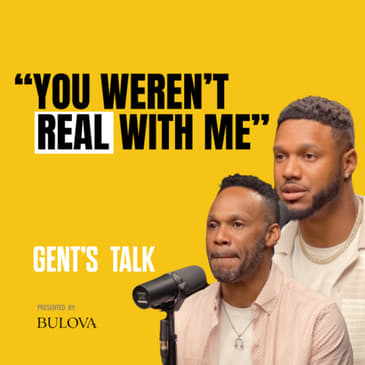
In this week's episode of Gent's Talk, presented by Reifel Rye, host Samir Mourani sits down with Cedric Newman and Tychon Carter for this special edition Father's Day episode where the father & son duo pull the curtain back on their relationship, where Cedric didn't show up the way Tychon needed him to, the balance between being the fun dad and the parental dad, lessons learned along the way in the fatherhood journey. #gentstalk Connect with us! Subscribe here ► https://www.youtube.com/@GentsTalkPodcast Website: https://gentspost.com/ Instagram: https://www.instagram.com/gentspost/ TikTok: https://www.tiktok.com/@gentstalkpod Facebook: https://www.facebook.com/gentspost/ About Gent's Talk: The Gent's Talk series, powered by Gent's Post and presented by BULOVA Canada is an episodic video podcast conversation with leading gents and rising stars across various industries. Guests include Russell Peters, James Blunt, Jonathan Osorio, Director X, JP Saxe, Wes Hall, Johnny Orlando, Shan Boodram, Dom Gabriel, and Nick Bateman, just to name a few. The conversations range from career path, hurtles, mental health, family, relationships, business, and everything in between. Gent's Talk is the first-ever video podcast to be made available for streaming on all Air Canada domestic/international flights. We aim to have a raw, unfiltered conversations about our guests' lives, how they achieved success, lessons learned along the way, and the challenges encountered. A special thank you to our partner Reifel Rye for making this episode come together. Credits: Host/Producer: Samir Mourani Creative Director and Executive Producer: Steven Branco Video & Sound Editor: Roman Lapshin A STAMINA Group Production, powered by Gent's Post.
The Gent's Talk podcast, hosted by Samir Mourani, pulls the curtain back on difficult conversations around mental health, business, relationships and the difficulties around expressing oneself, with rising and leading gents from across the globe.
New episodes every Monday! #GentsTalk
Instagram: https://instagram.com/gentstalkpod
TikTok: https://tiktok.com/gentstalkpod
YouTube: https://www.youtube.com/@GentsTalkPodcast
[00:00:00] Rifle Rye is an award-winning high-rise spirit that is meticulously crafted using local ingredients. This Father's Day, gift the father figure in your life the best Whiskey Canada has to offer. So what did you make for breakfast? Crepes and bacon. Is that your specialty?
[00:00:46] I just learned to make crepes. It's all in the wrist. I used to be a pancake guy. I realized we grew up in Montreal. Crepes are better, not as heavy. He loves it. He eats anything that's heavy, full them up. He's a big boy. Strong.
[00:01:00] I've got to grow up big and strong. Well gentlemen, thank you so much for joining me today for this very special Father's Day episode of Gents Talk. Brotherhood is a very, very important topic for a lot of men.
[00:01:15] And this is an episode that could not have come together without the help of our friends at Rifle Rye who helped make this come together. And I'm really excited about having this conversation because I've seen some of the story posts, the Instagram posts.
[00:01:32] You and I, Tashawn, have had several conversations. This is your third time around on the pod in so many different ways. But Cedric, it's really good to meet you in person. Thank you so much.
[00:01:42] And I'm excited to have this conversation because I think fatherhood is such a particular piece for men, right? We often talk about how we model ourselves around our fathers. We talk about scenarios where our fathers didn't show up the way we wanted them to.
[00:01:58] I've had conversations with fathers who've talked about the things that they know today that they're like, man, I didn't know that when my kid was just born. Like there is no manual for any of this. Right.
[00:02:09] So you figure it out on television and you just go with it and see what happens and you hope you don't screw your kid along the way. Right. But with that being said, thank you for joining me.
[00:02:18] And I think I just want to start it off first and foremost by asking you, Cedric, as the father in this equation, what does fatherhood mean to you? Fatherhood means raising your child to do the best he can do and to be better than what you were.
[00:02:40] And that's, you know, you just want to do it every day to just give positives and you know, raising a human is hard enough, but raising somebody of color is even harder. Because we got different stigmas to deal with. We've got to deal with racism.
[00:02:57] You got to deal with, you know, you're in a country that's predominantly white and you're raising a kid that's not white. So you got to teach them to be able to blend in with society. Is that something that you think you knew when Tashon was born?
[00:03:14] Or is this something that you sort of look at now and go, these are the things you've learned over the years of being a father? No, this is something I knew when he was born because you want you want him to be your first child.
[00:03:27] It always wants to you want to put him in an image of yourself like I love basketball. I want to put him in basketball. I love public speaking, like certain things we put into it as a child. That's what we wish we had for ourselves.
[00:03:40] And you put that into your first child. And when you were talking just now, you referenced how you want your child to be to grow up and be a better version of yourself. When you look at Tashon now, do you see that?
[00:03:56] Do you see a better version of you? Yeah. Yeah. Yeah. What he's doing is what I envisioned myself. I wish I could have done. Yeah. And I gave him all the tools. You know, hopefully I give him all the tools to succeed.
[00:04:11] And I did it in the best of my ability. Yeah. So Sean, I think that's a good segue piece there. Do you feel you were given all the tools to succeed from your father specifically? I think my dad for sure gave me a lot of tools to succeed.
[00:04:34] To say all of them wouldn't necessarily be fair because some things you just kind of have to learn on your own. But I do think my dad taught me a lot of things in my life. Like he taught me about like putting yourself out there.
[00:04:49] He taught me about spontaneity. He taught me about being creative and learning to build, learning to grow on your own. He taught me a lot of things about life. But to say all the tools, I don't think would necessarily be fair, but I
[00:05:02] think a lot of good things were learned from him. Can you give me an example? What would be the biggest thing when you think about your relationship with your dad? What's the biggest thing that stands out to you?
[00:05:16] I feel like he taught me how to be a people person, like be a person who connects with people. Like my dad is one of those people that he goes into a room, the room lights up. He's able to engage with different people, connect with different people.
[00:05:35] And I think for me, that's one thing I always saw in him was just his ability to light up a room. And I think that's something he taught me because that's a skill that's not easily transferable. It's not easily learned.
[00:05:50] And having the ability to connect with people, I think is something that. I use to this day and something that is is bigger than any one skill that I have like you can be good at public speaking, you can be good at a
[00:06:03] sport, you can be good at all kinds of things, but the ability to connect with people, I think is an innate ability that he has and something that he has for sure passed to me so that that's helped me so much.
[00:06:16] Do you feel now as you've grown into a man, you see your father differently than when you did when you were a child? Yes, I for sure see my dad in a completely different light in the sense
[00:06:32] that like as a child, he's more of this larger than life human being like a superhero. You know, you see it. I saw my dad as a superhero, like he driving a Mustang, you know, like we're just, he was just fun. He was the fun dad.
[00:06:46] Like I just thought anything was possible with him. So it was more of a superhero now that I'm grown. I don't have that larger than life fantasy anymore. Now he's, he's my dad, but he's not, I'm not a little kid anymore
[00:07:01] looking at him to like save the day. Now it's more so he's like, he's become more of a friend than like this big larger than life character that I look up to. What's the, what's the age difference between the two of you? 21 years.
[00:07:16] Well, 20 I was when he was born, I was 20. So it's a 20, 20, 20, 20 and a half. Can you imagine having a kid at 20? Absolutely not. I can't even imagine having one now. It's a lot of responsibility. Absolutely. What was that like? Oh, that was tough. I was working a job.
[00:07:35] I was going to college still and his mom moved away for, and I had raised him for a few years with my mother. So, you know, it was going into work and coming home after work. And one of the best thing feelings in the world, nobody could imagine
[00:07:50] this if you don't have children is coming home after work and then just hear him run to the door. You hear his little footsteps or he'd be at the window waiting for me. It's like, that's the best feeling in the world.
[00:08:00] Is there anything he does now that gives you anything close to that feeling? Um, no. No, I love, I love hanging out. No, if he's running at a door, you're definitely hearing it.
[00:08:13] We were in Vancouver last week and I asked him to come out to, um, I had to do a public speaking thing and a couple of jokes and, uh, in a place called white rock and on the Friday, he, he said, dad, I'm not where
[00:08:26] I'm supposed to be in my speech. He had a speech to do next morning. He goes, I can't make it tonight. And my, does he know the story? No, say it to him directly. Yeah. So last week, you know, Thursday we talked about you coming Friday
[00:08:39] and then I messaged you Friday in the morning. He said, dad, my speech isn't there. And I'm like, well, okay. And you said maybe later on I'll be ready. You know, maybe I'll see where I am. And I felt so disappointed.
[00:08:51] And then I thought to myself, this is what he must've felt like. This way he must've felt like as a kid when I canceled on something and then my lip got all long. And I went, he's not coming. You know what I mean?
[00:09:04] That it made me realize at this point, that's what disappointment must've felt, even though it was just something simple of us hanging out together and coming out. It really was like, oh, he's only here for three days and, and he can't come out with me tonight.
[00:09:17] You know, I was looking forward to that. What do you think of hearing that? I never would have thought, you know, like, but I get it. And you're right. Like that's, that is kind of what disappointment felt like,
[00:09:31] like with, with me and you, you know, when you'd be like, yeah, I'm on my way or I'll be there in 20 minutes. And then 20 minutes becomes an hour and then maybe we miss something. So it's really interesting that you saw it that way, but I would also
[00:09:45] have never imagined that you'd have felt it that way. Yeah. But I would never show that disappointment to you. You know what I mean? Cause I, you know, obviously I know something important and, and to this, yeah, it was important to me too, but I know,
[00:09:59] I get it, I understand it because I've been there, but now actually feeling it was wow, wow. Sometimes we need that disappointment to, to, to understand things. You know? Well, you, you guys had a post together on Instagram that I saw
[00:10:13] where you talked about how as a parent, you don't ever really want to show any signs of weakness to your child because you almost want to maintain that larger than life figure, you know, that I'm there
[00:10:25] for you, I can protect you, I can, I can support you, but here you're sitting saying, honestly, I was, I was disappointed. Yeah. I was sad about it. What's the difference there between saying you don't want to show it.
[00:10:38] And then also here you are saying that to him directly. The difference is, um, it's the same thing. I didn't tell them. They didn't want to show that I was disappointed. Right? You always want to, you always want to have that smile on your face.
[00:10:51] You always want to show them that even if you're hurting, you know, you don't want to show them that you really want them to understand, um, how you feel, but at the same token, you don't want to show that weakness, right?
[00:11:04] That's why I didn't say I was disappointed. I didn't want to make him think that he disappointed me, right? Cause you just, you don't want to look weak. You don't want to look weak. Right. And, but that's a hard thing and that's learning.
[00:11:15] And we've been through a few things where we had to, you know, he said to me, dad, if there's anything, just tell me, just tell me, just tell me. And sometimes you still want to say something, but you're afraid to.
[00:11:26] So hearing that you and I have had tons of conversations around vulnerability being a strength, not a weakness. I mean, hours of talks, you and I, um, hearing him say that to you, what would you say to him right now?
[00:11:41] What do you want to say to him and say it to him directly? So I wish you always told me how'd you feel. How you feel. I wish you always tell me how you felt because then I would know,
[00:11:50] you know, I think for one thing I've noticed with us throughout my life is that I feel like the difficult conversations are the ones you shot away from with me. And I don't think I would have ever saw you as weak for it.
[00:12:05] I would have saw you as strong because it would have felt like you're being real with me, you know what I mean? And it's like, I think for somebody asked me this last week, I actually went
[00:12:14] on a dementia walk and one of the guys was telling me, you know, his mom has dementia and how, how much it's impacted him. And one thing he was saying, he's like, a lot of us don't get to know our parents on a certain level.
[00:12:26] We look at them as these people who are above us or these people who are just our parents, but we don't see them as people we actually get to know. So I feel like for us, there was like a block there where we wouldn't have
[00:12:39] conversations about T, I'm struggling with this or T, I need this from you or T here's this lesson that I learned that was really hard for me, but I don't want you to have the same challenge.
[00:12:49] And I feel like that's one thing where I would have seen it more as a strength as you just putting trust in me and showing me that you're human too. You know, as much as that you're a superhero, it would have humanized you in my eyes at least.
[00:13:04] Yeah, just it's a, it's a vulnerable vulnerability thing and you feel vulnerable when you come out and admit that you, you're weak and you're not who you, you know, I don't know exactly how you viewed me, my eyes,
[00:13:17] but you've always, you know, I'd come see you and you'd be so happy. And it's like, you just want to disappoint. And my, my mind is better late than never rather than, Hey, I got to respect your time.
[00:13:27] I got to respect your feelings and it's only when you understand it later on in life, you realize, wow, wow. Yeah. You were doing so much. We're giving you what we think is the best of our ability.
[00:13:39] Cause my mom was always working and I didn't have a dad there. So I wanted to give you more than what I had received, which is pretty much nothing. I didn't have a father figure. So I wanted to be that father figure for you and everything I
[00:13:53] envisioned, like I said, in the beginning as I envisioned was what I wanted for you. I had him. I never went to McGill. I had a McGill sweatshirt. I bought a McGill sweatshirt at, at 19 years old.
[00:14:04] I think I still have a picture in it and there he went. He graduated from McGill's with a master's degree. I was like, cause one of the most proudest moments in my life. You know, it's like, it's like I put it out there and they say
[00:14:14] what you put out there comes to light sometimes and it did. You know what I mean? I, he, he saw pictures of him in basketball jersey at two years old, what did I have? And these were my visions because I love basketball, but I didn't
[00:14:27] have anybody to take me to the park and teach me. So I did that with him. So in a way you're putting all this out there, what you want them to be, what you wanted, right?
[00:14:38] And as you get older, you know, I have a little guy now and it's not, it's like, I want him to, you learn, let them show them everything and whatever they gravitate to. That's where you put the energy in them with Tashon.
[00:14:52] I did bring him to a basketball member, your first basketball. I said, no, I still want him to be a kid, have fun. I didn't want to put them in rep basketball. And he just took to the sport and he made a take into it.
[00:15:02] Cause he saw it made me happy when he was four or five, six at the court shooting around. Was that a thing you did because of the reaction you saw in your dad's face, or was that something you wanted to do?
[00:15:14] I think it was a balance of both. I knew playing basketball brought me and you together. And my dad wanted me to be the best, like, and we would train hard and play hard together. And it's like, I know how proud it made you to see me play
[00:15:31] basketball and do well at it. So I kept at it. And just, I think I had that competitive nature myself, but like, I think another thing I learned from is how much we, we hate to lose, like I hate to lose because of you.
[00:15:43] So it's like, I always wanted to win. And I know how much, you know, seeing that look on your face when we did win and being the underdog in winning. I think that really drove me when I played basketball for sure.
[00:15:55] One of my fondest memories I have with you was he was grade eight and he was getting to about my height and you were grade eight, you're getting about my height. I don't know if you remember we were in the topical and you
[00:16:07] wanted to play one-on-one and I kept telling you, no, no, no, he couldn't beat me. He couldn't beat me. And I knew this was going to be the fighting moment that one day after practice, we played one-on-one and he beat me.
[00:16:17] And I knew this was going to be the last day I ever beat you in one-on-one. It's like my ego went shh, but I knew I still had tennis. He still hasn't beat me in tennis. And one summer I saw that he's, you know, he's getting
[00:16:31] to grade seven, grade eight, grade nine and your basketball, well, you didn't seem like you were loving it. It seemed like it was too much. So we dropped the basketball. I put you in tennis camp and we played and you came, you learned new things every day.
[00:16:44] Let's play, let's play outside and we play. And then at that end of that summer, you came back, you picked up the basketball grade nine and you were just like, it was like a different love for it. Right.
[00:16:53] And that was one of the biggest things I was happy that worked, right? Cause you know, I always looked at the best in sports. Like you love Kobe. I grew up, I put you in hockey skates at seven, your feet
[00:17:03] were flying everywhere and you were dropping out and you're like, no, like try it one more time. No. So you didn't take the hockey, but basketball you took to and Wayne Greskey would throw his hockey back down in, in, in
[00:17:15] May, pick up a baseball and a baseball bat come back. And he was still the best player in the world. Right. We'd get up six in the morning and put the time in and you know what I mean?
[00:17:24] And, and I, but I always wanted to do you to be not just a basketball guy, but a rounded human beings. That's why, you know, it was good. Your mom was there to stay strict around your school.
[00:17:33] And I wish I would have been there more, you know, for the school stuff. But yeah, it was, it's a journey. Is there anything else that you wish you were able to be around for more or do more with him when he was my parents
[00:17:47] tell me all the time they wish they spent more time with me when I was a child growing up, similar to your story, they worked. You're just trying to put food on the table. Lots of hours at work type of thing.
[00:17:58] And they say, you know, that was our biggest regret. What would yours be? Well, we were co-parenting and one of the biggest regrets I wish I could have asked you more what you want. You know, there's a, there's a point in high school where
[00:18:12] you went back and forth between the two of us and every, every teenager challenges both part and they play both sides, but I wish I stuck up as much as I could for you, but I wish I could have been there more, more sit down.
[00:18:24] Let's talk instead of just in and out, in and out quick, quick, you know, I wish I got to know you more as a person than just my kid. We're having fun. You know, how did that shape your perspective? Of him. Like what he just described.
[00:18:43] I think for me, it just, yeah, it just shaped you as being the fun dad, but not the dad that's going to have a difficult conversation with me. You know, not like, you know, if I was sad, it wouldn't be like, dad, let's talk about it.
[00:19:02] I would go to my mom, you know, because yeah, you were just the dad that, you know, we would do fun things together. We would bond over those things, but never the ones we would never have serious moments together, which
[00:19:15] I think was the balance that I would have needed at that age. Because it's like, yeah, like I never know what you thought in certain situations. Like I remember one time for you, I can't remember what happened, but you either found papers in my
[00:19:34] pocket or you caught me smoking weed, something along those lines and you were upset with me. I could tell you didn't say anything. You just didn't talk to me for, I don't remember how long, for like maybe five, six days.
[00:19:47] And I was just like, I knew you're upset. We didn't say anything, but it was like one of those things where like I wish you had, you know? So I'd say like it's kind of shaped. He was more the fun dad, but not the serious dad.
[00:19:57] So as a man who advocates for more facilitative relationships between men. Between father and son, brother to brother, friend to friend saying those things here, saying, you know, I kind of wish you showed up for me in this way. How has that shaped your view of him today?
[00:20:24] Versus when you're sitting here knowing this is what you needed then and then hearing him talk about what he wanted, which seems to be almost the same thing. He wanted to show up more. You wanted him to show up more, but for whatever reason life circumstances didn't
[00:20:37] allow it to happen. So hearing him say that from your perspective, what are you thinking today? I mean, it's hard to say because I don't know that much has changed in the sense of like maybe a little bit more where you will say how you feel.
[00:21:01] But I think that's something that's going to be an obstacle that you're going to have to get over for you and for all the relationships in your life, maybe even including the one with yourself is that you have to have difficult conversations with people around you.
[00:21:22] And one thing I'll say is like for you, I notice you avoid very difficult moments. And I don't know if it's just conversations, but I know that like that's a thing that I've seen like just observing you that is a challenge when something gets really difficult.
[00:21:45] It looks like it makes you not want to be around it and want to avoid it. Super uncomfortable. Yeah, it's something like that that you avoid. I don't know why. I don't know where that comes from, but that's something that if you were to ask
[00:22:01] me like what do I observe and how does that look today? It just looks like avoidance. And I can't speak to all the areas in your life that has affected, but I know like with our relationship it's for sure that's one.
[00:22:16] And it's something that I recognize as a child and something that I needed, but it's something that I still see a bit of today. Yeah, I call it a term I came up with is turtling. And it comes from being afraid of my
[00:22:32] mom and she was a strict parent and I'd become home late. I was so scared one night she said be home at 12 and I was home. I got home 12 15. I sat on the staircase. It's like going back is like I sat on the staircase all night scared to
[00:22:49] go and it's like I've always been afraid of stuff like that. And it's like it's confrontation and I go the other way. I go the other way and I can't. And I want to change that about myself. It's hard. It's a hard thing, especially when you
[00:23:06] went through your whole life with that you know and I and that's why it's like the only place I feel really comfortable on stage. That's my therapy right and even talking now like just thinking about I still sometimes in life I still do
[00:23:20] it and I don't know how to change that. And I go to therapy and it's like I'm afraid I'd rather walk away and just go in the other direction. And and it all you know my dad my mom left my dad because she wasn't
[00:23:34] happy with them and just left them. He came home from work and I'm gone and I think that transpired to my life you know what you would what kids see you know somebody does they think that's okay but it probably wasn't okay.
[00:23:48] You do that to a parent now you take off with your kid the other direction you're going to jail for it. My mom laughs about it but it's it's a serious thing like if I came home one day and your mom was gone
[00:23:57] with you it would have killed me inside. It kills you inside and and I've done it I've done it to someone too. The kids that they call it ghosting it's a horrible thing to do. People would rather know than not know right and it's it's an
[00:24:14] it's an easy way out but you have to look at it from the other person's end and perspective sometimes and that's why you know when that happened last week is like you know I didn't realize what it must have done to you and as a
[00:24:25] kid at that point I realized that. You talk about not having a father in your life to essentially guide you give you the road map of what it's like to be the son in this situation. So it sounds like with Tasha and
[00:24:41] you were kind of learning on the fly where did you were if it wasn't through your own father where did you learn how to become a father. Well I had a best friend Garnett and his dad would be at all his games at the basketball the
[00:24:58] baseball and and he I would see how his you know just the confidence and how he played the sports and and his dad bringing him there I was always a kid that would tag along and I would then that's was one of the he knows who I'm
[00:25:11] talking about because his Garnett's dad was his grandfather's good friend too but we didn't know this later on you know but yeah he was my he's the person that I saw as a dad role model right as a black dad in his life and then
[00:25:30] and then as watching TV was Bill Cosby. Bill Cosby was a doctor his wife was a lawyer and he had a perfect family he made the money and he just made everybody laugh. Bill Cosby was my role model of that Cosby show started in the
[00:25:46] 80s you were born in 92 and then look what happened to Cosby now she's still disappointed you know what I mean it's like that was our role model because every other black person we saw on TV was a servant Benson Isaac from Love Boat you know everybody any
[00:26:02] black role model on TV was always a servant and you know somebody like you know Eddie Murphy coming up was in Beverly Hills Cop he's just like a criminal going through so we didn't have the role model and Cosby was mine. Deshawn when you hear your dad
[00:26:20] talk about the lack of a role model and I'm gonna again pull on a conversation that you and I have had about looking to men in our network as inspiration and motivation for how to be a good man and you hear him sit here and say
[00:26:35] I'm my only role model was somebody else's dad that I would see when I go to games let's say or a make-believe character on television who turned out to be a disappointment in real life so disappointments all the way around when you hear him say that
[00:26:52] what is that illicit for you what does that make you think or feel looking at him particularly from the lens of I mean we were all children at one point we all grew up cussing our dads under our breasts being
[00:27:06] like I hate you I don't want to be anything like you or any of these things but and you made a point about how he used to idolize him like a superhero and now you see him as a human when you hear him talk
[00:27:16] about the things that he didn't have what do you think of that? Well I think hearing about what you didn't have definitely makes me feel empathetic in the sense that maybe I don't always put myself in your shoes and always think of maybe what
[00:27:37] you didn't have because a lot of times I'm just seeing it from my perspective why is he late why can't he be like this why can't he show up or why can't he be consistent but hearing that you know you didn't really have a father
[00:27:52] to look up to and the father that you did have to look up to was on television who also ended up being a disappointment for sure has had impacts on you which I never thought of you know and obviously I look at
[00:28:08] you and say you know you could look at what you didn't want and then do better and it sounds like you definitely tried your best but just to to actually put myself in the shoes where I think about you know what you may have had and what you
[00:28:25] may have been going through as a 20 year old boy pretty much trying to raise a child it would have been it would have been very tough and I don't always necessarily look at it in that light. I would go out to meet my friends
[00:28:40] and he's in the baby seat in the car in the Mustang you know in the back and people look do you have a kid back there and he'd be like that as he got older I remember I used to do courier I was working in a
[00:28:53] hospital working a psych unit he knows this for 10 years with um mental illness patients and I had a part-time job as a courier and he would be in the seat in the back reading maps at six years old. I'd take him around with me and he
[00:29:08] would learn to read maps at five six years old so I was grooming him for maybe the amazing race that we were on. Which is true you guys were on a reality show together. I mean you were on another one you
[00:29:19] won big brother Canada um but you were on an the amazing race together. What was that journey like sort of it's not just you and him going to play basketball in the court down the street anymore this is you're on national television doing stuff across
[00:29:35] the country you know your your high moments and your low moments are going to come out. What was that whole process like? Oh first and foremost I had to swallow my pride because we had to spend eight weeks in hotel rooms
[00:29:48] together and when he was a kid I was big spoon. So I had to swallow my pride now I'm little spoon but because of our thinking and how we like he said we're friends we didn't have those arguments we always we kind of worked
[00:30:08] I found we worked well together you know little did we know that other teams were working it had it just been no helping on other teams I think we would have won this right there's a lot of things that went on and and um
[00:30:20] but the experience was was great but a few times you know he he you know he has a little bit of he'll get a little angry about something but he picked up on that how do they know why do you know why are they ahead of
[00:30:30] us again but looking back on it was when you have teams collaborating each other they're working against us so we we found out after they were intimidated when they saw us they thought we were two football players. Did you find that that bonded you guys a
[00:30:44] little more? I think it did coming off the show um I was just there's just so much happening but going into it I think it did I think you know we we I already knew how he thought about stuff and he did you know he'll see
[00:30:58] me do like uh remember that challenge just where remember as a kid you'd have a puzzle I'd have a puzzle McDonald's be one piece missing yeah and you have to make the McDonald's sign or whatever but well there was one where it's a big
[00:31:09] one he's like dad what the he's like where did you learn that you know and he saw it like you know when we did the bicycle challenge we had to build a bicycle he knew it was a mechanic so that was pretty
[00:31:19] easy but they a lot of challenges were dancing too and I was so happy he had some of the harder ones where he had to dance and I know that was our weak part you know but watching him was one of happiest episodes of my life was
[00:31:33] when you got through that dancing challenge because all I kept thinking is I would have never been able to pull this off but there's one where was it called biathlon we had to shoot and I kept doubting it we started the
[00:31:44] day off was sunny when I left there was snowing Asco was snowing like I don't like I thought I was starting doubting myself I thought it was my eyes I couldn't hit the book it's all in the breathing was technique thing but I didn't know
[00:31:57] this and I I skied around because I know how to ski and then um I had to shoot and it was just and we ended up last place and he he was still behind me and I kept looking at him like I'm disappointing our
[00:32:07] team and because dad don't worry and he encouraged me so hard that got me through that challenge when I finally hit the last bullseye I look behind me to see if somebody else shot it for me Tukon in those moments where you provide the the moral support the
[00:32:24] energy the motivation that's a nice wholesome story but I wonder based on what you said earlier whether that's an example of a moment where you might feel it'd be nice if my dad was the one motivating me am I accurate there or am I way off
[00:32:43] yes and no um I think there's a point there's a part of me that like one thing I noticed like we did bond throughout the race and it was an amazing experience one thing I noticed that that that became very obvious to me throughout the races
[00:33:02] I didn't feel like you believed in yourself at many times and therefore I didn't feel like you believed in us and so to your question it's not necessarily my dad motivating me but my dad believing in our ability to win our ability to shine through and
[00:33:19] get to the end together because he would say things throughout like you would say things like I wish we could win or I hope and I wish and I hope and it wasn't like we are going to and it would bother me
[00:33:31] because it'd be like do you not believe we can we can win this why is it a wish and a hope so I wish you believed in us I wanted you to believe in us but I not necessarily have you be the one motivating me
[00:33:48] if that makes sense yeah it makes me also wonder though then is there is there a certain way you there are times there are things that I've taken away from my father that I'm like I wish I didn't have that trait is there something that you
[00:34:09] now hold as a characteristic as a trait from Cedric that you go I wish I didn't have this this traitor characteristic and I know where it comes from fear of commitment I would say not to the same degree but I would say like in what areas
[00:34:28] of your life and anything it could be with plans it could be with women it could be I think those are the two major roles that stand out or yeah if I plan to do something will I do it can I date one woman for a long time
[00:34:46] I'd say those are two areas definitely where I'm like yeah those are traits maybe I wish I didn't have have you ever shared that with him no it's not a conversation that I can picture us having I guess we're having it yeah what do you think
[00:35:06] he's he's dead on he's he's dead on I'm afraid I'm afraid of committing um I'm afraid of disappointment so sometimes it's easier not to commit or feel to come so you don't you'll never have that disappointment and um also too you know looking at
[00:35:22] the whole perspective you know being coming out of a single family home and seeing my mother's I don't know you know I didn't have those conversations with her either but it wasn't a big thing for me not I wasn't afraid of being alone more
[00:35:38] than I was afraid to being in a relationship that I might feel stuck in and that's uh and that's a bad way to look at it but that's how I feel or felt and now I'm getting at an age where yes I want to settle
[00:35:50] down be committed and it's still everything might seem so perfect that you're still afraid and it's just you know and you coming from your mother's side who's your grandparents um were together for a long time you've seen two people in a home together whether we I don't
[00:36:07] know their situation but you came from that perspective in a way but you still have a one mom and a dad that don't live together which is you know where you probably have friends that come from families that the parents are together and that's
[00:36:18] what they see and that's what they want to that did the split have you ever had a conversation with your dad about him and your mom basically co-parenting not living together not being what you typically perceive to be a modern family unit if that's
[00:36:38] even a thing anymore these days but just the idea of mom and dad not living together to your point cedric have you ever had a conversation with either of them but more specifically cedric about how that impacted you maybe i would have had a
[00:36:52] conversation with my mom about what you not you and my mom not living together may have looked like and how it impacted me but not with you um to tell you the truth i never witnessed them together um so i don't even know what that would have been
[00:37:11] like um but i just don't think i grew up truly being a witness of genuine love in a romantic relationship um although my my grandparents were together i didn't see genuine love between them they're together maybe 50 years didn't see genuine love and then
[00:37:31] with you my mom that was ugly because my mom at many times just sound like she was just angry with you um and then you would kind of just avoid her so i just never witnessed so what but what would what
[00:37:47] would you what what is genuine love to you it's two people that look like they love each other no because my grandparents i think on the outside maybe look like they love each other to the public but it didn't look like they didn't spend time together
[00:38:04] they didn't hug each other they didn't really kiss each other so an affect affection to you so affection communication listening having fun together i didn't see that and these are all the things that i would have said okay that's that's genuine love
[00:38:18] you know and i didn't really see that i mean i definitely saw moments with you and different girlfriends that you had that looked like genuine moments but never saw like a lengthy committed relationship or looked like love and i think another thing of that
[00:38:33] affected me outside of that was that you would date different women but i would develop relationships with these women and when you guys would break up it's kind of like they would just disappear so also felt like you know i have this complex as well now where
[00:38:56] it's like anyone i get close to i feel like they'll just disappear and it affects my ability to commit and it's not necessarily your fault or anyone's fault it's just kind of the way the cards fell so it's like i like an abandonment
[00:39:10] abandonment issue kind of thing yeah see i never thought about that either right so what are you thinking now as he says that to you um what do you want him to know as a result of hearing this i want it i want you to know that
[00:39:23] this is not something obviously i did on purpose and it's not something i looked at and i didn't have expectations of these women being your stepmom or because i knew you always had a mom there it wasn't like you didn't have a mom that cared about you
[00:39:38] but i never really took it in that you might have created a relationship with somebody that's more important than your just daddy's girlfriend you're you're a friend to me and looking at it now it's like wow i think it's really that can be
[00:39:52] impactful you know i have my own my younger brother had a stepdad but we didn't we weren't close we didn't talk about anything i'd see him he'd leave he'd dare to see his my brother you know what i mean so he kind of we went on vacation
[00:40:05] together but i had no connection to him right i now seeing this it's like i hope this could help other people understand what goes on out there and and this is what's so you know important because we don't there's nothing that teaches us this right
[00:40:24] cedric if you were able to if you were able to share go back in time and speak to a young tishon you walk into the room he's sitting there knowing everything you know today hearing some of the stuff that he shared with
[00:40:41] you today the way he's perceived some of the life's happenings what would you say to him i say to shan i love you um anything anything that's on your mind that bothers you let me know about it and i'll and i'll talk back to you it doesn't
[00:41:00] matter what time of the night it is what time of the day um let's let's just talk it out you know let's not hold anything in just just put it all out there on on a plate and it could be something that you think is stupid
[00:41:14] but it it means that i won't formulate my own ideas of what's going on or or i'll feel like oh he doesn't care he's not saying anything to me i wish i just bring it to me and it'll go both ways when you hear that after you've made
[00:41:33] a comment of you feel that there's a level of avoidance and an inability to commit to things so when you hear him say to you you know i'm here talk to me would younger tashawn have believed that younger tashawn would have believed that
[00:41:54] if the actions matched the words so for you to say come talk to me would have had to been balanced with you talking to me as well and being vulnerable with me as well because like vulnerability i don't think it's only a one-way street
[00:42:13] um you would have had to those words would have just had to have been backed up by by the action of seeing you be vulnerable with me as well i think that's the only way it wouldn't so taking the lead and not
[00:42:25] just saying hey if you need to talk to me come talk to me but also coming to you and saying let's talk and starting the conversation yeah because there's a very big difference between like hey let me know if you need me then hey i'm struggling with this
[00:42:41] i you know i may not have i i don't know where i'm gonna get the money to pay rent this month but i'm working on it then it's like okay he's he's sure he's there's a wall that's breaking down here okay i can talk to do you feel
[00:43:00] my phone when my father and i have had conversations about these kinds of things today when i was a child no way but today when we had these conversations when we have these kinds of conversations and he tells me something similar to
[00:43:11] what you said cedric of you know you don't want to show your son weakness i understand today that that was his approach of trying to make sure that i still felt okay that i didn't feel the fear and anxiety and stress that came with being the adult
[00:43:31] trying to support a family a young family at that fast forward to today does your perspective of how he showed up change for you knowing what he was going through and trying to balance i don't think my perspective just changes in the aspect of i have more empathy
[00:43:57] for what you were going through at the time but i don't think it changes how it's impacted me if that makes sense that's fair but the impact is still the same though i have more empathy and more clarity absolutely but i think like change maybe wouldn't
[00:44:17] come from just this one conversation i think even us like going to therapy together could be something maybe that we could explore but i think definitely i have more empathy but i don't think the impact necessarily has changed does that make sense
[00:44:33] it doesn't make a lot of sense it's um it's all a result of years of it adding up and it can't be broken down by one conversation it has to come out through few conversations and understanding because i didn't see
[00:44:50] you know in my eyes i'm doing a good job in my eyes i'm okay we're we're at we're at a basketball tournament there's three fathers i'm one of the fathers i'm coaching the team i'm here with you more time because i'm coaching the team i'm not
[00:45:03] getting paid to coach but i'm getting to spend time to you watch you grow so in my eyes that almost seemed like it was good enough but it it wasn't it wasn't and we can't go back but we can also we can move forward
[00:45:17] understanding what you must have went through as a kid because in my eyes oh he's good i'm here i'm around he sees a father she's a black father that i didn't see so it was better it was better compared to my situation but it's not better
[00:45:31] what making you any better doesn't that make any sense to you yeah and to your point as teenagers we probably don't know what we need probably don't know how to ask for as kids we don't know and as adults sometimes we have a fear
[00:45:47] of asking for what we need i know like a few of my friends have similar challenges with their fathers but they're like i'm out he should know he's my dad he should know what i need and i think now i know now i'm at the point where
[00:46:02] i can ask for that that's something that i should do you know if i need something i should again as i say vulnerability is our strength i should be strong and being vulnerable like dad i need you to show up for me for this
[00:46:16] like one example of that was and i don't think i told you this either when we were in vancouver and i had a keynote speech when i first told you about it i didn't feel like you you didn't i didn't you didn't ask like what time is it
[00:46:29] could i be there it was more like hey i have this thing on friday can you come and i was a little bit hurt by that because i was like i have a speech in vancouver you didn't even ask about it
[00:46:40] and i think when when the time came i asked you to come and then you came and i was so happy that you came i saw you called me out and they're like my dad is here and and he's little his face lit up
[00:46:50] like when he was a little kid again and i was like oh yeah and i the old people asked me go so you must have seen this i go this is the first time i've ever seen you speaking and i was so proud of you
[00:46:59] i was so i was like blown away by what you did on that stage and you know and you even asked me said dad what can i do different when i told you you know what i mean and i like that you you take my
[00:47:10] criticism constructively where some people take it unconstructively yeah i'm curious so cedric when he talks about the particular point of how he felt he needed to ask you to come as opposed to wanting his dad to say what time i'm there just give me the details
[00:47:30] type of thing how that resonates with you that resonates that knowing this now because in my head oh i'm up late here's the night in the morning i don't want to i don't want to say i'm coming and not show up because this has happened to me before
[00:47:43] where i applied to and then i'll put pressure on myself that that i'll do it so bad that i would mess it up and i don't want to so i would never want to say i'm coming and not show up especially at this age
[00:47:55] so i'd rather just say what okay so i call i didn't even have the address where it was and i messaged him and he got back to me i messaged him late at night got back to me at seven in the morning
[00:48:03] and i'm like i'm not missing this for the world right especially at this age and and i didn't know how important it was to him not even knowing you know but um going and seeing that and seeing what he's doing was was was brilliant it was
[00:48:16] just brilliant to me and and that goes back to us not having those conversations you know it's interesting because as you were talking to Sean it made me think of how we just always want our dads to just be there and proud of us and
[00:48:33] it somehow makes us feel really really good like it makes us feel like the superheroes and then i think about cedric how you talked about because you didn't have your dad around how that feeling was never even an option for you and there's a level of sadness in
[00:48:49] that and knowing that the thing that tashawn wants is the thing that you probably wanted but couldn't get and learning still to this day how to give him the things that you wanted as a child that you had again no one to sort of pave the way
[00:49:05] for you and show you this is how you know this is how we do it similar to how you were talking about you know you've never seen or you don't feel you've seen genuine love and connection so when you're in a relationship of some kind you don't
[00:49:19] know if you if you can trust your eyes like is this a real thing is this how i'm supposed to behave or act or carry myself and it's breaking that generational gap gap thank you in terms of how does he give you what you need
[00:49:35] without knowing how to give it to you because he never had it either does that change how do you feel that knowing this changes the dynamic of your relationship and this is open to either of you um it it's teaching me right now and i've been learning this
[00:49:53] recently it's teaching me to put you know this is all saying but put yourself in the other person's shoes and and perspective of what they would feel like if they did this to you then that's what's opening my eyes to and the second thing is you
[00:50:12] it's coming with you he said this communication people don't communicate so when you don't communicate you formulate whatever you want in your mind because the mind's so powerful you formulate what you think they might be thinking or what what they're doing this to hurt
[00:50:26] you or they're doing this this because we don't have the conversations and it goes back to me and i'm gonna take 80 percent of the blame on it and uh the 20 i put towards you if you're not asking absolutely i mean i couldn't have said
[00:50:46] both points better myself like communication is a balance of speaking and listening and i think that is a huge takeaway for me and i think one more that i would add onto that is showing up i think sometimes we think we should
[00:51:01] say the right thing do the right thing we focus on all these all the smoke and mirrors and fancy bells and whistles but it's like there's just an importance in showing up for each other and i think that's that's what we need to do more of
[00:51:15] cedric you mentioned a little earlier that you have a little guy now how old five years old what did you learn being a father for tishan what have you learned from your experience being tishan's father that you want to improve on as a little guy
[00:51:35] i want to improve on you know i spent as much time as i could with tishan at that time i want to improve on spending more time letting him see what i do for work let him see that you could be happy but you could
[00:51:49] still be sad you could it's okay to cry it's fine i mean t would cry when he was upset not when you wouldn't cry just off of emotion stuff was only when you're upset the anger and the cry were coming out i
[00:52:02] want him to be able to cry if anything bothers him let him know it's okay for a little boy or a little man to cry right to let out that emotion it's because in society it's seen as a weakness when we cry
[00:52:18] and that's one the one thing i want him to learn that's okay you're upset upset you're emotional you win a game cry it's okay you know crying doesn't always have to be out of the negative right tishan what are you having a younger sibling
[00:52:39] and seeing your father as the man he is today and sort of going through that experience with him as he was growing up into the man he is today what advice would you give him when it comes to parenting sorry i don't know your your son's
[00:52:55] name emet emet what advice would you give him when it comes to parenting emet i would say show up show up be consistent and use your voice um i think you have so much life experience and so many things that you've learned uh good lessons hard lessons
[00:53:23] that you could share with your family your son with emet and i think those are important to share your vulnerability is your strength and i think if you use that strength it'll it'll definitely benefit him and equip him to to live in the real world and
[00:53:47] grow up to be a young man living to his potential yeah cedric what would you want emet to learn from tishon there's one thing you had to pick out um one thing i had to pick up is uh is education or confidence that he is dude um
[00:54:09] there's one thing that i won't forget where before he was going off to um do big brother and tishon i said to shan just you know be yourself and and because he goes because he said to me well he goes you know that every
[00:54:21] time people just look at me like i'm somebody and i said t you are somebody yeah but he meant it more like they think i'm a basketball player or i'm a football player or i'm somebody on tv and i said t you are somebody and he
[00:54:35] when he won the show now they're coming at him knowing this is tishon this is not cedric's son this is not shantel shan this is tishon carter newman and the tv show showed his personality and and it showed his vulnerability had cameras in front of him and
[00:54:50] there's one episode where he talked about how you know the gap between dads and uh generational trauma i i was sitting in front of the tv and i just started crying and i'm like he gets it he gets it he gets it
[00:55:05] i said to nobody because crying from the tv like a little baby because i didn't know he got it you know general generational trauma is a thing we as my age just worked hard right and these younger i'm aging myself younger cats
[00:55:22] you know what i mean they just you know they're they're more educated and but you know they still gotta deal with life social media different different things that we had to do jerman i have in front of you um a couple of cards with some questions on them
[00:55:38] we've covered some of them but i want you to to take the card flip it over and i want you to read the it's just on the other side just read and forgive my handwriting but i want you to read one of the questions and then ask it
[00:55:56] to the other person so either one of you feel free to start what was your favorite memory of me my favorite memory of you there's there's a few the one that stands out to me was um we were driving in your mustang and we're coming home from a
[00:56:30] basketball game and i think we just learned like what we placed that for provincials that was coming up the next weekend and remember you just saying i'm so proud of you and you pulled these shoes out of the back there were these adidas mad handles
[00:56:43] and you handed them to me and i remember it was like i wanted those shoes like they were so nice and it was just like a moment where it's just you surprised me with something that i didn't expect and it was these shoes that i really wanted
[00:56:57] and i remember like how well i played in the shoes and just like how much that moment meant to me because it just felt like i made you proud and yeah like that that moment was just so heart-filling for me i just never forgot it for some reason
[00:57:15] i'm surprised now because you're always a nike guy jordan i don't like adidas anymore those shoes like they're like okay do we have the right questions i'm pretty sure yeah no can we switch i was looking at them like what's the hardest part of being a father
[00:57:45] i was like that too i swear i thought i got them right well the memory the memory if you was just two same ones yeah top one was just father and son yeah what was the hardest part about being my father the hardest part about being a
[00:57:59] father was not being able to live within the same city as you i had to drive up from montreal when you moved to toronto i had to drive off montreal and i only get to spend the weekend with you and that was hard because i would come
[00:58:13] in we'd have fun the friday saturday sunday when i was leaving he would just start bawling bawling and i am driving i'm leaving your complex and i'm driving and i start i'd never let him see me cry i always start crying you know how
[00:58:27] you go up earth you turn onto below i would cry almost all the way to don valley parkway so it was a good healthy cry it wasn't all the way till the come back border but it just stayed with me leaving you
[00:58:42] leaving you knowing that you had such a great weekend with me and then now you got to go think about you have to go to school monday morning say i had fun on my dad but now you're sad though probably the whole sunday night
[00:58:54] never spoke to you about it you know i don't know i don't know how you feel about it now looking back at it but you probably remember that every time i'd have to leave because i have to work monday i i do remember how hard it was to
[00:59:09] to see you go and yeah it was just it was painful because it was like such a high then such a low and yeah i was i was definitely not a mommy's boy i was definitely like a daddy's like that i was a daddy's boy for
[00:59:23] for real through and through so that was it was hard really hard so when you moved to toronto that was like a really big change in the dynamic and it's funny that uh when a little kid like when i picked him up the first day of daycare
[00:59:38] and his whole body from toes to the top of his head the whole body like convulses and i'm looking at him like that's how my orgasms are just like i can't say it either delete that but i'm just saying of the energy a kid exudes seeing
[00:59:55] their parent pick them up from day care nothing feels better than that and that's how i show up on a friday that's his energy and then saturday you know you could see as they get older they realize he's leaving in an hour he's leaving in two
[01:00:09] hours and then that energy starts to go inevitable and you try to like you know what i mean try to deflect that that's low it's going to be low and i don't want to leave either but he knows like the last hour he'll start acting out
[01:00:23] because they know you're leaving you know you're leaving and then his mother he yeah get at it with his mother so now i got to stay longer right can't be easy i imagine it can't be easy from your perspective knowing that you're the reason
[01:00:36] you leaving makes you feel like you're the one responsible for that that pain that he's feeling in that moment um it's it's it's it's a reality of you know of being co-parent it's a reality that you don't live together it's a reality that you there's
[01:00:57] nothing you could do about that right you know it's and it's better as to be a co-parent it's better that this is this way then to me try to stay there to raise you living with your mom because we think that's the right
[01:01:12] thing to do but then you see us fight in the house or if you know if we had fights we tried not to you know you you know me i'll just take off your mom would be screaming at me and i would never
[01:01:22] talk down to a woman at any point and especially not in front of my son because people do that and they then they grow up to do that and i don't think you've ever grown up to talk down to anybody
[01:01:34] like that no not at all and i agree being in a loveless home i think is is worse than than being in a co-parenting situation you know but i also had never i never wasn't a chance i never had the chance to see
[01:01:53] what a home full of love looked like so then it makes me wonder tishan what would what's your hope for this relationship what are you hoping for i i really just hope that my dad and i can have open communication we can be honest with each other we
[01:02:15] could rely on each other and to be a relationship that that has a genuine side um when it comes to you know things that we can talk about beyond just us having fun together that's what i would say that that's that's really what i hope for is just
[01:02:35] like more depth to our relationship what about you um well you know father sons there's a lot of you know you don't take it in that there's not a lot of close father son especially emotionally connection and black father-son this is another whole different issue so that being
[01:02:56] said i'm hoping we could change that dynamic you know people seen us in on tv land but i want them to see us in personal land we walk the streets i mean you know showing affection being able to be our true real selves
[01:03:11] you know and even having this conversation today we learn we learn i learned things that i didn't know and it's hard that it took a podcast and sitting you know six feet away from each other like it's covid times to learn something right no but i
[01:03:28] think that's part of the the reason why we wanted to have this particular conversation because i think it's extremely important to normalize what a father-son relationship and a father-son conversation looks like it's not perfect it's not what you see on tv it's not um it has
[01:03:46] ridges it's fractured it can be ugly and it can be beautiful it can be everything at the same time and hearing the two of you talk to each other like this um i'm not gonna lie i just want to go home and call my dad
[01:04:00] and see if i can get him in here but um yeah it's it's funny sometimes cedric how it takes you know a random conversation hey let's have a conversation on a podcast to be like i've never said these words to you before and maybe it's the
[01:04:16] idea of intentionality going into it to your point earlier of i'm going to intentionally make a decision to act on having a conversation with you and how that can spring and open up you know truths that you've been feeling for a long time
[01:04:34] um a lot of what you said cedric resonated with me from conversations i've had with my father he grew up without a father um his father was kidnapped in a civil war so he never had a role model right and he just
[01:04:50] kind of learned as he went and it's funny because the dynamic between the two of you is very similar to my relationship my father and i are almost more friends than we are father son and to your point there are times where i
[01:05:01] think to myself even to this day i wish you showed up more as a father and less as a friend but to your point as well i've developed a level of empathy because i understand that he did the best he could with what he knew
[01:05:13] and had and that's where i would encourage you the same with cedric here i get the sense that you did the best you could with what you knew and the tools that you had available to you but there's no reason why this relationship can't continue to blossom
[01:05:28] i think you guys have an amazing relationship i've seen the way you guys chat with each other not just in this podcast room but just in general and it's inspiring and i hope that there's other people out there who hear this watch this and think okay
[01:05:42] maybe this is my reason to pick up the phone and call my dad or just to say hey what was i like as a kid and just watch his face light up as he talks about remembering you running around the house doing nonsense or
[01:05:54] whatever and how that you know just like you're doing right now one of the things i'm just thinking about while you you're saying that is to have these conversations right there's a lot of outside distractions so if you're upset about something you
[01:06:07] want to talk dad come over i need to talk and i get there and my i have other things of mine okay not now this what happens a lot or we'll talk about this later and later never comes and that's the hard thing to
[01:06:17] to organize something that we can sit down and actually maybe it needs to be you know it doesn't have to be like every tuesday i think but like hey you know every couple weeks let's just say let's just have spent five minutes what's going on in your life
[01:06:30] because time flies a minute turns into five five turns into an hour an hour turns into 24 hours and that's that's one of the things that maybe families that's why families sometimes say hey we're gonna have dinner together phones put away and that that's that's outside
[01:06:43] distractions is hard you have to make you have to put in the effort that's what i'm thinking me personally i know that for sure effort i think is ultimately the biggest thing um intentionality is the biggest thing right i think we can all agree that
[01:06:57] the best relationships come when both people are intentionally trying to make something happen you're trying to see that friend you're reaching out to that friend and saying hey i i want to see you and they respond and reciprocate saying yes what are you doing tuesday at x time
[01:07:11] let's get together and it could be just coffee tea whatever doesn't even have to be anything or you can go grab a drink let's say with rifle rye but um you can but you can the point is is getting together is the most important
[01:07:25] element of it all because that's how you're going to really bond and in the age of social media and texting and you know sending messages as opposed to getting in face to face i think it changes everything gentlemen thank you so much thank you so much
[01:07:39] i really appreciate you coming through um thank you again to our friends at rifle rye just for helping to to put this together so please if you are looking for a father's day gift father's day is coming up i am curious about what you guys have
[01:07:53] planned for father's day but if you're looking for something for father's day please consider rifle rye smooth smooth it's very smooth there you go gentlemen thank you so much for your time thank you so much so i really appreciate it and thank you everybody for listening watching we
[01:08:09] hope this was insightful and um if you're fortunate because i've had conversations with people whose fathers have either passed away or not around or are just about to become a father i encourage you to to have those conversations it's worth it um make the most of
[01:08:25] those relationships because they're very impactful they're very powerful gentlemen thank you so much thank you and uh cheers to the both of you and i hope that you guys are able to have an amazing father-son relationship going forward