
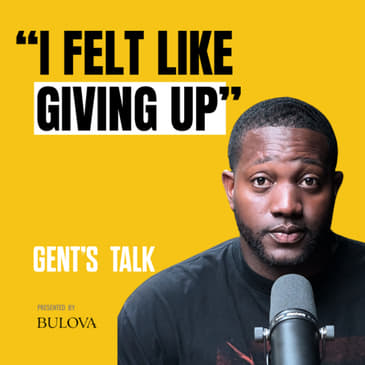
In this week's episode of Gent's Talk, presented by BULOVA, host Samir Mourani / @SamirMourani sits down with Canadian men's national team soccer player Doneil Henry who talks about the heartbreaking injury that took away his FIFA World Cup dream away. Doneil talks about how it happened, the response from his coaches and teammates, lessons learned and how he's still coping with the struggles of losing the one thing he worked his entire career for. #gentstalk Connect with us! Subscribe here ► https://www.youtube.com/@GentsTalkPodcast Website: https://gentspost.com/ Instagram: https://www.instagram.com/gentspost/ TikTok: https://www.tiktok.com/@gentstalkpod Facebook: https://www.facebook.com/gentspost/ About Gent's Talk: The Gent's Talk series, powered by Gent's Post and presented by BULOVA Canada is an episodic video podcast conversation with leading gents and rising stars across various industries. Guests include Russell Peters, James Blunt, Robin Sharma, Director X, JP Saxe, Wes Hall, Johnny Orlando, Shan Boodram, Dom Gabriel, and Nick Bateman, just to name a few. The conversations range from career, mental health, family, relationships, business, and everything in between. Gent's Talk is the first-ever video podcast to be made available for streaming on all Air Canada domestic/international flights. We aim to have a raw, unfiltered conversations about our guests' lives, how they achieved success, lessons learned along the way, and the challenges encountered. Credits: Host/Producer: Samir Mourani Creative Director and Executive Producer: Steven Branco Video & Sound Editor: Roman Lapshin A STAMINA Group Production, powered by Gent's Post.
The Gent's Talk podcast, hosted by Samir Mourani, pulls the curtain back on difficult conversations around mental health, business, relationships and the difficulties around expressing oneself, with rising and leading gents from across the globe.
New episodes every Monday! #GentsTalk
Instagram: https://instagram.com/gentstalkpod
TikTok: https://tiktok.com/gentstalkpod
YouTube: https://www.youtube.com/@GentsTalkPodcast
[00:00:00] I always lived through my moments, but that was probably one of the first times in my life
[00:00:04] where I felt like giving up, definitely.
[00:00:07] Doneil Henry is a Canadian professional football player who played for Toronto FC, the Vancouver
[00:00:12] White Caps and had stints in Europe.
[00:00:13] He is a member of the Canadian national soccer team that went to the World Cup in Qatar.
[00:00:18] What went through your mind immediately after you felt the injury happen?
[00:00:22] I knew right away that that was me finished.
[00:00:26] Everything that I've worked on since I was 17 year old signed my first contract as a professional.
[00:00:31] All that work, all that graft, all that belief, understand that I can do all of that and still
[00:00:37] not get there.
[00:00:38] That's where a lot of this pain comes from.
[00:00:42] It's still something that bothers you today.
[00:00:45] The emptiness?
[00:00:46] If you love something, if you really truly are passionate about something, it's very
[00:00:50] hard to let go.
[00:00:52] Are you proud of this version of yourself?
[00:01:21] So you're not a breakfast guy?
[00:01:23] Definitely not a breakfast guy.
[00:01:25] Yeah, I like smoothies.
[00:01:27] I like to juice in the mornings.
[00:01:28] Start really light and fresh.
[00:01:31] But soon I'm done either training or now coaching.
[00:01:35] I really do like to have a nice little meal.
[00:01:38] Well you're a coach now.
[00:01:41] You're also an owner.
[00:01:43] We're going to talk about the entrepreneurship side of things.
[00:01:46] But you have a career playing across a few teams with MLS and you've also played for the
[00:01:52] national team, for the Canadian men's soccer team.
[00:01:56] Yeah, what a riot it has been.
[00:02:00] I can say that it's been like an honor and a privilege to live out my dreams playing
[00:02:05] with the national team.
[00:02:06] Being at the biggest stage at the World Cup in Qatar and watching my team is obviously
[00:02:11] I didn't play but being able to sense what it's like to be at that level, I always dreamed
[00:02:17] of it as a boy.
[00:02:18] Usually supporting another team but finally I get to suit up for the white and red.
[00:02:23] Well it's nice to finally be able to see the Canadian squad, both men and women, controversy
[00:02:33] aside, just compete at that level because I think there's such a yearning for soccer
[00:02:38] in Canada.
[00:02:38] Yeah, it's literally like a time taking bond of when we're going to be great.
[00:02:43] It's not a matter of if but when because we have what's beautiful and special about
[00:02:49] Canada is that we're such a diverse country.
[00:02:52] Race, religion, cultures all brought into this one place, a nice big melting pot and
[00:02:58] that's what makes us great.
[00:03:01] You mix that with good coaching staff, someone who can light fires and bring everybody's
[00:03:06] perspectives, everybody's reason why and you get that in one umbrella or under one roof
[00:03:13] sorry and you put that into a team and that team can be amazing.
[00:03:17] Well we saw them do extremely well at the Copa America.
[00:03:22] They came in fourth and then we also saw the women's team just overcome a huge disadvantage
[00:03:30] in the opening round of the Olympics.
[00:03:33] Right?
[00:03:34] Wait, was it the Olympics or was it?
[00:03:36] Yeah, I don't know.
[00:03:38] Soccer at the Olympics is still a new thing for me.
[00:03:41] I wanted to call it the World Cup but you said something interesting.
[00:03:46] You said you got to watch your teammates play in Qatar.
[00:03:51] My understanding of the story is you worked your butt off, you got to that point and
[00:03:57] it didn't necessarily play out the way you wanted it to.
[00:04:00] What happened?
[00:04:06] Yeah, sometimes when you go back through the whole motion it's like having this baby and
[00:04:12] you're raising him up to be a man and you finally start seeing the things that you've
[00:04:17] prayed about, you've dreamed about all the work you put in, start to come to fruition
[00:04:22] and you're going to a World Cup and you're seven or eight months away from kicking off
[00:04:31] your first game against Belgium and in the warm-up tournament, not tournament, the warm-up
[00:04:36] camp going into the World Cup in Bahrain.
[00:04:41] Yeah, I have an unfortunate calf tear that keeps me from living.
[00:04:48] It's like you see in your dreams shatter all the, how old am I now, 31?
[00:04:53] I would have been 29 at the time I think.
[00:04:56] Yes, everything that I've worked of since I was 17 year old, trying to my first
[00:05:01] country as a professional, all that work, all that graft, all that belief, the faith.
[00:05:09] I seen it all slip with one move.
[00:05:14] That was the hardest time of my life.
[00:05:16] What went through your mind immediately after you felt the injury happen?
[00:05:21] That I'm done.
[00:05:22] You knew right away?
[00:05:25] I knew right away that was me finished.
[00:05:29] And forgive me because I don't know this but a calf injury, a calf tear you said
[00:05:33] it's not something that's easily recoverable from?
[00:05:37] It wouldn't be in time to suit up in the tournament at all, probably eight weeks.
[00:05:46] And yeah, there was at that point the significance of the injury would be too much for me to even
[00:05:51] think that I would be able to compete at a high enough level.
[00:05:56] That I knew I was putting the team at risk and I was so bought into believing in
[00:06:03] what we've built that I wouldn't hinder my own selfish desires of being at the tournament
[00:06:11] and putting the team first.
[00:06:14] How long did it take you to heal from that?
[00:06:20] Mentally I'm still recovering, but I would say talking about two and a half months, two
[00:06:26] three months.
[00:06:29] So after you found out how severe, I mean you said you knew right away but
[00:06:34] after you sort of got the formal diagnosis it's a calf tear.
[00:06:40] What happened next?
[00:06:42] What did you do next?
[00:06:44] I stayed in my room and I cried.
[00:06:50] I didn't want to be around anybody, I didn't want to talk to anybody.
[00:07:00] I just wanted to listen to music.
[00:07:02] That was my escape.
[00:07:04] Just being by myself and just kind of trying to think about how hard I worked up to that point.
[00:07:17] Knowing that I probably never get an opportunity to do it again.
[00:07:23] So you sound, you look very emotional thinking about it, talking about it.
[00:07:33] It sounds like it's still, you said two years ago, it's still something that bothers you today.
[00:07:41] Yeah, I've, to say I'm over it completely.
[00:07:48] I think about other things in my control that maybe played a factor into it happening.
[00:08:01] But the reasons are limitless.
[00:08:06] I can tell you 100 things that I could have changed or could have done but the reality is it happened and I know it's gone.
[00:08:14] But my feelings for the game and for that moment will live with me forever.
[00:08:23] That emptiness because I said, especially as a Canadian, how much we had to fight to get our respect.
[00:08:36] I really was one of the guys who really, really seen the system and where we had to really fight for our respect
[00:08:45] and to be a team that was recognized, our passport that we had ability to play.
[00:08:53] I put it all on the line for this team.
[00:08:57] And to understand that I can do all of that and still not get there.
[00:09:02] That's where a lot of this pain comes from.
[00:09:06] If I was a fly on the wall in a locker room or in your private apartment after you got the diagnosis after the injury, what would I have seen?
[00:09:21] I think the best thing about being in Qatar was that I wasn't able to have a drink because I would love to just not be able to feel at that point.
[00:09:39] I think the best thing for me was that I was around my teammates because they spoke life into me.
[00:09:51] When all I wanted to do was just stop everything, my teammates, my coaching staff, medical staff.
[00:10:01] I think the best thing that ever happened to me was being far away from home at the time where I couldn't do anything.
[00:10:11] That would make me just forget that moment.
[00:10:15] You had to live through it.
[00:10:16] Yeah.
[00:10:18] When you talk about live through it, like the resilience to...
[00:10:25] I always think...
[00:10:28] Well, I always lived through my moments.
[00:10:31] I don't try to hide or shy away from it.
[00:10:34] But that was probably one of the first times in my life where I felt like giving up.
[00:10:41] Definitely.
[00:10:44] What did your teammates say to you?
[00:10:46] You said they spoke life into you.
[00:10:48] They loved me and they know how much this meant to me.
[00:10:53] They got my back.
[00:10:58] It was just more like there's nothing you could say but just being present.
[00:11:06] You could feel that embrace and that love that kept me going through the tournament.
[00:11:17] John also said it.
[00:11:18] He's like, nothing is going to make you feel better, better brother.
[00:11:22] But your role is too big within this team for you to stop now.
[00:11:29] I need you to lead it another way that you've probably never thought you've ever had to lead in.
[00:11:35] But you're a part of bringing this team here, a massive role in bringing this team here.
[00:11:39] And when it gets tough here and it will, I'm going to need you to step in and make sure that you're affecting this group.
[00:11:49] And I didn't understand what that meant at the time.
[00:11:53] A lot of things didn't make sense to me at the time.
[00:11:58] But when I had to be strong for my teammates and my boys, I held it together.
[00:12:06] Looking back on it two years later, obviously you're still working through the emotions that came with it.
[00:12:15] The heartache, the disappointment, that feeling of being robbed of the moment that you worked so hard for.
[00:12:25] How far along are you in your journey today to finally finding some form of closure with that event?
[00:12:36] Can you even achieve it fully? Is that possible?
[00:12:43] I wouldn't say. I've had closure, but the feelings will live with me forever.
[00:12:51] My passion and my love and everything that I get comes from the game. They gave me everything.
[00:12:59] So the same thing that you love, the same thing that can drive you crazy.
[00:13:03] You know what I mean? I haven't put this much time and energy or love into anybody or anything other than the sport.
[00:13:11] And I try to channel that into making sure that as a pioneer, young boys and girls don't have to feel what I felt.
[00:13:23] They don't make some of the mistakes that I made along the way.
[00:13:27] Like what?
[00:13:32] Like self sabotage or even like in a World Cup year, you need to make sure you're playing at your club
[00:13:41] and how you do that. There's always so much hype and stuff surrounding going to a World Cup.
[00:13:49] Canadians, we don't experience that. It's not that. It's pretty foreign for a lot of us playing at such a monumental sporting event.
[00:14:03] So how I dealt with that, what kind of goes into it. I would definitely say that.
[00:14:14] I always tell my players now just play the game and not the occasion.
[00:14:18] A little bit of that but just go through the same process that kept you and made you great.
[00:14:24] Instead of day by day, instead of thinking about the goal that would be obviously the World Cup.
[00:14:33] And I do know like this does happen. I'm not the only person who has felt this or had an injury before the World Cup.
[00:14:39] And there will be players after me but I'm talking about the mental side of it and making sure that you have the right people around you
[00:14:46] and support system to obviously the injury will always heal but the mind can take a beating.
[00:14:56] I think that's an area where we gotta make sure that we can support a lot of people.
[00:15:04] Are you taking the steps to heal and protect your mind today?
[00:15:11] Yeah, I do that by my own.
[00:15:13] What does that look like?
[00:15:15] Keeping busy.
[00:15:17] Is that just distraction?
[00:15:19] Yes, it's not probably the best way to do it but I always thought keeping busy will keep me from thinking.
[00:15:32] And that's kind of the method that I've been regimented into using.
[00:15:38] You say regimented into is that something that was instilled in you, taught to you or is that something you had to develop along the way?
[00:15:46] That's what I've developed along the way.
[00:15:47] Is it a defense mechanism?
[00:15:51] It's an escape mechanism.
[00:15:55] I think...
[00:15:56] I don't dwell on the past and I don't like to think of it because when things happen honestly it's not in my control but I don't let...
[00:16:07] Those negative thoughts are creeping in my mind because I do know that the mind is powerful.
[00:16:14] Anything that stays on your mind or creeps in your mind can eventually actually come and happen.
[00:16:20] And I just thought if I was busy and always active and doing stuff that I never had to think about all these pessimistic thoughts that come to my mind.
[00:16:29] You sound like a man who's self-aware enough to know when you're blocking something out.
[00:16:40] And you know that there's something there that seems...
[00:16:43] And correct me if I'm wrong but seems unresolved still to some degree.
[00:16:47] Yeah.
[00:16:49] Knowing and you say yeah just like that like you know it right?
[00:16:52] So I'm fascinated and I'm curious what's preventing you from really opening up that wound and saying I need to work through this.
[00:17:06] I've had a lot of conversations on this podcast and I've personally gone through an experience where I had to do that.
[00:17:13] I had to open the wound and go through the pain to come out the other side where I could talk about that experience, still get emotional about it.
[00:17:22] But can talk about that experience where I don't feel like I need to block it.
[00:17:27] Right? I can coexist with the fact that this happened.
[00:17:32] What's preventing you from doing that?
[00:17:35] Uh, I don't think it's like I'm blocking it but it's just not my process of how I do things.
[00:17:43] Um, I feel like even in sport or anything results based or anything that's driven.
[00:17:57] And when we talk about my sport because I have excelled in it is that you can train fantastic for five days out of the week but you're based on one day which is the game day.
[00:18:08] A couple of hours in that one day?
[00:18:10] Yeah hour and a half of complete concentration.
[00:18:13] I've seen players who do it right or fantastic players and have bad showings and the bad spells.
[00:18:19] That's a part of the game and how you deal with it but I've come to me thinking what could have been, everything is decisions.
[00:18:30] Decisions, some effect to you in a negative way, some effect to you in a positive way.
[00:18:35] But either way, I just try to live past it.
[00:18:41] I can always think what it could have been but it wasn't my way.
[00:18:46] My purpose now is to make sure that as this game continues to grow we are able to not only make and affect players to be better but also to make sure that they have the blueprint to success.
[00:19:05] Because now I know what it looks like.
[00:19:08] I've lived through it.
[00:19:09] I've told you a hundred things that I felt like I could have done better and like I said I have self sabotage.
[00:19:16] Can you give me an example?
[00:19:17] I'll tell you self sabotage.
[00:19:21] Going in, finding out you're not playing and not going through my process as if I was a starter.
[00:19:28] What does that look like?
[00:19:33] Partying, drinking.
[00:19:37] Just being unprofessional or just being a pessimist, not thinking that I'm getting and then having the opportunity to maybe someone gets sick or something and then boom you're starting.
[00:19:50] Well you just, you fucked up because you weren't, you already counted yourself out.
[00:19:58] You know what I mean?
[00:20:00] That's probably the highest form of self sabotage that I feel like I've done before.
[00:20:08] Or just getting too comfortable as a starting piece and then not knowing that the youngster is just knocking on your door and then he takes your spot.
[00:20:17] How do you respond to that?
[00:20:20] You know what I mean?
[00:20:21] These are the type of things that footballers do.
[00:20:23] You're great at obviously training but the most important thing is game day.
[00:20:31] You add social media, you add media outlets and what they say and the stories that they're writing.
[00:20:37] It's a part of their job too.
[00:20:39] I found it from a young age that what's said, what's written, never too high, never too low because as soon as they're there to build you up, you can be, you're a game away from being your reality sometimes.
[00:20:57] You know what I mean?
[00:20:57] They're telling me exactly.
[00:21:01] Two years ago when we launched this podcast, Jonathan Osorio came on and he talked about how no matter how well he played the negativity and the criticisms from the media, from the fans ate away at him.
[00:21:15] It made it so difficult for him to feel happy about the fact that he was playing well.
[00:21:19] And when he wasn't playing well, it only made him feel worse because he already self believed that he was bad in those moments.
[00:21:27] How did you balance all of that?
[00:21:29] Talk about Jonathan Osorio first, like an amazing professional also.
[00:21:37] What you see and also you see in like Michael Bradley, like the willing drive to win every single day.
[00:21:44] So you talk about a guy who if he knows he played bad, it's really eating him up and he's really going to work even harder to make sure that that never happens again.
[00:21:58] I've deleted my social media before because of some of the things that I've heard about myself.
[00:22:02] You know what I mean? You always like to, you know everybody is like human nature.
[00:22:06] You like to hear all the good things they say about you but as soon as it's bad it eats away because you're actually starting to say am I that bad?
[00:22:14] What's for context for people listening watching who don't really understand the negative comments that athletes get?
[00:22:23] Is there a moment or something specific that sticks out to you when you talk about the negativity that resulted in you deleting your social media?
[00:22:30] I think we all know when we've done something bad or when we've done something that affected the game.
[00:22:35] So we already have that accountability of self reflection.
[00:22:41] When they write it and they agree with it and you're getting heckled on social media or you're embarrassed.
[00:22:47] You understand we go out there and we perform in front of X amount of people on a big stage.
[00:22:54] We understand the kind of pressure that comes with that.
[00:22:56] So we already have the courage to go out there and know that there's a possibility that first of all you can be embarrassed on a world stage.
[00:23:06] Or you can fail living with those two things.
[00:23:13] It's scary at points.
[00:23:16] So you try to, as I said the social media, when I deleted it was just to escape hearing that.
[00:23:22] But that was also the first time I left Canada where I thought I was mature and ready and the big man who can go over there.
[00:23:30] And I got humbled because I went to a country where you can't get away from the game.
[00:23:36] You wake up in the morning, you listen to BT Sports or Sky Sports News and it's on the radio.
[00:23:41] You go to the gas station, there's a supporter of the club and you're being reminded constantly.
[00:23:48] Football, football, football, football. You can't escape it.
[00:23:52] And that was the first time when I actually say I could understand football.
[00:23:58] I didn't play much when I was in England or in Europe.
[00:24:01] I had loads of injuries but I can tell you that when you have bad games you will know.
[00:24:08] And if you don't think you did, they will remind you.
[00:24:13] I want to go back a moment to a comment that you made.
[00:24:18] You talked about how when you were in Qatar your teammates were there to rally around you.
[00:24:26] They supported you and having that saved you from finding alternative escapes.
[00:24:34] And in the moments I can imagine having that amount of support felt as uplifting as it possibly could given the circumstances of an injury that ruined the dream.
[00:24:47] But once all that was over you had to hop on a plane and come back to reality, to life.
[00:24:55] You didn't have all your teammates around you all the time. What happened there?
[00:25:00] I didn't have my teammates, you're right. But I knew that I had a baby on the way.
[00:25:06] So that was like my saving grace or that fire and the ability to know that what do I want my son to look at me as?
[00:25:16] A guy who quit and gave up or yeah my dad was him.
[00:25:22] And I would like to think that if you ask any of my teammates about me and what I brought or whatever they would know.
[00:25:27] Like Daniels a really stand up guy. He doesn't shy away from challenges and I always take risks.
[00:25:35] It's just me, I don't see possibilities as I see them as rewards and if you do it right the risk reward I'll always take risks.
[00:25:47] But knowing that I had a son on the way that made me know that I couldn't get too low.
[00:25:57] Because I knew the type of father I wanted to be in my child's life.
[00:26:01] Your son's two?
[00:26:03] No, he's for about 14 months.
[00:26:05] 14 months okay.
[00:26:07] So obviously too young to form an opinion on the man you are today but if he could what would he say about you today?
[00:26:16] What do you think he would say? Would he be proud of this current version?
[00:26:20] Yeah 100% he knows that as a hard worker.
[00:26:24] He would know that his dad is definitely a stand up guy.
[00:26:30] But he would know that his dad loves and would try to impact everybody's life that he comes in contact with.
[00:26:45] Are you proud of this version of yourself?
[00:26:54] I'm getting there.
[00:26:55] What are you not proud of?
[00:27:22] Maybe if it was too soon to say that I should stop then.
[00:27:28] I fight with that still to this day if I stop too soon or if I should have kept going or if my time is now.
[00:27:44] That's probably the biggest battle for the last eight months.
[00:27:51] A lot of athletes struggle with that knowing when to walk away from the thing that you've built yourself to become for all those years.
[00:28:05] A lot of athletes at the highest of levels will hit retirement or call it a day and say you know what my body can't go further.
[00:28:16] I'm not mentally invested in this anymore.
[00:28:19] It doesn't take away from the love and the passion for it but just the day to day the amount of work that goes into it.
[00:28:26] And then they're faced with this identity crisis of understanding who they are.
[00:28:31] If I'm not the soccer player then what am I? Who am I?
[00:28:35] And it sounds like that's where you're at right now.
[00:28:38] More or less than the identity crisis, I know who I am.
[00:28:42] Football is giving me everything but football won't define the new.
[00:28:50] My teammates or anybody who I know outside of the game knows me as the new.
[00:28:55] The new identity is the new identity.
[00:28:59] What I did struggle with is how do I know I'm done?
[00:29:05] So it's me asking my mentors or people who I confide in.
[00:29:10] How did you know you were done? What did it feel like? What did it look like? How was your day to day process?
[00:29:17] And when I figured that some of those things aligned with what I'm feeling and going through right now,
[00:29:23] I knew that it might be my time to start thinking about where I take my next steps of life.
[00:29:35] I'm going to ask you about the next steps but I'm curious to know because there's going to be people listening and watching who are at that moment in their lives.
[00:29:45] And it might be sports related, it might be just a project they're working on, a career whatever the case may be.
[00:29:51] Where they're trying to decide how do I know if it's my time to walk away from this?
[00:29:56] What were some of those things that your mentors shared with you?
[00:30:00] Because having a mentor is a luxury and it's such a blessing because you have someone who's gone through it who can share that wisdom and that knowledge.
[00:30:09] And there's going to be people who don't have that ability to lean into someone and they're kind of figuring it out as they go.
[00:30:14] So let's help those people out for a moment.
[00:30:17] How do you know? What should you look for?
[00:30:24] I never needed an alarm clock to get ready for training.
[00:30:29] Growing up I was always ready to go.
[00:30:34] Waking up and not having the desire, my patience to continue to learn.
[00:30:45] I felt like my role changed from player to how I can be a good teammate.
[00:30:57] I liked my role as player and just being myself alone would be the big brother or the guy who could keep teammates and players and keep them accountable and keep everybody in line.
[00:31:10] That leadership qualities of almost like when you talk about energy in football and it's not training killers.
[00:31:23] It's like having guys to be able to have the energy to run through a wall for you and everybody's kind of visions aligned to go out there and because football is war.
[00:31:36] Any way you look at it international football is war.
[00:31:38] Club level is a different beast but I can't see international football as anything other than war.
[00:31:48] It was more along the lines of just the process of doing the things that make players great.
[00:31:58] What makes a player great?
[00:32:01] I would say discipline.
[00:32:04] First I think the most important thing is discipline.
[00:32:07] Discipline mentality and then work rate.
[00:32:12] Things that are in your control.
[00:32:16] So the mentality is always in your control, your discipline is in your control and your work rate is in your control.
[00:32:22] I noticed talent is not in there.
[00:32:24] No, no, hell no.
[00:32:27] Talent didn't give me my career.
[00:32:29] Work rate and drive and desire gave me my career.
[00:32:32] I would never say that.
[00:32:33] I would never sit up here and say I was the best player ever but I was tough as nails.
[00:32:39] I lived and thrived off of people.
[00:32:48] Counting me out, I've always been count out.
[00:32:50] I've always been cut and that drive to prove people wrong was the leading factor in me never quitting and stopping.
[00:33:04] I have no football influence in my family.
[00:33:07] I didn't have anybody to look up in a sense of sports.
[00:33:11] It was at a time where football was the cheapest sport to sign up for.
[00:33:16] Just registration, 100 bucks, you get a jersey and you're guaranteed like 14 house league games in the summer.
[00:33:22] So my mom just wanted me out of the house.
[00:33:25] But it also speaks to why soccer is such a booming sport internationally.
[00:33:30] Why is it now a booming sport?
[00:33:32] It should have been always like this.
[00:33:37] Whereas we just have our professional league that's maybe five or six years of existence in the CPL.
[00:33:44] Still has loads to do but I think that's probably one of the best things that happened in Canadian football.
[00:33:50] The CPL was the Canadian Premier League.
[00:33:51] That's correct.
[00:33:52] One of the best things that happened so far in Canada.
[00:33:57] Giving players the opportunity to play.
[00:34:00] I'm going to tell you right now, between the ages of 17 and 21-22, there was an opportunity for players beyond like university or college.
[00:34:11] If you're not going professional.
[00:34:13] Those are some formidable years.
[00:34:15] Absolutely.
[00:34:16] But also even if you were a young professional, you wouldn't be playing.
[00:34:20] So you're also finding out how hard it is to break into the first team and those being a training player.
[00:34:27] And some of my best friends who we did this professional journey together were done after their first contract because they weren't able to break some of these hurdles that now the CPL allows players to kind of grow.
[00:34:45] They're younger, give them more professional experience.
[00:34:47] Whereas we just get professional training but not playing games.
[00:34:50] Games are important for development and for everything to be fair.
[00:34:55] That's why the league is so important.
[00:34:57] So what advice would you give to... I'm going to ask you a series of advice questions.
[00:35:01] What advice would you give... let's start with the big one.
[00:35:05] What advice would you give to a young athlete or an athlete of any age for that matter who's just encountered or just suffered through an injury that's hurt their chances of making the first team, playing in that tournament that they wanted to compete at, whether professionally or at the amateur level.
[00:35:27] Or if this is just part of your weekend rec league but it means so much to you.
[00:35:31] And you're really struggling mentally and emotionally because of something your body has gone through.
[00:35:38] You did all the things you could have done and it didn't work.
[00:35:42] What advice would you give them?
[00:35:44] As long as it's a young athlete I think you have to understand that you are going to recover.
[00:35:47] I think you got to take care of your mind and your mental.
[00:35:50] Having a good group of people around you also will allow that time to kind of pass.
[00:35:57] I think if you treat yourself with kindness and you keep an open outlook on life and in the game that you love, at the end of the day if you are passionate and you love something, you never can quit on it.
[00:36:13] You never can quit on it.
[00:36:15] So it's very, very difficult.
[00:36:18] You can quit on it but it's very, very difficult because like I said if you love something, if you really truly are passionate about something, it's very hard to let go.
[00:36:29] But for young athletes more on the lines of professionals wanting to be professionals and stuff, I would definitely say that you got to just get up and go again.
[00:36:44] There's no time to really dwell on what's going on or how it's more about keeping yourself mentally engaged in it because there's so much that you can continue to give to the game.
[00:36:58] And for the guys like myself, there's so much you can give after the game.
[00:37:03] And that's just all through my decisions are how my cards were dealt and making sure that we can maneuver and help them never to have to feel that.
[00:37:22] What advice would you give Donil from two years ago?
[00:37:30] He's a resilient guy. I'll tell you that.
[00:37:37] The advice that I would give myself even two years doesn't seem like a long time but just be kind to yourself.
[00:37:50] You always figure it out and I know I'm going to figure it out.
[00:37:59] Just while I'm going through it, just cheat myself kind of give myself some grace.
[00:38:08] And sometimes I have to remind myself or I watch old videos and just reflect on all the good times.
[00:38:16] But also knowing like being the first, not being a statistic, already beating the odds, having a 13-14 year career.
[00:38:31] I've already lived my dreams.
[00:38:34] I think the cherry on top of the cake is...
[00:38:37] I went to a World Cup obviously didn't play and that's the bittersweet part about it for me.
[00:38:42] But any day I say I'm done, which is definitely soon.
[00:38:48] But the official day I say I'm done, I'm going to really be proud of myself because of my circumstances.
[00:38:56] I shouldn't have been a professional.
[00:38:59] But this is all...
[00:39:02] Just... you have to understand.
[00:39:05] Before my time was the Julian de Guzman, the T-Buzz and the De Rosario.
[00:39:12] They had nothing, absolutely nothing.
[00:39:16] They had to go away and go build a resume in Europe, Scandinavia, etc.
[00:39:25] Before they could come around and play in Champions League and play against Real Madrid and De Ros, able to play in North America and MLS.
[00:39:37] Before... that was before my time.
[00:39:39] My time was the first to have these professional academies.
[00:39:45] And I went to the Academy route in North America.
[00:39:48] So that was my lifeline at 16-17 where I was saying, if I don't go to school, I'm done.
[00:39:57] This is when the Princeton and the Ivy League schools are coming in and...
[00:40:04] I can't remember all these D1 schools in the US.
[00:40:07] And I'm thinking, do I have to go to school? I just want to be a professional.
[00:40:13] Me and my mom, I would never forget me telling my mom.
[00:40:17] I don't know why you're getting so happy about seeing these Ivy League schools.
[00:40:22] I'm not going. And her not wanting to be falling out and not talking for a day or two.
[00:40:30] The academies, literally... I remember getting cut on maybe the Friday and then by Monday.
[00:40:38] I'm in training with the TFC Academy.
[00:40:41] And the only reason, and God bless Stuart Neely, that was my academy coach.
[00:40:47] He let the fire in me to know that.
[00:40:50] And the only thing that made me go to TFC Academy was knowing that I was going to play in two games against the provincial team that just caught me.
[00:40:58] We were playing in a two game series at 16 and we would be playing the provincial team.
[00:41:03] That was my get back saying, you caught me but...
[00:41:08] I'm the best center back in this age group or this talent pool.
[00:41:12] And we beat the provincial team. So that was like me saying, you're wrong.
[00:41:17] That's the kind of hunger that I kind of survived off back in the day.
[00:41:22] So how have you turned all of this experience into fuel today?
[00:41:29] The Rovers. Simcoe County Rovers.
[00:41:34] Probably my prize investment because it means so much to me because it's football.
[00:41:40] And it's...
[00:41:41] This is a semi-professional team on the men's and women's side.
[00:41:47] And it's anywhere from, to be fair, if you're 16, 17 doesn't matter.
[00:41:52] We run it like a professional organization.
[00:41:54] Ownership group that entails Jeanine Becky, myself, Kyle Lahren, Atiba Hutchinson, founded by Julian de Gooseman, Peter Racco.
[00:42:05] So an ownership group that knows where Canada, or the game in Canada has filled us and all of our experiences good and bad, whatever it looked like.
[00:42:19] But we knew what would make a proper professional club and we had the opportunity to do it our way.
[00:42:25] All of our visions aligned.
[00:42:27] And when we were able and founded the Rovers, it was all to make sure that we give a pathway to young professionals.
[00:42:36] Or aspiring professionals.
[00:42:38] Give them all the tools to coach and the access to facilities, top level stuff.
[00:42:44] Then obviously a semi-professional budget to get to the next level.
[00:42:49] We've exceeded all of that.
[00:42:51] And now where myself and probably my most difficult part of my life in the last two years is...
[00:43:00] I now have the opportunity to find out where my passion still lies and is still with football.
[00:43:08] And now I have the opportunity to help mentor, coach and affect the youth.
[00:43:16] And let them have another tool or use me as a tool to help them be successful.
[00:43:24] That's my new passion.
[00:43:26] You enjoy it?
[00:43:27] I love it.
[00:43:29] I never wanted to encounter someone like me.
[00:43:32] I'm not...
[00:43:34] You're a fair share of what Daniel was like.
[00:43:37] Some good, some bad but I never wanted to deal with someone like me on one of my bad days.
[00:43:44] What were you like on your bad day?
[00:43:52] I can be very intense.
[00:43:56] I would say I'm an alpha.
[00:43:59] And if I had to be physical I could...
[00:44:01] I just know what a change is like.
[00:44:03] It's a bunch of characters and personalities.
[00:44:05] I don't pick on people but I also don't take shit from nobody.
[00:44:13] And yeah, I think I have the qualities to lead.
[00:44:18] And anything that I do buy into I put 110% into.
[00:44:22] And it has to make sense to me.
[00:44:24] And if it doesn't then you need to make it make sense to me.
[00:44:26] And how this vision is going to align with making this team or this group or us a better people.
[00:44:35] So what's the secret to speaking to someone like that?
[00:44:42] Don't talk, show me.
[00:44:46] Action always be loud in the words but...
[00:44:52] You know why I love John Herndon the most?
[00:44:54] Of all my coaches.
[00:44:58] This is a man who was identified as a women's coach to go to the men's team.
[00:45:05] But what John Herndon is...
[00:45:08] I've never seen anybody work harder than him.
[00:45:11] Nobody.
[00:45:12] He's outworked every single person that I've seen when it comes to football.
[00:45:17] Late nights, early mornings, commitment to his players.
[00:45:21] Speaking truthfully to his players.
[00:45:22] And when you know a man's background and where they come from and what keeps him ticking.
[00:45:31] It's the hell of a thing because you will run through a wall for that person.
[00:45:35] Because you connect.
[00:45:39] And in the few times that John ever fell out.
[00:45:43] We never, we'll never for a long time or anything because we always were able to speak to each other face to face.
[00:45:49] I like clarity.
[00:45:53] From there then I will pick how I deal with it.
[00:45:56] Which is usually, maybe I might be mad for a night but I wake up the next day and I'm the hell of a teammate.
[00:46:03] Whatever they needed me to be, I could be that person because we always had a rule that...
[00:46:10] When it came to selection and stuff, whatever the decision was or whatever you found out your mission was.
[00:46:17] You'd be that mad that night but when you wake up the next morning, you need to be back on board.
[00:46:22] And that was our brotherhood, that was what we called high level leadership.
[00:46:27] We're all humans, we have feelings, we have emotions, we can offer...
[00:46:30] We should feel what we want to feel but when you're with a group right or wrong, you always do what's best for the team.
[00:46:42] I was a big believer in that because not only did I see the results in games,
[00:46:48] but I knew how much went into the process that made us great.
[00:46:52] That was a two hour phone call that I had and then I found out he did this to about 70 players who were in the player pool.
[00:46:59] Back before we did that like four year cycle for the World Cup and I'm thinking,
[00:47:06] he wants to know the root of the problem until you find the root of each problem or why we weren't great.
[00:47:12] Nothing will ever change.
[00:47:14] And from there we built this together and ground up.
[00:47:18] And that's why I have the highest form of respect because he's able to take broken projects, broken people, broken teams
[00:47:27] and completely 180 degree change programs and turn them into winning clubs.
[00:47:38] I had a couple of conversations with John and we talked about him coming on this podcast.
[00:47:46] He not too long ago in an interview opened up about his challenges with mental health.
[00:47:55] What would you say to him on that front?
[00:47:59] You've been very honest with me, with the audience that'll listen to this.
[00:48:05] When we did that KMH engage event, you were very forthcoming about the challenges.
[00:48:11] You had just recently lost a dear friend.
[00:48:13] What would you say to John who's openly talked about his challenges with mental health?
[00:48:23] He knows that he has a brother in me and everybody that he encountered or worked with.
[00:48:30] But when guys like John, their minds never stop moving like that.
[00:48:37] He's always thinking about how can I be a better him? How can he be a better coach?
[00:48:41] How can he make his team better?
[00:48:43] So you don't really, guys like himself, he doesn't really make time for himself.
[00:48:50] He's always thinking about how he's going to affect his team, his world, whatever.
[00:48:57] You put yourself last.
[00:48:59] For him, I would say, hopefully in the off season he takes a second to recharge and rewind.
[00:49:07] I think we all need mental breaks where we can decompress and see the landscape and what we've done.
[00:49:15] Enjoy that for a bit and then get back to work.
[00:49:18] I think he'll definitely need one come the end of the year.
[00:49:23] When does the end of the season, when's the off season?
[00:49:26] I believe November, the MLS season finishes.
[00:49:30] I think the finals will be late November.
[00:49:34] Okay, so coming out.
[00:49:36] Yeah, next few months.
[00:49:39] Donil, thank you so much brother.
[00:49:41] Anytime.
[00:49:42] I'm so glad that we were able to have this conversation.
[00:49:46] So I just alluded to it a little bit earlier.
[00:49:48] We participated together in a Cam H Engage event which was a really cool charity pickleball tournament that they put together.
[00:49:57] And I think you and I remarked about how we didn't realize how big pickleball was.
[00:50:01] But after that mini conversation where you talked about overcoming the hurdles and the challenges of reaching the pinnacle of your dreams and then watch them slip away.
[00:50:17] I knew immediately that I wanted to have this conversation with you because I really wanted to understand how a person in your position overcomes that challenge.
[00:50:26] And how you work through that.
[00:50:29] And I think the main message I've taken away from this is that it's an ongoing process.
[00:50:37] You may slowly heal from the emotional pain that comes with it but it'll never completely go away because it still took something from you.
[00:50:49] Absolutely.
[00:50:49] And you have to learn to coexist with it where it doesn't affect your day-to-day and you're able to find enjoyment in life's pleasures.
[00:51:01] You're a father congratulations.
[00:51:03] Thank you.
[00:51:04] You have a team that you're an owner in congratulations.
[00:51:08] Play our final or cup final Friday.
[00:51:11] Good luck.
[00:51:12] Looking forward to that.
[00:51:17] Amazing stuff overall honestly.
[00:51:19] And I would say listen we're all going to feel what we feel and that's what makes us human and that's why all of us makes us individuals.
[00:51:29] But the key message is I never will give up.
[00:51:33] I will never ever give up and I will feel what I have to feel and I will go through that process.
[00:51:40] But like I said the two things that you have control over your workplace your work your work rate and your mentality.
[00:51:49] I think obviously there's a big big key part in discipline but listen these things do happen in life.
[00:51:58] Injuries death a bunch of things can happen but you feel what you feel and you carry on.
[00:52:08] I'm not saying that my process is the right way.
[00:52:12] And yes talking is therapy 100 percent.
[00:52:16] But just got to make sure you're doing it and you're confiding in the right people.
[00:52:22] 100 percent I would say.
[00:52:24] Thank you so much.
[00:52:25] We gotta do this again.
[00:52:27] Hey man I'm here I have a little bit more free time so we'll make it work.
[00:52:31] I appreciate you thank you so much for listening everybody.