
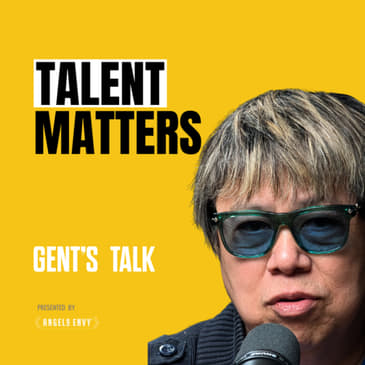
In this week's episode of Gent's Talk, presented by Angel's Envy, host Samir Mourani sits down with Alvin Leung. The award winning chef affectionately known as the Demon Chef is a Michelin Starred chef, entrepreneur and restauranteur. Alvin shares how he acquired the Michelin Star, balancing family and why he doesn't care about the critics. #gentstalk Connect with us! Subscribe here ► https://www.youtube.com/@GentsTalkPodcast Website: https://gentspost.com/ Instagram: https://www.instagram.com/gentspost/ TikTok: https://www.tiktok.com/@gentstalkpod Facebook: https://www.facebook.com/gentspost/ About Gent's Talk: The Gent's Talk series, powered by Gent's Post, is an episodic video podcast conversation with leading gents and rising stars across various industries. Guests include Russell Peters, James Blunt, Robin Sharma, Director X, JP Saxe, Wes Hall, Johnny Orlando, Shan Boodram, Dom Gabriel, and Nick Bateman, just to name a few. The conversations range from career, mental health, family, relationships, business, and everything in between. Gent's Talk is the first-ever video podcast to be made available for streaming on all Air Canada domestic/international flights. We aim to have a raw, unfiltered conversations about our guests' lives, how they achieved success, lessons learned along the way, and the challenges encountered. Credits: Host/Producer: Samir Mourani Creative Director and Executive Producer: Steven Branco Video & Sound Editor: Roman Lapshin A STAMINA Group Production, powered by Gent's Post.
The Gent's Talk podcast, hosted by Samir Mourani, pulls the curtain back on difficult conversations around mental health, business, relationships and the difficulties around expressing oneself, with rising and leading gents from across the globe.
New episodes every Monday! #GentsTalk
Instagram: https://instagram.com/gentstalkpod
TikTok: https://tiktok.com/gentstalkpod
YouTube: https://www.youtube.com/@GentsTalkPodcast
[00:00:00] The Demon Chef
[00:00:01] That's what they were calling me.
[00:00:03] A lot of people think I am arrogant, and I don't mind.
[00:00:06] I'm always successful in life, you know why?
[00:00:08] Because I can achieve anything.
[00:00:12] Alvin Leung is a self-taught, three Michelin-starred chef, renowned for his innovative approach to Asian cuisine.
[00:00:17] The television personality, restaurateur, and entrepreneur is famously known for bringing avant-garde Asian cuisine to the global fine dining stage.
[00:00:27] Every chef's dream is to get three stars. It's the Oscar.
[00:00:30] How did you feel about losing that one star?
[00:00:34] The day I lost it, I was in Singapore, and when they announced it, my late wife wrote,
[00:00:40] You're still three stars in my books.
[00:00:42] And at the end of the day, I don't care how many stars your restaurant have.
[00:00:45] Being at the top means you can never stay there.
[00:00:50] What was the biggest mistake you made in your career?
[00:01:08] Alvin Leung, welcome to Gents Talk.
[00:01:11] I'm excited to have this conversation with you.
[00:01:13] I don't know. My name and Gents usually don't make the same room, okay?
[00:01:19] Well, I mean, the only thing I know about Gents is that's where you go and stand in front of something and release water.
[00:01:26] But, so we're talking about, this is toilet. It's going to be dirty, right?
[00:01:33] Gents Talk.
[00:01:35] Maybe. You know what? We'll see where it goes.
[00:01:37] No, but I'm really excited to have this conversation.
[00:01:39] I have, you know, in my many years have seen you on television.
[00:01:44] I think you're my mother's favorite television personality, by the way.
[00:01:48] That's what they say. I'll sign the book.
[00:01:51] For her.
[00:01:52] Yeah, yeah. I'm sure she'll be grateful to you.
[00:01:55] But this is an exciting conversation.
[00:01:57] This doesn't happen without our friends at Angel's Envy for helping to have these amazing conversations with people like yourself.
[00:02:03] And I mentioned it right off the top.
[00:02:06] I think the very first thing I want to know is, how did Alvin become the demon chef?
[00:02:11] Well, I can tell you, it's not by accident.
[00:02:15] Because, you know, in Hong Kong, they love to call, you know, if you're very good at cooking, let's say, they'll call you the god of the kitchen.
[00:02:23] And, you know, if you're good at gambling, they call you the god of the gambling or whatever.
[00:02:27] You see, the thing is, that's what they were calling me, you know, the god of the kitchen.
[00:02:31] And to be quite honest, I was not comfortable with that, okay?
[00:02:36] Being a believer of a superior being and, you know, a Christian, it is blasphemous to call yourself god.
[00:02:42] But if you call yourself a demon, that's not.
[00:02:46] That's not.
[00:02:47] And some people think, you know, it registers somebody sinister and bad.
[00:02:55] But, you know, to be quite honest, I am all that.
[00:02:57] But, you know, demon in Greek means a playful spirit.
[00:03:05] And that's what I like to be.
[00:03:07] I like to be playful.
[00:03:08] And, you know, the spirit I drink.
[00:03:12] Well, you certainly have the personality for it.
[00:03:15] And one of the things that stood out to me was that you started off your career not in the kitchen.
[00:03:21] You originally went down the route of becoming an engineer.
[00:03:26] So, how many years were you an engineer for?
[00:03:28] Let's start there.
[00:03:29] Oh, first of all, I'm very glad you did your research.
[00:03:33] I was an engineer probably for around 30 years.
[00:03:39] 30 years.
[00:03:39] I didn't start cooking professionally until I was 40.
[00:03:44] Okay.
[00:03:44] That's 2003 when I had the first restaurant, you know, Bow Innovation.
[00:03:48] Yeah.
[00:03:50] Everything came, I would say, I wouldn't say it's an accident because nothing in life comes as an accident.
[00:03:55] I think, you know, it was just the right place.
[00:03:58] I was at the right place at the right time with the right talent, with the right, you know, with the right equipment.
[00:04:04] And the perfect storm came.
[00:04:06] And then, you know, I am what I am today.
[00:04:08] Yeah.
[00:04:09] I enjoy cooking.
[00:04:10] I like creating.
[00:04:11] I'm an exhibitionist.
[00:04:12] I am different.
[00:04:13] And I think all that played into my persona.
[00:04:16] What was it about cooking?
[00:04:18] Or maybe, let me rephrase that question.
[00:04:21] What was the moment that you said, you know what, I'm no longer an engineer.
[00:04:25] I'm now a chef.
[00:04:26] What triggered that transition?
[00:04:28] When somebody offered to pay me.
[00:04:32] I mean.
[00:04:32] It's always a good first step.
[00:04:34] I mean, look, when you can sell your service professionally, it means something.
[00:04:40] And I think, you know, when that moment came and I would say, wow, they actually will pay for it.
[00:04:45] Then I say, well, maybe it's time to do a conversion.
[00:04:49] Not a complete change, but to convert.
[00:04:51] Which means a gradual change.
[00:04:53] I didn't become a chef overnight.
[00:04:56] In fact, it took a long time.
[00:04:58] And I may not even be a chef.
[00:05:00] Okay.
[00:05:01] As even today, after, you know, some 20 odd years.
[00:05:04] Okay.
[00:05:04] Because, you know, I never went to culinary school.
[00:05:08] Never worked in a restaurant as a chef or as a cook.
[00:05:12] And I just, it was basically something I enjoyed doing as a hobby.
[00:05:16] When's the first time I discovered I need to cook?
[00:05:18] When I first ate my mother's food.
[00:05:19] It was so bad, you better cook it for yourself.
[00:05:21] Or you ain't going to be skinny all your life like you.
[00:05:24] Which might be not a bad idea, you know.
[00:05:28] So, I think everything happens.
[00:05:31] There's no such a thing.
[00:05:32] I don't believe in accidents in life.
[00:05:34] Okay.
[00:05:34] I don't believe in accidents.
[00:05:35] I think it's something that a spontaneous occasion or spontaneous event can be converted into something that is worthwhile.
[00:05:44] Wow.
[00:05:46] So, the first time you were offered to be paid for your service and you walked onto the, you know, I wanted to call it a set.
[00:05:54] But you basically walked into the kitchen.
[00:05:56] Mm-hmm.
[00:05:57] Do you remember what you felt that first moment when you were like, okay, this is, I am now a professional?
[00:06:03] No.
[00:06:03] No.
[00:06:03] I forgot.
[00:06:04] I don't think these are things that are worth remembering in life.
[00:06:08] People have asked me.
[00:06:10] Because I don't think something like that inspires me.
[00:06:14] So, what inspires you?
[00:06:15] A lot of things, but not that.
[00:06:17] I think everything inspires me, you know.
[00:06:19] Not just, you know, in my menus and all that, you know.
[00:06:24] Energy, any energy, any forms of creativity, any forms of anything inspires me.
[00:06:29] So, it doesn't have to be an ingredient.
[00:06:30] It doesn't have to be a person.
[00:06:32] Okay.
[00:06:33] And if a person inspires me, it may not be the way he cooks.
[00:06:36] Maybe he's hardworking.
[00:06:37] Maybe he's rich.
[00:06:38] That inspires me to be hardworking, to get rich.
[00:06:41] You know, a lot of things, you know, people say, you know, I get inspired by a lot of things.
[00:06:45] So, you know, my menus have been based on Hong Kong.
[00:06:48] Countries have been based on person, like Bruce Lee.
[00:06:51] It has been based on events.
[00:06:54] So, the thing is, I can grab everything out of the air and make something out of it.
[00:07:00] This is something that I discovered I was good at.
[00:07:03] And then I applied it to cooking.
[00:07:06] I mean, I could have applied it in a lot of things.
[00:07:08] But, you know, obviously cooking, you know, was easier for me.
[00:07:11] Because, you know, I think I have some, I have the talent.
[00:07:14] I have the equipment.
[00:07:15] Okay.
[00:07:16] I, you know, I got the stomach.
[00:07:17] I got the, I have the taste memory.
[00:07:20] Okay.
[00:07:21] I mean, if I applied that to ice hockey, it might have worked.
[00:07:23] But I was, I'm a bad skater.
[00:07:26] So, I think everything in life is possible.
[00:07:31] Or if you know how to use it and apply it.
[00:07:36] That includes your talent, your hardworking abilities, and your passion, which is way overrated sometimes.
[00:07:48] Okay.
[00:07:49] Passion is overrated.
[00:07:50] Oh, way overrated.
[00:07:51] Why?
[00:07:51] And your luck.
[00:07:52] Oh, why is passion overrated?
[00:07:53] Because at the end of the day, okay, if you have no talent, if you have no luck, what's passion going to bring you?
[00:07:59] A lot of dreams.
[00:08:00] But dreams are not reality.
[00:08:03] But talent, is that the key?
[00:08:06] Talent's important.
[00:08:07] It wouldn't be the key.
[00:08:08] There's five keys.
[00:08:10] What are the five keys?
[00:08:11] The five keys, I think, number one, not in order of importance, but I think talent's very important.
[00:08:16] Passion is very, is important.
[00:08:18] Passion is useful.
[00:08:19] I wouldn't say it's important, but it's useful.
[00:08:21] Hard work, luck, and your connections.
[00:08:26] I feel like hard work is pretty up there.
[00:08:29] Not definitely not for me.
[00:08:30] I'm a lazy, I'm lazy as hell, okay?
[00:08:33] It's pretty up to, everybody can be hardworking, okay?
[00:08:37] Your horse, your dog, your, oh, not your dog, okay?
[00:08:40] He's probably, you know, sitting all day licking his ass.
[00:08:42] But I mean, I mean, you're, you're, you're, you know, a lot of things can, a lot of people can be very, very hardworking.
[00:08:48] You know what I say to people that that works very hard?
[00:08:51] I say, maybe you're just not working efficient, you know, or maybe, you know, you just, you just, you know, I mean, look, it's not how much effort you put into it.
[00:09:02] It's how much you produce out of what little effort that you have to put in.
[00:09:07] That's, you know, in, in, in, in the law of nature is, it's the lowest form, you want to go to the lowest form of energy.
[00:09:13] So, you know, hard work is definitely, for me, not the logical direction, but, you know, for other people who works hard, hire them.
[00:09:22] So then what would be if you were to, to rank those in an order?
[00:09:27] No, I don't really want to rank them in order because it doesn't apply the same to everybody, okay?
[00:09:32] But I would say, you know, very important, you have to have talent.
[00:09:36] Now, everybody has some sort of talent, but wherever that talent's useful or not, that's, that's another thing.
[00:09:42] But, you know, and then you have to, and then you have to realize what your talent is.
[00:09:49] And then from that, you got to find something useful for that talent.
[00:09:53] And then from that, you got to find something that's unique because being unique makes it easier for you to be successful, right?
[00:10:01] If you're doing what everybody else is doing, it's going to be a harder path.
[00:10:05] And I think hard work, as I said, you know, you can always buy it, hire somebody, okay?
[00:10:12] I mean, you don't have to plow the fields.
[00:10:14] You can hire somebody to do it.
[00:10:17] Connection, it's also very good because, you know, you're well connected.
[00:10:21] That's how we run this, you know, life is like that.
[00:10:24] Never fair.
[00:10:25] It's about who you know.
[00:10:25] It's never fair.
[00:10:26] Sometimes it's about who you know.
[00:10:27] And I can tell you luck is also very, very important.
[00:10:31] Even though this is something you cannot control.
[00:10:33] You can't control luck.
[00:10:34] But a lot of times, you know, things happen because you got lucky.
[00:10:38] But also you have to be in a position where you're prepared to seize the opportunity when luck sends you something.
[00:10:46] You took the words right out of my mouth, okay?
[00:10:50] Is you got to have the bullets when you're ready to shoot.
[00:10:54] Yeah.
[00:10:54] Because if you don't have the bullets, you don't.
[00:10:56] So this is why I say don't put everything in one basket because, you know, you don't want to risk it all.
[00:11:03] And I'm not one who likes to risk it all.
[00:11:06] Can we talk about the…
[00:11:08] Unless it's your money.
[00:11:11] You'll risk someone else's money.
[00:11:12] Okay.
[00:11:14] Can we talk about that moment where after you started to pursue culinary, like the food industry a lot more seriously, it became sort of your profession.
[00:11:23] You've done the full conversion as you called it.
[00:11:26] And then you went and opened up a restaurant.
[00:11:29] And that restaurant became one of the, if I'm not mistaken, one of the first two Michelin star restaurants in Hong Kong.
[00:11:38] Do I have that correctly?
[00:11:39] Well, I started, I opened a restaurant and I got two stars right away.
[00:11:45] Was that the goal?
[00:11:46] No.
[00:11:48] The goal was to get three.
[00:11:50] The goal was to get three, okay?
[00:11:51] And then when you get three, the goal is to keep it or go for something more.
[00:11:55] Another three, okay?
[00:11:56] There's never a goal for me because a goal has a limit, okay?
[00:12:02] And once you reach it, you wouldn't know what to do or you finish.
[00:12:05] You know what I mean?
[00:12:06] So, I think the goal should be something that you can never reach, okay?
[00:12:12] Because you want something in life.
[00:12:14] You want to do something.
[00:12:15] You know, you need something to go towards in life, okay?
[00:12:18] So, if you have a particular point where you say, this is, you know, I'm going to stop here, then what are you going to do afterwards?
[00:12:27] You know, my friend, you know, Humberto Bama, his three-missive star chef, you know what he said to me?
[00:12:31] Once you get three stars, the only way you can go is down, okay?
[00:12:36] And that's not what you want to happen, right?
[00:12:39] That's not your goal.
[00:12:40] Your goal is basically you have to move it all the time.
[00:12:43] You got to move it further, okay?
[00:12:45] Or move it so far you can't reach it or every time you reach it, move it further.
[00:12:48] So, what's your current unachievable goal?
[00:12:54] I think she's dead.
[00:13:00] You know, no goal is unachievable.
[00:13:05] I'm just saying move it ahead so you're chasing it.
[00:13:09] If it's unachievable, don't chase it.
[00:13:11] Why are you chasing an unachievable goal?
[00:13:14] So, the thing about an engineer, difference between an engineer to an artist to an architect, whatever, we go for things that we can achieve, okay?
[00:13:25] Now, it may be quite close.
[00:13:28] It may be quite far.
[00:13:30] We may not have the technology to do it now, which is something you don't say anymore because technology is so advanced and so far ahead of what our goal is, okay?
[00:13:40] In the old days, we used to wait for technologies to reach our goal.
[00:13:45] Right now, there's so much technology, we're looking for goals, okay?
[00:13:50] Okay?
[00:13:51] So that our technology, you know, we're looking for goals for our technologies.
[00:13:55] Basically, we go in the opposite way.
[00:13:57] We have so much technology, we're looking for things to do with it rather than, you know, waiting for technology to do things, all right?
[00:14:03] So, we are in a very different world, you know?
[00:14:05] I'm a dinosaur.
[00:14:06] I was born in 1961.
[00:14:08] Do the calculation, okay?
[00:14:10] I actually saw, I actually, you know, when we immigrated to Canada in 65, okay, early 65, we actually saw the Toronto Maple Leaf win their last Stanley Cup, all right?
[00:14:23] It's been a long time since.
[00:14:25] It's been a long wait, okay?
[00:14:27] And, you know, if you're asking the question, what is an unachievable goal?
[00:14:32] Well, I mean, you know, seeing them win a Stanley Cup, that can be, you know, that's almost very close.
[00:14:38] That's almost close, you know?
[00:14:40] Being alive to watch the Leafs, even the finals.
[00:14:43] Make it to the finals, yeah.
[00:14:44] Make it to the finals, okay?
[00:14:46] Or the third round.
[00:14:46] That's my unachievable goal, okay?
[00:14:49] My seemingly unachievable goal.
[00:14:51] Who knows, okay?
[00:14:52] Maybe, you know, there'll be only be one team left.
[00:14:55] It's automatically awarded to them.
[00:14:57] And they'll still win it.
[00:15:00] Okay, so then what is the goal that you've pushed down the road?
[00:15:05] I think the goal I push down the road is, you know, I want to get as much as I can in life.
[00:15:14] I want to experience new things, okay?
[00:15:16] So I've done open, you know, I've had three mission stars.
[00:15:19] I had, okay?
[00:15:20] I lost it.
[00:15:21] I'm only a two star now, but I've done it.
[00:15:23] I have, you know, there was one time where I had a three mission star restaurant, okay?
[00:15:27] And I'm still a three mission star chef because that follows me forever.
[00:15:33] I've done televisions, you know, MasterChef.
[00:15:38] The new one's coming up.
[00:15:39] It's called The Maverick Chef, or The Maverick Academy.
[00:15:41] That's going to be in Netflix in Asia November 8th.
[00:15:44] So look out for it.
[00:15:47] I have, you know, I'm being interviewed by this, you know, by this supreme, this great channel.
[00:15:56] So, you know, that's a tremendous achievement for me.
[00:16:02] I would say, okay, that I just want to keep on, okay?
[00:16:08] I think, you know, I've done it all.
[00:16:09] I've done it all I want.
[00:16:11] There may be something more that I want, but I don't see it right now.
[00:16:14] Like, you know, like, do I need another three mission star restaurant?
[00:16:18] Do I need another TV show, you know?
[00:16:21] Nowadays, I'll be honest with you.
[00:16:22] I just want to go.
[00:16:23] I travel.
[00:16:24] I fly 80 flights a year.
[00:16:26] That's a lot.
[00:16:27] That's a lot of flights.
[00:16:27] And, you know, I have restaurants in the Middle East.
[00:16:29] I have restaurants in Singapore, Asia, China, you know, North America.
[00:16:33] So right now, my only goal is try to, you know, go home.
[00:16:37] So people ask me, where do you go on vacation?
[00:16:39] I say, Hong Kong.
[00:16:40] Okay.
[00:16:41] And I just want to see my grandson.
[00:16:43] You know, he's two and a half.
[00:16:46] And I enjoy, you know, his company.
[00:16:48] So would you ever encourage your grandson to get into this business?
[00:16:52] No.
[00:16:52] He would have a choice.
[00:16:54] My daughter is the same.
[00:16:55] Okay.
[00:16:55] I say, it's your choice.
[00:16:57] I wouldn't encourage you.
[00:16:58] I think it's something that brought me a lot of pleasure.
[00:17:02] But if I encourage him, it will bring him a lot of pressure.
[00:17:05] And there's a difference between pleasure and pressure.
[00:17:09] So, no, I don't encourage them to do what I've done.
[00:17:15] Because the same thing when people ask me, you know, what's the best advice you would give to a young chef?
[00:17:21] And I said, look, you know, I don't know you.
[00:17:25] I don't know, you know, what your talents are.
[00:17:27] I don't know what your motives are.
[00:17:29] So how can I give you advice based on, you know, personally?
[00:17:34] I mean, I can give you general advice, okay?
[00:17:36] You know, which is basically, you know, as useful as a hockey stick to a Toronto man, believe me.
[00:17:45] What advice would you give young Alvin?
[00:17:49] I would basically tell him that, you know, you can't go back in time.
[00:17:55] So never regret because you can't do anything about it.
[00:17:59] Is that something that you struggled with?
[00:18:00] You know?
[00:18:01] No.
[00:18:02] I don't.
[00:18:02] To be quite honest, I mean, quite likely, I don't struggle with anything.
[00:18:06] But I think one advice that I do give to people, and I said, look, you're the best person to give advice to yourself.
[00:18:20] Because you know yourself, okay?
[00:18:23] You've gone through a lot of things.
[00:18:25] You've gone through a lot of mistakes.
[00:18:26] What do you learn from your mistake, okay?
[00:18:29] You don't learn from your mistakes not to do it again.
[00:18:33] I mean, we're humans.
[00:18:34] We're born to make errors, to make mistakes.
[00:18:39] And we'll do it over and over and over again, okay?
[00:18:43] So let's say, so what do you learn?
[00:18:46] Well, you learn how to recover more quickly and more efficiently.
[00:18:52] So every time you make the mistake, you recover.
[00:18:55] You make another one, you recover faster because you know the root of recovery.
[00:19:01] And that's all you need to learn, to recover.
[00:19:03] What was the biggest mistake you made in your career?
[00:19:06] Doing this interview.
[00:19:11] Well, too bad you're here.
[00:19:18] I made a lot of mistakes, okay?
[00:19:21] And I can say, you know, going back, I don't know.
[00:19:27] Because, you know, one thing you try to do is what do you want to remember your mistakes for?
[00:19:31] To learn from them?
[00:19:33] I know.
[00:19:33] But the point is it's going to come to you anyway.
[00:19:36] You know?
[00:19:36] So, you know, the biggest mistake you learn from.
[00:19:38] And when the mistake comes, you know you're going to do it again.
[00:19:40] So the biggest mistake I always make is I'm impatient, okay?
[00:19:44] If I was going to the Wizard of Oz, okay, and, you know, I would look for patience.
[00:19:51] And I think, you know, that's what I would want.
[00:19:55] So I think if I go back in my life 10 years from now or, you know, say if I'm still alive, I would say I wish I was more patient.
[00:20:05] I wish I was more patient.
[00:20:06] But it's something that I don't process.
[00:20:11] Is that something you think you can acquire?
[00:20:13] No.
[00:20:14] I think this is.
[00:20:15] Do you even want to acquire it?
[00:20:18] Like has the impatience worked for you?
[00:20:22] Well, it definitely scares a lot of people.
[00:20:27] I think it works for me in my own way.
[00:20:30] It probably won't work for you.
[00:20:32] But it will work for me in my own way.
[00:20:34] And then, you know, what patients do for you will work in your own way.
[00:20:37] Because at the end of the day, whatever talent and whatever assets you have, just use it wisely.
[00:20:42] Okay?
[00:20:43] And don't waste it.
[00:20:44] I think what I get angry is not people not putting in the right effort.
[00:20:49] I get more angry with people not putting in effort than not achieving anything.
[00:20:54] Because this is the best.
[00:20:55] Do, try, do the best you can.
[00:20:58] Okay?
[00:20:58] And if you do the best you can, you don't get what you want, you know, at least you're ahead of the game.
[00:21:04] Okay?
[00:21:05] And the second one is, you know, always putting that extra step.
[00:21:08] Always putting that extra step.
[00:21:09] Because that's the one that's going to put you ahead of people.
[00:21:12] That extra step, you mean the, like, extra effort, extra something, extra change.
[00:21:18] Like, you know, I remember the first time, the first dish I ever had made was spaghetti bonnais.
[00:21:23] Okay?
[00:21:23] So I took hamburgers.
[00:21:24] I think I was maybe nine at the time.
[00:21:27] Took hamburger.
[00:21:27] I took Campbell tomato soup.
[00:21:29] Okay?
[00:21:30] And then I just added some curry powder in and everybody said, wow.
[00:21:33] Okay?
[00:21:34] So I took an extra step.
[00:21:35] I did something that was beyond the ordinary.
[00:21:38] I did something.
[00:21:39] I put an extra step.
[00:21:40] And it just brought me more attention.
[00:21:43] It brought me some attention.
[00:21:44] So at the end of the day, it's not, it doesn't have to be big things.
[00:21:47] It could be very subtle and small things.
[00:21:50] Okay?
[00:21:51] So, you know, just put it in that extra step, no matter how big or how small.
[00:21:56] To us, envy is a good thing.
[00:21:58] It motivates us in the pursuit of better.
[00:22:02] Like crafting a bourbon, even the angels would envy.
[00:22:08] Angels Envy.
[00:22:10] Worth the Envy.
[00:22:12] You talked about how the three Michelin star follows you as a chef wherever you go, regardless of the fact that the restaurant was received.
[00:22:24] Demold it.
[00:22:25] Demold it.
[00:22:25] Demold it.
[00:22:26] I think it follows you.
[00:22:28] It's once you achieve three stars, you are a three Michelin star chef.
[00:22:32] Because the stars actually follows the restaurant.
[00:22:36] Okay.
[00:22:36] So if you got three stars in this restaurant, you cannot go to another restaurant and say you have three stars.
[00:22:43] You got to re-earn it.
[00:22:45] So the stars actually follows the restaurant.
[00:22:47] But I have achieved three Michelin star.
[00:22:50] So therefore, you know, I can be classified as a three Michelin star chef.
[00:22:54] Okay?
[00:22:55] So when the restaurant was demoted, as you put it, how did you feel about seeing that, losing that one star?
[00:23:05] I'll be very honest.
[00:23:06] I've been asked that question quite a few times.
[00:23:08] And I remember the day I lost it.
[00:23:13] I was in Singapore when they announced it.
[00:23:16] And, you know, everybody was very apologetic.
[00:23:19] And my wife, my late wife, wrote in her Facebook, your sales three star in my books.
[00:23:25] And I think it took me about a minute to recover.
[00:23:29] And I said, you know, that's not your ultimate goal in life.
[00:23:34] You know, your ultimate goal in life is to find happiness.
[00:23:38] Find love, you know.
[00:23:39] Find someone who cares about you.
[00:23:42] Find, that's, there's a lot of chefs say, ah, you know, three stars, that's why everyone.
[00:23:45] I mean, once you get it, of course, you know, it motivates you to get it.
[00:23:50] You get a lot of happiness based on that achievement.
[00:23:53] Okay?
[00:23:53] Based on achieving it.
[00:23:55] But once you achieve it, how much does that bring you after you achieve it?
[00:24:02] Okay?
[00:24:03] I mean, you know, you get married.
[00:24:06] You found a wife.
[00:24:07] You know, you achieve something.
[00:24:09] You found your true love.
[00:24:10] That's going to bring you so much more than getting three stars.
[00:24:14] And, okay, you're very happy.
[00:24:18] You got three stars.
[00:24:19] So what's next?
[00:24:19] Okay?
[00:24:20] Now, the pressure is on for you to keep it.
[00:24:24] Okay?
[00:24:24] So I would say, you know, that, I mean, that awe of happiness, it's overrated.
[00:24:36] Okay?
[00:24:36] Of course you're very happy.
[00:24:37] Of course people are going to congratulate you.
[00:24:39] Of course your ego, your head's going to swell double.
[00:24:42] But at the end of the day, think of what is that going to bring you afterwards.
[00:24:48] Okay?
[00:24:49] I'm not going to say misery.
[00:24:50] I'm not going to say pressure.
[00:24:52] I think, you know, and I think financially it's going to be quite helpful.
[00:24:56] But at the end of the day, get your priorities right.
[00:24:59] Get your priorities right.
[00:25:00] This is why I say, oh, how did you feel?
[00:25:02] And I said, yeah, I felt great.
[00:25:03] But, you know, it's not something that I'm not going to bring that, you know, like next day I'm going to say, oh, you know, oh, I got three mission stars.
[00:25:13] I'm going to bring that happiness back.
[00:25:15] You know, a lot of memories I had with my late wife, okay, it brought me a lot of happiness.
[00:25:22] Okay?
[00:25:22] But that same moment when they gave me three stars, okay, it's not going to brighten my day.
[00:25:28] Okay?
[00:25:28] I can tell you.
[00:25:29] Okay?
[00:25:30] And I'm not putting, you know, I'm not putting anything down on mission because I think every chef's dream is to get three stars.
[00:25:38] It's the Oscar.
[00:25:39] But, you know, but just think about it.
[00:25:41] When you got it, after you got it, what's going to happen?
[00:25:45] You know, does it bring you more?
[00:25:47] No, it doesn't.
[00:25:48] It doesn't.
[00:25:49] No, it doesn't for me.
[00:25:50] It may be for you.
[00:25:51] It may be for my other chef.
[00:25:52] But it doesn't for me, you know.
[00:25:56] But I'm not saying it's not important.
[00:25:58] I think this is a goal that every chef should go for because it's still the Oscar.
[00:26:02] It is still in our business, the pinnacle or whatever you call it.
[00:26:07] This is, you know, this is what everybody wants to get it.
[00:26:09] So, you know, I don't criticize.
[00:26:12] I don't badmouth them when they took a star from me nor, you know, nor, nor, nor other.
[00:26:17] I'm very grateful.
[00:26:18] Be a grateful loser.
[00:26:22] Be a grateful loser.
[00:26:23] Be generous.
[00:26:24] You know, when you lose and when you win, be humble.
[00:26:28] That's my middle name, Mr. Humble.
[00:26:31] It's hard to be gracious when you're losing.
[00:26:35] It's hard to contain the emotions.
[00:26:39] Especially in a public setting.
[00:26:41] Like when it's a public thing when you lose a Michelin star.
[00:26:44] Yes.
[00:26:45] Your peers, your competitors.
[00:26:47] Yeah, everybody's going to say, ah, poor him, you know.
[00:26:49] Like, you know, I can tell you, you want to know something funny?
[00:26:53] I got more people waiting to, what, to, when I lost my star, I got more people calling me than when I got three.
[00:27:02] Why do you think that is?
[00:27:03] It's an interesting thing that we don't, we have so many people that will reach out when something bad happens.
[00:27:08] Because we love bad news.
[00:27:09] Yeah.
[00:27:09] Because we love bad news.
[00:27:11] And, you know, and, you know, they may call me because, hey, you know, like you just lost a star.
[00:27:17] Or they may call me out of true friendship.
[00:27:18] You know, a lot of things happen.
[00:27:19] But I tell you, I got more people because at the end of the day, okay, when you're at the top, you're a target.
[00:27:26] Okay?
[00:27:27] And to be quite honest, okay, that doesn't mean I don't want to be on the top.
[00:27:31] Okay?
[00:27:31] I'll be more than happy to be a target.
[00:27:33] But I can tell you, you know, being at the top means not a lot to me.
[00:27:38] Because you can never stay there.
[00:27:40] You're going to be at the top for one second.
[00:27:42] You'll be at the top for one minute.
[00:27:43] You can be at the top for maybe one month.
[00:27:45] But sooner or later, you know, you're not going to be there.
[00:27:48] And there's no real benchmark to who's the top chef, you know?
[00:27:54] Is it the one that has the most three Michelin stars or the most stars?
[00:27:58] Is it the guy who makes the most money?
[00:28:00] You know?
[00:28:01] Who's the top?
[00:28:02] That's a great question.
[00:28:04] Yeah.
[00:28:04] So at the end of the day, there's no benchmark on who's the top.
[00:28:06] So why bother?
[00:28:08] The message that your late wife left on Facebook, it's a beautiful message.
[00:28:14] Yeah.
[00:28:15] Can you tell me about her?
[00:28:16] Well, you know, we've been married for, before she passed away, 38 years.
[00:28:22] That's a long time.
[00:28:23] So, you know, I wasn't, I wouldn't call myself the best husband in the world.
[00:28:29] You know?
[00:28:29] I think there was a lot of time, you know.
[00:28:31] But she was always someone who looked after my interests.
[00:28:36] Someone who was well-willed in the background.
[00:28:39] Because, you know, we all want to be famous.
[00:28:40] And when you're other half, it's probably better known in public.
[00:28:45] And sometimes, you know, it creates, you know, other emotions.
[00:28:51] But, you know, I would say, you know, it's, to me, you see, to me, it's more important that whatever I do is acknowledged by someone.
[00:29:07] Because, you know, I don't see, I see myself as, you know, I can achieve anything.
[00:29:15] To me, you know, achievement is not something that means anything to me if it's not acknowledged by members of your family, the public or whatever.
[00:29:27] You know, you know, I mean, getting it means nothing to me.
[00:29:31] But, you know, it makes her proud.
[00:29:35] It makes people, you know, it inspires somebody to do what I did.
[00:29:39] Then, you know, I think that's a greater feeling than just getting it.
[00:29:44] You know what I mean?
[00:29:45] Do you think she was proud of you in the way you showed up in the world?
[00:29:49] Yes.
[00:29:49] Yes, I think.
[00:29:51] You know, I know.
[00:29:52] I know.
[00:29:54] I think, you know, a lot of people are proud of me.
[00:29:56] Because, you know, at school, I did, I mean, I did well in school.
[00:29:59] Don't, don't, you know, there's no doubt about that, okay?
[00:30:02] Being an N-size student, okay, in University of Toronto doesn't put me on the, you know, on the moron list.
[00:30:09] Okay.
[00:30:12] But I think it's very important.
[00:30:13] You know, there's a saying that I really believe in.
[00:30:16] You're not who you think you are.
[00:30:18] You're not what other people think you are.
[00:30:21] You're what you think other people think you are.
[00:30:25] Okay.
[00:30:25] So if you put all that logic together, okay, I think it's very important that whatever I do, you know, it makes, it's shared.
[00:30:36] It's shared, you know, and I hope it's shared.
[00:30:39] Because, you know, having, you know, having these emotions, having these things for myself, you know, doesn't mean that much to me.
[00:30:49] Okay.
[00:30:49] It takes a lot to impress me.
[00:30:51] I can tell you that much, okay?
[00:30:53] So winning three star, okay, I got it.
[00:30:57] You know, does it impress me?
[00:30:59] Yeah, I think it impressed me a little bit.
[00:31:00] But, you know, it's not my biggest, I wouldn't say that's my biggest achievement in life.
[00:31:05] It's not my biggest achievement in life.
[00:31:06] When you say it takes a lot to impress you, I recently sat down with Eric.
[00:31:14] And he said that after winning MasterChef Canada, he went and basically worked with you.
[00:31:22] You were his mentor.
[00:31:23] What was it about him that impressed you?
[00:31:25] What was it that specific thing that impressed you enough to say, I'm going to take a chance on this?
[00:31:30] As he described himself, home cook.
[00:31:33] In a lot of ways, he's very much like me.
[00:31:35] Okay.
[00:31:37] You know, he's the son I never had.
[00:31:39] Okay.
[00:31:39] So in a lot of ways, I find that, you know, he's an engineer.
[00:31:44] He's probably much more hardworking than me.
[00:31:48] He's quite spontaneous a lot of times.
[00:31:51] So, I mean, you know, I saw part of him in me.
[00:31:54] And I think, you know, if you take something that is similar to me, apply me to it, then most likely you may get another mini-me.
[00:32:05] Right.
[00:32:06] So I think that part, okay, is what that, and then, you know, of course, I may be wrong.
[00:32:14] But then, you know, after, you know, I took him on tour, you know, we did lots of television shows together.
[00:32:20] And then, you know, at the end of the day, it clicked.
[00:32:23] You know, he listens to me.
[00:32:24] I listen to him.
[00:32:25] It goes both ways.
[00:32:26] So it's a good relationship.
[00:32:29] How do you balance, when you call someone a mini-you and you feel sort of, you called him the son you never had, there's obviously a level of personal relationship that exists there.
[00:32:44] How are you balancing as you're navigating the business world, balancing the personal relationship and your work relationship?
[00:32:54] Well, at the end of the day, okay, they're all important.
[00:32:59] They are important, okay?
[00:33:01] Because at the end of the day, you know, it's very important that the business we do together succeed, okay?
[00:33:07] If not, then, you know, you know, that's a failure.
[00:33:11] At the end of the day, I don't care how many stars your restaurant have.
[00:33:14] It's how much money you make.
[00:33:17] It's something that's the purpose of opening a restaurant, right?
[00:33:20] There's a purpose of opening business is to, you know, achieve financial goals.
[00:33:26] So I think that's very important.
[00:33:28] And we have done that.
[00:33:30] In terms of personally, I think, you know, there are times where he listens and there are times that he don't.
[00:33:37] But that's a relationship, okay?
[00:33:39] You know, it doesn't always go one way.
[00:33:41] And, you know, if it goes one way, you know, sooner or later, something is going to break, okay?
[00:33:46] Something is going to explode.
[00:33:47] So I think up to now, and we've been, you know, we've been, what, over 10 years together, you know?
[00:33:53] You know, I being, and I say mentor.
[00:33:56] When I say mentor, I'm guiding him, okay?
[00:34:00] But at a distance, okay?
[00:34:02] I'm not holding his hands.
[00:34:04] I'm guiding him at a distance because I need him to grow, okay?
[00:34:09] I need him to grow.
[00:34:10] And if he can grow better than me, fine.
[00:34:14] Then I achieve more in life.
[00:34:15] But I don't, you know, I'm not guiding him basically, you know, through dictatorship.
[00:34:23] So, you know, just semi-dictatorship.
[00:34:28] So, and he listens.
[00:34:30] But, you know, he listens because we're both engineers.
[00:34:33] So when we talk, we talk in logic.
[00:34:36] We talk in logic.
[00:34:37] I say, yeah, and we speak the same language, logical.
[00:34:39] If you do this, logical, it may not work.
[00:34:42] I'm not going to say, I don't think it's going to work.
[00:34:45] This is my gut feeling.
[00:34:46] That doesn't apply to me, you know?
[00:34:48] There's no such thing as gut feeling.
[00:34:49] You feel it because it's logic, okay?
[00:34:52] Everything I do is logical, okay?
[00:34:55] It's very important.
[00:34:56] Logic, you know.
[00:34:56] But that's the only thing we know for sure.
[00:35:00] That's a sure thing, right?
[00:35:01] Logic.
[00:35:02] It means your gut feeling.
[00:35:03] That's not a sure thing.
[00:35:04] I mean, it could be 50-50.
[00:35:05] It could be 40-60.
[00:35:06] It could be 30-70, right?
[00:35:08] But if it's logic, it's 100%.
[00:35:10] Almost 100%.
[00:35:13] You mentioned how you feel you may not have been the best husband, which I presume was
[00:35:22] while you were really sort of in the full scope of everything you were doing.
[00:35:27] Eric said something very similar where he said, you know, he's got a new child and he's
[00:35:32] trying to balance his personal life with his work life.
[00:35:36] And he feels an overwhelming sense of guilt sometimes that he's not being present for his family
[00:35:45] because he's also trying to take advantage of all the different opportunities that are coming up.
[00:35:49] Well, he's got 3.8 years experience.
[00:35:52] I got 38, okay?
[00:35:54] So I would think, you know, feeling it now is good.
[00:35:57] It's good to feel it now.
[00:35:59] And I think, yes, sometimes you're always going to feel guilty.
[00:36:03] But there are sacrifices in life.
[00:36:05] In life, it's full of sacrifice.
[00:36:06] And I think as long as his family understand it, as long as he's getting support from his family,
[00:36:17] you know, his wife, his child, his parents, his friends, and me, as long as you're getting that support, okay,
[00:36:26] then you can, you know, maybe feel a bit guilty, go away.
[00:36:31] But at the end of the day, you know, like, you know, in this business, you know,
[00:36:34] where are you on Valentine's Day?
[00:36:36] Where are you on Christmas Day?
[00:36:37] Where are you going to be on Saturday?
[00:36:40] Where are you going to be?
[00:36:41] You're going to be at the restaurant, right?
[00:36:43] On Valentine's Day, you're most likely not going to spend it with your girlfriend or your wife or, you know, or whatever, you know.
[00:36:51] Right now, you know.
[00:36:52] Isn't that the challenge then?
[00:36:54] Like, that's the challenge of the industry itself?
[00:36:57] No, I don't think it's a challenge.
[00:36:58] It's not a challenge, okay?
[00:37:00] You know, because the point is, you know it's going to happen.
[00:37:03] Come on, don't think for one minute, okay?
[00:37:06] You want to be a successful chef, you want to go up in the world, and you're not going to work on Valentine's Day.
[00:37:10] All right?
[00:37:12] It's not a challenge as such.
[00:37:15] You know it's something.
[00:37:17] It's part of the job.
[00:37:18] It's part of the job, okay?
[00:37:20] It's part of the job.
[00:37:22] And it's not like you're going to be, say, ah, I'm going to spend, I'm going to close my restaurant on Valentine's Day,
[00:37:27] so I can be with my wife, because then you've got a complete idiot, because you can't then, you can't afford to pay the bloody rent, okay,
[00:37:35] to house your wife and your kids, okay?
[00:37:38] At the end of the day, we all have to do things we don't like, okay?
[00:37:43] It's always great if you go to work happy every day, and you come home happy every day.
[00:37:47] But that's not going to happen, all right?
[00:37:49] And I don't care what you do, okay?
[00:37:52] It's not going to happen.
[00:37:53] Even if you do nothing, that's not going to happen, okay?
[00:37:57] So logically, you know, don't forget about it.
[00:38:00] You can't have your cake and eat it, you know, okay?
[00:38:04] I think you just need to balance it and try to maintain, you know, a relationship rather than have it go completely one way, okay?
[00:38:14] At the end of the day, what good is it, okay, if you are so successful, but at the end of the day, you're the only person in the room, okay?
[00:38:23] I mean, to me...
[00:38:25] Isn't that seeking external validation, though?
[00:38:28] External?
[00:38:29] No, I don't.
[00:38:30] Yeah, I can say seeking external validation, but that's part of our life, okay?
[00:38:34] We can't exist by ourselves, you know?
[00:38:36] Like, what are you going to do?
[00:38:36] Exist by yourself?
[00:38:37] You can't.
[00:38:38] You exist with a lot of people.
[00:38:40] You exist with people that are close to you.
[00:38:42] You exist with people that are not close to you.
[00:38:45] You exist with people who like you.
[00:38:47] You exist with people who don't like you.
[00:38:51] So the most important thing is try to get the people who don't like you, okay, to like you, and try to get people who like you to be loyal to you, okay?
[00:38:59] That's what you want, right?
[00:39:02] For the people who don't like you.
[00:39:04] Oh, there's a lot of those.
[00:39:06] What is it about Alvin that makes you unlikable to people that you work with?
[00:39:12] I think I can be extremely arrogant, okay?
[00:39:16] And I can tell you I can get extremely passionate when, as you've seen in episodes of MasterChef, when things don't go the way it should.
[00:39:30] I'm not saying if it doesn't go my way.
[00:39:33] I'm just saying the things that don't go the way it should, okay?
[00:39:37] And, you know, and there are lots of people, I'm pretty sure they're jealous of me, and they say, hey, here's a person who started with nowhere.
[00:39:45] He just came out of nowhere.
[00:39:47] He never went to culinary school.
[00:39:48] He never, you know, he never worked in a restaurant, but he's relatively successful.
[00:39:53] How did he do that?
[00:39:54] I think it's all hype.
[00:39:56] I think it's not all hype, okay?
[00:39:58] It's planned.
[00:40:00] It's planned.
[00:40:01] So there's a lot of person that do not like me, and there's a lot of person that like me, and hopefully there's more people that like you than people who don't like you, okay?
[00:40:12] Because if there's a war between the person who likes you and the person who don't like you, okay, you know, you got to still end up with some people left who likes you.
[00:40:25] The culinary school piece, is that, even Eric talked about it.
[00:40:31] He was a home cook.
[00:40:32] Is that, do you need to go to culinary school?
[00:40:34] Is that a thing?
[00:40:36] Is it, like.
[00:40:37] I'm not going to say yes.
[00:40:41] Yes.
[00:40:42] I'm not going to say yes, because I think there would be some advantage if we went to culinary school.
[00:40:53] There is some disadvantage, maybe, because, you know, we may be set in our way.
[00:40:59] Because, you know, rather than going to culinary school, we went to university, we become an engineer, we think differently.
[00:41:03] We think out of the hat more, and therefore, you know, we are rare, okay?
[00:41:07] You know what I mean?
[00:41:08] Okay, and then you can say, oh, we didn't go to culinary school, so it took a bit more time for us to really bring our craft up to the standard, okay?
[00:41:18] So, you know, he was not a success overnight.
[00:41:20] Neither was me, okay?
[00:41:22] And I think in the, in a lot of times, you know, in terms of standing, being over time, I think more cases of people who went to culinary school will be in this industry longer.
[00:41:37] A lot of people who didn't are just overnight sensation, okay?
[00:41:40] I mean, you can read the statistics.
[00:41:42] I think statistically, I think if you went to culinary school, you may not be unique as such, but you'll probably be able to maintain the industry because you have more things that can put you in the industry.
[00:41:55] Right.
[00:41:56] Okay, so I cannot say that culinary school does not help or you don't need it because, you know, I mean, look, you got Steve Job who never finished university, okay?
[00:42:11] And you say, ah, you know, look, do I need to go to university?
[00:42:15] And I would say, for me, I would recommend everyone go to university.
[00:42:21] A lot of my chefs, actually, Eric and a lot of my other chefs, you know, that have achieved very high standard went to university as well, okay?
[00:42:30] Because I think it develops their confidence.
[00:42:33] It develops their, it changes their thinking methods, okay?
[00:42:37] And I think it does help.
[00:42:38] But then, you know, you're educated for 30 years of your life.
[00:42:42] It doesn't give you much time.
[00:42:43] But, you know, nowadays, you know, you have chefs that are very successful, very, very young in life.
[00:42:48] And then you have the, you know, and then you have, in the old days, you know, you went from apprentice upwards, okay?
[00:42:53] So I will not crucify culinary school.
[00:42:59] But I'm saying that it's just one of the tools, one of the tools.
[00:43:05] And it's an important tool, okay?
[00:43:07] I mean, you know, you know, I don't know.
[00:43:10] It's like putting together IKEA, you know, you need the screwdriver.
[00:43:13] But the screw is also very important.
[00:43:15] With a screwdriver, it's no good if you don't have the screw.
[00:43:18] And you need something to screw into.
[00:43:22] You said that you had an interesting line.
[00:43:26] You're not who you think you are.
[00:43:28] You're not what people think you are.
[00:43:31] You're what you think people think you are.
[00:43:34] Well, I'm glad you remember all that.
[00:43:36] So what do you think people think you are?
[00:43:39] I think people, a lot of people think I am that persona on TV.
[00:43:45] Spontaneous, angry, mean.
[00:43:48] Okay?
[00:43:49] I think they all think of me this way.
[00:43:50] And I don't mind.
[00:43:51] Okay?
[00:43:52] Because when they see me in real life, they're surprised.
[00:43:54] They say, hey, you know, he's a teddy bear.
[00:43:57] And there's nothing wrong with that.
[00:43:59] Okay?
[00:43:59] So I think people think that I am a person that I'm not.
[00:44:07] Okay?
[00:44:08] And I may.
[00:44:09] Was that intentional?
[00:44:11] I think the element of surprise always create a lot.
[00:44:14] You get a lot more from the element of surprise.
[00:44:16] Okay?
[00:44:17] So, you know, if you got a gift from someone that was a complete surprise,
[00:44:22] I think you would value it and you would enjoy it more.
[00:44:25] So the element of surprise, to me, is always a good weapon.
[00:44:32] So, you know, and it's always good to be underestimated
[00:44:35] because if people underestimate you, then, you know, they become fearful of you.
[00:44:41] But if they overestimate you, then they actually do not become fearful of you
[00:44:47] because basically you're not what they thought you were.
[00:44:51] Do you know what I mean?
[00:44:52] So it's always good to maintain some sort of mystery and some sort of being the underdog.
[00:45:01] I think that's always good.
[00:45:03] Okay?
[00:45:04] But, you know.
[00:45:05] When was the last time you were the underdog?
[00:45:07] Well, I think I'm an underdog a lot of time.
[00:45:08] I'm the underdog a lot of time.
[00:45:10] But nowadays, you know, I mean, you know, in terms of cooking, I don't think you would.
[00:45:16] I'm, you know, I'm not going to be the underdog.
[00:45:18] I'm going to be the favorite.
[00:45:19] So I think, you know, I don't recall the last time, you know, I'm an underdog.
[00:45:24] I mean, it's the same as, you know, you want to go something in life, go for something you can achieve.
[00:45:31] If you go for something you can achieve, okay?
[00:45:33] So I'm saying I'm always successful in life.
[00:45:35] You know why?
[00:45:35] Because I go for things I can achieve.
[00:45:38] All right?
[00:45:38] So, you know, being that, you'll always be, you know, you'll always be successful in your own mind.
[00:45:45] Tell me about the new restaurant.
[00:45:48] Akin is, you know, the, I mean, we put a lot of thought on that, on the name.
[00:45:56] Because, you know, Eric wanted to call it 51 Coburn Street.
[00:46:00] And I said, what a stupid name.
[00:46:02] Okay?
[00:46:02] Like, that's your bloody address.
[00:46:04] Okay?
[00:46:04] You know, like, yeah, so I said, I think, you know, so.
[00:46:09] What does the name mean?
[00:46:10] Akin means, you know, relation.
[00:46:13] In blood or in, in blood or in, in act or.
[00:46:19] Like kin.
[00:46:20] Yeah, like a kin.
[00:46:21] Okay.
[00:46:21] Like a kin.
[00:46:21] So I think it's basically a inspiration or a tribute to the relation between Eric and his grandfather,
[00:46:31] who he got a lot of inspiration from because he's a dim sum chef.
[00:46:36] Mm-hmm.
[00:46:36] Very, very, very, you know, respected dim sum chef.
[00:46:39] And his relationship with me.
[00:46:41] So you got a blood relation and you got a relationship that is purely on, on, what did I say before?
[00:46:49] I forgot.
[00:46:49] You know, either blood relation or a relation that, that just, you know, that's not.
[00:46:53] Just through a bond.
[00:46:54] Just a bond.
[00:46:55] So, so, so I think that is the, the, the, the deep meaning of a kin.
[00:47:02] And also, you know, you want names that are easy and, you know, we're going to be the first on the telephone book.
[00:47:07] And, you know, you know, I think one word name is like bow, a kin.
[00:47:16] Okay.
[00:47:17] These, these are things that people remember, you know, you don't want to call it, you know, the relationship between Eric and Alvin and Eric and his grandfather.
[00:47:27] That's, that's, that's the sign, you know, that sign on the, it's going to cost more money to make, you know.
[00:47:33] What are you hoping, how many restaurants is this now for you?
[00:47:37] When a kin opens?
[00:47:39] I honestly, a lot, but I don't, offhand, I would have to start counting them.
[00:47:45] I don't remember how many restaurants I have offhand.
[00:47:48] You have to have a team, I assume.
[00:47:49] I definitely have to have a team.
[00:47:51] The whole thing is that success is your team.
[00:47:53] It's how you run your team.
[00:47:55] You can't run or do all this by yourself.
[00:47:57] You know that.
[00:47:57] So how do you cultivate a good team?
[00:47:59] I, well, I, I think first of all, underpay them.
[00:48:02] But, you know, you got to have people, you see, at the end of the day, you cannot have your cake and eat it.
[00:48:09] So if they're very talented, most likely they're going to be, you know, they, it's like the, it's like the, the, the British.
[00:48:15] They're a British soccer team.
[00:48:17] Okay.
[00:48:17] They have all the talents in the world, but they haven't won anything since 1966.
[00:48:22] Same as Toronto Maple Leaf.
[00:48:24] But the Toronto Maple Leaf.
[00:48:25] We have one year on them.
[00:48:27] So what I'm, I'm saying is at the end of the day, you got to know, I, I, I see, I play my team like a chess board.
[00:48:35] Okay.
[00:48:36] So you got the bishops, you got the rooks, you got the queen, you got the king.
[00:48:41] They all have positions in life.
[00:48:43] They all have certain advantage and disadvantage, and you have to know it all.
[00:48:48] And once you know it all, then you can put together a efficient team.
[00:48:52] There's no such thing as a perfect team.
[00:48:54] Okay.
[00:48:55] That doesn't exist.
[00:48:57] But an efficient team, because you got to have the perfect team and then one guy quits.
[00:49:01] So it's no longer perfect.
[00:49:03] So how long can you keep that?
[00:49:04] Okay.
[00:49:05] And there's no benchmark for the perfect team.
[00:49:06] So I, I think a lot of times, like, you know, I, I, I, I, you know, I, I was the president of the Bougastore, you know, Bougastore, you know, the culinary contest in, in, in, in Lyon every two years.
[00:49:17] So I'm very active, you know, I, I, I try to advise the team and, and, and, and sometimes, you know, you, you have to be dictatorial.
[00:49:24] Sometimes you say, look, here, here, position the commies.
[00:49:28] Okay.
[00:49:28] So I'm not going to listen to them as serious, but it doesn't mean I'm not going to listen to them because even the lowest form in life can give you some, you know, can, can, can, can, can bring you some inspiration.
[00:49:40] But most, but the chances are very low.
[00:49:43] Okay.
[00:49:43] So I wouldn't put your year, you know, oh, sorry.
[00:49:47] I wouldn't lay your year on the ground and look for, you know, look for inspiration from an ant or something like that.
[00:49:53] Okay.
[00:49:54] You may get stamped on.
[00:49:55] Okay.
[00:49:55] But I'm just saying that I think your team is very important because, you know, you only have one person and, you know, multi restaurant.
[00:50:04] How am I going to handle all this?
[00:50:06] But I think you do need a team.
[00:50:08] Loyalty means a lot to me, but if it's inefficient, it also takes away from it.
[00:50:14] So how do you reward loyalty?
[00:50:16] How do you specifically?
[00:50:18] I think you have to reward them by knowing them.
[00:50:22] So some, some people are motivated by, by finance and some people are motivated by, by attention or motivated by, by what do you call acknowledgement, acknowledgement.
[00:50:32] So I think, you know, a lot of times nowadays, I don't like to put my name in all the restaurants.
[00:50:38] I want, you know, whoever's there to get some sort of acknowledgement because once you get that acknowledgement, you're now bitten by the success bug.
[00:50:48] Okay.
[00:50:49] Once you get that, once you get an acknowledgement, once you get that, you're bitten by the success, but which will drive you to do more, to do more, to work harder.
[00:50:57] And so people ask me, what is my main motivation?
[00:51:03] What drives me?
[00:51:04] And I would say success.
[00:51:06] Because, you know, if you're not successful for 10 years and you're still working on it, you know what you, you know what you are?
[00:51:13] You're an idiot.
[00:51:20] Or you're blind.
[00:51:22] Or both.
[00:51:23] Yeah.
[00:51:25] One final question for you.
[00:51:29] I know you said that you don't, because you, you can't really give advice to people because you don't know them.
[00:51:37] But from what you're seeing in the industry overall, a young chef comes to you and says, Alvin, you don't have to know me, but I'm starting in the industry today.
[00:51:50] Okay.
[00:51:51] As I said, I already gave you the one, the second half.
[00:51:55] The second half was you're, you're the best person to give advice to.
[00:52:00] So basically in every single steps you make or every single cycle, whatever, go back and reflect and give yourself advice on the next cycle.
[00:52:13] Okay.
[00:52:14] That you would do for you to go through it with more success.
[00:52:20] Okay.
[00:52:20] So always reflect on what you have done.
[00:52:23] So you're the best people to give advice to.
[00:52:27] Okay.
[00:52:27] That's the first part.
[00:52:29] Okay.
[00:52:29] The second thing I would tell you as a general advice.
[00:52:32] Okay.
[00:52:33] Is to go and find a homeless person.
[00:52:39] Okay.
[00:52:40] Find one.
[00:52:41] Find a stinky one that smells like Hammond bear.
[00:52:43] Okay.
[00:52:44] And ask him, okay, what made him successful in life.
[00:52:51] And don't follow his advice.
[00:52:56] Because sometimes trying, finding out what not to do is just as good advice as finding out what to do.
[00:53:06] Because if you're not doing something that's bad, then you end up doing something that's good.
[00:53:15] So a lot of times it's easier to tell yourself what not to do than to tell yourself what to do.
[00:53:23] Because when you tell yourself what not to do, obviously it's proven.
[00:53:28] Okay.
[00:53:28] If you follow this advice of this homeless person who smells like Hammond bear, okay, you're going to probably end up like him.
[00:53:35] And you don't want to do that.
[00:53:36] Okay.
[00:53:37] And the second thing is, okay, you know, but that's a joke.
[00:53:41] Okay.
[00:53:42] But you're supposed to give a joke.
[00:53:44] I haven't given one yet.
[00:53:45] Okay.
[00:53:45] But, you know.
[00:53:46] Well, you've made me laugh quite a bit.
[00:53:48] I know, but that was a joke, everybody.
[00:53:54] I know, but you shouldn't be smoking while you're doing this interview.
[00:53:59] But the second one is a joke because I can tell.
[00:54:02] I say, you know, find the happiest person, happily happiest married person you know.
[00:54:09] Okay.
[00:54:10] And go to his wife.
[00:54:12] And you find out she's dead.
[00:54:14] I mean.
[00:54:17] That's a bad one.
[00:54:18] But that's a bad one.
[00:54:21] But I mean, you laugh.
[00:54:22] Okay.
[00:54:23] You shouldn't be laughing at those jokes.
[00:54:24] No.
[00:54:25] It's not a funny joke.
[00:54:26] That was awful, Alvin.
[00:54:28] Terrible.
[00:54:29] Thank you so much.
[00:54:31] No, it's my pleasure.
[00:54:33] Thank you for stopping by.
[00:54:34] A lot of fun.
[00:54:34] A lot of fun.
[00:54:35] Yes.
[00:54:36] It was an interesting conversation.
[00:54:37] I wasn't sure which way it was going to go.
[00:54:41] But it was fascinating and interesting just to get your take and your perspective.
[00:54:44] perspective on a lot of the things that you've accomplished and the route that you've taken in your life.
[00:54:49] I think there's an element of refreshing, if I can put one word to it.
[00:54:56] Because you're definitely passionate, even when you speak.
[00:55:01] And you're very particular about how you feel and how you view the world when it comes to certain things.
[00:55:08] But I respect that you stick to it because you know it works for you.
[00:55:13] And so I think that was the biggest lesson to take away from me from this conversation.
[00:55:18] So thank you so much for sharing your time with me.
[00:55:21] I'm very appreciative of it.
[00:55:23] Thank you to our friends at Angel's Envy for helping to make this conversation happen.
[00:55:26] And Alvin, I wish you the best of luck with the restaurant opening.
[00:55:30] Not that I think you need it because something tells me you've logically thought of every possible scenario.
[00:55:37] But let's do a part two one day.
[00:55:39] Well, it's been a pleasure.
[00:55:41] And make sure when you write my check, you date it right.
[00:55:47] Alvin, thank you so much.
[00:55:48] Thank you so much, everybody.
[00:55:50] Thank you for tuning in to this week's episode of the Gents Talk podcast.
[00:55:54] I'm your host, Samir Marani.
[00:55:56] This week, we sat down with chef extraordinaire Alvin Leung, affectionately known as the Demon Chef.
[00:56:05] He's a Michelin-starred chef.
[00:56:07] He's opened a number of restaurants, apparently too many for him to count.
[00:56:10] And I'd like to take a moment to recap what we discussed in a quick episode reflection
[00:56:16] brought to you by our friends here at Angel's Envy, Canada's number one super premium bourbon.
[00:56:24] Refreshing is the word that jumps to my mind here.
[00:56:27] Alvin is unapologetic about how he approaches the world and how he sees the world.
[00:56:33] But he's also very particular about how he does things.
[00:56:37] From his approach to opening up a restaurant, to his approach to running a restaurant,
[00:56:42] to how he selects his chefs, and to the fact that he decided to go from an engineer background
[00:56:48] to opening up a restaurant.
[00:56:50] And that restaurant, that first one, immediately receives a two Michelin star rating.
[00:56:57] It's incredible.
[00:56:58] There's so many lessons in there.
[00:57:01] But I think it also speaks to something similar to the conversation we had with Eric,
[00:57:05] where finding the right balance between what you're willing to sacrifice
[00:57:09] and what you're willing to do for your personal life is a tricky line to walk.
[00:57:14] And I think we can all resonate with that, where we're constantly trying to figure out
[00:57:17] how much am I going to put into something and what's the cost of that something.
[00:57:23] When he talks about the different layers of what it takes to be successful,
[00:57:28] from talent to hard work to luck,
[00:57:30] all of those different things combined, I think,
[00:57:33] allow someone to get into the most successful position.
[00:57:35] And that was something that Alvin was talking about quite regularly on this episode.
[00:57:40] I hope you enjoyed this one.
[00:57:42] Make sure you tune in next week at 2 p.m. Eastern,
[00:57:46] because we drop these episodes every week.
[00:57:48] And I have something I just want to say to you, the viewer.
[00:57:52] Thank you for doing what you do to help us and support us continue to have these incredible conversations.
[00:57:57] Week after week after week, we have these amazing guests.
[00:58:00] And every time you like, subscribe, follow, all that does is further gives us the motivation,
[00:58:07] the excitement, but it also helps us continue to have these amazing conversations week after week.
[00:58:12] So thank you for what you do.
[00:58:13] If you have not done any of that yet, please, that will be the only thing I ever ask of you.
[00:58:19] Thank you again for tuning in.
[00:58:21] Thank you to our friends at Angel's Envy for making this amazing episode happen.
[00:58:26] I hope you have a wonderful day.
[00:58:28] Cheers.