
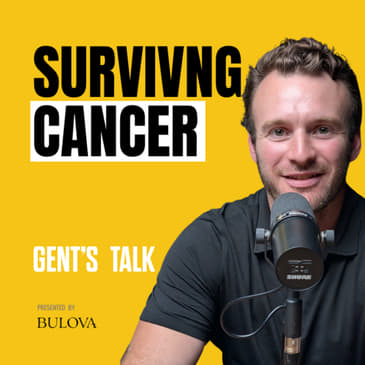
In this week's episode of Gent's Talk, presented by BULOVA, host Samir Mourani sits down with paralympian hockey player Tyler McGregor to talk about being diagnosed with bone cancer as a young teenager, losing his leg and learning to cope with his new reality, learning to become a hockey player again and what phantom pain really feels like. Tyler shares insights into his career, his life and his recent work with the Princess Margaret foundation. #gentstalk Connect with us! Subscribe here ► https://www.youtube.com/@GentsTalkPodcast Website: https://gentspost.com/ Instagram: https://www.instagram.com/gentspost/ TikTok: https://www.tiktok.com/@gentstalkpod Facebook: https://www.facebook.com/gentspost/ About Gent's Talk: The Gent's Talk series, powered by Gent's Post and presented by BULOVA Canada is an episodic video podcast conversation with leading gents and rising stars across various industries. Guests include Russell Peters, James Blunt, Robin Sharma, Director X, JP Saxe, Wes Hall, Johnny Orlando, Shan Boodram, Dom Gabriel, and Nick Bateman, just to name a few. The conversations range from career, mental health, family, relationships, business, and everything in between. Gent's Talk is the first-ever video podcast to be made available for streaming on all Air Canada domestic/international flights. We aim to have a raw, unfiltered conversations about our guests' lives, how they achieved success, lessons learned along the way, and the challenges encountered. Credits: Host/Producer: Samir Mourani Creative Director and Executive Producer: Steven Branco Video & Sound Editor: Roman Lapshin A STAMINA Group Production, powered by Gent's Post.
The Gent's Talk podcast, hosted by Samir Mourani, pulls the curtain back on difficult conversations around mental health, business, relationships and the difficulties around expressing oneself, with rising and leading gents from across the globe.
New episodes every Monday! #GentsTalk
Instagram: https://instagram.com/gentstalkpod
TikTok: https://tiktok.com/gentstalkpod
YouTube: https://www.youtube.com/@GentsTalkPodcast
[00:00:13] Tyler McGregor is a Canadian hockey player and captain of the national team. After losing his leg to bone cancer at the age of 15...
[00:00:20] ...he transitioned to para ice hockey winning medals and leading the team to world championships.
[00:00:26] I met with Dr Peter Ferguson and he said, Tyler, in order to save your life we have to amputate your leg.
[00:00:33] I was absolutely scared. I had my amputation about six inches above my knee. I was living in a fog.
[00:00:43] Very unsure of who I was and where I was going.
[00:00:49] The pain, the hardship, the tears, the anxiety, the fears. You had every excuse in the book to call it quits.
[00:00:56] There was no question that regardless of how difficult it was, I was gonna find a way.
[00:01:05] One more question for you.
[00:01:31] So I get asked often what's the hardest part about running a podcast?
[00:01:37] Mm-hmm.
[00:01:37] This right here is the easiest.
[00:01:40] All right, yeah.
[00:01:40] I could do this all the time.
[00:01:42] Mm-hmm.
[00:01:42] It's all the stuff that happens behind the scenes that's really difficult.
[00:01:45] Yeah, I can imagine.
[00:01:45] Because there's a lot of scheduling and coordination and back and forth emails.
[00:01:49] Everything's changing constantly.
[00:01:50] Yeah, and if for whatever reason I'm not available, the studio is not available, the guest is not available, everything is in flux.
[00:01:56] It's just, you know, I sound like I'm complaining, but it's just, it is a lot of work.
[00:02:02] Yeah, yeah.
[00:02:03] I can imagine, yeah.
[00:02:04] But Tyler, I am excited to have this conversation with you.
[00:02:08] You are a Paralympic champion.
[00:02:10] You are an incredibly inspiring individual.
[00:02:16] And I want to know more about the story in terms of how you got here.
[00:02:22] What's something that people don't know about you, Tyler, and your journey?
[00:02:29] Well, I grew up in southwestern Ontario.
[00:02:32] Forest is my hometown, quite a small town of about 2,000, 2,500 people.
[00:02:40] I grew up in a little hockey haven, as I like to call it.
[00:02:45] We grew up right on the edge of town.
[00:02:48] My best friend, childhood best friend, same age, also a huge hockey fan, lived right across the street.
[00:02:55] Whether we were playing road hockey, playing in either of our backyard rinks,
[00:03:02] or with our team at the local arena, 400 meters down the road.
[00:03:08] It's literally pretty much how I grew up.
[00:03:12] And I certainly played a number of other sports and had a number of other interests as well.
[00:03:19] But from a very young age, that was what I wanted to do.
[00:03:23] I wanted to be a hockey player.
[00:03:27] And I pretty much dedicated my life to that.
[00:03:31] And there's certain moments, I think, through that process where I knew I someday wanted to play in the NHL,
[00:03:39] and in particular, play for Team Canada.
[00:03:41] And I remember being seven years old, watching the Salt Lake City Olympics.
[00:03:46] The women's team, hockey team, had just won a gold medal.
[00:03:50] And then either the next day or two days later, the men's hockey team hadn't won an Olympic medal in hockey in 50 years.
[00:04:00] And some of my childhood heroes were on that team, and they won.
[00:04:04] I remember the prototypical story of watching that game and immediately going outside
[00:04:09] and probably spent the next six to eight hours kind of reliving those moments myself.
[00:04:18] And it was kind of an obsession in many ways, but things changed when I was 15 years old.
[00:04:30] I had fractured my tibia and fibula in the first game of our hockey season.
[00:04:37] At that point, I would have been entering our OHL draft year.
[00:04:44] So my season was essentially over.
[00:04:47] You were 15 years old or so?
[00:04:47] 15, yeah.
[00:04:49] And my season was essentially over.
[00:04:53] The recovery process for that type of fracture is pretty typically four to six months.
[00:05:00] And upon recovery, I was walking within three to four weeks, skating, to my recollection, between six to eight weeks post-surgery.
[00:05:13] And I was recovering well, despite at the time, and very slowly through the process started to develop a mass on the site of the fracture.
[00:05:24] And I was healthy, as can be, both physically, mentally, emotionally.
[00:05:32] And so no one, especially myself, thought anything was wrong.
[00:05:39] So fast forward to about four months post-surgery, that mass had grown to about, I would compare it to the size of a tennis ball right below my left knee.
[00:05:53] And my final x-ray, going back to see my orthopedic surgeon, showed that about two inches of my bone was missing, approximately.
[00:06:06] And so I had a titanium rod inserted at the initial surgery that was really the only thing supporting my leg.
[00:06:15] And so immediately, I was scheduled an emergency surgery and brought in the next day.
[00:06:23] And like no 15-year-old kid would expect, and as many people don't expect, I was diagnosed with spindle cell sarcoma, a form of bone cancer, a couple months before my 16th birthday.
[00:06:41] And my life immediately changed from there.
[00:06:45] So what happened next?
[00:06:49] Immediately after, I actually, I was admitted into the hospital for about a week after my biopsy to undergo a number of tests.
[00:06:59] My tumor had been growing for about four months at that point.
[00:07:03] So there was a lot of suspicion that it had spread to other parts of my body.
[00:07:12] Thankfully, thankfully, it hadn't.
[00:07:14] But I underwent a number of tests just to get a better understanding of what the protocol would look like, whether I would do radiation, chemotherapy, what type of surgery we would need to do.
[00:07:30] And slowly kind of started to discover what that looked like for the next several months.
[00:07:36] And within that, I had a very short, brief opportunity to go home and really kind of break the news to everyone outside of my immediate family.
[00:07:49] My team was starting playoffs.
[00:07:51] I remember going to visit them in the locker room and having our coach break the news to the team and just breaking down emotionally, knowing I wouldn't have the opportunity to compete with them.
[00:08:08] And, you know, going to into my high school and seeing all my high school friends and essentially saying goodbye for the next eight months.
[00:08:18] And then I went back into the hospital and was admitted for two weeks to receive my first of six cycles of chemotherapy.
[00:08:30] And immediately was as a as a as a 15 year old kid who had really no prior knowledge, no real family history introduced to how lethal, I guess you could say chemotherapy can be.
[00:08:49] And that was the start of what felt like an eight month chemotherapy protocol that felt like years.
[00:09:01] For those who don't know what actually happens during chemotherapy, can you walk me through that journey, that process?
[00:09:11] Pretty typically, it all starts with testing your blood to ensure that your immune system is healthy enough to receive chemotherapy drugs, which essentially deplete your immune system.
[00:09:28] And so for myself, I would go into the hospital, have my blood tested, ensure that my immune system was was able to withstand what was coming.
[00:09:42] And from there, I would be admitted as an inpatient.
[00:09:47] I had a Hickman line inserted into my chest, which had two tubes coming out of it to be able to receive my chemotherapy drugs.
[00:09:59] Two of them are some of the harshest available, doxorubicin and cisplatin.
[00:10:05] And my protocol required both, which is why I needed two tubes.
[00:10:10] And they're actually so toxic that they can't be administered together outside of the bloodstream.
[00:10:21] And so both kind of have both are sort of different protocols, but they're administered at the same time.
[00:10:30] One was delivered over 48 hours.
[00:10:32] Another was delivered over the course of a week.
[00:10:36] And so receiving that one, I would stay in the hospital for on average a week to sometimes a little bit longer, depending on how things went.
[00:10:50] And I would have an opportunity between that to go home and rest, let my body recover and then come back in for to receive my my third chemotherapy drug called methotrexate, which I actually don't have a whole lot of recollection of how that all went down.
[00:11:11] That one was a little less harsh.
[00:11:15] But from my memory, it was administered over the course of three, four days up to a week.
[00:11:23] And then I would have another little recovery period.
[00:11:27] And that would entail one cycle of chemotherapy.
[00:11:32] And what was the.
[00:11:35] What was the impact on your body through this round of chemo?
[00:11:41] Just the most fatigue that I've ever experienced in my life.
[00:11:47] That would be number one, the nausea, the constant nausea.
[00:11:52] And for me, at least it came in waves.
[00:11:54] It was especially bad early on.
[00:11:57] Obviously, such a shock to my body to receive such toxic drugs.
[00:12:04] So the nausea was especially bad.
[00:12:08] There is the potential to have an effect on or depleted platelets in your body.
[00:12:16] So your your body's ability to heal, which is certainly what one thing I experienced where after my biopsy, the holes that they drilled into my leg never healed because my platelets have become so depleted.
[00:12:34] And there was a number of different things.
[00:12:36] Your immune system's just so weak that everyone knows about the hair loss.
[00:12:43] I was also experiencing a bit of an infection that required me to carry around a portable antibiotic for a number of weeks.
[00:12:59] I don't know exactly the timeline, but there's a number of different side effects.
[00:13:04] And, you know, ultimately it's it just feels as though you're dying.
[00:13:14] Were you scared?
[00:13:17] A hundred percent.
[00:13:18] I I would say in many ways.
[00:13:24] I was.
[00:13:24] I was I was I was a little immature and I think that.
[00:13:28] Proved to be a bit of a benefit because I was sort of naive to the magnitude of the situation, but you're 15.
[00:13:36] Yeah.
[00:13:36] And I think in saying that I was absolutely scared.
[00:13:41] I as anyone would be.
[00:13:43] Um, and I think what scared me the most was.
[00:13:50] Just the experience of of being in.
[00:13:55] A children's hospital amongst.
[00:13:59] Kids from.
[00:14:02] Newborn babies to.
[00:14:05] Five, four or five years old to to, you know, kids that aren't even teenagers.
[00:14:12] Um, and literally seeing them fight for their lives as well.
[00:14:17] Um, there was a lot of things that were were scary about it.
[00:14:22] Um, because you.
[00:14:25] You don't really know what's next and it's.
[00:14:28] It becomes really challenging to to live in the moment and to feel a sense of gratitude and joy for the moment that you are in.
[00:14:40] And I think that's what's most scary about the whole thing.
[00:14:45] So, um, forgive my ignorance here.
[00:14:49] After they applied the chemotherapy and they did the extra surgeries on your leg.
[00:14:55] What's the current state of your leg?
[00:14:58] So.
[00:15:00] After the initial, um, the initial diagnosis.
[00:15:07] Came late January of 2010.
[00:15:10] And.
[00:15:11] It was a matter of weeks.
[00:15:14] Before we had a full understanding of.
[00:15:17] And a really clear picture of what needed to happen in terms of surgery.
[00:15:22] And.
[00:15:24] There was.
[00:15:26] Um.
[00:15:27] With certainty looking back at at some.
[00:15:30] Some x-rays and and CT scans and another imagery.
[00:15:34] That.
[00:15:35] The cancer had spread through most of my leg.
[00:15:38] And.
[00:15:39] Because of that chemotherapy on it.
[00:15:42] On its own was not going to be enough.
[00:15:43] Um.
[00:15:45] So.
[00:15:46] I met.
[00:15:48] With Dr.
[00:15:49] Peter Ferguson.
[00:15:50] Um.
[00:15:50] From Mount Sinai Hospital.
[00:15:52] Uh.
[00:15:52] Well.
[00:15:53] He was at Mount Sinai Hospital at the time.
[00:15:56] Um.
[00:15:58] And.
[00:15:59] Oh.
[00:16:00] I have such an admiration for.
[00:16:03] What he does.
[00:16:04] And honestly having to have these types of conversations.
[00:16:07] With people of all ages.
[00:16:09] But.
[00:16:10] The way that I remember that.
[00:16:12] Happening is.
[00:16:14] Him walking into.
[00:16:16] Uh.
[00:16:17] I was in a.
[00:16:17] A four person.
[00:16:19] Uh.
[00:16:20] Hospital ward room at the time.
[00:16:21] With both of my parents.
[00:16:22] And.
[00:16:24] The way I remember it.
[00:16:25] Is he said.
[00:16:27] He introduced himself.
[00:16:29] To myself.
[00:16:30] And to my mom and dad.
[00:16:32] And he said Tyler.
[00:16:33] In.
[00:16:33] In order to save your life.
[00:16:35] We have to amputate your leg.
[00:16:37] Um.
[00:16:38] And so.
[00:16:40] I would say.
[00:16:40] For me.
[00:16:41] Like.
[00:16:42] That might have been.
[00:16:43] One of the scariest parts of it all.
[00:16:46] Um.
[00:16:47] Knowing sort of the finality of.
[00:16:49] That surgery.
[00:16:50] Um.
[00:16:53] Kind of losing.
[00:16:54] A lot of the hope.
[00:16:56] That I had.
[00:16:58] Left.
[00:16:59] Of.
[00:17:00] What life would look like.
[00:17:01] When I finished chemotherapy.
[00:17:04] Um.
[00:17:04] Um.
[00:17:06] And ultimately.
[00:17:07] Uh.
[00:17:08] After I finished.
[00:17:09] My first two rounds.
[00:17:10] Of chemotherapy.
[00:17:11] Uh.
[00:17:12] I had my amputation.
[00:17:14] About six inches.
[00:17:15] Above my knee.
[00:17:16] Um.
[00:17:17] At Mount Sinai Hospital.
[00:17:21] Take me back to.
[00:17:22] The moment you woke up.
[00:17:24] From the surgery.
[00:17:30] It was.
[00:17:32] Actually.
[00:17:33] The day of.
[00:17:35] My.
[00:17:35] Oh.
[00:17:36] My age groups.
[00:17:37] OHL draft.
[00:17:38] Um.
[00:17:39] One that I was hoping.
[00:17:40] To be a part of.
[00:17:41] And.
[00:17:42] I'll actually.
[00:17:43] Take you back.
[00:17:44] Even to.
[00:17:46] Just laying in bed.
[00:17:47] Outside the operating room.
[00:17:48] Um.
[00:17:49] My surgery was scheduled.
[00:17:51] I don't know if it was.
[00:17:52] Seven or eight a.m.
[00:17:53] But first thing in the morning.
[00:17:55] And.
[00:17:57] That was really.
[00:17:58] I think the first time.
[00:17:59] Where like.
[00:18:00] I.
[00:18:01] I let my emotions.
[00:18:02] Go.
[00:18:03] Go.
[00:18:03] And.
[00:18:05] Felt the rush of them.
[00:18:07] Come out.
[00:18:07] And I remember.
[00:18:10] Just being in tears.
[00:18:12] Laying in bed.
[00:18:14] Getting wheeled in there.
[00:18:15] And.
[00:18:17] For the next.
[00:18:19] Number of hours.
[00:18:20] They performed the surgery.
[00:18:22] I woke up quite early.
[00:18:24] Um.
[00:18:25] Afterwards.
[00:18:26] And.
[00:18:29] I.
[00:18:31] Opened my laptop.
[00:18:32] And.
[00:18:32] And watched.
[00:18:33] Many of my friends.
[00:18:34] Get drafted to.
[00:18:35] The OHL.
[00:18:36] And.
[00:18:37] I was so confused.
[00:18:39] And felt.
[00:18:40] So defeated.
[00:18:41] In that moment.
[00:18:43] And also.
[00:18:46] Funny enough.
[00:18:47] Like.
[00:18:48] One of my biggest fears.
[00:18:50] Was.
[00:18:51] My.
[00:18:52] Girlfriend at the time.
[00:18:53] Was coming to visit that day.
[00:18:54] And.
[00:18:56] I.
[00:18:57] Had looked down.
[00:18:59] At my leg.
[00:19:00] For the first time.
[00:19:01] And.
[00:19:02] Did not see it.
[00:19:03] And.
[00:19:04] I put.
[00:19:05] I grabbed a pillow.
[00:19:07] From behind my back.
[00:19:08] And.
[00:19:09] Tucked it underneath.
[00:19:10] Um.
[00:19:11] Where my leg was supposed to be.
[00:19:13] To make it look like.
[00:19:15] It was still there.
[00:19:18] And.
[00:19:20] I think for that entire day.
[00:19:22] And even.
[00:19:23] A period of time.
[00:19:25] Time after that.
[00:19:27] The best way I can describe it is.
[00:19:30] I was.
[00:19:31] I was.
[00:19:32] Living in.
[00:19:33] A fog.
[00:19:35] Very unsure of.
[00:19:37] Who I was.
[00:19:38] And.
[00:19:39] Where I was going.
[00:19:45] Did you.
[00:19:46] Uh.
[00:19:49] Did you ever experience.
[00:19:50] That sensation.
[00:19:52] Where.
[00:19:52] You felt like the leg.
[00:19:54] Was still there.
[00:19:55] I've heard people talk about that.
[00:19:57] I actually still do.
[00:19:58] To this day.
[00:19:59] Um.
[00:20:00] And so.
[00:20:00] I'll.
[00:20:00] I'll sort of describe.
[00:20:02] Two.
[00:20:03] Sensations that I.
[00:20:05] Still experience.
[00:20:06] Maybe not quite.
[00:20:08] As frequently.
[00:20:09] As.
[00:20:10] Right after surgery.
[00:20:11] But.
[00:20:12] Um.
[00:20:13] There's what they call.
[00:20:15] Uh.
[00:20:15] Phantom limb pain.
[00:20:16] And phantom limb sensation.
[00:20:18] Um.
[00:20:19] I would say.
[00:20:20] I experience the pain.
[00:20:22] A lot less frequently.
[00:20:24] Than.
[00:20:25] Sensations.
[00:20:25] But.
[00:20:26] And I always get.
[00:20:27] The pain.
[00:20:28] Or.
[00:20:29] Experience the pain.
[00:20:30] In the same.
[00:20:31] Location on my leg.
[00:20:32] Right.
[00:20:33] Where I initially fractured it.
[00:20:35] Um.
[00:20:36] But.
[00:20:37] To be.
[00:20:38] To be blunt about it.
[00:20:39] The way it feels.
[00:20:40] Is almost like being stabbed.
[00:20:41] Right in the.
[00:20:42] Right in the shin.
[00:20:44] Um.
[00:20:44] And then.
[00:20:45] The sensation that I feel.
[00:20:47] Is.
[00:20:49] It occurs a lot more frequently.
[00:20:51] And that is almost.
[00:20:52] As if.
[00:20:53] I.
[00:20:54] Have.
[00:20:55] A shoe full of sand.
[00:20:57] Um.
[00:20:58] And so.
[00:20:58] Those are the two that.
[00:21:00] That I experience.
[00:21:01] A lot less frequently.
[00:21:02] Than.
[00:21:02] Than I initially did.
[00:21:04] But.
[00:21:06] Even.
[00:21:07] 14 years later.
[00:21:08] I still do experience those.
[00:21:11] I.
[00:21:11] I want to go back.
[00:21:12] Back a second.
[00:21:12] Because I'm curious now.
[00:21:14] Was.
[00:21:15] Was the cancer.
[00:21:17] Always there.
[00:21:18] Or did it develop.
[00:21:19] Or.
[00:21:19] Progress.
[00:21:20] Because of the fracture.
[00:21:21] Yeah.
[00:21:22] They had gone back to.
[00:21:23] Initial x-rays.
[00:21:24] After I fractured.
[00:21:26] My tibia and fibula.
[00:21:27] And.
[00:21:29] They.
[00:21:30] They concluded that.
[00:21:32] It.
[00:21:32] Had been there.
[00:21:33] And that had caused the fracture.
[00:21:35] Um.
[00:21:35] Oh the cancer caused the fracture.
[00:21:37] Yeah.
[00:21:37] Exactly.
[00:21:38] I didn't weaken the bone enough that.
[00:21:39] Yeah.
[00:21:40] I see.
[00:21:41] Um.
[00:21:41] And you would have.
[00:21:42] The doctor said like.
[00:21:45] You would have never noticed it.
[00:21:46] Because it.
[00:21:47] It.
[00:21:48] It was so challenging to see.
[00:21:50] You would have had to.
[00:21:51] Be looking.
[00:21:52] Intentionally.
[00:21:53] For cancer cells.
[00:21:54] But.
[00:21:55] As a 15 year old.
[00:21:57] That was healthy.
[00:21:57] No one was looking for that.
[00:21:58] Right.
[00:21:59] Of course.
[00:21:59] Mm-hmm.
[00:22:00] So then in some way.
[00:22:02] The fracture.
[00:22:04] Highlighted what was.
[00:22:05] Hiding underneath.
[00:22:06] And could have potentially saved your life.
[00:22:08] Is that.
[00:22:08] The right way of thinking of it?
[00:22:09] It absolutely did.
[00:22:10] Yes.
[00:22:13] You.
[00:22:14] You had every excuse in the book.
[00:22:16] To call it quits.
[00:22:17] There.
[00:22:18] Just to say.
[00:22:19] You know what.
[00:22:20] I'm done.
[00:22:22] But instead.
[00:22:23] You decided.
[00:22:24] You're going to make something.
[00:22:25] Of your life.
[00:22:26] Despite the challenge.
[00:22:28] Of losing your leg.
[00:22:30] Dealing with the chemo.
[00:22:31] The pain.
[00:22:32] The hardship.
[00:22:32] The tears.
[00:22:33] The anxiety.
[00:22:34] The fears.
[00:22:36] What made you decide.
[00:22:38] To still pursue a career.
[00:22:40] As a.
[00:22:41] As an athlete.
[00:22:44] I think a number of things.
[00:22:46] There.
[00:22:47] And first and foremost.
[00:22:48] I think it starts with.
[00:22:51] A lot of the people around me.
[00:22:53] That.
[00:22:54] That's my family.
[00:22:56] That's.
[00:22:57] My friends.
[00:22:58] My community.
[00:22:59] My.
[00:22:59] My.
[00:23:00] My teammates.
[00:23:01] Coaches.
[00:23:02] Um.
[00:23:04] Who were there.
[00:23:06] Regardless of what I.
[00:23:08] Was feeling.
[00:23:10] To.
[00:23:11] Support.
[00:23:12] And encourage me.
[00:23:14] Um.
[00:23:14] I think secondly.
[00:23:19] There was.
[00:23:20] Despite.
[00:23:21] All the doubt.
[00:23:23] In the world.
[00:23:23] That I had about.
[00:23:25] What my future.
[00:23:26] Looked like.
[00:23:27] There was this.
[00:23:30] Small.
[00:23:31] However small.
[00:23:32] Seat of belief.
[00:23:33] That.
[00:23:33] That.
[00:23:35] I would still find my way.
[00:23:37] Somehow.
[00:23:38] Some way.
[00:23:39] Because it's.
[00:23:40] Literally.
[00:23:42] All I.
[00:23:43] I'd ever known.
[00:23:45] And.
[00:23:45] I think.
[00:23:46] A combination.
[00:23:47] Of.
[00:23:47] Of those.
[00:23:48] Two things.
[00:23:49] And then.
[00:23:53] Quite honestly.
[00:23:54] Like.
[00:23:55] One of the.
[00:23:57] The main.
[00:23:58] Driving forces.
[00:23:59] Of.
[00:24:00] Why I try to.
[00:24:01] Practice.
[00:24:02] Gratitude.
[00:24:03] And why.
[00:24:03] I.
[00:24:04] I feel so.
[00:24:05] Thankful.
[00:24:06] And try to live with.
[00:24:07] So much joy.
[00:24:08] Is because.
[00:24:09] Of.
[00:24:10] The people.
[00:24:11] I met in the hospital.
[00:24:12] Those young kids.
[00:24:13] And.
[00:24:14] You know.
[00:24:16] Some are still here today.
[00:24:17] And others aren't.
[00:24:18] And there's.
[00:24:18] Three that.
[00:24:19] That stand out.
[00:24:21] Um.
[00:24:22] Two of them.
[00:24:23] Were.
[00:24:24] Four years old.
[00:24:26] Both lost their lives to neuroblastoma.
[00:24:29] Neuroblastoma.
[00:24:30] Um.
[00:24:31] And the other was.
[00:24:32] Was 12.
[00:24:33] And lost her life to.
[00:24:34] Leukemia.
[00:24:36] Um.
[00:24:37] Three kids that I got to spend.
[00:24:38] A lot of time with.
[00:24:41] In the hospital.
[00:24:43] And.
[00:24:46] For.
[00:24:47] For two of them in particular.
[00:24:48] Never got the opportunity to.
[00:24:50] To go to school.
[00:24:51] Or to even play a sport.
[00:24:53] Or to even.
[00:24:55] Dream of.
[00:24:56] What they could someday accomplish.
[00:24:58] And.
[00:25:00] I honestly think like.
[00:25:02] Through it all.
[00:25:04] Kind of witnessing that.
[00:25:06] And sort of.
[00:25:07] Experiencing.
[00:25:08] The hardship of that.
[00:25:12] Was.
[00:25:13] A very.
[00:25:15] Vivid reminder of.
[00:25:17] For me to.
[00:25:19] Do.
[00:25:20] Literally everything I could to.
[00:25:22] Live for them.
[00:25:28] What would you say to them?
[00:25:32] Wow.
[00:25:44] I'd say.
[00:25:45] Thank you for.
[00:25:48] Thank you for.
[00:25:48] Bringing me joy.
[00:25:50] When.
[00:25:52] And bringing joy to the world.
[00:25:53] When.
[00:25:58] Um.
[00:25:58] A lot of.
[00:25:59] Reason to.
[00:26:01] To do so.
[00:26:02] Um.
[00:26:03] I.
[00:26:04] Yeah.
[00:26:04] I've never really.
[00:26:06] Really thought of that.
[00:26:07] And that's.
[00:26:08] That's a hard one to answer.
[00:26:10] But.
[00:26:11] Um.
[00:26:13] I think I would.
[00:26:15] Yeah.
[00:26:15] I.
[00:26:16] I.
[00:26:16] I just want to thank them for.
[00:26:21] For showing up.
[00:26:24] As.
[00:26:25] As kids.
[00:26:26] I think there's.
[00:26:27] Something.
[00:26:28] So freeing.
[00:26:29] In.
[00:26:30] The way kids.
[00:26:31] Approach life.
[00:26:32] And.
[00:26:32] Regardless of.
[00:26:33] Of circumstance.
[00:26:35] Um.
[00:26:35] Regardless of.
[00:26:36] How difficult life is.
[00:26:38] I think they're.
[00:26:39] A great example of.
[00:26:41] Um.
[00:26:45] Of joy.
[00:26:46] And of gratitude.
[00:26:51] When.
[00:26:53] You.
[00:26:55] Decided that you were still going to become an athlete.
[00:26:59] What's the journey there?
[00:27:02] It was pretty unclear.
[00:27:04] In one where.
[00:27:05] You don't necessarily know.
[00:27:08] The next step.
[00:27:10] But there's an understanding that.
[00:27:16] With all the.
[00:27:17] The fear.
[00:27:19] And lack of clarity.
[00:27:20] You have to take it.
[00:27:22] Um.
[00:27:22] And so.
[00:27:24] I finished chemotherapy.
[00:27:26] On October 1st.
[00:27:27] 2010.
[00:27:28] The.
[00:27:29] First thing I did.
[00:27:31] Was put my hockey gear back on.
[00:27:33] In my parents basement.
[00:27:35] Albeit.
[00:27:35] But.
[00:27:36] I.
[00:27:38] It was my first time.
[00:27:40] Putting a pair of skates back on.
[00:27:41] And.
[00:27:41] And.
[00:27:42] I literally was just walking around the basement.
[00:27:44] Trying to figure out how to.
[00:27:46] Balance on skates and a prosthetic leg.
[00:27:49] And.
[00:27:49] So the journey began with that.
[00:27:51] And trying to.
[00:27:53] Navigate.
[00:27:54] How to.
[00:27:55] Skate and play hockey.
[00:27:57] As an above knee amputee.
[00:27:59] So I.
[00:27:59] I had a.
[00:28:00] Special prosthetic made.
[00:28:04] Specifically for skating.
[00:28:06] Which.
[00:28:07] Was certainly.
[00:28:10] Better.
[00:28:11] Suited for skating.
[00:28:12] Than.
[00:28:12] Than.
[00:28:13] My day to day.
[00:28:14] Walking prosthetic.
[00:28:16] But without the lack.
[00:28:18] Or without a knee.
[00:28:20] It's a.
[00:28:21] Significant challenge.
[00:28:22] To be able to skate.
[00:28:23] Especially at the level.
[00:28:24] That I was at.
[00:28:25] And so.
[00:28:25] There was a lot of frustration.
[00:28:27] Around that.
[00:28:28] Um.
[00:28:29] And.
[00:28:31] I knew I wanted to.
[00:28:33] Not only.
[00:28:34] Not only play.
[00:28:36] And participate.
[00:28:37] In sport.
[00:28:38] I'm kind of wired.
[00:28:40] To.
[00:28:40] To be a high performer.
[00:28:41] And so.
[00:28:42] That's when I started.
[00:28:45] Looking at other options.
[00:28:47] And.
[00:28:48] That's when the journey.
[00:28:49] Sort of.
[00:28:50] Took a bit of a turn.
[00:28:51] Um.
[00:28:52] It was actually.
[00:28:54] A recommendation.
[00:28:55] From a former coach of mine.
[00:28:56] Greg Bignall.
[00:28:57] Um.
[00:28:58] To.
[00:28:58] Get in a sled.
[00:29:00] And.
[00:29:00] And try to play hockey.
[00:29:01] That way.
[00:29:02] Um.
[00:29:03] I'd never.
[00:29:05] Were you open to it?
[00:29:06] I was a little hesitant.
[00:29:07] To be honest.
[00:29:08] Um.
[00:29:10] But more so.
[00:29:14] More so.
[00:29:15] Because it was so unfamiliar.
[00:29:16] Um.
[00:29:19] And.
[00:29:20] I think once the frustration.
[00:29:22] Of.
[00:29:23] Not being able to skate as well.
[00:29:25] Really started to get to me.
[00:29:27] Is when.
[00:29:28] I knew.
[00:29:29] That's when I had to make the transition.
[00:29:31] Uh.
[00:29:31] And so.
[00:29:32] That was.
[00:29:34] About a year.
[00:29:36] After.
[00:29:36] I'd finished chemotherapy.
[00:29:38] In October of.
[00:29:39] Of 2011.
[00:29:41] And.
[00:29:41] And even initially.
[00:29:43] Upon getting in a sled.
[00:29:45] For the first time.
[00:29:46] I.
[00:29:48] Was.
[00:29:49] Terrible.
[00:29:50] And.
[00:29:51] That was not expected.
[00:29:53] I thought I'd.
[00:29:54] I'd pick it up right away.
[00:29:55] I'd understand how to play.
[00:29:57] I'd understand the mechanics.
[00:29:58] Of.
[00:30:00] Playing.
[00:30:01] Playing hockey.
[00:30:02] With just your upper body.
[00:30:04] Um.
[00:30:05] And it was a more difficult transition.
[00:30:07] Than.
[00:30:07] Than I anticipated.
[00:30:10] I'd.
[00:30:10] But then again.
[00:30:11] All these.
[00:30:11] These old.
[00:30:13] Habits.
[00:30:13] From when you're.
[00:30:14] A young kid.
[00:30:15] Just.
[00:30:16] Spending.
[00:30:17] Every spare moment.
[00:30:19] Practicing.
[00:30:20] They came back.
[00:30:21] And I brought a sled home, sat in my basement, practiced every chance I could and tried to learn as quickly as possible.
[00:30:36] And it's an ambidextrous sport as well.
[00:30:39] So that was unfamiliar in that I had to learn how to use both hands equally well to be able to compete at a high level.
[00:30:49] And so the journey, once again, had another layer to it where I had to really kind of challenge myself to become ambidextrous and learn how to use my left hand.
[00:31:04] So I was literally doing household chores, cooking, brushing my teeth, opening doors with my left hand rather than my dominant right hand.
[00:31:15] Wow.
[00:31:15] And so that was kind of...
[00:31:17] It's a challenge.
[00:31:18] It certainly was.
[00:31:19] I mean, I can only imagine you're trying to figure out how to play hockey in a sledge and then also learning how to use your other hand.
[00:31:30] I mean, I can imagine there was a ton of frustration in there.
[00:31:34] Do you think about quitting?
[00:31:35] I actually didn't.
[00:31:39] Okay.
[00:31:40] Because I think I knew this was sort of my only chance to continue playing.
[00:31:53] And especially like upon starting, I'd started to meet a lot of people within the sport.
[00:32:00] And I understood that, you know, the ultimate goal would be to play on the Paralympic team.
[00:32:09] And so once I had that goal in mind, there was no question that regardless of how difficult it was, I was going to find a way.
[00:32:21] What was the...
[00:32:26] In the journey of learning how to compete now in this different format, what was the biggest lesson you took away from all of that?
[00:32:37] Something that still resonates with you today?
[00:32:40] I would say the ability to seek out challenging tasks.
[00:32:52] I'll phrase it as.
[00:32:56] I think in the pursuit of anything, resilience is paramount.
[00:33:05] And I think you build resilience by seeking out hard things.
[00:33:11] And so whatever the experience may be, you know, whether it was dealing with cancer, whether it was dealing with an amputation and learning to walk again, or whether it was starting a new sport, that those are all really hard, challenging things to deal with.
[00:33:37] And, you know, in hindsight, I think prepared me to become a better athlete because I developed the strength and resilience to find a way when things weren't going my way.
[00:33:59] The first time you put on the prostate leg, what was that like?
[00:34:10] It was frustrating.
[00:34:14] I...
[00:34:15] I...
[00:34:15] I had thought I would walk right away within a day.
[00:34:21] And for a number of reasons, I didn't because my weight had fluctuated so much due to chemotherapy.
[00:34:29] But I was also really quite shocked at how difficult it was.
[00:34:36] And then the thing about learning how to walk with the prosthetic is you actually spend your first day in the rehab hospital learning the mechanics of walking while not wearing your leg.
[00:34:53] And what I vividly remember is going through that with the OT and the PT.
[00:35:02] And then going back to my hospital bed and literally sleeping for eight hours.
[00:35:09] It just completely and utterly exhausted me.
[00:35:13] Wow.
[00:35:13] And so that's really what I remember.
[00:35:16] I remember the fatigue, just the energy consumption of it all.
[00:35:21] And then trying to master the mechanics of what was now my new gait, which was quite difficult.
[00:35:39] So prosthetic leg.
[00:35:40] I called it a prostate leg.
[00:35:41] That's a very different thing.
[00:35:43] I don't even think that's a thing.
[00:35:46] If someone's listening to this, watching this, going through their own challenges and battles with cancer,
[00:35:58] and they've had to have a limb amputated as a result,
[00:36:02] and they're about to start this journey with a prosthetic device item,
[00:36:09] what advice would you give them as they're starting this out?
[00:36:13] I would suggest where possible, one of the most important things is to find another,
[00:36:27] someone like you, someone who's been through something similar and had to navigate that process.
[00:36:33] I know for me, while going through that, meeting other amputees,
[00:36:38] and hearing about what they're doing and seeing how they live their life
[00:36:43] and they're able to navigate life just the same, maybe in a slightly different way,
[00:36:50] that's encouraging.
[00:36:53] I would say, and I would really encourage someone going through that to as much as possible,
[00:37:03] try to be patient with the process.
[00:37:05] That's one thing I wish I did a better job of, is being patient, being really mindful that it wasn't,
[00:37:18] it's not supposed to be easy, and it certainly wasn't.
[00:37:23] But I would really preach patience throughout the entire process.
[00:37:28] Do you feel different?
[00:37:32] Different in what way?
[00:37:34] In any way?
[00:37:35] Like, do you feel, you know, when you're walking down the street,
[00:37:38] or when you meet people and you tell them your story, do you feel different from them?
[00:37:44] I would say, at this point in my life, no.
[00:37:48] But that took a lot of intentional effort.
[00:37:52] And it took a number of years.
[00:37:59] Admittedly, like, I don't think I accepted who I was,
[00:38:03] and that I am a little bit different in my own way until probably five, six years ago.
[00:38:15] What changed?
[00:38:16] I think, most of all, I think I learned to accept who I was.
[00:38:26] And that came through just sort of falling in love, learning to fall in love with myself.
[00:38:39] And by that I mean with Tyler McGregor, the person, not the athlete, not anything else.
[00:38:48] Just who I am and my values.
[00:38:53] The way I show up in the world, the way I treat people, I think that's what changed.
[00:39:00] I learned that regardless of one leg, two legs, whatever, whatever it is,
[00:39:10] I learned to love myself and accept myself for who I ultimately am.
[00:39:15] Was there something specific that you did for that?
[00:39:20] A number of things, actually.
[00:39:24] First and foremost, it actually came as a result of the 2018 Paralympics,
[00:39:31] where we had a soul-crushing loss.
[00:39:35] And ultimately, my self-worth was based around how we performed,
[00:39:42] how I performed and how we performed on ice.
[00:39:48] And the fallout of that was a number of months long,
[00:39:55] but it ultimately led to me reaching out to a therapist
[00:39:58] and just seeking help, trying to understand who I was.
[00:40:06] And especially as someone that's more than an athlete.
[00:40:11] And so I seeked that out and really started to learn who I was, what I value.
[00:40:20] I started a bunch of different practices.
[00:40:23] And still to this day, I practice meditation.
[00:40:27] I journal.
[00:40:29] I read a lot.
[00:40:33] And so all these different strategies that helped me sort of feel grounded
[00:40:42] and feel grateful for who I am.
[00:40:45] And yeah, that was the specific moment, I think, that led to that.
[00:40:55] But when you talk about reaching out to a therapist, the meditation, the journaling,
[00:41:03] it's still uncommon today for men to openly say that they've sought therapy.
[00:41:12] I mean, we have these conversations all the time
[00:41:15] with the attempt to encourage more men to seek help,
[00:41:18] in whatever form that is, but seek help.
[00:41:21] Why do you think, for athletes in particular, that's still such a struggle?
[00:41:28] I do think there's almost so deeply ingrained in the culture,
[00:41:37] this culture of bravado.
[00:41:40] And truthfully, I'm really proud of our team,
[00:41:49] specifically because I know that comfortability to reach out and seek help
[00:41:58] has just grown immensely over the past number of years.
[00:42:03] And I believe that momentum will help shift that culture of,
[00:42:13] I guess, quote-unquote, masculinity within sport.
[00:42:18] And I think helping more athletes understand that it's okay,
[00:42:26] that whatever they're feeling is valid
[00:42:31] and they're not alone in having those feelings or those thoughts,
[00:42:38] whatever they may be, everybody experiences their own emotions,
[00:42:45] their own thoughts, and has their own perspectives on
[00:42:50] whatever it is they're dealing with in life.
[00:42:53] And I think the more we step up and reach out for help,
[00:43:05] the more momentum we build in helping other athletes understand that that's okay too.
[00:43:15] If there's an athlete out there that's listening to this, watching this,
[00:43:18] I always try to find a way to offer people some form of practical advice.
[00:43:24] There's an athlete out there struggling with their mental health,
[00:43:31] wants to reach out, afraid to.
[00:43:33] To your point, the culture doesn't really support that still.
[00:43:38] And just for context, there was a window of time in my life
[00:43:42] where I was a scout in the Ontario Hockey League.
[00:43:47] And you could tell the culture in the Ontario Hockey League
[00:43:52] still didn't necessarily openly talk about these things.
[00:43:56] So there's a ton of athletes today who are still struggling with this,
[00:44:01] who are afraid to do so.
[00:44:03] What could you say to them?
[00:44:05] How could you encourage them to seek the help
[00:44:08] when they're surrounded by an environment that discourages it?
[00:44:22] I would suggest that it's actually the ultimate form of strength
[00:44:29] to accept who you are, what you're feeling.
[00:44:36] And ultimately, I think it's so admirable for someone to be so aware
[00:44:48] and understanding that they're feeling whatever types of emotions
[00:44:54] or anxieties, fears, depression,
[00:44:57] and to understand that they need help in navigating that.
[00:45:05] And that's okay because they are certainly not alone in having those feelings.
[00:45:15] Tell me about the connection to Princess Margaret,
[00:45:20] the Cancer Foundation, the work that you're doing there.
[00:45:25] With the Princess Margaret, I actually, it goes back to my recovery after chemotherapy.
[00:45:33] I was actually, it would have been around the summer of 2011.
[00:45:37] I was actually just laying on the couch watching TV
[00:45:40] and I saw an ad for the inaugural Road Hockey to Conquer Cancer.
[00:45:47] It sounded like such an awesome event.
[00:45:49] Just, you know, a massive road hockey tournament,
[00:45:52] which piqued my interest.
[00:45:54] Yeah, I mean, any kid that grows up playing road hockey would immediately be interested.
[00:45:58] Oh, man, it sounded like a blast.
[00:46:00] And then, you know, on top of that,
[00:46:02] it was a massive fundraiser for the Princess Margaret
[00:46:07] to support vital cancer research.
[00:46:12] And I was actually still living at home at the time.
[00:46:15] I don't, I would have been about 17.
[00:46:18] I don't even know if I had,
[00:46:19] actually, I didn't have my license at the time.
[00:46:21] I was late getting that.
[00:46:22] So I literally had to ask my parents.
[00:46:25] I'm like, can you, if I register for this,
[00:46:28] can you drive me down to Toronto and do this over the weekend?
[00:46:31] And so I registered as an individual.
[00:46:36] And there's a portion of the profile that you make
[00:46:43] as you register where you can write a bio.
[00:46:45] And so I actually kind of,
[00:46:48] I just wrote my story in there.
[00:46:52] And I don't know the exact timelines,
[00:46:55] but pretty soon after,
[00:46:57] Kevin Shea, actually,
[00:46:58] who at the time worked for the Princess Margaret,
[00:47:01] reached out and was like,
[00:47:03] do you want to, like, I love your story.
[00:47:05] Do you want to speak at this event as well as play on our team?
[00:47:08] And I was like,
[00:47:10] I was 17.
[00:47:11] I don't think at that time I'd done any public speaking at all.
[00:47:15] But I agreed to it and attended the inaugural event in 2011.
[00:47:23] My parents and I,
[00:47:26] at the time,
[00:47:27] they did everything we could to fundraise
[00:47:28] whatever amount of money that we were able to.
[00:47:31] And fortunately,
[00:47:33] like this,
[00:47:34] the forest,
[00:47:35] the town I grew up in,
[00:47:36] did a great job in supporting those efforts.
[00:47:40] And so I played in the inaugural tournament in 2011.
[00:47:44] At that time,
[00:47:45] it was at Ontario Place.
[00:47:47] I played on a team mostly of Princess Margaret Cancer Center staff
[00:47:52] and formulated relationships with a lot of those people
[00:47:56] that I've been fortunate enough to maintain now
[00:47:59] for the past 13 years,
[00:48:01] I guess.
[00:48:03] And that was the beginning of it.
[00:48:05] And I've been lucky enough when it,
[00:48:09] when it works around our travel schedule for hockey,
[00:48:13] I've been able to play a number of years.
[00:48:16] But it's just such an incredible event,
[00:48:19] like one that I'm very honored to be a part of.
[00:48:23] Over its 13 years has raised,
[00:48:27] I believe,
[00:48:28] over $33 million.
[00:48:30] Wow.
[00:48:30] So,
[00:48:33] that's
[00:48:34] such an incredible amount of money
[00:48:36] that supports cancer research.
[00:48:40] And the one thing I will add too,
[00:48:42] like it's just,
[00:48:42] it's so awesome because
[00:48:43] my orthopedic oncologist
[00:48:45] that performed my surgery,
[00:48:48] he plays in the tournament
[00:48:49] pretty much every year.
[00:48:51] And so,
[00:48:53] like that,
[00:48:53] that's the guy who literally saved my life.
[00:48:56] And,
[00:48:58] you know,
[00:48:59] outside of attending this tournament,
[00:49:01] I don't know if that's like a relationship
[00:49:03] that we maybe,
[00:49:05] we would have had the opportunity
[00:49:07] to maintain over the years.
[00:49:10] But this is sort of like that special event
[00:49:12] that offers us the opportunity
[00:49:15] to connect in a more personal way
[00:49:20] over the years.
[00:49:21] That's incredible.
[00:49:23] Just to be able to continue
[00:49:25] to maintain that bond
[00:49:26] and that relationship.
[00:49:27] Mm-hmm.
[00:49:28] It's pretty awesome.
[00:49:30] He's an incredible...
[00:49:32] What's his name?
[00:49:32] Dr. Peter Ferguson.
[00:49:34] Yeah.
[00:49:34] Great stuff, Peter.
[00:49:36] Yeah.
[00:49:36] Or Dr. Ferguson.
[00:49:37] Yeah.
[00:49:38] Yeah.
[00:49:40] But I think the other thing too
[00:49:41] is outside of this tournament,
[00:49:44] Princess Margaret
[00:49:44] is doing this all year round.
[00:49:46] Like they're constantly fundraising
[00:49:47] to raise awareness,
[00:49:49] but also to support the research
[00:49:51] and to new,
[00:49:52] I guess,
[00:49:55] ways to solve cancer
[00:49:56] or treat cancer rather.
[00:49:58] Exactly.
[00:49:58] Yeah.
[00:49:58] And there's so many incredible events
[00:50:00] that they hold.
[00:50:02] I know there's the Walk to Conquer Cancer,
[00:50:04] the Ride to Conquer Cancer.
[00:50:05] I believe there's a new one coming out
[00:50:09] called the Cricket to Conquer Cancer.
[00:50:12] So they do some amazing,
[00:50:14] amazing work
[00:50:15] and fundraise so much money.
[00:50:18] And we're so fortunate
[00:50:22] to have right here in Toronto
[00:50:25] one of the top five
[00:50:28] cancer research centers in the world
[00:50:32] that is truly making a difference,
[00:50:34] helping change
[00:50:36] and save the lives
[00:50:38] of so many people,
[00:50:40] not just in Canada,
[00:50:41] but around the entire world.
[00:50:44] Yeah, absolutely.
[00:50:45] And I think I want to ask you now,
[00:50:51] I've seen those commercials.
[00:50:53] I've seen the ads,
[00:50:54] you know,
[00:50:55] to donate and raise money
[00:50:57] and the Walk for Cancer
[00:50:58] and the Ride for Cancer,
[00:50:59] to your point,
[00:51:00] the road hockey event.
[00:51:01] But as someone who has lived experience,
[00:51:07] survived cancer,
[00:51:11] what would you say to people
[00:51:12] to encourage them
[00:51:13] to participate in this?
[00:51:14] Why should they be participating in this?
[00:51:18] There's a number of reasons.
[00:51:21] First and foremost,
[00:51:22] I think these events
[00:51:25] cultivate community
[00:51:26] in such a special way.
[00:51:28] And I think when you feel
[00:51:29] and experience the power of community,
[00:51:31] that's something special on its own.
[00:51:35] And then,
[00:51:36] in addition to that,
[00:51:38] it supports
[00:51:40] critical cancer research.
[00:51:42] And sometimes,
[00:51:46] like for people
[00:51:47] who don't know it,
[00:51:48] it doesn't,
[00:51:49] like the ultimate goal
[00:51:50] is to find a cure.
[00:51:53] But in that process,
[00:51:55] what it also does,
[00:51:56] what this fundraising does
[00:51:58] and the research does,
[00:51:59] is improve the care
[00:52:00] that we have right now
[00:52:01] for cancer patients
[00:52:05] and also their families.
[00:52:07] And just to provide
[00:52:09] like a little bit of an example,
[00:52:12] during my chemo protocol,
[00:52:16] my doxorubicin,
[00:52:18] one of the drugs I received,
[00:52:19] is so harsh on your heart
[00:52:22] to the point where
[00:52:24] my heart function
[00:52:25] had decreased below 50%.
[00:52:28] And so,
[00:52:31] by the time I was,
[00:52:36] I guess it would have been
[00:52:37] my second last cycle of chemo,
[00:52:41] they needed to find a new way
[00:52:43] to administer those drugs
[00:52:45] and protect my heart
[00:52:47] at the same time.
[00:52:48] And so,
[00:52:51] miraculously,
[00:52:52] I guess,
[00:52:53] there was this drug
[00:52:55] that was just developed
[00:52:57] that would be able to
[00:53:00] act as a masking agent
[00:53:02] to protect my heart
[00:53:03] while receiving
[00:53:06] doxorubicin
[00:53:07] over the court,
[00:53:09] over a shorter period of time,
[00:53:10] which allowed me to
[00:53:12] ultimately finish chemotherapy
[00:53:14] on schedule
[00:53:16] while also allowing,
[00:53:19] while protecting my heart,
[00:53:20] but also allowing it,
[00:53:21] its function to improve.
[00:53:23] So,
[00:53:24] that's just one example
[00:53:25] of like,
[00:53:27] how critical
[00:53:29] the money that we raise
[00:53:30] is to,
[00:53:34] to helping,
[00:53:35] you know,
[00:53:36] change people's lives.
[00:53:37] It's a tangible example
[00:53:38] of where the funds go,
[00:53:40] essentially.
[00:53:40] Mm-hmm.
[00:53:41] Um,
[00:53:44] one more question for you.
[00:53:47] If you can go back in time
[00:53:48] and talk to 15-year-old Tyler,
[00:53:52] the one that was
[00:53:53] laying in the bed
[00:53:54] before he went into
[00:53:55] the operation room,
[00:53:56] the one that had,
[00:53:57] finally had his emotions
[00:53:58] boiled to the surface,
[00:54:01] and you were able
[00:54:02] to say something to him,
[00:54:03] what would you say to him?
[00:54:15] I would say,
[00:54:20] I would say,
[00:54:22] I would tell myself
[00:54:23] and remind myself
[00:54:25] that,
[00:54:29] or to love myself,
[00:54:32] to accept who I am
[00:54:35] right away
[00:54:36] and be confident in that.
[00:54:40] Um,
[00:54:40] I think that's one thing
[00:54:44] I,
[00:54:44] I really struggled with
[00:54:45] is being confident
[00:54:47] in,
[00:54:47] in who I was
[00:54:48] for a,
[00:54:49] a very long time.
[00:54:51] Um,
[00:54:52] so I would,
[00:54:54] I would remind myself
[00:54:55] of that
[00:54:56] and to,
[00:54:56] to be patient
[00:54:57] with myself.
[00:54:58] You know,
[00:55:00] when you talk about
[00:55:01] it only took
[00:55:05] until a handful
[00:55:07] of years ago
[00:55:08] for you to finally
[00:55:10] accept yourself,
[00:55:12] to start loving yourself,
[00:55:15] and that feeling
[00:55:18] of being different,
[00:55:21] I just want to
[00:55:22] emphasize to you
[00:55:24] listening to your story
[00:55:25] and your journey
[00:55:26] that,
[00:55:29] that part of your life
[00:55:31] where you're learning
[00:55:32] to love yourself
[00:55:33] is something
[00:55:34] we all
[00:55:36] could learn.
[00:55:38] And so in that way,
[00:55:39] you're not different
[00:55:40] at all.
[00:55:41] If anything,
[00:55:42] you're,
[00:55:43] you're well ahead
[00:55:44] of most of us.
[00:55:46] So,
[00:55:47] Tyler,
[00:55:47] I just want to say
[00:55:47] thank you for sharing
[00:55:48] your story with me.
[00:55:49] Thank you for sharing
[00:55:50] this journey.
[00:55:52] It's honestly inspiring.
[00:55:53] I had goosebumps
[00:55:54] half the time
[00:55:55] you were talking about it,
[00:55:56] just thinking about
[00:55:57] how hard it must have been
[00:55:58] for a 15-year-old
[00:55:59] to be going through that.
[00:56:02] And now in that moment,
[00:56:03] there's very little
[00:56:04] anyone could really say
[00:56:05] to take away the pain,
[00:56:07] the fear,
[00:56:07] the emotions,
[00:56:08] but you did it.
[00:56:10] You did it
[00:56:11] and then you said,
[00:56:12] I'm not just going to settle,
[00:56:13] I'm going to go and do more.
[00:56:15] And you've made a career
[00:56:16] out of it
[00:56:17] and you do incredible things
[00:56:18] with the,
[00:56:19] with the hospital
[00:56:20] and raising awareness
[00:56:22] and funds
[00:56:23] and all that.
[00:56:23] So,
[00:56:24] man,
[00:56:24] congratulations to you.
[00:56:26] You're an inspiration.
[00:56:27] Thank you.
[00:56:27] Keep doing what you're doing.
[00:56:29] I appreciate that very much
[00:56:30] and thank you so much
[00:56:32] for having me here today.
[00:56:34] I'm really grateful.
[00:56:35] No,
[00:56:35] of course,
[00:56:35] my pleasure.
[00:56:36] Where can people find you
[00:56:38] if they want to reach out to you,
[00:56:39] you know,
[00:56:40] just to say hey
[00:56:41] or to ask for advice maybe?
[00:56:45] I would say primarily Instagram.
[00:56:48] Tyler McGregor 8.
[00:56:50] Just like any other hockey player.
[00:56:52] Yeah,
[00:56:52] exactly.
[00:56:53] Everyone has to include
[00:56:54] the number,
[00:56:54] right?
[00:56:57] Amazing.
[00:56:58] Yeah.
[00:56:58] Tyler,
[00:56:58] thank you so much.
[00:56:59] Thank you.
[00:57:00] Thank you so much,
[00:57:01] everyone.