
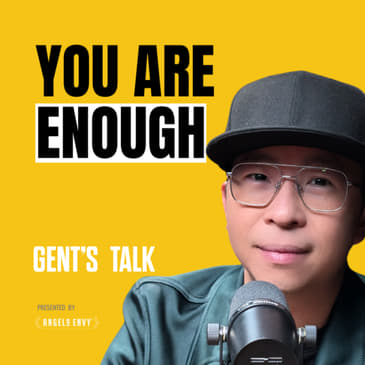
In this week's episode of Gent's Talk, presented by Angel's Envy, host Samir Mourani sits down with Justin Wu. The award winning creative is a director and photographer who shares insight into overcoming imposter syndrome, how he captured the last moments of his father's life, the importance of keeping your "receipts", identity and hitting a dream milestone in completing his first feature film starring Noah Beck and James Van Der Beek. #gentstalk Connect with us! Subscribe here ► https://www.youtube.com/@GentsTalkPodcast Website: https://gentspost.com/ Instagram: https://www.instagram.com/gentspost/ TikTok: https://www.tiktok.com/@gentstalkpod Facebook: https://www.facebook.com/gentspost/ About Gent's Talk: The Gent's Talk series, powered by Gent's Post, is an episodic video podcast conversation with leading gents and rising stars across various industries. Guests include Russell Peters, James Blunt, Robin Sharma, Director X, JP Saxe, Wes Hall, Johnny Orlando, Shan Boodram, Dom Gabriel, and Nick Bateman, just to name a few. The conversations range from career, mental health, family, relationships, business, and everything in between. Gent's Talk is the first-ever video podcast to be made available for streaming on all Air Canada domestic/international flights. We aim to have a raw, unfiltered conversations about our guests' lives, how they achieved success, lessons learned along the way, and the challenges encountered. Credits: Host/Producer: Samir Mourani Creative Director and Executive Producer: Steven Branco Video & Sound Editor: Roman Lapshin A STAMINA Group Production, powered by Gent's Post.
The Gent's Talk podcast, hosted by Samir Mourani, pulls the curtain back on difficult conversations around mental health, business, relationships and the difficulties around expressing oneself, with rising and leading gents from across the globe.
New episodes every Monday! #GentsTalk
Instagram: https://instagram.com/gentstalkpod
TikTok: https://tiktok.com/gentstalkpod
YouTube: https://www.youtube.com/@GentsTalkPodcast
[00:00:00] I want to start with landing the feature film.
[00:00:02] That first experience was just so unbelievable. Weeks would pass, nothing would really happen,
[00:00:07] you know, and then you get the calls like, we want you.
[00:00:10] Justin Wu is a multi-award-winning director, speaker, photographer, and creative director
[00:00:15] who's worked with world-class talent such as Simu Liu, Jeremy Irons, Selena Gomez, and many more.
[00:00:21] What was the most recent failure you've experienced that's really impacted you?
[00:00:27] To not be as present as I want to be for my family.
[00:00:30] You've let people down.
[00:00:31] I feel like I've let people down and there is one very big one and that kind of ties to my father.
[00:00:37] When he was diagnosed with terminal cancer, he wasn't given very long to live.
[00:00:42] That was actually the best part of my life because every day became an opportunity.
[00:00:47] Nine days left. Here is what he wants to get off his chest. Eight days left.
[00:00:50] You pose more questions and it would just inspire him to
[00:00:53] get started a whole different conversation. But by the end, we actually hit a wall.
[00:00:57] He told me very explicitly, this is as far as I would go.
[00:01:01] I'm not willing to share anymore. And this is what you have to live with.
[00:01:04] If you could sit down for one more conversation with your dad and show him everything that you've
[00:01:10] done to this point, what would you hope his reaction would be?
[00:01:28] Justin, welcome back to Gents Talk.
[00:01:30] Happy to be back.
[00:01:31] I'm so excited to have this conversation with you. It's been, I was looking at it,
[00:01:34] I think it was October of 2022. We did the last episode. So we're going on almost
[00:01:39] two full years now since we've last talked. I mean, we've talked in between obviously, but
[00:01:44] I'm really excited to have this conversation. This doesn't happen if it wasn't for our friends at
[00:01:50] Angels Envy for helping us to put this together. So shout out to the team there for just being amazing
[00:01:55] partners on this. I was listening to our episode before coming into the studio because you had remarked
[00:02:04] how you enjoyed the last episode, but you really felt you wanted to get a little deeper into certain
[00:02:09] topics that matter to you. We talked about identity. We talked about your relationship with your dad.
[00:02:15] We talked about how film drives you and you've got some exciting stuff we're going to be talking
[00:02:19] about in a moment. But I want to start with the identity piece. You talked about how it took you a
[00:02:25] while to really understand and comprehend the full scope of your own identity. How far along are you in
[00:02:33] that journey today? Where are you? Still discovering myself. I feel that through the beauty of actually
[00:02:41] film and TV, I think a lot of the work that we do is about character analysis, right? We have a wider
[00:02:48] way, a wide array of diverse characters that we have to always portray on screen, whether you're old or
[00:02:55] young from different generations, different demographics. A lot of the work that we had to do
[00:03:02] is to do the proper research and understand what their backgrounds are, what their motivations are.
[00:03:06] And I find that when you're kind of deep diving into these different character archetypes and
[00:03:13] watching characters and having them express it and really spending time with these characters on set,
[00:03:20] I really discover new aspects of myself. And I think that identity is also one of those things that's
[00:03:27] constantly evolving, right? And I define identity as, you know, what values you aspire to have,
[00:03:35] what beliefs, what are your virtues. And I think these are sort of the elements that are constantly in flux.
[00:03:43] And, you know, being able to explore this with other human beings and have it expressed on camera, I think it's
[00:03:51] quite a beautiful thing. So I'd say that it's an ever evolving journey. And I think that I'm much more
[00:03:58] sure of myself today than I've ever been. But, you know, it's still one of those things that I'm very
[00:04:03] excited to keep exploring as I'm going.
[00:04:06] Is there anything from two years ago to where you are today? And I keep using two years ago for
[00:04:10] anyone who's listening and watching just because that's when we last talked on the podcast. So from
[00:04:15] where you were two years ago, when you stepped into the studio and where you are today,
[00:04:18] what's been the biggest change for you?
[00:04:21] I think confidence. I think confidence to me.
[00:04:24] It's a hard one.
[00:04:24] It's a hard one because it's so much of this industry is, I mean, I'm sure I've mentioned this
[00:04:31] last time and it's quite frequently brought up this idea of this imposter syndrome and how
[00:04:37] I'm very young to this business, relatively speaking, I gotten relatively quickly. And oftentimes
[00:04:44] when you're being put in a position of leadership where you have a lot of your staff
[00:04:48] younger than you or, oh, sorry, much of your staff older than you, you're put in a place where
[00:04:55] you have to very quickly be assertive and know exactly what you want, be very clear with
[00:05:02] the communication and also just be able to express your own truth as clearly and as effectively as
[00:05:10] possible. So I think that I'm much more sure of myself having been on so many different TV shows and
[00:05:15] now arriving at this penultimate moment with my future film.
[00:05:21] Congrats on that, by the way. That's huge.
[00:05:23] Thank you so much.
[00:05:23] And we just teased it, but we're going to come back to it, I promise.
[00:05:29] How do you be sure of yourself when you're talking to people who in theory have had more experience
[00:05:35] than you? That imposter syndrome just seems to be a theme that's constantly coming up in the
[00:05:39] conversations I've been having on the podcast where no matter what position you are in life,
[00:05:44] no matter how senior or how junior you are in your role, in your function, imposter syndrome can creep
[00:05:49] in very quickly and can kill your confidence. So when you are on these sets, when you are in these
[00:05:55] meetings and you're having these conversations and you see the room, you see that there are people
[00:05:59] who've been around much longer, have been doing it much longer, have various skill sets, somehow,
[00:06:03] you know, you might say they definitely do it better than me, some will be at the same level,
[00:06:07] some of your junior. How are you navigating keeping the imposter syndrome at bay while also being
[00:06:14] present? Because I think that's part of the hard part is while all of this internal stuff is happening,
[00:06:18] you still have to focus on what's in front of you.
[00:06:21] I attribute that to a technique that one of my mentors had reminded me and constantly reminds me,
[00:06:29] which is to know that you're worth it, right? They booked you for a reason. And I think that idea
[00:06:35] of you being selected for a very particular reason should tell you that you deserve this. So I think
[00:06:46] this idea of being worth it and deserving this title includes all the responsibilities that it has. And so
[00:06:54] when you can recognize that you've achieved something that other experts, studios, producers,
[00:07:01] decision makers have felt that you are the right person for the job should give you the same level
[00:07:06] of confidence. So I think that kind of positive reinforcement of recognizing, you know, they're
[00:07:12] putting millions of dollars on the line and believe that you can handle this is also a reminder for
[00:07:20] yourself. So I think that there's always a constant battle, I think, not jumping too far ahead, but
[00:07:27] this past weekend, we had the festival screening of my feature and there was an award show very similar
[00:07:34] to the TIFF Tribute Awards. There was an award show to celebrate, you know, that the top 10
[00:07:40] upcoming actors by variety, as well as these lifetime achievement awards. And on stage right next to me,
[00:07:46] you'd have people like Nicolas Cage and Diane Warren. These people, they're just legends,
[00:07:52] right? And the fact that I'm in the same room with them, I think that is a clear visual
[00:08:01] representation where you feel the difference. And where are the imposter syndrome? These are people who've
[00:08:06] achieved something for an entire lifetime and are either on the rise or they've already made on the
[00:08:12] big screen. And I think that that's where you'd feel it. But where I gain the most confidence is
[00:08:18] really when you're on set and the producers are hands off. They've given you the trust that you
[00:08:26] are now in charge. You're the captain of the ship and they trust the direction you're taking it. So
[00:08:32] it's kind of a constant balance, I feel. And it does require a lot of reassurance and reminders. And
[00:08:37] I'm really thankful for friends and family who are able to kind of also remind me whenever I'm,
[00:08:43] you know, racked with anxiety. It's like, no, you know, you were chosen for a reason. So I feel that,
[00:08:50] but lately over the past couple of years, I really feel that I'm much more sure of myself and,
[00:08:55] and know that, you know, they chose me for a reason. So, uh, execute to the best of your abilities.
[00:09:00] Yeah. So I like to ask people in the moments, you know, a lot of what you described, um,
[00:09:06] very reasonably stunts imposter syndrome's ability to take over.
[00:09:12] But a lot of it, the way you described it as external, it's happening because you're at an
[00:09:17] event with so-and-so. And by looking at that external experience, you go, this is my validation
[00:09:23] in the quiet moments when you're at home by yourself and you're working on something or
[00:09:28] you're just reflecting on your life and you start, you know, your confidence starts to take a hit,
[00:09:34] the anxiety that can, you know, like, Oh, am I really as good as I think I am? Was it,
[00:09:38] am I faking it the whole time? Yeah. What do you say to yourself? What do you,
[00:09:42] what techniques do you take? Some people journal, some people, you know, just talk out loud. I know
[00:09:46] I've done that too, but what do you do to help yourself sort of continue to stay confident in
[00:09:51] those quiet moments? This may sound very egotistical, but I find that it's the, it's the reminder of the,
[00:09:57] the journey that you've been on. So, uh, in my office I have, you know, the typical things like the,
[00:10:04] the, the college diploma on the wall. Right. And that kind of tells you where you came from,
[00:10:07] but then, and also I have a lot of these, you know, um, mementos I've carried throughout my,
[00:10:13] my entire journey. So things like, um, uh, either a prop from a, from a shoot that was very meaningful
[00:10:21] to me. That was a milestone moment for me personally, for either many different reasons,
[00:10:26] either it was a personality that I'd really admired that I never thought I would ever be able
[00:10:30] to work with all the way to the placards I had. Um, the, when I was directing Kim's Convenience,
[00:10:37] for instance, uh, the, the chair backs, these are the, the, the, I would say the plates that you'd
[00:10:42] have on the director's chair that has your clear name on it as well as the TV show or the studio.
[00:10:48] And I think that when I was able to kind of see the growth that I've had and the, the many different
[00:10:53] steps that I've, that I've earned to kind of get to where I am, uh, that gives me the full reminder
[00:10:59] that no, I am on the right path and I've earned it. It's not as if I jumped so far ahead and I skip
[00:11:05] certain steps. I feel that, uh, when I see the, the level of progress that I've made, it's incremental
[00:11:13] at the same time it's, it's well earned. So I think that that's one way in the quiet moments for me to
[00:11:20] see and understand, right. Uh, this, it may appear, it may feel like my God, I it's only been three,
[00:11:28] four or five years that I just entered the business and now I'm here. But that said, I know a lot of
[00:11:34] hard work has been put into it. So, uh, when I, when I see those placards or chair backs or those
[00:11:42] signatures from cast and crew, I'm, I vividly remember being there. I vividly remember all the
[00:11:48] challenges that I faced. I, I remember how I overcame them. Um, some times I could not face
[00:11:55] and, and how with each successive project, I was able to strengthen those skills as well as
[00:12:04] learn a lot about my, my own identity, my own leadership style and be able to build upon that.
[00:12:10] And so I think that it comes with, um, it comes with time and it comes with the ability to reflect,
[00:12:19] uh, frequently on one's past achievements and failures that I feel that in the quiet moments,
[00:12:26] I'm able to be more sure of myself. What was the most recent failure you've experienced that's
[00:12:33] really impacted you positively, negatively? Hmm. Interesting. Well, I would say the, um,
[00:12:45] Hmm. That's a, that's a great question. That's a great question. There are a lot of like smaller
[00:12:49] failures. I'm thinking that there was a big failure that I've had in my life. And it may not have been,
[00:12:54] the failure itself may not have been big in terms of scale, but the impact it had on you was big.
[00:13:01] Right. Then I would say there is one very big one and that kind of ties to, to my father. And it
[00:13:09] not, it not necessarily is too, too recent. In fact, it kind of ties back to our first conversation.
[00:13:14] And I would say failure to not be as present as I want to be for my family. I think that, uh, with the
[00:13:21] very fast paced world that we live in, uh, I try my best to, to be present for my family. But at the
[00:13:29] same time, I look back and I realize that there are some milestone moments that I wish I could have
[00:13:34] been part of. And that's just one of the hard realities of this business is that when you're
[00:13:38] on a set, when you're on a TV show and the cameras are rolling, um, unexpected things can happen.
[00:13:44] The birth of a child, for instance, right. And not being able to take a day off and step away
[00:13:50] is pretty hard. And I think that the, there's a certain level of failure that comes with it and
[00:13:56] a certain guilt. And I think that the- You feel like you've let people down.
[00:13:59] I feel like I've let people down and it's a really weird balance that I, you know,
[00:14:04] thankfully my friends and family are very supportive and they understand how the expectations that come
[00:14:08] with this job that I have. But nonetheless, I think that the biggest failure I have is to
[00:14:14] constantly try to make time to reflect, uh, be present, uh, for, for my close ones, uh, that,
[00:14:20] that have supported me on my entire journey. So I'd say that the, the biggest learning I've had from
[00:14:26] that failure is, uh, uh, rebalancing priorities, knowing really what really matters. I think that,
[00:14:34] you know, oftentimes if you talk about, Oh, do what makes you happy, but although at the same time,
[00:14:38] I think another big part is, uh, do, do it, do what makes you happy, but also do what makes sense and,
[00:14:46] and, and what's, uh, important to you. Right. And sometimes it may not be happiness. Yeah.
[00:14:53] Right. That's, that's, that's always the challenge to find balance between what you're doing and what
[00:14:57] you feel you should be doing. That should version of ourselves that we're constantly playing tug of
[00:15:03] war with. Exactly. Uh, you, you touched on your dad. Um, in our last conversation, you referenced how,
[00:15:11] speaking of being present, you talked about how when he was diagnosed with terminal cancer,
[00:15:15] um, he wasn't given very long to live, but to everyone's surprise. And thankfully he had
[00:15:23] lived a lot longer than what the doctors had suggested would happen. And you talked about how
[00:15:29] it gave you an opportunity to finally be present with him. What was that journey really like?
[00:15:36] Just to knowing that every moment, like you don't know how many more of them you're going to get.
[00:15:42] Yeah. That's a hard thing to, as I was listening to you talk about that again, I was reflecting on,
[00:15:48] you know, if I had known X amount of time left with the people I love,
[00:15:53] like that's just even a hard thing to think about, let alone go through.
[00:15:57] Yeah. Um, it comes with a lot of mixed emotions. Of course, I think the, the first,
[00:16:02] uh, I would say, I would say, inkling is when you are faced with a harsh reality, right? So upon delivery
[00:16:11] of the news, you're, you're in complete shock. Uh, and that shock really affects you emotionally. It
[00:16:18] really affects your, your judgment, perhaps. Uh, of course what the first thing I did was kind of rush
[00:16:23] back home and, and just be present, do whatever my dad needs, you know, get all the affairs, uh,
[00:16:30] settled, but then really becomes the, the, the true discovery. And I think what I, what I'd done
[00:16:37] was to begin by listening. I think that's the first step, right? You know, listen to what he, his needs
[00:16:44] and wants are. So phase one would be, you know, let's, let's go through what he needs, uh, so that
[00:16:52] I can then better finally, hopefully break through. And I think, as we mentioned in the first conversation,
[00:16:58] we never quite had the strongest relationship. We were quite distant. Uh, it was very perhaps
[00:17:03] transactional. We may have loved each other, but it's not, it's not as if he expressed his love to me,
[00:17:08] um, uh, in, in the way I would have loved. And, but I knew that there
[00:17:14] was so much more I could mine and dig through and, and to try to reforge the relationship I've
[00:17:19] always wanted with my father. And the first step is to kind of get again, all the affairs settled so that
[00:17:25] all the remaining time that we have is to start the conversation, which is the hardest point.
[00:17:31] Right. And, and that requires a lot of repetition. I remember so vividly sitting on the couch and,
[00:17:36] you know, uh, being a director, I'm trying to control everything. You know, I, I was very insistent
[00:17:44] that we would start recording some of our conversations and for posterity. I would explain
[00:17:49] to him like, Oh, you know, we'll love for my future kids. Uh, if I have kids to, to hear, uh,
[00:17:56] some of the stories and lessons from my father, uh, their grandparents, um, and, and, and just capture
[00:18:03] the essence of who he is. Uh, and he was very resistant of course. And of course I turned the
[00:18:08] cameras off and turn the mic off. And I think it just takes time, but also I think there's an,
[00:18:15] there's an element of urgency that's also quite bizarre and, and it really transforms people.
[00:18:21] I remember, uh, from the time he was diagnosed and you're given a period of time, say a few months,
[00:18:27] it's really hard to kind of like quantify months, right? Like when it's kind of, it's kind of vague
[00:18:32] when you're given something more different, like say, Oh, you have a deadline in 10 days.
[00:18:36] You sort of know what a, what a day feels like. Uh, the hours, the hours of sleep that you have,
[00:18:43] the hours that you're present in the day doing your morning routine or whatever, and how much
[00:18:47] free time you have. But when you give them something as vague as months, two or three months,
[00:18:51] it's really hard to, to know what to do with that time. You can't really structure. You can't
[00:18:55] really plan it. A lot of these things is about just being able to just pose the questions repeatedly.
[00:19:01] But, but the, the, the big turning point really was when the doctor said, Oh,
[00:19:05] you have days left. And I think that's when things change because with such a finite amount of time,
[00:19:12] even my dad was able to recognize, Oh wait, maybe there are things I want to get off my chest.
[00:19:18] Maybe there are apologies. I want to, I want to give, maybe there are questions he has
[00:19:22] of me that, uh, he had never posed before. So I think that, that, that, that level of urgency
[00:19:28] is what also, uh, kickstarts the conversation. And, but I think a lot of the legwork was building
[00:19:36] everything up to that. And, uh, there was a really beautiful concept that I unfortunately don't like,
[00:19:44] but accept. And it came up in the conversation that you had on stage about masculinity. It's
[00:19:48] this idea of vulnerability and reciprocity. And, uh, very early on, I known again, as a,
[00:19:55] as a director that oftentimes to kind of get through to an actor who has to be vulnerable
[00:20:01] and share their deepest and darkest feelings, positive and negative on camera in front of a
[00:20:06] crew of 150 people or so, uh, the best technique was to open yourself up to them, which means, uh,
[00:20:14] sharing your personal insecurities, your personal journey and stories hardship, because at the end of
[00:20:20] the day on screen, you want real drama, right? And, and for actors to trust you, you have to open up
[00:20:27] to them first so that then they can share their personal stories to me. Cause in a professional
[00:20:32] setting, I mean, I find that film and TV is so bizarre and like, how can you in any normal
[00:20:38] circumstance so willingly devolve your personal deepest and darkest secrets, uh, in front of our,
[00:20:45] in front of our work? I mean, I can't even imagine besides being a therapist that there's any particular
[00:20:51] scenario that, that that happens, but that's one of the requisites of being a director. So I learned that
[00:20:56] tool very quickly. So when that applies to my father, what I had done is open up, shared about my story
[00:21:04] coming out, uh, some of the difficulties that I had, um, uh, coming out to my parents. Uh, I was,
[00:21:11] for my story, it was actually quite accidental. They, uh, my dad had discovered in some way and he
[00:21:17] challenged me, uh, on, on, on a car ride back from New Year's Eve when I expressed to my friend that I had
[00:21:23] a crush on, on a guy and, you know, that trauma really stayed with me. And because of how distant
[00:21:31] they were not quite open at the time, uh, I had left, I fled, I went to Paris and I stayed there
[00:21:38] for, for almost, almost a decade. And so when I was able to kind of express to him, you know, some of
[00:21:44] the challenges I had faced, um, how I, how I overcame them, some challenges I could not overcome
[00:21:50] and how I wished I had built and I, uh, had built up a, uh, a dialogue with my father.
[00:21:57] So he could also give me some of his experiences. Um, he was able to then understand, right? Uh,
[00:22:05] Justin is divulging all this information. He's sharing his personal stories of what he wants,
[00:22:11] being vulnerable, which is being vulnerable. And then that was the turning point was then when he was
[00:22:16] able to say, ah, okay. Now that I've heard all this stuff, perhaps it's, this is very common of
[00:22:23] many immigrants and of that culture, not to really share so much that once that happened,
[00:22:28] he was able to see the possibility of like, oh, what if I were to express these things? Then the
[00:22:34] conversation took and really opened up. It still took some time and requires a lot of persistence,
[00:22:39] but he was able to say when I wasn't, when I was growing up, like, honestly, in my entire life,
[00:22:45] in my entire life, I would never even hear the phrase when I was growing up and it would never,
[00:22:50] and, and, and, and start with, with a certain anecdote. Yeah. He'd talk about vague, you know,
[00:22:57] pictures of what it was like, the hardships, but it was never specific. It was never,
[00:23:02] there was never one. He never really let you in. He never really let me in. And I think that that,
[00:23:07] did you hold resentment to him for that? Of course. You know, um, the other challenge of being,
[00:23:12] you know, uh, being raised in Canada is, which is the beauty of it all is that you have all these
[00:23:17] diverse voices and, and, and characters and personalities and individuals and people that
[00:23:24] are here. And very typical of Western culture is to be open and share, uh, especially when it comes to
[00:23:30] as silly as things like show and tell in high school or in elementary school.
[00:23:35] And my, of course your, your friends, parents would ask, uh, native to Canada, like, oh,
[00:23:41] so what are your parents like? And so it was very, very difficult for me to answer. And there was a lot
[00:23:46] of guilt and shame to say, like, I really don't know. I really don't know what my parents are like.
[00:23:51] I can tell you what they're like with me, but I don't know the history. I don't know the past. And, um,
[00:23:56] um, as I've shared before, a lot of these immigrants have such deep trauma that they try to push through.
[00:24:03] And the way, the way that they cope is to bury it is to shield you from it so that, and the aspiration
[00:24:10] is, is justifiable. They're trying to do it so that kids don't have to necessarily feel what they feel,
[00:24:17] what they felt or have to endure what they had to kind of deal with. Um, so that I would say is
[00:24:24] one of the hardships I do regret. And I do had, I did, I did have a lot of resentment against my
[00:24:29] parents, but after, again, I shared my vulnerability with the idea of reciprocity, uh, and was very
[00:24:35] persistent and open, constantly sharing more stories of things I'd done good and bad in Paris or in Europe.
[00:24:43] Um, and questions I, I had during that journey that I wished he was able to answer. And so retroactively,
[00:24:52] what I've done was also pose questions like, you know, do you remember that year in 2016 when I,
[00:24:58] you know, when this happened, my parents would only know the superficial details of like,
[00:25:01] I was in Berlin doing an exhibition, but they didn't know why I was doing it. They didn't know
[00:25:06] what I was, I was inspired by. And then I would pose a question present with my father. Then I was like,
[00:25:12] well, what are your thoughts about this? You know, that there, that there was an exhibition I did
[00:25:17] about identity, about culture. And I just reversed the question like, oh, it would have been great if I
[00:25:22] had some consultation here at some of your experience, you know, what, what did you,
[00:25:26] how would you've experienced my, my exhibition? And again, just giving like a, a peak, giving it an,
[00:25:31] uh, an opening, a safe space for them to share. And that's when I really kind of started to kind of
[00:25:38] break through. And I think that that was, I would say the most meaningful use of my time with,
[00:25:44] uh, uh, uh, with my, the remaining days. And to really go back to your first question of like, um,
[00:25:52] how did I use those days? I think that once you have that urgency, then it becomes more and more
[00:26:00] structured because my dad's very cognizant that like, okay, nine days left. So here is what he wants
[00:26:07] to get off his chest eight days left. You know, you pose more questions and it would just inspire him
[00:26:12] to get and start a whole different conversation. And then eventually it was a point where by,
[00:26:18] by near his last days schedule days, I mean, this is what the doctor said, right?
[00:26:23] I was able to then open up and finally record some of the stuff. And he was able to give me a monologue
[00:26:29] and just express his truth. And I would just post questions almost like a, like a, like a documentarian,
[00:26:33] but not just the best of his life. Some of the worst parts of life, his own personal regrets.
[00:26:40] So I think that that was great. And then what happens after? So as you said, my dad had even
[00:26:46] more time and I actually turn it around and say, that was actually the best part of my life because
[00:26:54] every day became an opportunity. You're like another day. I mean, okay. So then I was able to
[00:26:59] kind of review my notes and continue with my questions. It's like, okay, let's continue down
[00:27:04] this path much like how we're going deeper. It's like you have the opportunity to just go one step
[00:27:12] further, ask another question. Now, the end result was that funny, funny enough is with all the time,
[00:27:19] bonus time we had, I really treat every day as a precious day with him, but by the end, we actually
[00:27:24] hit a wall and it was actually beautiful in some way that he was like, and this is where the
[00:27:30] conversation ends. He told me very explicitly, this is as far as I would go. I'm not willing to
[00:27:35] share anymore. I've shared as much as I feel comfortable sharing. And this is what you ought to live with.
[00:27:42] And I, I genuinely respected that. We all have our own secrets. We all gave me goosebumps.
[00:27:46] Yeah. The notion, the notion that, you know, we all have limits, but I was so happy, genuinely happy
[00:27:57] with no resentment that I was able to kind of get to that point that he shared his entire life story
[00:28:02] as much as he thought he could. And he told me respectfully what his limits were. And I don't know
[00:28:10] there's any better way for me to know him, you know, as such. And I really hope that people can
[00:28:17] take that opportunity. So what's, I feel that the lesson to be gained here is that don't let, or try
[00:28:23] not to let things that are so urgent, you know, a life and death stakes ticking time bomb of like
[00:28:29] a doctor telling you, you have 10 days left to start that process. And I think, I don't know,
[00:28:35] I think the, in retrospect, the one thing I would have done very early on is to be persistent and open
[00:28:42] up. I think there's this, again, back to this idea that like, well, if my dad doesn't open up,
[00:28:48] why would I open up? Right. But I, I, I just feel that, um, you know, your parents should not be there
[00:28:54] to judge you. They should really be there to listen and support you. And I'm not saying this is,
[00:28:59] this is the case for all parents, but you know, if you, if you trust them to, uh, have your back
[00:29:06] or want the best for you, giving them some of your personal stories and, and, and, and sharing some
[00:29:12] of your, your, of your vulnerabilities and stories would hopefully, uh, uh, allow them to maybe
[00:29:21] start sharing with you before it's too late to us. Envy is a good thing. It motivates us in the
[00:29:28] pursuit of better. Like crafting a bourbon, even the angels would envy. Angels envy worth the envy.
[00:29:40] Wow. Um, what an incredible opportunity that you got at the, at the end there to have that moment with
[00:29:47] your father. You, you talked about having to, on the idea of reciprocity, having to share and be
[00:29:56] first to share with the actors that you work with. Um, tell me more about like your career.
[00:30:04] You said only four to five years. It's only four to five years. I feel like it's been so much longer.
[00:30:09] No, but that's, and like, I, I, I had to remind myself that that's where again, right, right now,
[00:30:13] as I'm sitting here talking to you, I, again, the imposter syndrome hits again, right? It's, it's,
[00:30:18] it's like a constant wave and that you have to just go through. Yeah. It's only been less than five
[00:30:25] years. Wow. And you're, you've worked now on a feature film. Um, tell me about that journey because
[00:30:36] that I think is one really definitive way to stump imposter syndrome whenever it creeps up.
[00:30:43] Yeah. Uh, it's the ultimate dream come true. I, I mean, I just from what I remember so vividly when
[00:30:52] I was like, I think eight years old or so, uh, sneaking in watching Jurassic park and my cousins
[00:30:57] in the basement. Um, cause obviously I was way too young to be able to watch a movie like that.
[00:31:04] I don't know. It just really piqued my interest. And I had this dream for the longest time that I
[00:31:10] want to be the person who did that. And, you know, coming back to this, this project, um,
[00:31:16] so much of the, the, the process was unbelievable. It's a lot of firsts. I mean, it's, it's a project
[00:31:23] of firsts, right? You first time a studio calls you first time a network calls you first time a
[00:31:28] producer calls you and gives you a script, you know, for all the, for some, to give some context,
[00:31:33] when you're in TV, uh, oftentimes they look at your body of work. They would hire you, uh, based upon
[00:31:40] your skillset, but I, I'd have no scripts to read here. It's a whole different process.
[00:31:47] The process begins with them giving you first, of course, uh, reviewing your body of work to see
[00:31:52] whether you are the right fit approximately vaguely. Um, then they would give you the private script for
[00:31:57] you to read, you'd read the script, you digest it. And then they would ask you what's your take on it.
[00:32:04] Right? So that was a first for me. It was, it was a first word because you had to then express
[00:32:09] how you interpret it. And this is something that has never happened. That never happens in, in,
[00:32:14] in, in TV specifically, because in TV, you have something called a showrunner. A showrunner is
[00:32:19] the one, the visionary behind the show. And it's oftentimes that they dictate to you,
[00:32:23] uh, what their vision is. And then yes, there is an opportunity for you to, uh, go back to them.
[00:32:30] And you are an artist, you're a respected artist, and you still have to give them how you interpret
[00:32:35] it, but it's still very much someone else's vision. In this particular case, you are the
[00:32:39] visionary. They've given you the, the script is just a blueprint, but you have to take it upon yourself to
[00:32:45] imbue your own personality, your own identity into the piece. And whether you connect with it or you
[00:32:51] don't connect with it, where you can add, where you feel can be enhanced or taken back. And so I think
[00:32:57] that, that, that first experience was just so unbelievable. I remember I, I, I even teared up
[00:33:04] actually after I made the pitch. So in the process, you take the script and they ask you to give us a pitch.
[00:33:11] Tell us how you see the scene. How do you paint the scene? What are the characters like? Who do you envision
[00:33:17] being part of it? Right? So there's no actors at that point. No actors, no actors.
[00:33:20] It's just purely a thought, right? Here is just a blank slate and a blueprint of the scripts that they,
[00:33:27] there were no actors where they tied to it. Now, arguably this particular one,
[00:33:30] the lead actor was, is also one of the executive producers. His name is Noah Beck.
[00:33:35] Oh, I didn't know he was the producer. Yeah. He was one of the EPs who actually
[00:33:39] helped originate the story. And so he was very part of the, the very first conversation. So I knew he was
[00:33:45] part of it, but there are so many characters in the story. I mean, you also have the lead,
[00:33:49] the girl who is the protagonist and we had, we didn't, we hadn't cast her at that point,
[00:33:54] right? It was the first steps are going to get a director so that the director can also take charge
[00:33:58] with the studio to kind of figure out and find all the other pieces. Yeah. And it was just truly
[00:34:04] unbelievable that I was just talking to these studio executives and sharing my thoughts of like how it's done
[00:34:16] and yeah, I was like, you know, months, weeks would pass. Nothing would really happen, you know?
[00:34:20] And then you get the calls like we want you. That's step one. We want to attach you to the project.
[00:34:27] I'm like, okay, well that sure. Right. I mean, and, and, and I'm, I'm always very cognizant of this
[00:34:33] idea of Hollywood talk, this, this, this idea that they, it's all smoke and mirrors. Uh, it's all like
[00:34:40] through back channeling until you're on set. I was like, sure, whatever. Right. Even signing a piece
[00:34:46] of paper showing your intent doesn't really mean much. I feel. And I, and I have been on commercials
[00:34:52] where you get booked for the job. You're supposed to fly to Tokyo. And then one day, 24 hours prior,
[00:34:58] they canceled the entire thing. So I, I've been through enough rejection that I, I know so consciously,
[00:35:05] uh, what it feels like to have the rug pulled underneath you. So many times a little bit.
[00:35:10] I reserve myself. I, I, I create this kind of shield. I make sure that I don't get too invested
[00:35:16] in something before I get disappointed. Right. But that was the first step. Then,
[00:35:21] then you go into casting, then you get the cast, you meet with the cast. And can we just list out
[00:35:27] the cast just for, for, for people to understand the magnitude of this film? Sure. And even that,
[00:35:33] even that alone is also kind of a story. Um, so we have our wonderful lead, Noah Beck, who's the,
[00:35:40] romantic interest. Um, the lead of the film, her name is Sienna Agudong, who I fought for. Uh, she's an
[00:35:46] incredible young actress, actor, who was the lead of Resident Evil, uh, a TV show on Netflix. And just
[00:35:56] seeing her watching her on camera, she just, she just sings like she has so much to express.
[00:36:04] Other characters, other actors that I never thought I would ever be able to work with,
[00:36:09] especially on my first feature include the likes of James Van Der Beek.
[00:36:15] Dawson's Creek. Dawson's Creek.
[00:36:16] Rossity Blues. Yeah.
[00:36:17] Debra Cox, the legendary Canadian Debra Cox singer. Uh, and other, you know, uh, friends who I've made
[00:36:27] of throughout my career and who I also admire like Drew Ray Tanner from, from Riverdale and so much more.
[00:36:33] You know, these are just like the characters. These are the, the actors that we had. And I
[00:36:37] really felt like, no, I can't believe this is actually happening on my first feature.
[00:36:42] This is unbelievable. Right. But you know, oftentimes again, back to the whole same technique,
[00:36:49] I would just look at the wall, look at my placards and remind myself I've earned this to ground me.
[00:36:57] I even have a photo of it so that anytime I feel this imposter syndrome, I would just pull it up and
[00:37:02] like, yeah, no, I earned this. I took all the different steps. I didn't jump in. I didn't cheat
[00:37:05] the system. I did the work. Right. And then now that the actors were there and to go through the
[00:37:12] table read, uh, that was even that alone. I remember I completely blacked out. I, I just couldn't believe,
[00:37:18] I had to take a moment to just absorb what was happening in front of me. Now the table read had to be on
[00:37:24] zoom because the actors were all across the country internationally. Um, and just to see their faces,
[00:37:32] read the words and having them interact and be being in the corner. Uh, uh,
[00:37:39] Katie story. Yeah. I was like, I really can't believe this. I really, I really felt like it was the,
[00:37:45] I was punching myself. I was actually underneath the table grabbing and pinching myself. Like,
[00:37:51] is this really happening? And, but we pass that phase and then, then comes a real fun part where
[00:37:58] you meet the actors in person and, you know, kind of tie it all together. The first thing you do is,
[00:38:04] of course you do the whole introduction and whatnot. Um, and they ask, they, they interview you the same
[00:38:11] way I had to interview them right during the casting processes, what tied you to the project. And
[00:38:16] that's where I think, um, I real, real connections are made, you know, real trust is made real bonding
[00:38:22] is made because that question is very kind of a quite loaded question. Like what, what, what brought
[00:38:26] you to the project? And often it really is personal trauma that you had to share with them. It's like,
[00:38:32] Oh, there's a scene in the film that, or the character arc is very similar to mine. And this is not
[00:38:39] confidential. The, uh, the story is really about, uh, this girl aspiring dancer who wants to follow in
[00:38:47] her late mother's footsteps to become a star dancer, following her late mother's alma mater. And that
[00:38:52] journey is so similar to mine. And that, I mean, that's a very obvious one, you know, chase after your
[00:38:57] dreams, which is a very big theme of the film. But within that is also, you know, uh, different aspects
[00:39:05] of the film touches on a bit, a bit of grief, but of acceptance. And of course, romance, you know,
[00:39:11] the romance part is something that we can all relate to. We all know the feeling is like to fall in love
[00:39:16] for the very first time, which is great. Excitement, that excitement, exactly. All that, all the sparks.
[00:39:21] Yeah. Um, but you know, that's, that's the obvious one. And that's that, that's kind of through
[00:39:26] a line of it all. But you know what I have also discovered, which is so beautiful, especially with,
[00:39:31] with the newer films is that romance happens when people are vulnerable with each other.
[00:39:38] Right? You have the very superficial first date, the first dates about, do we have a spark? Do we
[00:39:43] have a connection? And often the spark really happens when someone shows you a side of them
[00:39:49] that's unexpected. That's like, ah, first, you know, I feel like you just showed me a private
[00:39:55] version of you just for me. Yeah, precisely. Right. You've given me a peek, like you can leave me on,
[00:40:01] on, on, in today's world, you got Tinder, you got the profile picture, you got some of the vague
[00:40:05] interests, but to have the conversation and realize, wow, like they re they have, they have this whole
[00:40:13] other side of them that a profile photo and some descriptors is didn't express. And that's when
[00:40:19] you really get charmed by them. Right? Yeah. So that's, that's the easy part. But I think
[00:40:23] much of the conversation when it comes to these prolific actors is to know,
[00:40:28] are you able to understand and lead the, the whole journey and especially the tougher parts? Because
[00:40:36] you know, the tougher scenes that you know you're going to have to face. And this is something that
[00:40:41] we always talk to discuss when it comes to planning a film is that where are we going to, where do we
[00:40:46] put in the schedule? The most challenging scenes, the scenes where you deal with loss, the scenes where
[00:40:51] you have the breakup or, or, you know, the emotional scenes that require that take a lot out of the
[00:40:56] actor. Right. And so they challenge you as much as you challenge them about what do you, do you as
[00:41:02] a director, Justin actually understand this and, and why do you understand it? So very early on,
[00:41:08] almost like therapy, you're just divulging your own personal insecurities and your own,
[00:41:12] your own anecdotes of like, I've dealt with losing someone like my father. I've dealt with failing at,
[00:41:20] you know, in photography, I remember having my portfolio thrown in the trash and saying my work
[00:41:26] is complete garbage and I have no future in the business. I remember all those different aspects
[00:41:30] and to, to, to express it to them and then reverse it and ask, ask of them too, even though they're,
[00:41:37] they're prolific actors. I need to also make sure as a director that I know what they're drawing from.
[00:41:42] Um, privately before expressing it to the rest of the cast and crew. It's like,
[00:41:46] so where was your interest in this? I don't know. I think, I think those early conversations,
[00:41:52] especially with people like Deborah Cox, who I just met, uh, in Toronto, no less than a year ago,
[00:41:59] two years ago at the Junos. So after the Junos, she performed on stage. I of course know her. We
[00:42:06] know her as his legendary, um, personality and talent, you know, this icon of Canada. Um,
[00:42:14] the spark just, it, it, it just hit me somehow in mid performance that, uh, I know her life story
[00:42:20] from what I read, but I was so curious to see, could she play this role? So after the Junos happened,
[00:42:26] I just found my way through a friend of mine, uh, at Sony to meet her, discuss, get a contact,
[00:42:34] then have lunch with her. And then it just, that I think was the very first, uh, step when I realized
[00:42:41] that I'm now earned this position to be able to have those conversations. Yeah. You're taking the
[00:42:46] reins at this point and making it happen. Yeah. So how long, what was the, the total time spent
[00:42:52] making this film? I would say the, the Genesis was about two years ago. Okay. Two years ago,
[00:42:59] uh, there was a script that was laid upon me and I was attached to the project. And that, that,
[00:43:03] that process took, as I mentioned, it takes, takes some time, but once you're attached to the project,
[00:43:08] then they have to find the financing. And then they go through the whole, go through the whole
[00:43:11] role and there was a financial crisis. Then the strike happened. So, uh, the film was supposed to
[00:43:17] be ready to film a year and a half ago, but through various iterations,
[00:43:22] uh, deal making, we finally landed. And so it's, so it's a, took two years to kind of get the,
[00:43:28] the project financed, but then the actual project only a few months. Wow. And it's fast. It's really
[00:43:35] fast. It happens quick. It happens really fast. I think that the, to give some, some context,
[00:43:40] uh, around February ish, we're given the green light. And then by April you're flown in
[00:43:49] to, to the location. And for us, it was Victoria, BC to begin location scouting and very rapidly.
[00:43:55] You're like, you got a certain number of weeks, maybe two, three weeks. Now you have to hire
[00:44:01] everyone. You have to build up the crew, find the locations. Uh, and then the team starts assembling.
[00:44:07] Yeah. Rehearsals begin, uh, final casting for all the supporting characters come in and then you're on
[00:44:13] set for what feels like a minute, but it's, when did you wrap up? We wrapped, I believe
[00:44:23] so hazy now, like July. I mean, I mean, and film premieres,
[00:44:28] film premieres this fall. This fall. Okay. I can't, I can't give the dates yet. No,
[00:44:35] that's good. That's fine. Um, I gotta ask you like this incredible journey of yours from
[00:44:41] where you started hearing, you'd say, for example, like your photography stuff got tossed
[00:44:45] in the garbage. I'm like, I can't believe there are jerks out there like that. But, um,
[00:44:50] this incredible, inspiring journey from where you started to finally landing the feature film,
[00:44:57] working on it, you know, knocking imposter syndrome out the door and keeping it at bay.
[00:45:04] I gotta ask you one more question here. If you could sit down for one more conversation with your dad
[00:45:13] and show him everything that you've done to this point, what would you hope his reaction would be?
[00:45:22] Well, the obvious one would be pride. I think that, um, that's, I would say the,
[00:45:29] I wouldn't, I wouldn't call this a failure because I really feel that, uh, it's, it's a false
[00:45:34] expectation that anyone can achieve the dream and present it to the parents in their lifetime. I think
[00:45:38] that's the, that's always the aspiration. I would say that, that I know I've made it. You know,
[00:45:45] I think the, the hardest part that really always hits me really hard is the fact that my father had
[00:45:51] felt and seen me go on this perilous journey with seemingly no hope, all these rejections. And it's
[00:45:59] not as if all this time it was a smooth path to kind of get here. I may have broken into film and
[00:46:06] TV five years ago and now I'm making a movie, but people often forget that it's taken more than a decade
[00:46:13] for, for me to break into the industry. And my dad was, was very observant. Uh, he saw it all. He saw me,
[00:46:22] um, live in this really crummy apartment in Paris, living with two or three roommates while I was in LA
[00:46:31] and just struggle living on couches. And he never saw me succeed. And I think that that probably would
[00:46:39] be the, uh, uh, the thing I would love to do for him is to be able to tell him I'm all right and I've
[00:46:47] made it. And I think that that would open a whole other conversation. I feel, you know, a lot of what he
[00:46:54] shared was a lot of the difficulties had and some of his success, but you know, I would have loved to
[00:47:00] have that father, son bonding moment for us to feel like, you know, we're on the right path. And I,
[00:47:07] and I really would have felt that, and I, certainly would believe that that would have opened up a whole
[00:47:13] different life that we would have had together. That's amazing. And, um, and funny enough, actually,
[00:47:19] I'll just one, one short anecdote is that that one beat exists in my film vaguely. I can't, I won't
[00:47:29] talk specifics, but like, you know, I just had the best relationship working with James Rennie because
[00:47:36] the father, and he became this kind of like surrogate father for me on a moment because,
[00:47:41] you know, you know, before we talked about one particular scene, we just spent time together
[00:47:46] discussing in detail, um, how we're planning to express it. And, and then I, I, I, I'll tell you
[00:47:56] this. There was one scene that we had, uh, and while it was performing, I could see my father and I broke
[00:48:06] down in tears. The assistant director broke down in tears. So did the producer. And at the end,
[00:48:12] I, I, I, I was choking with so much. I couldn't even call cut. My assistant director had to call cut
[00:48:17] for me. And, and I just went up to James and I gave him a hug and he was asking, Justin, are you okay?
[00:48:24] And I said, I'm fine, but, but thank you. Thank you for, for, for being there and for expressing that
[00:48:32] particular truth. A moment that I never had, but I felt that that could have been what it could have
[00:48:39] been like. And yeah, that's beautiful. And that's that, and that scene still, and it will always
[00:48:47] be one of my, my cherished memories on the set. I can't wait to watch it. Justin, thank you so much.
[00:48:52] Thank you so much for sharing this journey. Um, the lessons, it's all incredible. Uh, congratulations on
[00:48:59] the film. Congratulations on all that you're doing. It's so exciting. I can't wait to celebrate
[00:49:04] the film for you, with you and in support of you and everything. Um, thank you so much for coming
[00:49:10] through. Thank you of course, to our friends at angels envy for making this episode happen.
[00:49:17] Can't do it without them. And thank you to everyone for watching and listening. We appreciate you, but
[00:49:23] Justin, one final thing. Just thank you. No, thank you so much. And the film comes out.
[00:49:29] This fall on TV. Okay. There you go. Make sure you tune in everybody. Thank you so much.
[00:49:35] Justin. Thank you so much. Appreciate it. Thank you for tuning into this week's episode of the
[00:49:40] Gents Talk podcast. I'm your host, Samir Marani. And as you know, we just sat down with Justin Wu,
[00:49:47] an incredible award-winning director, photographer, and creative. I'd like to take a moment to recap what
[00:49:55] we discussed in a quick episode reflection brought to you by our friends here at angels envy Canada's
[00:50:02] number one super premium bourbon. It was an incredible conversation with Justin talking about
[00:50:08] identity relationship with his father. And that one in particular struck me quite profoundly. It's a,
[00:50:15] it's always an interesting subject when you hear men talk about the relationships they have with their
[00:50:19] father. And in Justin's case, talking about how he knew he had such a finite amount of time before,
[00:50:25] you know, that relationship would no longer exist. And the steps that he took to try and
[00:50:31] make amends and to build a real meaningful relationship with his father was incredible to
[00:50:36] see. And I think it, it's a nice reminder for all of the gents out there and for anyone in general,
[00:50:42] really make an attempt to build that relationship with your loved ones, because you really don't know
[00:50:49] how long you have with each of them. And now if I can ask you one favor, no matter where you're
[00:50:57] watching this, listening to this, please like, follow, subscribe, rate the episode. Your support
[00:51:04] means the world to us. None of what we do can happen if it's not for these interactions that you do.
[00:51:10] So thank you for all that you do to support this amazing podcast. It allows us to bring in incredible
[00:51:16] guests every week. Thank you for doing what you do. Thank you to our friends again at Angel's Envy
[00:51:22] for helping us to put this episode together. Cheers.