
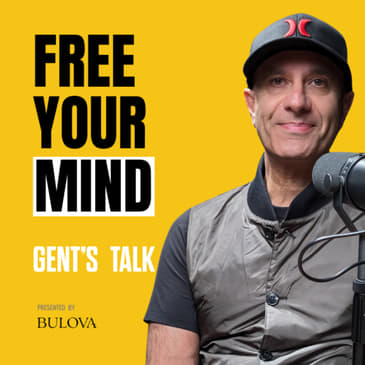
In this week's episode of Gent's Talk, presented by BULOVA, host Samir Mourani sits down with world renowned speaker and author Robin Sharma (Author of the 5AM Club, The Monk Who Sold His Ferrari) to talk about the 8 forms of wealth money cannot buy, how to live a purposeful life, the focus needed to go from having a victim mentality to a leader mentality and the steps to take to become the best version of yourself. #gentstalk Connect with us! Subscribe here ► https://www.youtube.com/@GentsTalkPodcast Website: https://gentspost.com/ Instagram: https://www.instagram.com/gentspost/ TikTok: https://www.tiktok.com/@gentstalkpod Facebook: https://www.facebook.com/gentspost/ About Gent's Talk: The Gent's Talk series, powered by Gent's Post and presented by BULOVA Canada is an episodic video podcast conversation with leading gents and rising stars across various industries. Guests include Russell Peters, James Blunt, Jonathan Osorio, Director X, JP Saxe, Wes Hall, Johnny Orlando, Shan Boodram, Dom Gabriel, and Nick Bateman, just to name a few. The conversations range from career path, hurtles, mental health, family, relationships, business, and everything in between. Gent's Talk is the first-ever video podcast to be made available for streaming on all Air Canada domestic/international flights. We aim to have a raw, unfiltered conversations about our guests' lives, how they achieved success, lessons learned along the way, and the challenges encountered. About Robin Sharma: Robin Sharma is a globally respected humanitarian who, for over a quarter of a century, has been devoted to helping human beings realize their native gifts. One of the top leadership and personal mastery experts in the world, he advises companies such as NASA, Nike, Microsoft, Unilever, GE, FedEx, HP, Starbucks, Yale University, PwC, IBM Watson and the Young Presidents' Organization. His #1 international bestsellers, such as The 5AM Club, The Monk Who Sold His Ferrari, The Greatness Guide and Who Will Cry When You Die?, have sold millions of copies in more than ninety-two languages and dialects, making him one of the most widely read authors alive. Credits: Host/Producer: Samir Mourani Creative Director and Executive Producer: Steven Branco Video & Sound Editor: Roman Lapshin A STAMINA Group Production, powered by Gent's Post.
The Gent's Talk podcast, hosted by Samir Mourani, pulls the curtain back on difficult conversations around mental health, business, relationships and the difficulties around expressing oneself, with rising and leading gents from across the globe.
New episodes every Monday! #GentsTalk
Instagram: https://instagram.com/gentstalkpod
TikTok: https://tiktok.com/gentstalkpod
YouTube: https://www.youtube.com/@GentsTalkPodcast
[00:00:00] There's generations, Samir. Generations of people who are feeling bad because they're
[00:00:05] measuring their success and wealth by what's in their bank accounts, talk portfolio, and
[00:00:10] the square footage of their house. If you want to break the loop of making everything
[00:00:15] about the watches, the jets, and how much money you have, ask yourself who are you
[00:00:19] spending your time with? Where do you find the balance between the extremes?
[00:00:25] If you look at the research, the most productive people working, it's harder than ever before with
[00:00:32] the ****.
[00:00:33] I'm wondering why you say that.
[00:00:38] Taking time off is necessary for creativity. Go goes for your taking a year away from the
[00:00:43] world. Go to Tokyo, go to Bali, go to Vietnam, do it for a day.
[00:00:47] What do you say then to the people who hear this message and go, that sounds great,
[00:00:53] but I work a really crappy job?
[00:00:55] I would say to that person, number one, you have a lot more choices than you might be noticing.
[00:00:59] Victims are about CBE, Complaint Blame and Excuse. Leaders are about APR, Absolute Personal
[00:01:04] Responsibility. Someone's going to write the next best seller. Someone's going to
[00:01:07] write the code that'll change the world. Why not you?
[00:01:35] Welcome to the Gents Talk podcast.
[00:01:36] It's great to be here with you, Samir.
[00:01:38] I'm really excited to have you on. I've heard so many great things about speaking
[00:01:43] to you and when the opportunity came up to have you join me in studio, part of your book
[00:01:50] tour for the new book. Congratulations.
[00:01:52] Thank you very much.
[00:01:55] I'm curious about how that process goes, but when I had the opportunity to bring you
[00:02:01] on, I immediately jumped at it because I think you are a wealth of knowledge. You're
[00:02:08] a world-renowned author. You've got your book sell everywhere across the globe.
[00:02:13] You're a speaker. You work with Fortune 500 CEOs. You name it.
[00:02:17] I mean, the list of accolades is so long it would take the extent of this entire podcast
[00:02:22] episode to list them out. But what I wanted to know from you first and foremost is part
[00:02:28] of this particular book tour, The Wealth Money Can't Buy.
[00:02:33] What is the wealth you're referring to?
[00:02:37] Maybe one way to answer it, Samir, is what is the wealth I'm not referring to?
[00:02:41] I only mean that our society has hypnotized us in many ways to measure wealth by how much
[00:02:47] money we have, the size of our portfolio, how many things we've accumulated.
[00:02:52] That has a lot of us climbing a mountain that I think truth will tell. They're going
[00:02:59] to reach a point where they think they've climbed the wrong mountain.
[00:03:03] In this book, I have a foundational model that I start off with. It's based on
[00:03:08] what I've been teaching to my billionaire client, sports superstar, entertainment
[00:03:12] royalty clients for about 15 years. It's called The Eight Forms of Wealth.
[00:03:16] Money is one of the forms of wealth. Money is important. It puts food on the family
[00:03:21] table. Excuse me for my voice by the way. I've been on this book tour.
[00:03:25] But money puts food on the family table. It allows us to do great things for the people we love.
[00:03:30] It allows us to be helpful. But there are seven other forms of wealth that I think most of us miss
[00:03:37] and if we could only embrace them and feed them, I think we'd have truly rich lives.
[00:03:43] And what are those seven?
[00:03:45] Okay, so there's the first form of wealth, growth. We can get into it.
[00:03:49] But if you are materializing your potential, you've got a currency worth celebrating.
[00:03:55] Number two, wellness. The old idea. When we are young, we would sacrifice all of our health for wealth.
[00:04:03] When we get old and figure out what life is all about, we'd sacrifice all of our wealth for a day of good health.
[00:04:09] So there's 20 chapters on how do you really maximize energy, longevity, peak health.
[00:04:15] Three, family. Last night I was very blessed. I spent time with my 87-year-old father
[00:04:23] and my mother and my daughter Bianca. That is a form of wealth money camp by
[00:04:30] to have good friends, a good family, a happy home.
[00:04:34] So that's the third form of wealth. The fourth is craft.
[00:04:37] I think we often neglect the power of seeing your work no matter what it is as an opportunity to pursue mastery.
[00:04:45] Fifth form of wealth is money. Sixth is community. Building a life where you strip out the energy of
[00:04:52] vampires and you fill your life with possibly Tarians and people whose lives you want to be living.
[00:04:58] Seventh is adventure. Eight is service.
[00:05:01] Out of those eight, which one resonates the most with you?
[00:05:07] They all deserve equal weighting in many ways.
[00:05:13] But I've always really embraced number one very much growth.
[00:05:19] I come from very humble beginnings. I grew up in a little town in Cape Breton, Nova Scotia.
[00:05:25] And if there's one thing I've done right, I never say I'm some kind of a guru, but if there's one thing I've done right,
[00:05:35] it's I've fallen in love with learning and growth.
[00:05:38] And if there's something I was struggling with or didn't know or wanted to do,
[00:05:42] I'd find the right mentor or the right book or the right course and I'd figure it out.
[00:05:47] And again, I have to give credit to my dad. He filled our home with personal development books.
[00:05:53] I've always been around the idea that you can materialize more of your primal genius.
[00:05:59] So growth is big for me. The fourth form of wealth craft is so important.
[00:06:05] Of course, family and wellness. I take those very, very seriously.
[00:06:08] But I spent 12 months writing this book. It was a devotion bordering on an obsession.
[00:06:15] Probably 20 versions of the manuscript, 10,000 changes every manuscript.
[00:06:20] So I think number one, I wanted to push a piece of magic out in the world.
[00:06:24] I don't know if I've done so. My readers will let me know soon.
[00:06:27] But that was my intention.
[00:06:29] But also when you when you work like that, you get to know more of yourself.
[00:06:33] And then I think another one that's very deep for me is the eighth form of wealth,
[00:06:37] smear service, the opportunity to be helpful, the opportunity to help someone in need,
[00:06:44] the opportunity, let's say as an entrepreneur to distribute values
[00:06:48] and try to put great products into the world in a world where too many people are
[00:06:54] card-carrying members of the cult of mediocrity.
[00:06:58] Card-carrying members of the cult of mediocrity. That's an interesting one.
[00:07:03] I'm wondering why you say that.
[00:07:08] Why do you think there are so many people that are settling for mediocrity?
[00:07:12] Well, let me ask you how many Basquias do you see in the world right now?
[00:07:17] How many Picasso's do you see in whatever the field of business or life is?
[00:07:22] How many Federer's?
[00:07:24] Yeah, a few.
[00:07:26] They're almost like unicorns for some reason.
[00:07:28] They're almost like unicorns.
[00:07:30] It's like you go into a coffee shop, it's good.
[00:07:33] But most businesses over promise and deliver.
[00:07:37] So, and I just think this distraction with media
[00:07:42] and this attraction to digital diversion is
[00:07:46] causing a lot of people to be very checked out.
[00:07:49] And so, I think there is a collective
[00:07:53] deprofessionalization of business.
[00:07:56] I think the borders between professional and personal
[00:08:01] have become blurred for obvious reasons.
[00:08:04] And I think too many good souls, and I'm not judging,
[00:08:09] humbly saying, but they go to work and they
[00:08:13] don't see it as a platform to push mastery in the world.
[00:08:16] The wealth money you can't buy is not just about mastery in your work.
[00:08:21] There's those seven forms of wealth, but I think it's
[00:08:24] I think all labor has dignity.
[00:08:27] And I think when you go to work every day,
[00:08:30] we live in a world where maybe hard work is getting a bad reputation.
[00:08:34] And I don't subscribe to the hustle and grind culture.
[00:08:37] I've written a lot about the importance of rest and enjoying the fruits of your labor.
[00:08:41] But our work is very important, and even if no one sees us
[00:08:47] or plots us, doesn't mean we shouldn't try to do beautiful work
[00:08:51] even if we're digging graves.
[00:08:55] So what do you say then to the people who hear this message
[00:08:59] and go, that sounds great, but I work a really crappy job
[00:09:04] because this is all I'm able to get in my current
[00:09:08] standing in life.
[00:09:10] But I'm able to put food on the table.
[00:09:13] I do it not because I like it.
[00:09:15] I don't care for it.
[00:09:17] I have no passion for my passion lies elsewhere.
[00:09:22] What would you say to those people?
[00:09:24] Well, I respect what they say.
[00:09:26] That's the great thing about a human life.
[00:09:28] We all get to roll through our days the way we want.
[00:09:32] I would say to that person number one, you have a lot more choices than you might be noticing.
[00:09:37] We live in a world right now where you use the word unicorn.
[00:09:41] You can launch a unicorn with a phone right now.
[00:09:44] It's true.
[00:09:46] So victims are about CBE, complain, blame and excuse.
[00:09:50] Leaders are about APR, absolute personal responsibility.
[00:09:53] Someone's going to write the next best seller.
[00:09:55] Someone's going to write the code that will change the world.
[00:09:57] Why not you?
[00:09:59] That's the first thing I'd say.
[00:10:01] And the second thing I'd say to a person who's stuck in a job is
[00:10:05] Have you ever been in a coffee shop, Samir?
[00:10:07] And there's 10 people who are on their phones or disengaged.
[00:10:11] And yet there's that one person who still has a sparkle in her eye.
[00:10:15] Absolutely.
[00:10:17] There is a spot.
[00:10:19] As soon as you walk in, you notice the ones that are there but not there.
[00:10:23] And then the ones that are present.
[00:10:25] It's like whenever you have a conversation with someone and
[00:10:28] their phone's on the table and it's going off and they're constantly looking at it.
[00:10:31] They're looking at their smartwatch.
[00:10:34] Versus the person who's fully invested in the other person.
[00:10:36] You see it in coffee shops.
[00:10:38] I was on a flight from London here to come here.
[00:10:40] The gentleman who was working for the airline had a sparkle in his eye
[00:10:42] and did his work like Rembrandt painted.
[00:10:44] I interviewed him sort of.
[00:10:46] And I said, like what is he?
[00:10:48] He goes, oh I love my job and I love my colleagues
[00:10:50] and I love my job.
[00:10:52] And I'm like, I'm going to be a good guy.
[00:10:54] And I'm like, I'm going to be a good guy.
[00:10:56] And I'm like, I'm going to be a good guy.
[00:10:58] And I'm like, I'm going to be a good guy.
[00:11:00] And I'm like, I'm going to be a good guy.
[00:11:02] I love my job and I love my colleagues and I get to fly around the world.
[00:11:04] And I get to do this.
[00:11:06] So all I'm saying is you don't have to leave your current job
[00:11:08] to get the sparkle back.
[00:11:12] My books for many years have been published by Harbour Collins.
[00:11:14] The global CEO, her name was...
[00:11:16] She's not there anymore.
[00:11:18] But her name was Jane Friedman.
[00:11:20] And she started off...
[00:11:22] Not in the mail room but in the secretarial pool.
[00:11:24] But I don't think she said, oh I don't have an important job.
[00:11:26] She probably took it out of her hands.
[00:11:28] So where's the balance between the...
[00:11:30] A point you made about working hard
[00:11:32] but also finding a balance between working hard
[00:11:34] and wellness and giving yourself a break?
[00:11:36] Admittedly, it's an area that I struggle with.
[00:11:38] This past Sunday for example,
[00:11:40] I had a day where I had nothing planned.
[00:11:42] And for the first few hours of the day
[00:11:44] I thought I'd be able to find a balance
[00:11:46] between working hard and well-being
[00:11:48] and giving myself a break.
[00:11:50] Admittedly, it's an area that I struggle with.
[00:11:52] This past Sunday for example,
[00:11:54] I had a day where I had nothing planned.
[00:11:57] And for the first few hours of the day
[00:11:59] I thought this is nice.
[00:12:01] But then it was very much quickly turning into
[00:12:03] I feel like I'm wasting a day.
[00:12:05] I should be doing something.
[00:12:07] I should be working.
[00:12:09] And I don't know if I've subconsciously
[00:12:11] subscribed to this hustle culture.
[00:12:13] I think in some degrees
[00:12:15] I know I have and in others
[00:12:17] I'm like, I think because I'm self-aware
[00:12:19] maybe I'm not.
[00:12:21] But I also see it all around.
[00:12:23] You turn on social media, entrepreneurship
[00:12:25] and the hustle mentality.
[00:12:27] I call it hustle porn.
[00:12:29] It's glorified.
[00:12:31] Quit your day job
[00:12:33] and go and have 10 side jobs, essentially.
[00:12:35] And if you're not working from 5am
[00:12:37] until midnight
[00:12:39] you're not working hard enough.
[00:12:41] This in and of itself
[00:12:43] is creating a group of people
[00:12:45] who are burnt out
[00:12:47] and just reddit it
[00:12:49] quit because it's too much.
[00:12:51] Where do you find the balance
[00:12:54] between the extremes?
[00:12:58] If you look at the research
[00:13:00] the most productive people
[00:13:02] work in cycles.
[00:13:04] They work in seasons.
[00:13:06] Rest is not a luxury, rest is a necessity.
[00:13:08] So I would say for I think you said Sunday
[00:13:10] and
[00:13:12] a lot of us are just overstimulated
[00:13:14] from all of the digital media
[00:13:16] and all the
[00:13:18] attractions and shiny toys out there.
[00:13:20] So it's you're right
[00:13:22] it's more and more it's harder
[00:13:24] to be alone in a room.
[00:13:26] It's harder than ever before
[00:13:28] with even the quick videos for example
[00:13:30] to sit and read
[00:13:32] and so what I would say is
[00:13:34] well I'd go to John Lennon
[00:13:36] he said time you enjoy wasting
[00:13:38] is not wasted time
[00:13:40] and by giving yourself permission
[00:13:42] to take a digital Sabbath
[00:13:46] in the wealth money camp by
[00:13:48] there's a whole section on productivity
[00:13:50] and one of the things I say is
[00:13:52] go to Tokyo
[00:13:54] go to Bali
[00:13:56] go to Vietnam
[00:13:58] go to Medellin
[00:14:00] bring your favorite books
[00:14:02] leave your phone at home
[00:14:04] go try the food
[00:14:06] make some new friends
[00:14:08] if you can't do it for a year
[00:14:10] go goes for a quarter
[00:14:12] if you can't do it for a month
[00:14:14] do it for a day
[00:14:16] what I'm trying to suggest is
[00:14:18] taking time off
[00:14:21] is necessary for creativity
[00:14:23] and productivity
[00:14:25] a good farmer understands that
[00:14:27] a great harvest requires
[00:14:29] a fallow season
[00:14:31] so at least once a week take some time off
[00:14:35] and regularly take time off
[00:14:37] because that's when your ideas incubate
[00:14:39] that's when you become an interesting person
[00:14:41] and not only that
[00:14:43] if you look at what makes mastery
[00:14:45] it's minimalism
[00:14:47] how so
[00:14:49] Picasso
[00:14:51] wasn't a baseball player
[00:14:55] Farah Nadria
[00:14:57] wasn't
[00:14:59] an Olympic boxer
[00:15:01] we live in a world
[00:15:03] the hustle culture
[00:15:05] we also live in a maximalist culture
[00:15:07] we want to push
[00:15:09] 1000 products into the world this year
[00:15:11] versus one Taj Mahal
[00:15:13] in the book there's a chapter called
[00:15:15] build your project X
[00:15:17] do your project X
[00:15:19] and I used the example of the Duomo
[00:15:21] we were talking before on camera
[00:15:23] about Italy
[00:15:25] so you know in Milana
[00:15:27] have you seen the Duomo?
[00:15:29] do you know how long it took?
[00:15:31] 600 years
[00:15:33] how did you know that?
[00:15:35] I want to move to Italy
[00:15:37] I'm super impressed
[00:15:39] 600 years
[00:15:41] and what I challenge readers
[00:15:43] in the book in that chapter
[00:15:45] about doing your project X
[00:15:48] is that you're willing to say no
[00:15:50] to all the shiny toys
[00:15:52] and distractions
[00:15:54] and for 600 years
[00:15:56] focus on your project X
[00:15:58] that one masterpiece
[00:16:00] that when you put it out in the world
[00:16:02] astonishes all witnesses
[00:16:04] I mean
[00:16:06] JD Soutland
[00:16:08] he only published
[00:16:10] The Catcher in the Rye
[00:16:12] but how many millions of people?
[00:16:14] know the book
[00:16:16] the Eiffel Tower
[00:16:18] all you need is one monument
[00:16:20] to stand the test of time
[00:16:22] so I would say
[00:16:24] take the rest and then just focus on one thing
[00:16:26] and priorities
[00:16:28] and be a minimalist
[00:16:30] the three great friends
[00:16:32] not 10,000 digital friends
[00:16:34] then you start stripping the complexity
[00:16:36] out of your life
[00:16:38] and you start to get very monomaniacally focused
[00:16:40] on the few priorities
[00:16:42] and then you have more free time
[00:16:44] free time I think is the ultimate goal
[00:16:46] because even when you speak to the entrepreneurs
[00:16:48] and the hustlers
[00:16:50] it's all about how do I free up my time
[00:16:52] and create passive income
[00:16:54] so that I'm not actually spending time working
[00:16:56] like I would have been in a 9-5 theoretically
[00:16:58] the
[00:17:00] free time concept
[00:17:02] at least to me feels elusive sometimes
[00:17:04] because
[00:17:06] no matter how much
[00:17:08] you work to try and build
[00:17:10] you end up having to work more
[00:17:13] and build further
[00:17:15] I'm curious
[00:17:17] from your perspective
[00:17:19] how you define free time
[00:17:21] and how does someone achieve something like that
[00:17:23] realistically speaking
[00:17:25] not just the occasional Sunday like it is in my case
[00:17:27] well
[00:17:29] I set very clear red lines in my life
[00:17:33] and that's important
[00:17:35] I think setting boundaries is very important
[00:17:37] saying no to things
[00:17:39] as simple as it sounds
[00:17:41] no to most social invitations
[00:17:43] saying no to most friendship requests
[00:17:45] even in business
[00:17:47] what destroys a great company is not that
[00:17:49] they didn't have enough opportunities
[00:17:51] it's that they had too many great opportunities
[00:17:53] and they said yes to everything
[00:17:55] so they diluted their focus
[00:17:57] so
[00:18:01] how do I define free time
[00:18:03] and how do I get it
[00:18:07] I'm very good at scheduling
[00:18:11] I'm old school
[00:18:13] I'm a big piece of paper
[00:18:15] I call it my weekly design template
[00:18:17] I can give it to you
[00:18:19] you can put it in the show notes for all your people
[00:18:21] so we'll make sure we do that
[00:18:23] exchange information afterwards
[00:18:25] so it's a piece of paper about this big
[00:18:27] and
[00:18:29] every Sunday I review my week that's gone by
[00:18:31] and then I just
[00:18:33] reflect and think about the week ahead
[00:18:35] and here's the key Samir
[00:18:37] I try to put everything
[00:18:39] that's important on that schedule
[00:18:41] morning routine is there
[00:18:43] my family meals are there
[00:18:45] what I call my second-win workout
[00:18:47] when I go for a walk after work
[00:18:49] is there times for meditation
[00:18:51] business meetings
[00:18:53] it all goes there which really frees the mind
[00:18:55] I know I sound like Morpheus in the old movie
[00:18:57] Matrix like free your mind
[00:18:59] but then it's all there
[00:19:01] and I even color code it
[00:19:03] and
[00:19:05] it just
[00:19:07] Saul Bellow once had a plan
[00:19:10] so I think a good schedule
[00:19:12] I think good boundaries
[00:19:14] getting great at the polite no
[00:19:16] and also as simple as it sounds
[00:19:18] clarity just getting really clear
[00:19:20] on your last day
[00:19:22] the final section of the book is the eighth form
[00:19:24] of wealth which is service
[00:19:26] and I not only talk about being a gift giver
[00:19:28] versus a taker
[00:19:30] I not only talk about the shortness of life
[00:19:32] but I talk
[00:19:34] about having a living funeral
[00:19:36] and eating
[00:19:38] your last meal today
[00:19:42] and I think connecting to your mentality
[00:19:44] and doing a few rituals
[00:19:46] to remind you of the shortness of life
[00:19:48] it allows you to live to the point
[00:19:50] and then you're not postponing
[00:19:52] and saying yes to everything
[00:19:54] like if there's a quote
[00:19:56] I don't know who said it
[00:19:58] and I'm just going to paraphrase it
[00:20:02] but you know something like that
[00:20:04] knowing that you have 30 days
[00:20:06] to go to the hangman
[00:20:08] which focuses the mind on what's truly important
[00:20:12] and it makes me think of a story in the book
[00:20:14] you know Eugene O. Kelly
[00:20:16] was the global CEO
[00:20:18] of KPMG
[00:20:21] and he went into his doctor
[00:20:23] to receive the results of
[00:20:25] routine medical exam
[00:20:27] doctor came back with a look
[00:20:29] you never want to see
[00:20:31] the doctor said
[00:20:33] long story short
[00:20:35] you've got
[00:20:38] brain tumor and you do have
[00:20:40] 90 days left to live
[00:20:45] he realized, confronted with his mortality
[00:20:47] in all his years
[00:20:49] as a high flying titan
[00:20:51] he had never taken his wife
[00:20:53] to lunch
[00:20:55] he had missed many of his daughters
[00:20:57] Christmas concerts
[00:20:59] he'd never walked Central Park
[00:21:01] with his friends
[00:21:03] and so what he decided to do
[00:21:05] was reverse engineer
[00:21:07] just like he was so good at reverse engineering
[00:21:09] the strategy of his business
[00:21:11] and he decided
[00:21:13] to what he called
[00:21:15] in the book Chasing Daylight
[00:21:17] become a perfect moment creator
[00:21:19] and he literally over the line
[00:21:21] and he did pass away roughly 90 days later
[00:21:23] but in those 90 days
[00:21:25] confronted with the shortness of his life
[00:21:29] he focused on what was most important
[00:21:31] and he created perfect moments for himself
[00:21:33] and his loved ones
[00:21:36] and that's what I'm saying about connecting with your mortality
[00:21:38] really getting clear
[00:21:40] on the fact life is short
[00:21:42] it allows, it's a great decision matrix
[00:21:44] to say no to the unimportant
[00:21:46] and really get busy doing
[00:21:48] I shouldn't say get busy
[00:21:50] but really focusing our hours
[00:21:52] on the things that really count
[00:21:54] the perfect moment
[00:21:58] interesting how he decided
[00:22:00] to
[00:22:02] spend those last 90 days
[00:22:06] the idea of coming face to face
[00:22:08] with your own mortality
[00:22:10] is a daunting thing
[00:22:12] that's an intimidating thing
[00:22:14] but to have the self-awareness
[00:22:16] to go you know what
[00:22:18] I'm going to choose to make those 90 days
[00:22:20] as meaningful as possible
[00:22:22] I think there really is a lesson to your point
[00:22:24] to pull from that
[00:22:26] to extract from that
[00:22:28] why wait until you, God forbid
[00:22:30] you don't find out
[00:22:32] or you don't get told or have it
[00:22:34] you weren't to have only 30 days
[00:22:36] 20 days
[00:22:38] 100 days, whatever a year
[00:22:40] how would you want to live that year
[00:22:42] we only have a short amount of time
[00:22:44] for some of us
[00:22:46] it's 90 days
[00:22:48] and for some of us
[00:22:50] it's 98,000 days
[00:22:52] but life is
[00:22:54] really short
[00:22:56] and human beings as a species
[00:22:58] we are the great postponers
[00:23:00] I'll launch the business
[00:23:03] again the spiritual affair
[00:23:05] I will get fit
[00:23:07] I'll do it
[00:23:09] next month or next year
[00:23:11] start Monday
[00:23:13] we're great postponers
[00:23:15] and I just
[00:23:17] you sounded like you were almost apologizing
[00:23:19] talking about the shortness of life
[00:23:21] and we all do that
[00:23:23] but I don't think
[00:23:25] death is
[00:23:27] depressing, I think death is inspiring
[00:23:29] so
[00:23:34] it's just a reality
[00:23:36] and I think the greatest fear
[00:23:38] is the ambient noise
[00:23:40] we all have that we're going to die
[00:23:42] I think every single one on the planet today
[00:23:44] has a subconscious ambient noise
[00:23:46] we're scared
[00:23:48] at some level because we know we're going to die
[00:23:50] but I just think
[00:23:52] I spent a lot of time thinking about my death
[00:23:54] you know there's
[00:23:56] a concept I have in the wealth of money camp
[00:23:58] I called
[00:24:00] my 25 summers
[00:24:03] framework
[00:24:05] if I'm lucky I have 25 summers left
[00:24:07] it's not a lot of time
[00:24:09] makes me focus on what's most important
[00:24:11] every morning to be tactical
[00:24:13] for all your many listeners
[00:24:15] and viewers around the world
[00:24:17] congratulations on how well your podcast is doing
[00:24:19] doesn't come easy
[00:24:21] it's a lot of work
[00:24:23] so I honor you for that
[00:24:25] we see someone successful and we don't see all the
[00:24:27] all they've gone through
[00:24:29] everything that goes into it
[00:24:31] the sweat, the disappointments
[00:24:33] the long hours
[00:24:35] the many wins that lead up to the big wins
[00:24:37] I appreciate you saying that thank you
[00:24:39] well that's why I think entrepreneurs and creators
[00:24:41] deserve to be put on a pedestal
[00:24:43] because
[00:24:45] it's easy to knock people down
[00:24:49] until you see what they go through
[00:24:51] I think the entrepreneurs
[00:24:53] and creatives and producers
[00:24:55] should be the ones who are absolutely
[00:24:57] celebrated in the world
[00:24:59] and it's just too much entitlement in the world
[00:25:01] right now
[00:25:03] and it's the value creators
[00:25:05] who are up at 5am
[00:25:07] and again I'm not saying hustle and grind
[00:25:09] run what I call the five great hours rule
[00:25:11] we can get into it
[00:25:13] anyway
[00:25:15] to be tactical
[00:25:17] I ask myself
[00:25:19] five morning questions in my journal
[00:25:21] every morning
[00:25:23] which really helps me very much
[00:25:25] and maybe they're going to be helpful
[00:25:28] because gratitude is the antidote to fear
[00:25:30] there's obviously lots of good science
[00:25:32] that deliberate
[00:25:34] gratitude to use the term
[00:25:36] of the positive psychologist
[00:25:38] allows us to have an antidote
[00:25:40] to the negativity
[00:25:42] bias of the human brain
[00:25:44] which is a feature of the human brain
[00:25:46] which causes us to constantly be looking for threats
[00:25:48] so number one
[00:25:50] what am I grateful for
[00:25:52] it retrains the brain to look for the blessings
[00:25:54] and the good
[00:25:56] what am I winning
[00:25:58] you talked about the small wins
[00:26:00] lots of good science talking about that
[00:26:02] for many years
[00:26:04] I've been teaching a brain tattoo
[00:26:06] small daily seemingly
[00:26:08] seemingly insignificant improvements
[00:26:10] when done consistently over time
[00:26:12] lead to stunning results
[00:26:14] so by asking yourself
[00:26:16] where am I winning
[00:26:18] you build momentum and energy
[00:26:20] because you're actually looking for your little wins
[00:26:22] number three I ask myself
[00:26:25] what am I doing today
[00:26:27] one of the chapters at the beginning of the book
[00:26:29] and the growths
[00:26:31] is don't be a resentment collector
[00:26:33] and maybe many of your entrepreneurs
[00:26:35] and creative types who follow you
[00:26:37] might say how is
[00:26:39] releasing resentment
[00:26:41] relevant to my productivity
[00:26:43] and dominating my domain
[00:26:45] because a lot of people will take that
[00:26:47] and go I use my resentment as fuel
[00:26:49] I use my failures as fuel
[00:26:51] I don't think you're ever going to produce your best
[00:26:53] I agree
[00:26:55] I think the greatest masterpieces
[00:26:57] were done from a place of love
[00:26:59] 100% I couldn't agree with you more
[00:27:01] we're talking about Italy
[00:27:03] Michelangelo I don't think was
[00:27:05] doing the frescoes
[00:27:07] on the ceiling of the 16 challenge
[00:27:09] you know
[00:27:11] angry because he didn't get paid
[00:27:13] so I don't know
[00:27:15] but
[00:27:17] so I think it's important to
[00:27:19] release our resentments
[00:27:21] and learn to forgive
[00:27:23] it's not condoning
[00:27:25] but we release the energy that we're caring
[00:27:27] which really frees up intimacy
[00:27:29] with creativity
[00:27:31] and productivity
[00:27:33] and our relationships are so much better
[00:27:35] fourth question
[00:27:37] what does my ideal day look like
[00:27:39] I call it a pre-performance paragraph
[00:27:41] one paragraph on your ideal day
[00:27:43] that walks you into clarity
[00:27:45] so you have more freedom to say no
[00:27:47] and then the final question is
[00:27:50] what needs to be said on my last day
[00:27:54] could you imagine that every day
[00:27:56] you wake up
[00:27:58] and just for three sentences
[00:28:00] Samir
[00:28:02] you reconnect with what you want people to say
[00:28:04] about you on your last day
[00:28:06] and then you live out the day with that frame of reference
[00:28:08] you've built a little protocol to do it
[00:28:10] then you're going to climb the right mountain
[00:28:12] yeah
[00:28:14] I really like that last one
[00:28:16] I think that one is a very
[00:28:18] grounding question
[00:28:22] make you realize
[00:28:24] make you think about the person
[00:28:26] you said
[00:28:28] that family member that maybe has been trying to reach you
[00:28:30] that you haven't called back
[00:28:32] or that petty argument
[00:28:34] that you're having with your partner
[00:28:36] that you're like is this really
[00:28:38] if today was my last day
[00:28:40] is this how I wanted it to go
[00:28:42] type of thing
[00:28:44] it's a very grounding question
[00:28:47] that's more morning
[00:28:49] I'm not going to think about it until I ask myself
[00:28:51] that question and see how I'm feeling
[00:28:53] when I answer that question
[00:28:55] can I ask you a question
[00:28:57] what do you want said about you on your last day
[00:29:00] that I was kind
[00:29:05] I think there's a lot of
[00:29:07] ugliness in the world today
[00:29:09] and
[00:29:11] a lot of times when people are kind
[00:29:13] it's masking
[00:29:15] self-interest
[00:29:17] I would like for someone just to say
[00:29:19] that I was kind and genuine
[00:29:21] that if they spoke to me
[00:29:23] or if I did something for them
[00:29:25] it was always just
[00:29:27] to do it genuinely
[00:29:29] for them
[00:29:31] to be kind to them
[00:29:33] because I think everybody needs a little more kindness in their life
[00:29:35] I think
[00:29:37] by showing
[00:29:39] one extra person a piece of kindness
[00:29:41] a smile, a hello, hold the door
[00:29:43] good morning
[00:29:45] how's your day
[00:29:47] I think that can drastically
[00:29:49] change a person's day
[00:29:51] it's happened to me
[00:29:53] and when that's happened to me
[00:29:55] I need to be able to
[00:29:57] if I can do that for other people
[00:29:59] and I treat it in a similar fashion
[00:30:01] to these conversations
[00:30:03] if I can create a space
[00:30:05] where you feel comfortable
[00:30:07] and safe
[00:30:09] and you can have conversations about whatever is going on in your mind
[00:30:11] and what you're passionate about
[00:30:13] and you don't feel like this is just part of some
[00:30:16] of the meaning of creating content for clicks
[00:30:18] and whatnot but a genuine connection
[00:30:20] genuine connecting moment
[00:30:22] that's
[00:30:24] I think that would be it
[00:30:26] well
[00:30:28] to give you a sincere compliment
[00:30:30] I don't know you very well
[00:30:33] I've just met you
[00:30:35] half an hour ago
[00:30:37] but two things stand out
[00:30:39] number one, you're very present in a world where
[00:30:41] a lot of people aren't quite there
[00:30:43] thank you
[00:30:46] second thing I've noticed about you
[00:30:48] you really are very kind
[00:30:50] and I agree with what you're saying
[00:30:52] we live in a world of
[00:30:54] polite crisis right now
[00:30:56] and people, I've heard it so many times
[00:30:58] well if I'm kind people will walk on me
[00:31:00] people will only walk over you
[00:31:02] if you let them walk over you
[00:31:04] may we not confuse kindness
[00:31:06] with weakness
[00:31:08] I think being kind is powerful
[00:31:10] when I was in my 20s
[00:31:12] I was very blessed to
[00:31:14] be a law clerk
[00:31:16] after law school
[00:31:18] to be a law clerk for
[00:31:20] a tight enough a judge
[00:31:24] and he really he shaped me
[00:31:26] in a lot of things
[00:31:28] I learned so much from my formative years
[00:31:30] and
[00:31:32] one of the things I got right
[00:31:34] was a number of years ago
[00:31:36] we'd been in touch every few
[00:31:38] you know every once in a while
[00:31:40] but I said you know I'm going to get on a plane
[00:31:43] and I'm going to come and I'm going to see you
[00:31:47] and
[00:31:49] so I did and we spent a wonderful
[00:31:51] few hours together
[00:31:53] one morning
[00:31:55] on the east coast of Canada
[00:31:57] and I asked him questions
[00:31:59] and when we finished our time together
[00:32:01] I asked him I said you know
[00:32:03] what's most important
[00:32:05] you've lived a long life
[00:32:07] what's most important
[00:32:09] and he said ah Robin
[00:32:11] be kind
[00:32:13] I still remember him
[00:32:15] saying and he goes oh Robin
[00:32:17] it's so important
[00:32:19] be kind
[00:32:21] and he passed away a number of months after that
[00:32:23] but kindness is
[00:32:25] you know kindness is
[00:32:27] so incredibly important
[00:32:29] and I think
[00:32:31] generosity is related to kindness
[00:32:33] and I think it's
[00:32:35] it's so important
[00:32:37] if you look at the best
[00:32:39] for example they're operating from scarcity
[00:32:41] going to a restaurant
[00:32:43] how can I charge the most amount of money
[00:32:45] and give the least amount of value
[00:32:47] and yet if you would only understand
[00:32:49] the marketplace rewards
[00:32:51] magic delivered
[00:32:53] that's why
[00:32:55] all those chapters in the book on mastery are important
[00:32:57] it's not only good for your soul
[00:32:59] it's good for the world
[00:33:01] that's why Steve Jobs
[00:33:03] he's talked about a lot but he's one of my heroes
[00:33:05] he was less an entrepreneur
[00:33:08] he wanted to push beauty into the world
[00:33:10] before he did the iPhone
[00:33:12] he said I want the icons on the iPhone
[00:33:14] that look so beautiful
[00:33:16] people would want to lick the screen
[00:33:18] he just was
[00:33:20] he was an absolute perfectionist
[00:33:22] by the way
[00:33:24] have you heard of the term in toku?
[00:33:26] no oh I think you'll love it
[00:33:28] it's the Japanese term for
[00:33:30] the art of giving in secret
[00:33:32] so I think
[00:33:34] we're talking about kindness
[00:33:36] I'm suggesting generosity wins in business and life
[00:33:40] but I think a gift given
[00:33:42] for a reward is not a gift
[00:33:44] it's a barter
[00:33:46] so I think in toku is a really great
[00:33:48] business
[00:33:50] for business people
[00:33:52] producers, for family members
[00:33:54] for human beings
[00:33:56] give a gift
[00:33:58] with no reward
[00:34:00] even if it's a compliment
[00:34:02] or if it's
[00:34:05] a look or a present
[00:34:07] or you go the extra mile
[00:34:09] do it
[00:34:11] for the act of giving
[00:34:13] and service
[00:34:15] don't do it because
[00:34:17] you'll get some kind of promotion
[00:34:19] or even some kind of applause
[00:34:21] because that's not a real gift
[00:34:23] I do this little small thing
[00:34:25] where
[00:34:27] if I have a conversation with someone
[00:34:29] and I get to know them enough
[00:34:31] where they share their birth date with me
[00:34:33] I put it in my calendar
[00:34:35] so that on that date
[00:34:37] even if we haven't spoken all year
[00:34:39] I'll just send them a message
[00:34:41] say hey today's your birthday
[00:34:43] I just want to wish you a happy birthday
[00:34:45] and some of the responses
[00:34:47] have been so incredible
[00:34:49] because it's profound
[00:34:51] for people to be like oh you remembered
[00:34:53] it's nice we talked last year
[00:34:55] whatever the case may be
[00:34:57] and I try to do that as a means to
[00:34:59] again just spread
[00:35:01] a bit of extra kindness into the world
[00:35:03] because on your birthday sometimes
[00:35:05] a lot of people are like how many people have wished me
[00:35:07] happy birthday
[00:35:09] I posted a photo of me
[00:35:11] and no ex people commented
[00:35:13] or liked or whatnot
[00:35:15] but then there's a lot of people
[00:35:17] who aren't on social media
[00:35:19] and weren't getting the external validation
[00:35:21] sending that little message
[00:35:23] I think goes a long way
[00:35:25] there's so many things
[00:35:27] I want to ask you about
[00:35:30] I want to quickly dive into
[00:35:32] your perspective
[00:35:34] on wealth
[00:35:36] through money
[00:35:38] I think a lot of people today
[00:35:40] grow up thinking
[00:35:42] if you don't have an ex number
[00:35:44] of dollars in your bank account
[00:35:46] you are not wealthy
[00:35:48] if you are not financially wealthy
[00:35:50] you are not wealthy period
[00:35:52] nothing else matters
[00:35:54] I've heard extremely wealthy people say
[00:35:56] I've been poor
[00:35:58] I've had problems on both sides
[00:36:00] being rich is still better
[00:36:02] and just reinforces this idea
[00:36:04] especially for younger generations growing up
[00:36:06] that you have to chase that dollar
[00:36:08] and you have to make all the sacrifices
[00:36:10] you have to make for it
[00:36:12] what are your thoughts on that
[00:36:14] exactly what the wealth money can't buy is all about
[00:36:16] I think it's almost tragic
[00:36:18] how many people have been hypnotized
[00:36:20] into believing
[00:36:22] that wealth is only about money
[00:36:24] again there's eight forms of wealth
[00:36:27] the fifth form of wealth in the book
[00:36:29] is money and there's 25 chapters
[00:36:31] where I deconstruct exactly how the billionaires
[00:36:33] think what their habits are
[00:36:35] and how they do it
[00:36:37] but you're right, I think there's an entire
[00:36:39] there's generations Samir
[00:36:41] generations of people who are feeling bad
[00:36:43] because
[00:36:45] they're measuring their success
[00:36:47] and wealth by what's in their bank account
[00:36:49] stock portfolio
[00:36:51] and the square footage of their house
[00:36:53] it's like it's a very deep cultural
[00:36:55] programming
[00:36:57] how do you withdraw from that
[00:36:59] there's a lot of podcasts for example
[00:37:01] they go, well we're really lucky today
[00:37:03] we've got a billionaire
[00:37:05] he just exited or she just had a liquidity event
[00:37:07] and sold their company
[00:37:09] wow we have a real hero in the room
[00:37:11] what about the gardener
[00:37:13] who makes the
[00:37:15] community beautiful
[00:37:17] what about the teacher raising 15 kids
[00:37:19] who go out there and change the world
[00:37:21] what about the poet working in anonymity
[00:37:23] and doing it not for applause but
[00:37:25] for honoring their gifts
[00:37:27] and their talents
[00:37:29] that's rich
[00:37:31] what about being authentic
[00:37:33] what about a great family life
[00:37:35] that's rich
[00:37:37] one of the happiest people I've ever met
[00:37:39] was my ski instructor
[00:37:41] and we were going up
[00:37:43] the chairlift one day
[00:37:45] it was a beautiful sunny day
[00:37:47] and he goes, you know Rob
[00:37:49] we used to have amazing conversations
[00:37:52] we're not rich but we have rich lives
[00:37:54] and then I've mentored
[00:37:58] a lot of
[00:38:00] celebrity billionaires
[00:38:02] and I can tell you one comes to mind
[00:38:04] on his way home every day
[00:38:06] he'd buy a lot of alcohol just to medicate himself
[00:38:10] there's a chapter
[00:38:12] the multi-billionaire in the very empty mansion
[00:38:14] a lot of lonely people
[00:38:17] a lot of lonely people
[00:38:19] a lot of the success gets complicated
[00:38:21] I think about Jim Carrey
[00:38:23] he said
[00:38:25] I wish everyone could be rich and famous
[00:38:27] to realize it doesn't make a difference
[00:38:31] how many of us say
[00:38:33] if I had more money
[00:38:35] oh, if I had that house
[00:38:37] if I had that watch
[00:38:39] tell me please isn't that the seduction
[00:38:41] if I had that
[00:38:43] I would feel whatever
[00:38:45] so what we're chasing is not the watch
[00:38:47] but we're trying to fill in the inner hole
[00:38:49] and no external thing will ever heal
[00:38:51] sorry for my voice
[00:38:53] but no external thing
[00:38:55] will ever heal
[00:38:57] and inner wound
[00:38:59] the power of personal development
[00:39:01] some people roll their eyes
[00:39:03] less and less
[00:39:05] it's amazing how I've been at this for 31 years
[00:39:07] it's amazing how over the past few years
[00:39:09] you look at the best seller list
[00:39:11] or what people are consuming
[00:39:13] it's personal developments
[00:39:17] the world is in a good place in many ways
[00:39:19] but when you do MVP
[00:39:21] meditation, visualize and prayer
[00:39:23] when you work with healers
[00:39:25] when you practice mantra
[00:39:27] mantra is Sanskrit for
[00:39:29] man means mind
[00:39:31] means freedom
[00:39:33] mantra is free in the mind
[00:39:35] so when you do all these different modalities
[00:39:37] journaling etc
[00:39:39] you start to fill the holes
[00:39:41] we all have within us
[00:39:43] and then you stop craving
[00:39:45] all those external
[00:39:47] objects
[00:39:49] to help you make
[00:39:52] yourself feel better about yourself
[00:39:55] so what advice
[00:39:57] if someone is listening to this watching this
[00:39:59] you know what
[00:40:01] I'm finding myself being easily seduced
[00:40:03] by the concept of
[00:40:05] if I was able to buy that
[00:40:07] burberry jacket
[00:40:09] if I was able to buy that house
[00:40:11] if I can buy that new car
[00:40:13] that watch you name it
[00:40:15] all of the external things
[00:40:17] and ultimately once you have them
[00:40:19] you realize what's the next thing
[00:40:21] and someone wants to start
[00:40:23] I'm self aware enough to know
[00:40:25] that I'm in this loop
[00:40:27] and I need to get out of it
[00:40:29] well it's a great question
[00:40:31] and you identified it in your question
[00:40:33] awareness is the DNA of transformation
[00:40:35] we live in a world right now
[00:40:37] that is so obsessed with tactics
[00:40:39] what are the tactics
[00:40:41] what are the tools
[00:40:43] and I talk about so many of them in the book
[00:40:45] but let's not forget the power of information
[00:40:47] and ideas
[00:40:50] methodology without philosophy
[00:40:52] is an empty victory
[00:40:54] so the idea
[00:40:56] just becoming aware
[00:40:58] that if I get another watch
[00:41:00] it's going to add more cost
[00:41:02] and more complexity
[00:41:04] or another house
[00:41:06] or all those things
[00:41:08] just becoming aware of that
[00:41:10] allows you to start breaking the loop
[00:41:12] we get good at what we practice
[00:41:14] practice not
[00:41:16] going out and medicating yourself
[00:41:18] the better you're going to get
[00:41:20] second thing I would say is
[00:41:22] we become
[00:41:24] our social network
[00:41:26] and there's very good science
[00:41:28] Nicholas Christakos at Harvard for example
[00:41:30] has found
[00:41:32] that we are influenced
[00:41:34] by not only our
[00:41:36] this is very powerful I believe
[00:41:38] we're influenced not only by our friends
[00:41:40] but the friends of our friends
[00:41:42] and the friends of our friends is friends
[00:41:44] and we could get into why
[00:41:47] but the larger point is
[00:41:49] we become our conversations
[00:41:51] so who are you following
[00:41:53] on social media
[00:41:55] are you following people who are saying
[00:41:57] here's my jet
[00:41:59] feel bad you don't have it
[00:42:01] or are you following people
[00:42:03] who are on a mission to change the world
[00:42:05] and celebrating family
[00:42:07] and doing beautiful work
[00:42:09] and taking nature walks
[00:42:11] and being a good human being
[00:42:13] and enjoying life
[00:42:15] while also doing
[00:42:17] pushing magic in the marketplace
[00:42:19] who are your friends
[00:42:21] are they all about hustle and grind
[00:42:23] I'm not judging I'm just saying
[00:42:25] if you want to break the loop
[00:42:27] of making everything about the watches
[00:42:29] and the jets
[00:42:31] and how much money you have
[00:42:33] ask yourself who are you spending your time with
[00:42:35] not only in your terms of your friendship circle
[00:42:37] but in terms of who are you following
[00:42:39] what content
[00:42:41] are you consuming
[00:42:43] there's one chapter
[00:42:45] so the seventh form of wealth
[00:42:47] is community and it's just this very point
[00:42:49] about stripping out the energy
[00:42:51] vampires and the dream stealers
[00:42:53] and there's one chapter called
[00:42:55] recruit a dead board of directors
[00:42:59] so if you can't find any live people
[00:43:01] who are living your values
[00:43:03] in the life you want to live
[00:43:05] go read the books of
[00:43:07] people who lived rich lives
[00:43:09] truly I think that's what we're talking about
[00:43:12] we're remembering there's a lot of rich people
[00:43:14] who are very life poor
[00:43:16] and we're really talking about living a rich life
[00:43:18] I'm curious
[00:43:21] as we're coming up on some time here
[00:43:27] the author of the 5am club
[00:43:29] what does your morning look like
[00:43:31] so in that book
[00:43:33] I shared the 2020-20 formula
[00:43:35] which I
[00:43:37] lived in many ways
[00:43:39] I practiced it for many years
[00:43:42] I've extended it for many years
[00:43:44] because in that book
[00:43:46] I said
[00:43:48] 20 minutes on a move
[00:43:50] 20 minutes on reflection
[00:43:52] and 20 minutes on growth
[00:43:54] but I need
[00:43:56] you probably agree
[00:43:58] you need an hour to work out the morning
[00:44:00] to really get it
[00:44:02] and then I love having coffee
[00:44:04] and writing in a journal for my reflection period
[00:44:06] that takes 40 minutes
[00:44:08] and then growing
[00:44:10] I did that for many years
[00:44:12] but I'd say for the past year
[00:44:14] I joined the 4am club
[00:44:16] and it
[00:44:18] has sort of changed my life
[00:44:20] well
[00:44:22] first of all I used to go to sleep an hour earlier
[00:44:24] I used to go to sleep at 11
[00:44:26] now I'm in bed between 9.30 and 10
[00:44:28] and it's changed my life
[00:44:30] because it just gives me so much more time
[00:44:32] in the morning
[00:44:34] and people might say wow that's really strange
[00:44:36] because any disruptive idea initially
[00:44:39] yet I'm getting good sleep
[00:44:41] and to get up at 4
[00:44:43] why would I do it?
[00:44:45] it gets to be so fun
[00:44:47] and it makes my days
[00:44:49] so freeing
[00:44:51] and so much
[00:44:53] so much better
[00:44:55] it's not like I don't have bad days
[00:44:57] but so I get up at 4
[00:44:59] and I lay in bed for 45 minutes
[00:45:01] and I open the window
[00:45:03] I live on a farm
[00:45:05] just outside Florence
[00:45:07] I listen to the roosters and the dogs barking
[00:45:09] and I do MVP
[00:45:11] you probably like sports
[00:45:13] so that's the most valuable player
[00:45:15] in my work
[00:45:17] MVP is meditation, visualization and prayer
[00:45:19] so I do that
[00:45:21] meditation, visualization and prayer
[00:45:23] 45 minutes let's say 5-6 days a week
[00:45:25] it really works
[00:45:27] and then I have a little gym
[00:45:29] that I've set up with a great elliptical
[00:45:31] and so I'll have a green drink
[00:45:33] and I will hydrate
[00:45:35] I'll do some cardio
[00:45:37] and some weights and mobility
[00:45:39] so you combine them
[00:45:41] I've realized how important mobility
[00:45:43] is
[00:45:45] weight training is important
[00:45:47] and obviously cardio is important
[00:45:49] so that gets us to 6 o'clock
[00:45:51] I make 2 cups of espresso
[00:45:53] and then I do those journal prompts
[00:45:55] I drink a little bit of espresso
[00:45:57] I write in my journal
[00:45:59] I play some country music
[00:46:01] imagine how I'm feeling
[00:46:04] what better way to start your morning
[00:46:06] yeah and so
[00:46:08] I do that
[00:46:10] I live with my life partner
[00:46:12] Elle
[00:46:14] who's an amazing human being
[00:46:16] and
[00:46:18] then I take my little dog, Holly
[00:46:20] it's her dog
[00:46:22] but she's now my dog
[00:46:24] because she's with me all the time
[00:46:26] so I take her for a little walk
[00:46:28] I think the power of a 15 minute nature walk
[00:46:30] is incredibly transformational
[00:46:32] it's all you need
[00:46:34] and be present
[00:46:36] notice the moon from last night
[00:46:38] notice the air
[00:46:40] notice what it feels like to put your feet on the ground
[00:46:42] maybe give a silent prayer of thanks
[00:46:44] it's a great way to start the day
[00:46:46] Robin thank you so much
[00:46:48] thank you so much for spending some time with me
[00:46:50] for sharing
[00:46:52] all of this wealth of knowledge
[00:46:54] it's just incredible
[00:46:56] I'm excited to
[00:46:58] dig into the world
[00:47:01] I'm excited to dig into this
[00:47:03] and I sincerely hope your readers
[00:47:05] continue to
[00:47:07] just learn from you
[00:47:09] because this has been inspiring
[00:47:11] and I don't know what else to say
[00:47:13] other than I hope that
[00:47:15] our paths can cross again
[00:47:17] sometime soon because
[00:47:19] I'd love to continue having this conversation one way or the other
[00:47:21] I would too
[00:47:23] thank you for your time
[00:47:25] and keep changing all the lives
[00:47:27] you're changing amazing Samir
[00:47:29] thank you so much
[00:47:31] the wealth money can't buy
[00:47:33] available now
[00:47:35] for everyone to purchase
[00:47:37] this is what it looks like
[00:47:39] and that is the genius behind it
[00:47:41] sitting across from me
[00:47:43] Robin thank you so much
[00:47:45] appreciate it everybody